Beyond the Hubbub: How Geneva Watch Days is Redefining the Horological Calendar
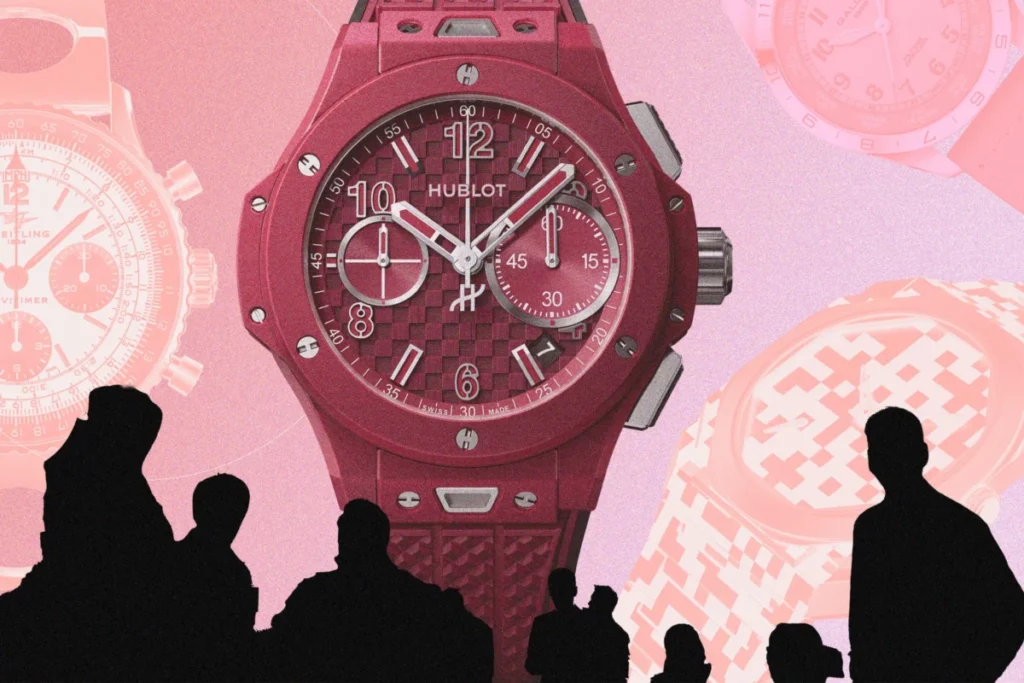
While Watches and Wonders remains the indisputable "Super Bowl" of the watch industry, anchoring the spring calendar in Geneva each April, a significant shift in strategy is taking place across the Swiss horological landscape. Geneva Watch Days, an event that made its modest, somewhat inauspicious debut in 2020—the same year the world shuttered under the weight of a global pandemic—is no longer just a secondary event. It is rapidly cementing itself as a vital, sophisticated follow-up, allowing major horological houses to bypass the frantic noise of the spring fair and command the spotlight on their own terms.
As the industry navigates a complex economic landscape, this second "bite of the marketing apple" in the latter half of the year has proven to be a masterstroke. It provides a sanctuary for brands to debut key releases, engage deeply with collectors, and maintain brand momentum long after the initial excitement of the spring has faded.
A Changing Market: Navigating the 2025 Headwinds
The landscape in which these watches are launching is one of caution mixed with optimism. Following a notable decline in 2024, Swiss watch exports saw a further contraction in 2025, with total export values dipping to approximately CHF 25 billion. This cooling period, often attributed to fluctuating global demand and inventory adjustments, has forced brands to become more selective and strategic with their product launches.
Despite the persistent "tariff seesaw" between the United States and global trade partners, the U.S. market has maintained its position as the undisputed heavyweight champion of the Swiss watch world. It remains the single largest consumer market, demonstrating a resilience that has surprised even the most bearish analysts. Encouragingly, recent quarterly reports and trade data suggest that the industry’s mid-term downturn may finally be reaching its nadir, with early signs of a sustained recovery beginning to materialize.

The Chronology of Innovation: A Week of Bold Releases
The recent week of activity in Geneva—and the auxiliary launches happening concurrently—showcased a distinct trend toward technical refinement, playful heritage, and a renewed focus on accessibility. Here is a closer look at the highlights that are currently dominating the conversation among enthusiasts and collectors.
Breitling Navitimer B09 Chronograph 41: A Tribute to the Jazz Legend
Breitling continues to lean heavily into its "legendary" archives. The new Navitimer B09 Chronograph 41, a direct homage to the 1960s Breitling Navitimer 806 Mk5 famously favored by Miles Davis, is a masterclass in modernizing a vintage icon.
The piece retains the critical DNA of the original: the manual-wind movement, the iconic Twin Jet logo, a reverse-panda dial configuration, and the classic 41-mm case proportions. However, it benefits from a transparent display caseback and updated, faux-aged cream lume that avoids the pitfalls of gaudy over-styling. Limited to 500 pieces, the watch is available on a calf leather strap for $8,900, though the steel bracelet version—complete with vintage-inspired round vents—is the clear aesthetic winner at $9,600.
The "CasioNaut": A Viral Sensation
Perhaps the most discussed timepiece of the week was not technically part of the official Geneva programming. Leaked imagery of the Casio G-Shock GAC-2500 series—quickly dubbed the "CasioNaut" or "CasioTilus"—has set enthusiast forums ablaze.

Built upon the structural legacy of the 1983 DW-5000C, this new resin-based analog series draws clear visual inspiration from the world of high-end luxury sports watches, specifically the Patek Philippe Nautilus. By offering an integrated-bracelet aesthetic at a rumored price point of roughly $134 for the resin models, Casio is once again proving that it understands the pulse of the market better than almost anyone else. A stainless-steel version, the GMC-2500D, is expected to follow at approximately $320, likely solidifying its status as the "must-have" affordable piece of the year.
Oris ProPilot X: The Gonzo Collaboration
Oris has successfully carved out a niche with its whimsical, character-driven collaborations. Following the success of the Kermit and Miss Piggy iterations, the new ProPilot X "Gonzo Edition" marks a significant evolution in their approach to pop-culture tie-ins.
Unlike previous iterations that relied on vibrant, solid colorways, the Gonzo is a exercise in subtle performance art. The character himself is discretely placed on the mainspring, visible through the caseback, while the 10-day power reserve indicator at 11 o’clock is reimagined as a red chili—a nod to one of the character’s signature shirts. This level of nuanced storytelling comes at a premium, however; priced at $10,500, it represents a substantial investment compared to the Kermit edition, signaling that Oris is positioning these collaborations as serious horological pieces rather than mere novelty items.
Zenith Chronomaster Sport: The "Accessible" Diver
Zenith’s strategy remains clear: leverage the legendary El Primero movement to drive volume across different segments. The new Chronomaster Solo Sport is a departure from the brand’s chronograph-heavy identity. It is a 40-mm steel diver’s watch with 200 meters of water resistance and a unidirectional ceramic bezel.

By stripping away the chronograph complication, Zenith is able to offer the high-frequency 36,000 vph caliber in a more "accessible" package. Starting at $9,800 for the no-date version, it is a direct challenge to established players in the luxury diver category, targeting those who appreciate high-frequency precision but prefer the cleaner aesthetic of a time-only watch.
Hamilton: The Interstellar Murph Evolution
Hamilton, a brand that consistently punches above its weight in the value-for-money department, surprised the industry by crashing the Geneva party with a significant update to its "Murph" collection.
The new Khaki Field Murph features a comet-inspired dial, utilizing a blue-to-black gradient to mimic the glow of ionized gases in space. Keeping with the current trend of downsizing, the watch remains in a 38-mm case, which is widely considered the "sweet spot" for field watches. At $995, it remains one of the most compelling entry points into the Swiss mechanical watch world, blending pop-culture relevance with rugged, daily-wear capability.
Ming 57.05 Comet: Independent Ingenuity
Ming, the independent brand founded by Ming Thein, continues to demonstrate why it is the darling of the collector community. The 57.05 Comet is a 40-mm worldtimer that addresses a common frustration with the complication: daylight saving time.

The watch features a patent-pending system where the split bezel is divided between cities that observe daylight saving and those that do not. By rotating the outer ring, the wearer can adjust only the affected cities, a clever and highly practical solution that highlights the brand’s focus on "innovative engineering" over mere cosmetic flair.
Implications for the Future of the Industry
The success of Geneva Watch Days signals a fundamental change in how the Swiss watch industry interacts with its audience. The "monolith" model of a single, all-encompassing trade show is being replaced by a more fluid, year-round cadence of product releases.
Decentralization and Brand Agency
By choosing to operate outside the shadow of the spring fairs, brands are gaining greater control over their narrative. They are no longer competing for headlines with thirty other brands on the same morning; they are choosing the timing that best suits their production schedules and marketing objectives. This decentralization is beneficial for the consumer as well, as it prevents "watch fatigue" and allows for a more focused appreciation of individual technical achievements.
The Resilience of "Entry-Level" Luxury
The consistent performance of brands like Hamilton and Casio—and the attempt by Zenith to offer more accessible price points—indicates that the industry is looking to broaden its appeal. While the ultra-luxury segment remains stable, the growth potential lies in the "enthusiast entry-level," where consumers are looking for heritage, design, and mechanical integrity without the five-figure entry price.

A Data-Driven Recovery
The decline in Swiss exports during 2024 and 2025 has been a sobering, yet necessary, correction. The industry is currently moving away from the speculative bubble of the post-pandemic years and toward a model based on tangible value and product innovation. Brands that prioritize thoughtful design, such as Ming, or functional heritage, such as Breitling, are the ones likely to lead the market into its next growth phase.
Conclusion
Geneva Watch Days has matured from a pandemic-era experiment into a cornerstone of the modern horological calendar. As the industry pivots away from the volatility of the past few years, the event provides a necessary platform for brands to showcase their resilience and creativity. From the viral potential of the "CasioNaut" to the technical brilliance of the Ming 57.05, the current state of watchmaking is as diverse and compelling as it has ever been. For collectors and enthusiasts, the message is clear: the industry is not just surviving the downturn; it is actively innovating its way toward a more sustainable and exciting future.