Beyond the "Smoking Gun": Rethinking Food Safety in the Era of Complex Supply Chains
The recent Cyclospora outbreak linked to shredded iceberg lettuce—which has spanned nine states and seen nearly 2,000 reported cases, with state-level counts exceeding 10,000—serves as a sobering case study in the modern challenges of foodborne illness investigation. For the general public, the expectation of a clear, definitive answer is natural: Did investigators find the parasite in the bag of lettuce? When lab results are withdrawn or prove inconclusive, public perception often shifts, leading to the assumption that the investigation has stalled or that the suspected food source has been wrongly implicated.
However, the reality of food safety in the 21st century is far more nuanced. Food safety investigations rarely depend on a single, definitive "smoking gun." Instead, they are intricate puzzles, meticulously assembled from thousands of disparate, imperfect pieces of evidence. As our food systems grow increasingly complex, the methodologies used to protect public health must evolve from reactive, siloed testing to proactive, integrated systems thinking.
The Anatomy of an Outbreak: Understanding the Investigation Process
Modern food safety investigations operate much like high-stakes forensic inquiries. When a cluster of illnesses is reported, investigators from the Centers for Disease Control and Prevention (CDC), the Food and Drug Administration (FDA), and state health departments begin a race against time.
The process is built on the convergence of multiple independent data streams:
- Epidemiological Interviews: Questioning patients about their dietary history to identify common exposures.
- Laboratory Analyses: Utilizing molecular diagnostics and genomic sequencing to identify the pathogen.
- Distribution and Traceback Records: Auditing invoices and shipping logs to map the journey of a product from farm to table.
- Supplier Information: Identifying commonalities in growing regions, processing facilities, and storage conditions.
Like detectives investigating a complex crime, officials build a case by synthesizing these imperfect clues. A single piece of evidence—such as a specific lab test—may change or prove inconclusive, but the overall mosaic of evidence often remains compelling. The challenge lies in the fact that by the time patients exhibit symptoms and report their illnesses, the contaminated product is frequently long gone—consumed or discarded—leaving investigators to reconstruct the past using the digital and physical paper trails of a globalized supply chain.
Chronology of Complexity: From Farm to Consumer
The complexity of the current food system is the primary driver of these investigative hurdles. Consider the journey of a head of iceberg lettuce: it is harvested in a specific field, transported to a processing facility where it is washed, shredded, and bagged, then sent to a regional distribution center, and finally dispersed to hundreds of grocery stores and restaurant chains.
Each transition point represents a potential vector for contamination. The flow of physical product is rapid, yet the flow of information is often slow and fragmented.
- Detection: Clinical reports begin to surface in multiple jurisdictions, triggering a preliminary cluster investigation.
- Initial Hypothesis Generation: Epidemiologists identify a commonality—for instance, consumption of shredded lettuce at specific restaurant chains.
- Traceback and Convergence: FDA investigators analyze shipping records, revealing that the affected outlets received produce from a specific processing plant during a narrow production window.
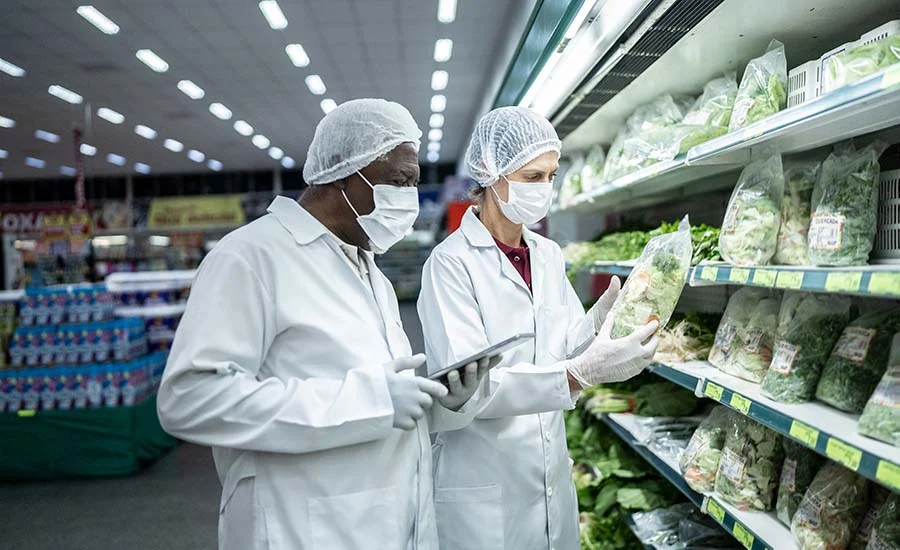
- Environmental Assessment: Sanitarians conduct inspections at the implicated farm or processing facility, searching for environmental contamination signals.
- Refinement: If lab results on the food product itself are delayed or negative, investigators rely on the convergence of traceback data and epidemiological correlation to initiate a targeted recall, preventing further illness while the investigation continues.
Supporting Data: Why Systems Thinking is the Future
The operations research (OR) and analytics community has spent decades perfecting methods for managing uncertainty in complex networks. Industries ranging from aviation and finance to healthcare and manufacturing have long utilized "systems thinking" to mitigate risk. In aviation, for example, safety is not maintained by a single sensor, but by the integration of radar, weather satellites, air traffic control, and mechanical diagnostics.
Food safety is currently undergoing a similar transformation. The goal is not to abandon traditional science but to integrate epidemiology, laboratory science, environmental monitoring, and supply chain traceability into a unified "decision-support system."
The "Weather Forecast" Analogy
Meteorologists do not predict a storm based on a single thermometer; they synthesize data from ocean buoys, weather balloons, radar, and satellite imagery. Individually, these tools provide limited insight. Together, they provide a reliable, probabilistic model of the future. Similarly, a future food safety system would not rely on a "search for the pathogen" as the only metric of safety. Instead, it would synthesize:
- Real-time wash water monitoring for chemical and microbial indicators.
- Predictive modeling based on environmental conditions at the farm level.
- Blockchain-enabled traceability for instantaneous supply chain transparency.
- Wastewater monitoring at processing facilities to detect pathogen presence before a product reaches the retail shelf.
Official Responses and Regulatory Evolution
Regulatory bodies, including the FDA and the USDA, have begun moving toward this integrated vision. The implementation of the Food Safety Modernization Act (FSMA) was a critical first step, placing greater emphasis on preventive controls rather than reactive response. However, the sheer volume of data generated by modern supply chains remains a bottleneck.
The FDA’s "New Era of Smarter Food Safety" initiative represents an official acknowledgement that the agency must embrace digital transformation. By promoting the use of AI-driven analytics, the agency aims to identify risks in the food supply chain before they result in widespread outbreaks. By analyzing vast datasets—including prior inspection history, agricultural practices, and regional climate data—investigators can deploy their limited resources to the highest-risk areas, narrowing the scope of potential recalls and minimizing economic disruption to the industry.
Implications for Industry and Public Health
The shift toward a systems-based approach has profound implications for stakeholders across the food landscape:
1. Increased Resilience Through Redundancy
Resilient systems do not rely on "perfect" components; they rely on well-designed interactions among complementary components. If one sensor fails—or if a laboratory test returns an inconclusive result—other data streams (such as distribution data or environmental health records) must be robust enough to maintain a clear picture of the risk.
2. Proactive Prevention vs. Reactive Recalls
The future of food safety lies in continuous situational awareness. Instead of viewing safety as a series of intermittent inspections, stakeholders must view every shipment, every environmental measurement, and every laboratory result as a data point in a continuous risk assessment. This allows for "preemptive interventions"—such as isolating a batch of produce based on an anomaly in the wash-water chemistry—before the product ever reaches a consumer’s plate.
3. Restoring Public Confidence
Public trust is arguably the most valuable currency in the food industry. When an outbreak occurs, the public demands clarity. By moving away from the "search for the smoking gun" and toward a model that communicates the strength of a weight-of-evidence approach, regulators can provide more precise, actionable guidance. This avoids the "blanket recall" scenario, where vast amounts of safe food are discarded due to uncertainty, and ensures that when a recall is issued, it is targeted, efficient, and effective.
Conclusion: The Path Forward
The Cyclospora outbreak is a stark reminder that as our food systems become more globalized and interconnected, the methods we use to monitor their safety must keep pace. We can no longer afford to treat epidemiology, supply chain management, and laboratory science as separate disciplines.
The future of food safety belongs to systems that learn continuously, integrate evidence intelligently, and respond with agility. By leveraging existing technologies—the same tools that have revolutionized finance and aviation—we can build a food system that is not only safer but more transparent and resilient. No single test will ever eliminate foodborne illness, but a well-integrated, intelligent, and systemic approach to risk management will fundamentally change the landscape of public health, ensuring that the food we eat is safer, and the investigations that follow when something goes wrong are faster and more accurate than ever before.