Beyond the Toy Box: The New Frontier of Play, STEM, and Cognitive Development
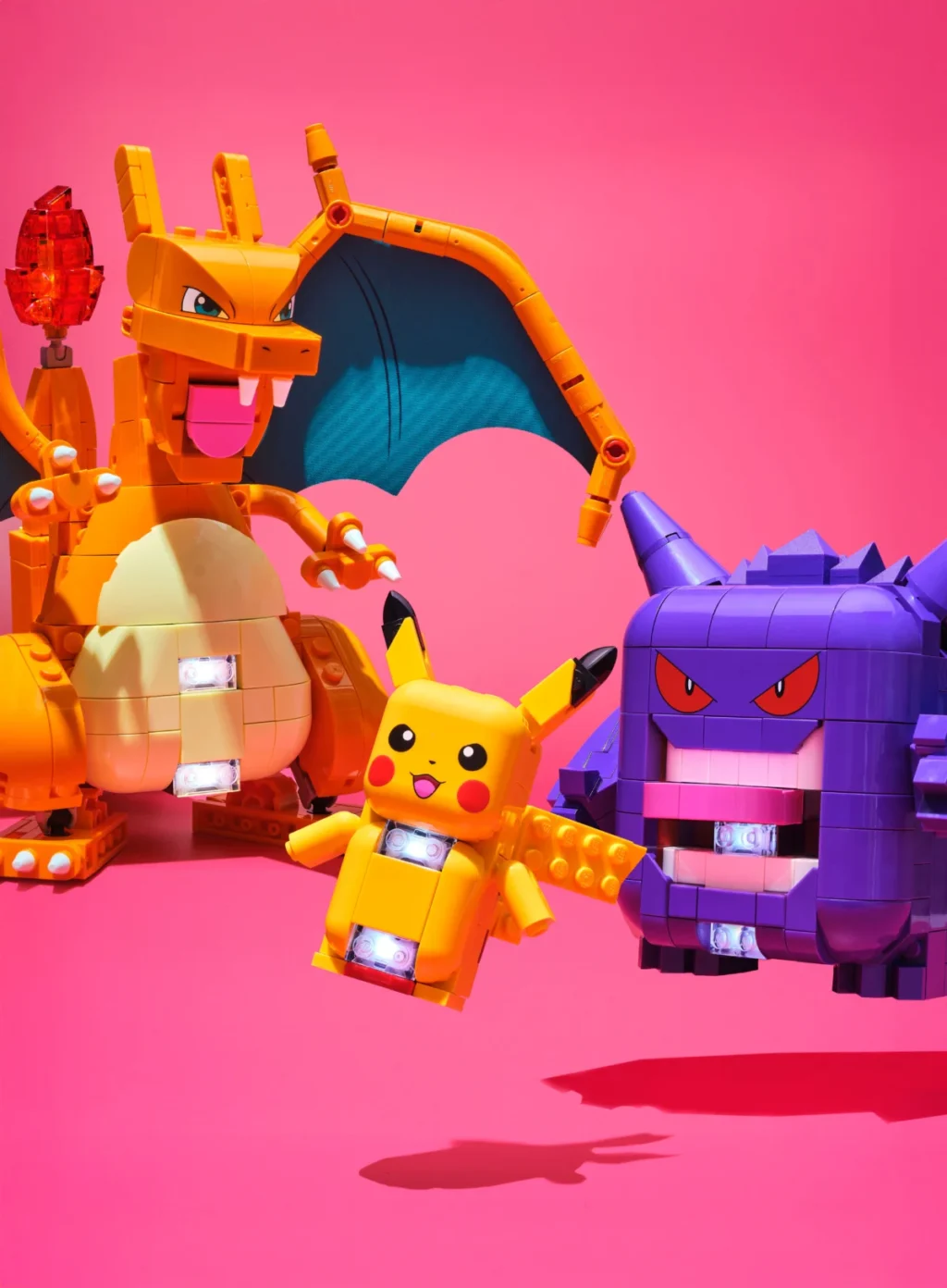
In an era defined by rapid technological acceleration, the traditional toy industry is undergoing a profound metamorphosis. No longer confined to passive plastic figures or static board games, modern playthings are increasingly designed to challenge children’s physical and mental limits. By pushing these boundaries, these innovative products help young users understand the parameters of their own knowledge—and, more importantly, how to transcend them.
From AI-driven companions to high-fidelity musical sequencers, the current generation of "smart" toys is bridging the gap between recreation and professional-grade skill acquisition. This article examines the latest advancements in developmental play, exploring the intersection of creative expression, physical coordination, and emerging technology.

The Evolution of Play: Main Facts and Trends
The modern toy landscape is shifting away from screen-based consumption toward tactile, interactive, and "screen-free" smart technology. Industry experts note a growing demand for toys that serve as "gateway tools"—objects that introduce children to concepts like MIDI sequencing, robotics, synthetic music production, and physical engineering.
A key trend is the integration of high-level sensors—including gyroscopes, accelerometers, and NFC (Near Field Communication) technology—into durable, child-friendly form factors. Unlike the novelty toys of previous decades, these items are designed with long-term engagement in mind, often featuring modular parts that encourage repair and iterative design.

Chronology: The Rise of the "Smart" Playroom
- Pre-2010s: The dominance of digital consoles and handheld gaming devices. Play is largely sedentary and screen-dependent.
- 2015–2020: The rise of "Maker" culture in childhood development. Kits like Raspberry Pi and simplified robotics enter the mainstream, focusing on coding as a primary skill.
- 2021–2023: The "Sensor Integration" phase. Toys begin to incorporate complex hardware, such as NFC tags, AI-driven personality engines, and high-fidelity synthesizers, often bypassing the need for a primary screen.
- 2024–Present: A focus on "Analog-Digital Hybridization." Brands are increasingly blending premium aesthetics (like the Gibson x Loog guitar collaboration) with sophisticated underlying tech, ensuring the toy feels like a "real" instrument or tool rather than a plasticky imitation.
Supporting Data: Innovations in the Current Market
The market has responded with a diverse array of products that cater to varying interests, from the musically inclined to the budding athlete.
Musical Mastery for the Next Generation
The Orbita MIDI Color Sequencer ($458) represents a shift in how children interact with sound. By utilizing a physical, magnetic interface on concentric rings, it allows children to visualize music production without the abstraction of a digital workstation. This mechanical approach demystifies the MIDI loop, turning the complex process of layering beats into a tactile, roulette-like game.

Similarly, the Blipblox After Dark ($219) provides a professional-grade synthesis experience in a child-safe chassis. By removing the barrier to entry for sound design, these tools foster a "tinkerer" mindset. Meanwhile, the Gibson x Loog Les Paul ($229) offers a high-quality three-stringed electric guitar, bridging the gap between a toy and a legitimate musical instrument.
Engineering and Robotics
The Lego Smart Play System represents the pinnacle of modern construction play. By integrating a 2-by-4-stud rechargeable smart brick with NFC tags, Lego has created an ecosystem where the build process triggers light, sound, and motion without requiring a smartphone or tablet.

For those interested in AI, the Looi Robot ($239) offers a unique proposition: a tank-like chassis that transforms a smartphone into an autonomous, ChatGPT-powered companion. While these toys offer incredible engagement, they also raise questions about data privacy and the role of generative AI in early developmental stages.
Physical Development and Coordination
The Stapelstein Rainbow Set ($299) and the Modu Balance Track ($203) focus on proprioception and physical stability. These systems allow children to build their own obstacle courses, encouraging physical problem-solving. On the more active end, the Woom Wow Balance Bike ($199) is engineered for children as young as nine months, using a self-centering mechanism that teaches the mechanics of balance before a child even understands the concept of a bicycle.

Official Perspectives and Industry Philosophy
Manufacturers are increasingly positioning their products not just as toys, but as "developmental assets." A common theme across brands like Kibu and HoverAir is the concept of "repairability."
The Kibu Headphones ($73) are a standout example of this philosophy. By requiring children to snap together the components themselves, the product transforms from a simple listening device into a STEM project. The company explicitly encourages repair; when parts break, they are replaced rather than the entire unit being discarded. This teaches children the value of maintenance and the underlying mechanics of consumer electronics—a stark contrast to the "disposable" nature of many modern gadgets.

Implications: The Future of Childhood Development
The shift toward these advanced toys has significant implications for how we view education and play.
1. The Death of the "Passive Toy"
We are moving toward an era where toys demand active participation. Whether it is the KidzLane Electronic Dance Mat ($19) or the Dex Camera ($249)—which translates imagery into 16 different languages—the modern toy is a collaborative partner. This shift reduces passive screen time, encouraging children to move, listen, and speak.

2. The High Cost of Innovation
There is a notable price disparity between traditional toys and these high-tech alternatives. With prices ranging from $19 to over $1,200 for the HoverAir Aqua drone, there is a risk of widening the developmental gap between socio-economic groups. Access to these "boundary-pushing" tools is becoming a significant factor in early education inequality.
3. The Digital-Analog Hybridization
The most successful products of this year have one thing in common: they use technology to enhance the physical world, not replace it. The UNO Canvas x MoMA deck ($25) reminds us that design and art history can be gamified, while the Timex Time Machines dinosaur watch ($49) proves that even a simple analog clock remains a powerful tool for teaching time-management skills in an increasingly digital world.

4. Safety and Privacy
As toys like the Takway Sweekar ($149)—an AI-powered virtual pet—become more common, the industry must grapple with the ethics of AI memory. If a toy "remembers" a child as it grows, where is that data stored? Is it being used to profile the child? Parents must become more digitally literate to navigate this new landscape safely.
Conclusion: Playing Outside the Lines
The toys of 2024 and beyond are not merely distractions; they are sophisticated instruments of cognitive, physical, and creative growth. By testing the limits of what a "toy" can be, these manufacturers are effectively training a generation to be more comfortable with complex systems, whether those systems are musical, robotic, or mechanical.

As we look to the future, the goal for parents and educators should be to curate these experiences thoughtfully. While the HoverAir Aqua or the Orbita MIDI sequencer offer incredible opportunities for learning, the most valuable lesson remains the one inherent in the design of the Kibu Headphones: that the world is a complex machine, and with a bit of curiosity and the right tools, it is one that children are entirely capable of understanding, maintaining, and improving.
The boundary of knowledge is not a fixed wall; it is a line that, with the right encouragement, is meant to be colored outside of.