Capturing the Bloom: A Deep Dive into the Artistry of Redding’s Organic Flower Farming
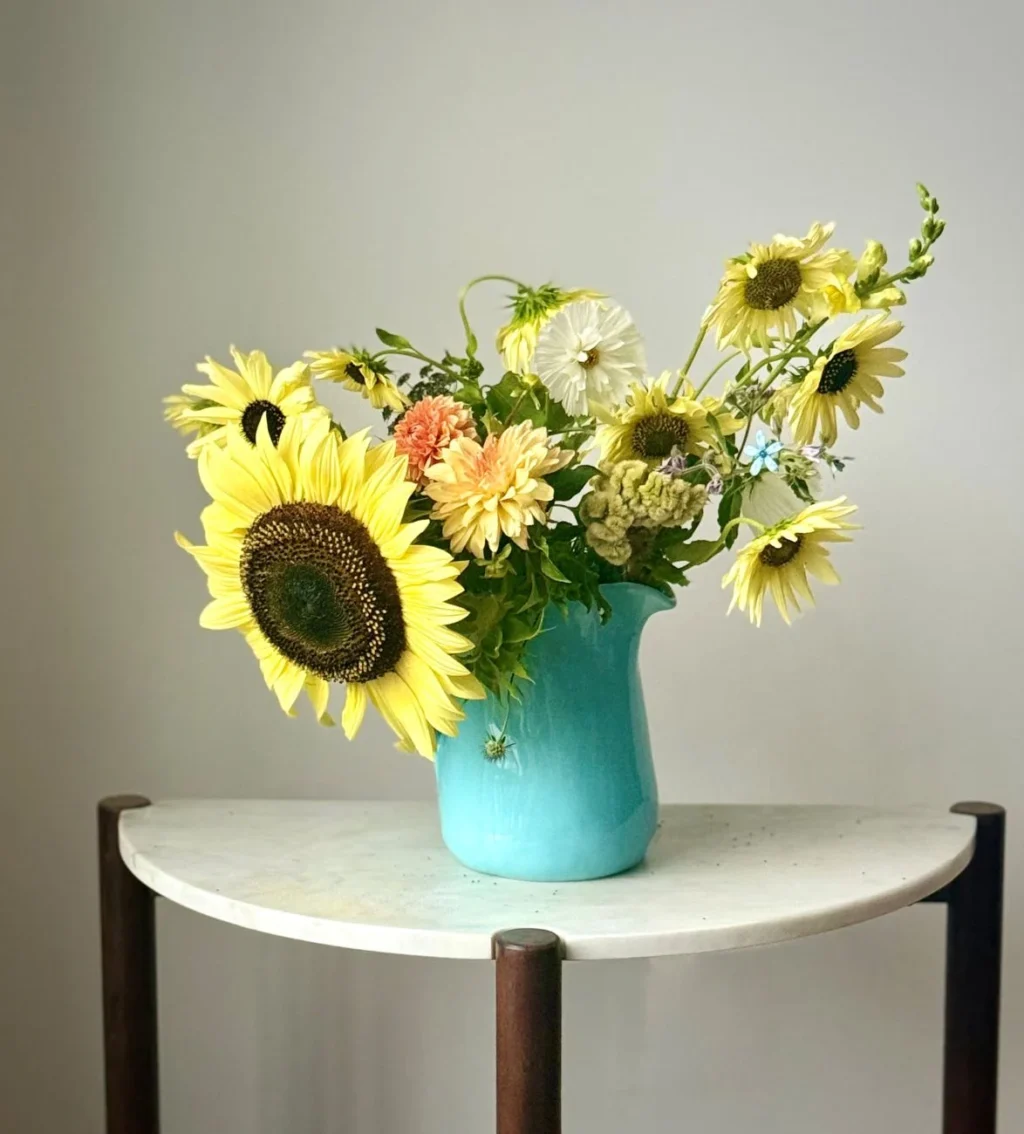
As the calendar turns to August, the peak of summer is in full, radiant swing. For many gardeners, this period represents the "golden hour" of the horticultural year—a time when months of careful soil preparation, seed starting, and diligent maintenance finally coalesce into an explosion of color and fragrance. This week, we journey to Redding, Connecticut, to explore the work of Jen, the creative force behind a thriving organic flower farm. Through her lens and her shears, we gain a new perspective on the intersection of regenerative agriculture, professional floral design, and the burgeoning art of botanical photography.
The Organic Ethos: A Foundation in Redding
At the heart of Jen’s operation in Redding lies a commitment to organic cultivation. In an era where commercial floristry is often criticized for its heavy reliance on synthetic fertilizers, pesticides, and long-distance shipping, small-scale, organic flower farms are providing a vital alternative.
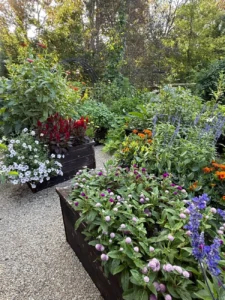
"I have a flower farm in Redding, Connecticut, where I grow everything organically," Jen explains. Her approach is rooted in the philosophy that healthy soil equates to vibrant, long-lasting blooms. By eschewing chemical inputs, she fosters a garden ecosystem that supports pollinators, improves soil structure over time, and produces flowers that possess a natural depth of color and hardiness that mass-produced stems often lack.
While her primary focus has long been the production of cut flowers for special events and bespoke floral commissions, a recent evolution has taken place. Jen has begun turning her attention toward the aesthetic documentation of her harvest. Her transition into botanical photography is not merely a hobby; it is an extension of the gardening process. By photographing her crops, she captures the ephemeral beauty of the seasons, documenting the intricate textures of petals, the unique geometry of foliage, and the interplay of light on organic matter.
Chronology of a Late-Summer Harvest
The late-summer garden is a theater of high drama. As the days begin their subtle slide toward autumn, the farm enters its most productive phase. The following is a breakdown of the seasonal progression that informs Jen’s current work:
- Early July (Foundation Building): The farm focuses on the final succession plantings of heat-loving annuals. It is a period of intense maintenance, including deadheading, staking taller varieties like dahlias, and managing moisture levels as the Connecticut sun intensifies.
- Late July (The Peak Palette): The structural plants—dahlias, snapdragons, and cosmos—reach their zenith. This is the period of harvest, where the farm’s bounty is gathered for weddings and local floral installations.
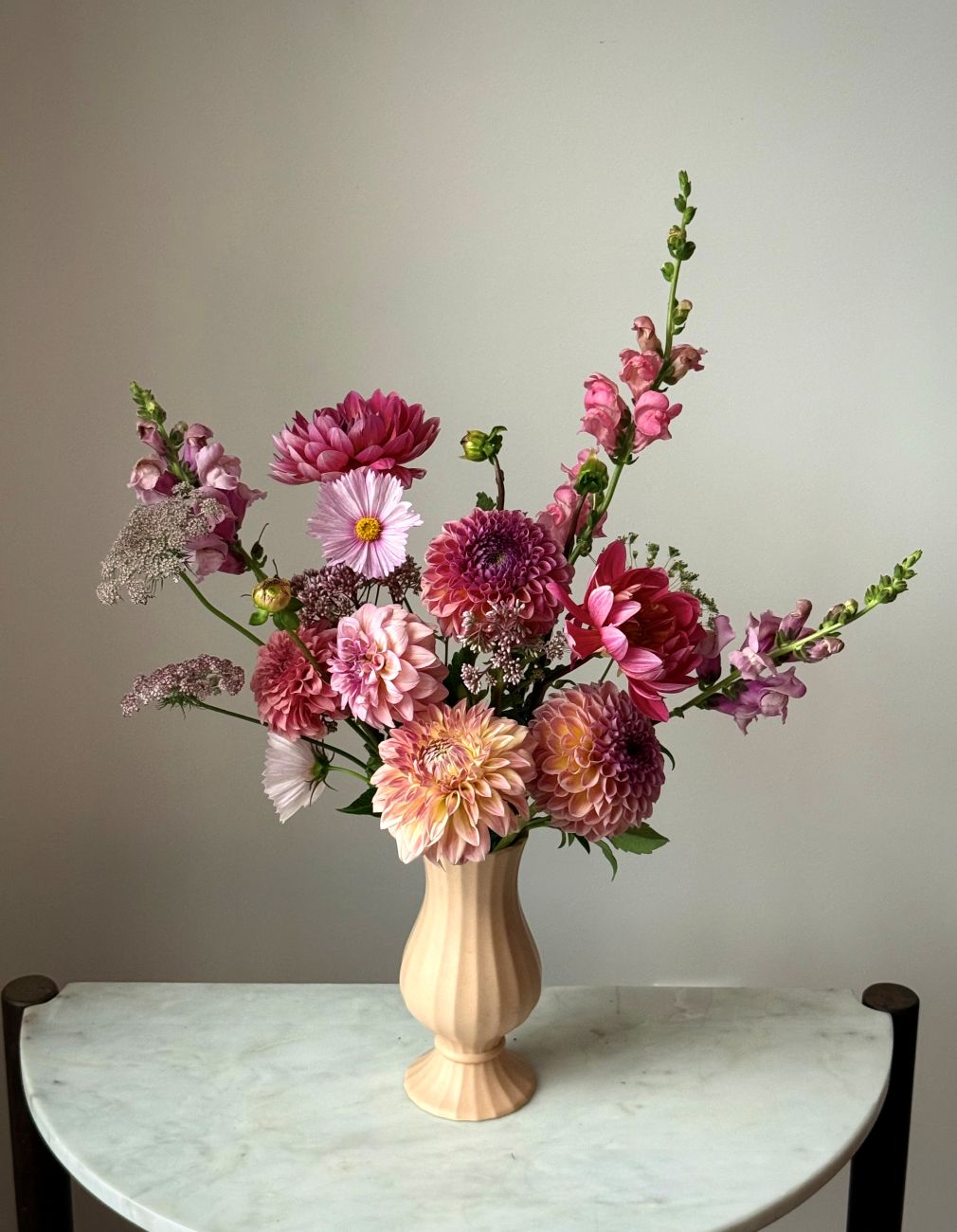
- Early August (Artistic Synthesis): This is where we currently stand. The labor of the previous months is now channeled into creative expression. The farm has shifted from pure production to the curation of arrangements that define the "berry, peach, and plum" color palette that characterizes the current collection.
Supporting Data: The Anatomy of a Masterpiece
To understand the visual appeal of Jen’s arrangements, one must look at the specific cultivars chosen. Her recent work highlights a masterful balance between focal flowers, structural elements, and delicate fillers.
The Palette Breakdown
The current arrangements feature a sophisticated blend of tones:
- Dahlias (Dahlia cvs., Zones 8–11): Serving as the primary focal point, these dahlias provide the depth of the "plum" and "berry" tones. Their complex, layered petals offer the necessary volume for a centerpiece.
- Snapdragons (Antirrhinum majus, Zones 7–10): These provide the vertical architecture of the arrangement, guiding the eye upward and adding height.
- Cosmos (Cosmos bipinnatus, annual): Used for their airy, whimsical nature, cosmos bridge the gap between the heavy focal flowers and the surrounding foliage.
- ‘Dara’ Flowering Carrot (Daucus carota, biennial): An essential element for adding texture, ‘Dara’ introduces a delicate, lace-like quality that prevents the arrangement from appearing too dense.
The Integration of Edibles
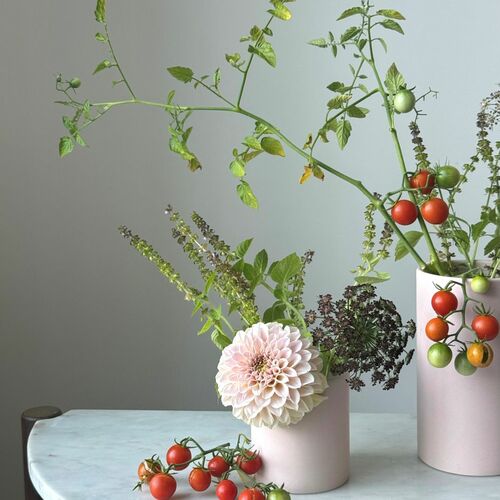
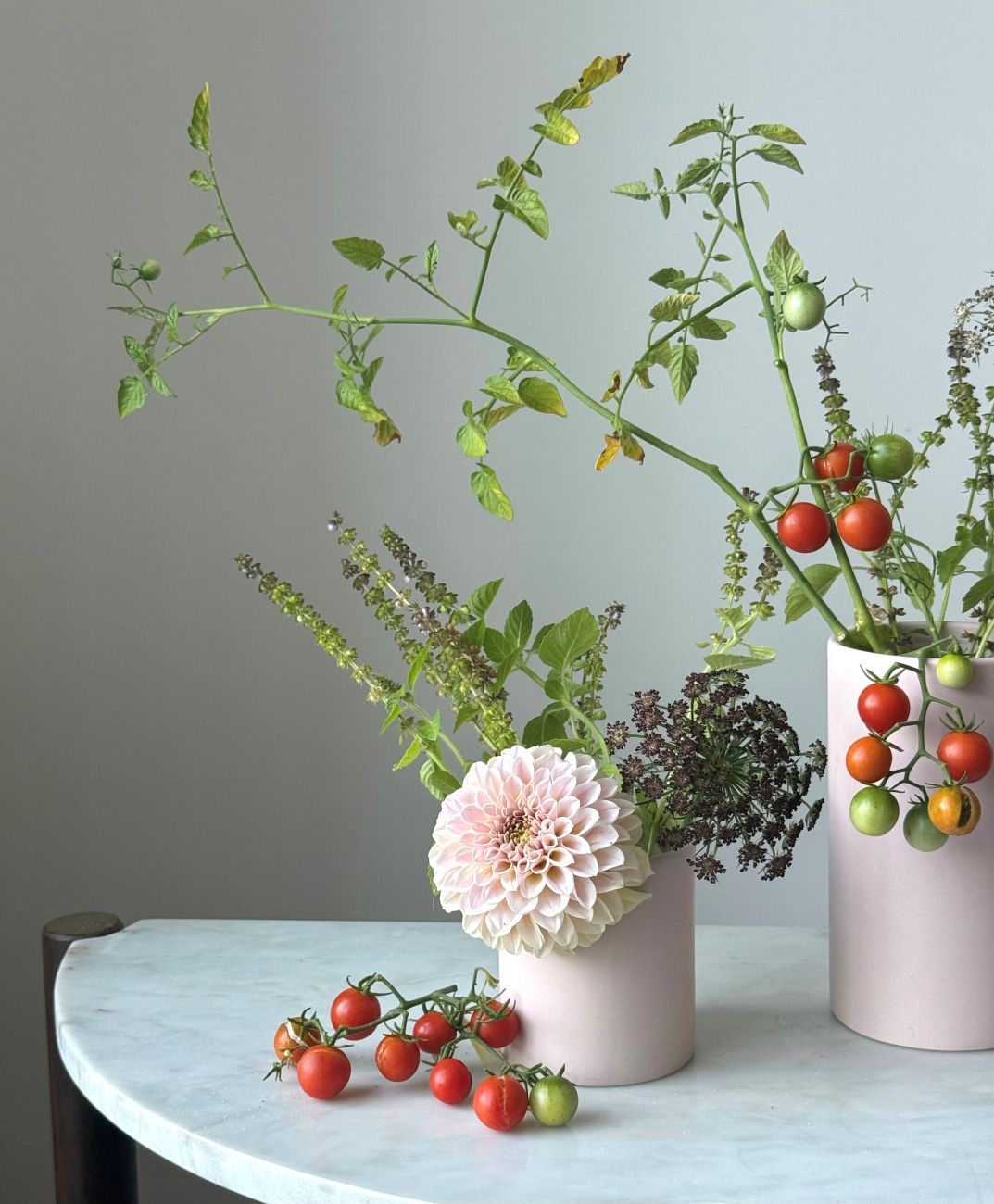
A notable trend in modern gardening is the blurring of lines between the kitchen garden and the cutting garden. Jen expertly incorporates cherry tomatoes (Solanum lycopersicum) and basil (Ocimum basilicum) into her floral designs. This "edible arrangement" style not only adds a unique color pop—the deep reds of the tomatoes contrasting with the soft pinks of the dahlias—but also engages the sense of smell, adding an herbaceous layer to the olfactory experience of the bouquet.
Implications for the Modern Gardener
The work being done at Redding Flower Farm serves as a blueprint for the contemporary gardener. It challenges the notion that a garden must be segregated into "ornamental" and "productive" zones. Instead, it posits that the most beautiful gardens are those that are integrated and utilitarian.
The Shift Toward Intentional Photography
Jen’s shift toward documenting her harvest speaks to a broader cultural movement. Gardeners are increasingly using platforms like Instagram and professional portfolios to share their successes, failures, and creative processes. This communal sharing of knowledge has transformed gardening from a solitary pursuit into a vibrant, global conversation. It allows a grower in Connecticut to inspire a hobbyist in the Pacific Northwest, fostering a culture of mutual learning and appreciation.
Environmental Stewardship
By focusing on organic, local production, the implications for the environment are profound. Supporting small-scale, organic growers reduces the carbon footprint associated with imported flowers, which are often subjected to long-haul shipping and high-chemical-input environments. When we choose to grow or purchase flowers from local organic farms, we are participating in a system that preserves local biodiversity and soil health.
Cultivating Your Own Oasis: Tools of the Trade
For those inspired by the work in Redding to begin their own journey into flower farming or elevated home arranging, the selection of the right equipment is paramount. Just as an artist requires quality brushes, a gardener requires tools that facilitate both efficiency and precision.
Essential Gear for the Aspiring Florist-Gardener
- The Connecta® Cultivation Kit (Johnny’s Selected Seeds): Precision is key when weeding around delicate annuals. This kit, with its interchangeable heads, allows for a surgical approach to soil maintenance, ensuring that the health of the plant is never compromised by heavy-handed cultivation.
- Lee Valley Large Gardener’s Wash Basket: Harvest management is often overlooked by beginners. A proper wash basket, such as the chrome-plated steel version from Lee Valley, is vital for maintaining the post-harvest quality of both flowers and vegetables. It allows for the immediate cleaning of produce, ensuring that soil-borne pathogens are not brought into the home or into the display vase.
- Dramm Revolution Adjustable Nozzle: Watering is the single most important task in the summer garden. A high-quality nozzle with an adjustable spray pattern is essential for delivering the right amount of water—whether it is a gentle mist for young seedlings or a targeted stream for mature dahlias.
Engaging with the Community
The beauty of the garden is incomplete without the opportunity to share it. As Jen’s work shows, the act of creating a bouquet is an act of communication—a way to share the fleeting beauty of a specific moment in time.
The Fine Gardening community invites all readers to contribute to this ongoing dialogue. Whether you are tending to a small patio container or a multi-acre flower farm, your experiences are the lifeblood of this horticultural tradition. Sharing your photos—and the stories behind them—helps to build a more connected and informed community.
When you submit your garden photos, consider sharing the "why" behind your plants. How did you choose your color palette? What challenges did you face this season? Which plants surprised you with their resilience? These stories provide context that transforms a simple photograph into a valuable lesson for fellow gardeners.
Conclusion: The Ever-Changing Canvas
As we move through the remaining weeks of August, the garden continues its rapid, relentless evolution. The flowers that are in bloom today will soon give way to the seed heads of autumn. This constant cycle of growth, bloom, harvest, and decay is the essence of gardening.
Jen’s work in Redding, Connecticut, serves as a poignant reminder that we are not just caretakers of the land; we are observers and interpreters of the natural world. By embracing organic practices, experimenting with the aesthetic possibilities of our harvests, and sharing our journey with others, we ensure that the art of gardening continues to thrive for generations to come. Whether you are arranging a simple bouquet for your kitchen table or managing a professional flower farm, you are part of a larger, vibrant tapestry that connects us all to the earth.
Keep your shears sharp, your soil healthy, and your eyes open for the beauty that emerges in every corner of your garden this season. The peak of summer may be fleeting, but the memories and the lessons cultivated within it are enduring.