Crisis at the FDA: Commissioner Nominee Faces Scrutiny Amidst Agency Staffing Collapse and Food Safety Volatility
Executive Summary: A Confirmation Hearing Under Pressure
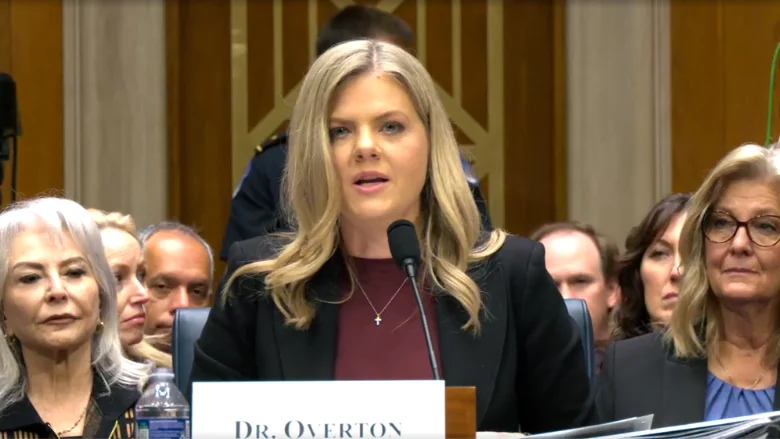
On September 24, the Senate Committee on Health, Education, Labor, and Pensions (HELP) convened to deliberate the nomination of Heidi Overton, M.D., Ph.D., as the next Commissioner of the U.S. Food and Drug Administration (FDA). The hearing served as a high-stakes litmus test for the Trump Administration’s approach to public health, exposing a stark disconnect between the ambitious "Make America Healthy Again" (MAHA) agenda championed by Health Secretary Robert F. Kennedy Jr. and the stark reality of a hollowed-out federal agency.
Dr. Overton, a board-certified public health and general medicine practitioner, faces a daunting confirmation path. With no prior background in food policy or safety, she was pressed by lawmakers on how she intends to fulfill the mandate of ingredient safety reform—specifically the FDA’s controversial push for mandatory "Generally Recognized as Safe" (GRAS) notifications—while operating an agency that has seen its workforce decimated by recent reductions in force (RIFs).
Chronology: The Erosion of FDA Oversight
The current state of the FDA is the culmination of a volatile 24-month period marked by administrative turnover, fiscal contraction, and a surge in public health crises.
- Early 2025: The Trump Administration initiates broad federal budget adjustments, leading to the first wave of attrition within the FDA’s Human Foods Program (HFP).
- Mid-2025: Former FDA official Jim Jones warns that the agency’s chemical safety review capacity is critically under-resourced.
- Late 2025: Following a series of "indiscriminate" layoffs, Jim Jones resigns, citing that the HFP’s reduced staffing renders the agency’s food safety mission "fruitless."
- Summer 2026: A record-breaking foodborne illness outbreak, including the largest Cyclospora outbreak in U.S. history linked to Taylor Farms, highlights the fragility of the nation’s outbreak response infrastructure.
- August 2026: Under a directive from Secretary Kennedy, the FDA proposes a rule requiring mandatory notifications for substances deemed GRAS, attempting to close a long-criticized loophole.
- September 2026: The HELP Committee confirmation hearing for Dr. Overton reveals that the agency has lost approximately 20% of its total workforce since the start of the administration.
Supporting Data: A Statistical Snapshot of Decline
The testimony provided during the hearing painted a grim picture of an agency struggling to maintain its regulatory grip. Sen. Patty Murray (D-WA) highlighted that the Human Foods Program currently operates with approximately 1,700 employees—a 13% reduction from early 2025 levels.
More alarming, Sen. Tim Kaine (D-VA) noted that the FDA has lost a total of 4,500 staff members during the current administration. Consequently, the number of federal food inspectors is at its lowest level since 2005. This contraction in oversight coincides with a reported 16-fold increase in foodborne illness outbreaks throughout 2026 compared to 2025. These figures suggest a direct correlation between the loss of institutional expertise and the degradation of consumer protection.
The GRAS Loophole and the Burden of Proof
At the heart of the current regulatory debate is the "Generally Recognized as Safe" (GRAS) pathway. Critics have long argued that this system functions as a regulatory loophole, allowing manufacturers to introduce new food additives into the supply chain without formal FDA premarket review.
The FDA’s proposed rule seeks to mandate that companies notify the agency of their self-determined GRAS status. While this would provide the FDA with a window into what is being added to the American diet, it does not necessarily grant the agency the power to halt the use of these additives. During the hearing, Sen. Jim Banks (R-IN) posed a fundamental question: Does the FDA have the resources to review these notifications?
Dr. Overton’s response was candid: "To my understanding, the agency would need more resources in its Human Foods Program to properly be able to process or review all of those mandatory notifications." When pressed for solutions, she offered no concrete plan, vaguely citing ongoing discussions in Congress regarding resource allocation.
Official Responses and the Leadership Gap
The confirmation hearing underscored a significant experience gap. When Sen. Murray questioned Dr. Overton on the specific role of the Coordinated Outbreak Risk and Evaluation (CORE) Network—the very body responsible for responding to high-profile foodborne outbreaks—the nominee was unable to identify the team.
This lack of familiarity with agency structure prompted concerns among committee members regarding her readiness to lead. In response to the criticism, Dr. Overton maintained that she is "committed to the food safety pillar of the FDA." She pointed toward a potential, yet unconfirmed, strategy involving increased foreign facility user fees to fill budget gaps. "FDA is hiring to have the best people in the best positions to be able to deliver on its core missions," she asserted, though she did not provide a timeline for when these hires would be onboarded or how they would compensate for the thousands of years of institutional knowledge lost in the recent RIFs.
Implications: State-Federal Conflict and the Future of Food Safety
The crisis of capacity has forced a shift in the balance of power between federal and state regulators. Sen. Lisa Murkowski (R-AK) noted that states currently perform approximately 60% of food facility inspections. The Administration is reportedly considering a plan to shift even more routine inspection duties to state agencies to manage federal budget constraints.
This decentralization, however, creates a patchwork of oversight that threatens to undermine national consistency. The debate over state-level additive bans—such as those implemented in California—has reached a boiling point. Manufacturers are increasingly pushing for federal preemption to prevent having to navigate a fragmented landscape of 50 different state laws.
When asked about her stance on preemption, Dr. Overton suggested that a "strong national standard" might be necessary to ensure uniformity. This position puts her in potential conflict with states that have moved aggressively to ban additives they deem toxic, highlighting a looming political battle between federal authority and state-level consumer protection movements.
Conclusion: A Heavy Burden for a New Commissioner
The path ahead for the next FDA Commissioner is fraught with structural instability. The agency is being asked to implement an ambitious, reform-heavy agenda while functioning at a level of reduced capacity not seen in two decades. The reliance on increased user fees and the potential for federal preemption suggest that the Trump Administration intends to change the nature of the FDA rather than merely restoring its previous scale.
For Dr. Overton, the challenge is not just technical—it is administrative. Whether she can convince Congress that she can manage a crippled agency while meeting the high expectations of the MAHA movement remains to be seen. As the 2026 calendar draws to a close, the data from the food supply chain indicates that the status quo is failing, and the window for effective intervention is closing rapidly. The coming months will determine if the FDA can evolve to meet these modern challenges or if it will continue to fade into a state of institutional inadequacy.