Mettler Toledo Expands Food Safety Infrastructure with New Dallas Reinspection Facility
By the Food Safety Magazine Editorial Team
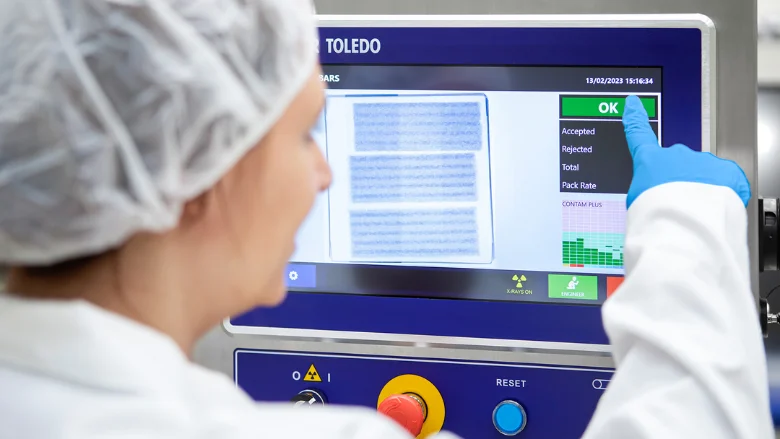
In a strategic move to bolster the resilience of the North American food supply chain, Mettler Toledo, a global leader in precision instrumentation, has announced the opening of a state-of-the-art X-ray Reclaim Foreign Material Reinspection Services facility. Located in Dallas, Texas, the facility is scheduled to commence operations on October 5, 2026. This dedicated center aims to provide critical support for food, beverage, ingredient, and pet food manufacturers grappling with the logistical and safety challenges posed by suspected foreign material contamination incidents.
The facility represents a significant investment in specialized food safety infrastructure, offering a comprehensive suite of services—including reinspection, contaminant extraction, application validation, and rigorous documented reporting—designed to help manufacturers mitigate the financial and reputational risks associated with product recalls and quality control failures.
Main Facts: A Hub for Contaminant Mitigation
The Dallas facility is engineered to serve as a high-throughput center for the inspection of quarantined finished goods. When a manufacturer identifies a potential contamination event, the speed of response is the primary determinant in whether a product can be reclaimed or must be disposed of entirely.
Core Service Offerings
The new Dallas location offers four primary pillars of service:
- Foreign Material Reinspection: Utilizing advanced PXT photon-counting X-ray technology to scan bulk, packaged, or processed products.
- Contaminant Extraction: Specialized protocols to isolate and remove detected foreign objects without compromising the integrity of the surrounding product.
- Application Validation: Pre-project testing to determine the feasibility of detection based on the specific density and characteristics of the product and packaging.
- Documented Reporting: Providing a detailed audit trail—essential for regulatory compliance, insurance claims, and internal quality assurance reviews.
By consolidating these services under one roof, Mettler Toledo provides manufacturers with a "one-stop" solution to navigate the complexities of a product hold. The facility is equipped to handle diverse product categories, ranging from fragile consumer-facing retail packs to large-scale bulk ingredients.
Chronology: From Discovery to Remediation
The workflow for manufacturers utilizing the Dallas facility is designed with efficiency and traceability in mind. The process follows a structured timeline:
- Incident Identification: A manufacturer identifies a potential foreign material breach through internal quality control or consumer reports.
- Initial Consultation and Inquiry: Before the October 5 opening, manufacturers can reach out to Mettler Toledo to discuss project scope and urgency.
- Application Testing: Before any physical product is processed, the Dallas team conducts rigorous testing. This phase determines the “detection threshold”—the sensitivity required to catch the specific contaminant (e.g., glass shards, bone fragments, or stainless steel) within the specific product matrix.
- Logistics and Intake: Beginning October 5, quarantined inventory is transported to the Dallas site. Upon arrival, every shipment is logged into a traceability system to ensure chain-of-custody protocols are maintained.
- Inspection and Extraction: Using PXT photon-counting technology, the product is scanned. Contaminated units are isolated for extraction, while compliant units are cleared for market release.
- Certification and Release: A final report is generated, providing the manufacturer with the data required to prove product safety to regulators and retailers.
Supporting Data: The Power of PXT Technology
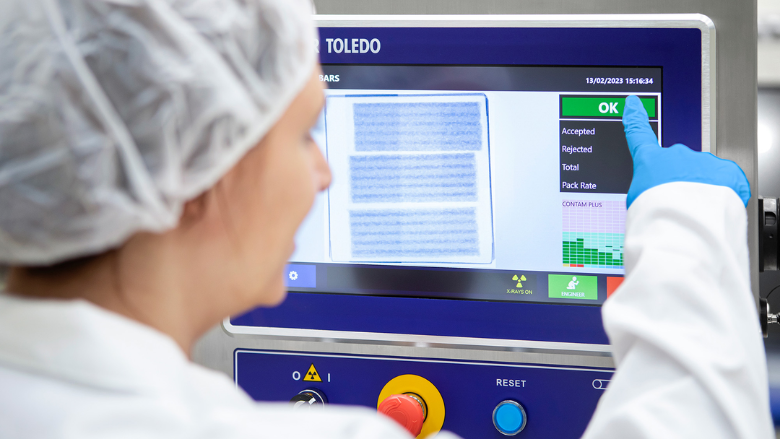
The effectiveness of the Dallas facility hinges on Mettler Toledo’s proprietary PXT (Photon-Counting X-ray) technology. Unlike traditional X-ray systems that provide a grayscale image based on overall density, photon-counting technology analyzes the energy spectrum of X-rays passing through the product.
Capabilities of PXT
The technology is highly sensitive to a wide array of foreign materials that have historically been difficult to detect:
- Metals: Ferrous, non-ferrous, and stainless steel (including small wire fragments).
- Inorganics: Glass, stone, and mineralized contaminants.
- Organics: Bone fragments in meat or poultry products.
- Low-Density Materials: Certain plastics and rubber components that often evade conventional inspection systems.
By increasing the probability of detection, Mettler Toledo reduces the "false reject rate," ensuring that manufacturers do not unnecessarily discard safe product—a critical factor in maintaining thin profit margins in the food industry.
Mobile Reinspection: Flexibility in Crisis
Recognizing that shipping massive quantities of quarantined product across the country can be logistically prohibitive or environmentally costly, Mettler Toledo is introducing a regional mobile reinspection service.
This service allows the Mettler Toledo team to deploy equipment and trained personnel directly to the manufacturer’s warehouse. This “on-site” approach is particularly valuable for:
- High-Volume Inventories: When the sheer size of the quarantined goods makes transportation impractical.
- Perishable Goods: When time-sensitive products require inspection before they expire.
- Security Concerns: When manufacturers prefer to keep their proprietary products within their own facility walls.
Mobile deployments are typically available within 48 hours of application validation and project authorization. This agility is a significant value-add for supply chain managers who need to minimize the "dead time" of a quarantined inventory block.
Implications: The Strategic Impact on the Food Industry
The opening of the Dallas facility is more than just a real estate expansion; it represents a shifting paradigm in how the food industry manages risk.
Financial Sustainability and Waste Reduction
The primary implication for food manufacturers is the potential to avoid total product loss. In the past, when contamination was suspected, the safest route was often a full-scale destruction of the batch. With the sophisticated detection capabilities of the Dallas facility, manufacturers can salvage a significant percentage of their inventory, protecting both their bottom line and their environmental, social, and governance (ESG) targets by reducing food waste.
Regulatory and Consumer Trust
Regulatory bodies, such as the FDA and USDA, require rigorous documentation when a safety incident occurs. The documented reporting provided by the Dallas facility serves as a "Gold Standard" of evidence. By being able to prove that a product batch underwent professional-grade reinspection, manufacturers can better navigate the regulatory scrutiny that follows a potential safety breach.
Furthermore, in an era of social media-driven public relations crises, the ability to act swiftly to ensure product safety is vital. A manufacturer that can proactively address a problem and provide verifiable data to retailers and consumers can often transform a potential brand-damaging event into a demonstration of commitment to safety.
The Role of Technology in Future-Proofing
As food manufacturing processes become more complex—incorporating more automation and diverse ingredient sources—the risk of foreign material introduction inherently increases. The Dallas facility serves as a localized insurance policy for the Texas-area manufacturing corridor, ensuring that as production grows, the safety net grows alongside it.
Looking Ahead: Advance Inquiries
With the official opening date of October 5, 2026, fast approaching, Mettler Toledo is currently accepting advance inquiries from food and beverage manufacturers. Prospective clients are encouraged to engage in early discussions to understand the application testing process and to prepare their logistics protocols for potential future incidents.
In a sector where precision is the baseline and safety is the mandate, Mettler Toledo’s new Dallas facility signals a commitment to the "Reclaim" philosophy—a proactive, tech-driven approach to food safety that treats contamination not as an end-of-the-line failure, but as a manageable operational challenge. As the industry continues to navigate a landscape of tightening regulations and heightened consumer expectations, facilities of this caliber will undoubtedly become a cornerstone of the modern, responsible food supply chain.
For those seeking to understand the intersection of safety and technology, the Dallas facility serves as a beacon of what is possible when precision instrumentation is coupled with dedicated expert service. Through the use of PXT technology and a highly agile mobile response team, the food industry now has the tools necessary to turn potential crises into controlled, manageable, and safe outcomes.