From Fairgrounds to Financial Literacy: How a Vermont Family is Reimagining Early Childhood Money Management

In an era of instantaneous digital transactions and "one-click" consumerism, the fundamental relationship between labor and capital is becoming increasingly abstract for the younger generation. However, on a rural homestead in Vermont, one family is leveraging the sensory-rich environment of county fairs and farm-to-table pizza nights to instill a sophisticated financial framework in their children, ages five and seven.
Known to the public through their platform "Frugalwoods," these parents have developed a "Family Money Philosophy" that transforms everyday childhood desires—like a plastic unicorn or a museum gift shop trinket—into rigorous lessons on debt, labor value, and discretionary spending. This case study in early childhood financial pedagogy offers a blueprint for parents seeking to demystify the "weird adult world of money" before their children even reach middle school.
Main Facts: The "Needs vs. Wants" Framework
The cornerstone of the Frugalwoods approach is a stark, clearly defined boundary between parental obligations and individual discretionary choices. In this household, the economic structure is divided into two distinct categories:
1. The Social Safety Net (Parental Responsibility)
The parents serve as the primary providers for all essential "needs." This includes the traditional pillars of survival—food, shelter, clothing, and healthcare—but also extends to "cultural capital." The parents fund admission to museums, county fairs, and educational outings, as well as a steady supply of books sourced from libraries and second-hand sales. By covering these costs, the parents ensure the children’s basic development and exposure to the world are never at risk due to a lack of personal funds.

2. The Discretionary Market (Child Responsibility)
Once inside the venue (the fair, the museum, or the restaurant), the economic burden shifts. Any item deemed "extra" or purely for entertainment falls under the child’s jurisdiction. This includes:
- Specialty Foods: While a meal is provided, a dessert at a restaurant must be purchased with the child’s own capital.
- Souvenirs: Gift shop items and fairground toys are self-funded.
- The Scholastic Book Fair: While the home is "full of books," new titles from school catalogs are treated as luxury goods.
By establishing these rules, the parents remove the emotional friction of "begging" or "pestering" at the point of sale. The answer is never a subjective "no," but rather a systematic "do you have the funds?"
Chronology of a Financial Education: From Chores to Debt
The evolution of the children’s financial literacy did not happen overnight; it was forged through a series of escalating real-world experiences.
The Acquisition of Capital (Ongoing)
The process begins with the "labor market." The children are offered the opportunity to perform chores at "fair market value." This is not a flat allowance but a performance-based system. Chores are divided into "Family Help" (paid) and "Self-Care" (unpaid).

The parents report that the children often go through "chore sprints" where they aggressively accumulate wealth, followed by periods of "leisure" where no work is performed. This cycle mirrors real-world economic participation and teaches the children that their "bankroll" is a direct reflection of their recent productivity.
The "Unicorn Debt" Crisis (Last Year)
The most pivotal moment in the children’s financial history occurred at a previous county fair. A child (identified as "Kidwoods") desired an inflatable turquoise unicorn priced at $13. At the time, she possessed only $9.
In a move that many parents might find controversial, the parents allowed the child to enter into a debt contract. They provided a $4 bridge loan on the condition that it be repaid through mandatory labor. The subsequent "debt service" phase proved revelatory. After an hour of cleaning to pay for an item she already possessed, the seven-year-old noted, "It is not fun to do chores to earn money for something I’ve already bought." This visceral experience with the "cost of credit" has resulted in the children avoiding debt for over a year.
The Cooperative Venture (This Summer)
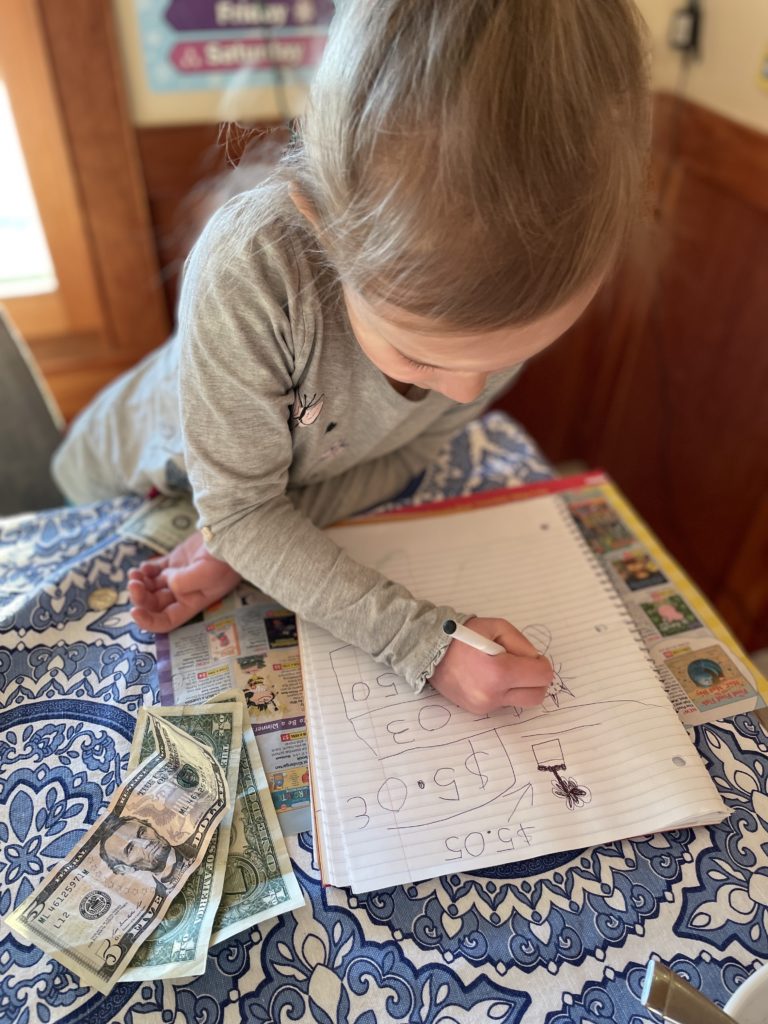
Most recently, the sisters demonstrated an evolution toward "corporate" cooperation. During local farm pizza nights, the elder sister realized that her $7 dessert purchases were being consumed by both girls, yet she was the sole financier. After a period of negotiation, the younger sister ("Littlewoods") agreed to split the cost. This led to a lesson in currency denominations, as they had to navigate the "indivisibility" of a seven-dollar price tag between two parties.
Supporting Data: The Labor-Value Scale
To maintain a professional and consistent economic environment, the Frugalwoods household utilizes a rotating list of chore options. These are adjusted for age-appropriateness and seasonal needs.
Paid Labor Examples (Market-Based)
The following tasks represent the "Family Help" category, where the child is performing a service that benefits the collective, thereby earning a wage:
- Trash Management: Emptying all interior bins into the main bin.
- Laundry Service: Putting away the parents’ laundry (putting away their own is unpaid).
- Deep Cleaning: Scrubbing baseboards or floors.
- Special Projects: Organizing kitchen cabinets (recently negotiated as a $10 "lump sum" contract).
Unpaid Labor (The "Social Contract")
To prevent the commodification of every household interaction, certain tasks are categorized as "part of life in a family." These include:
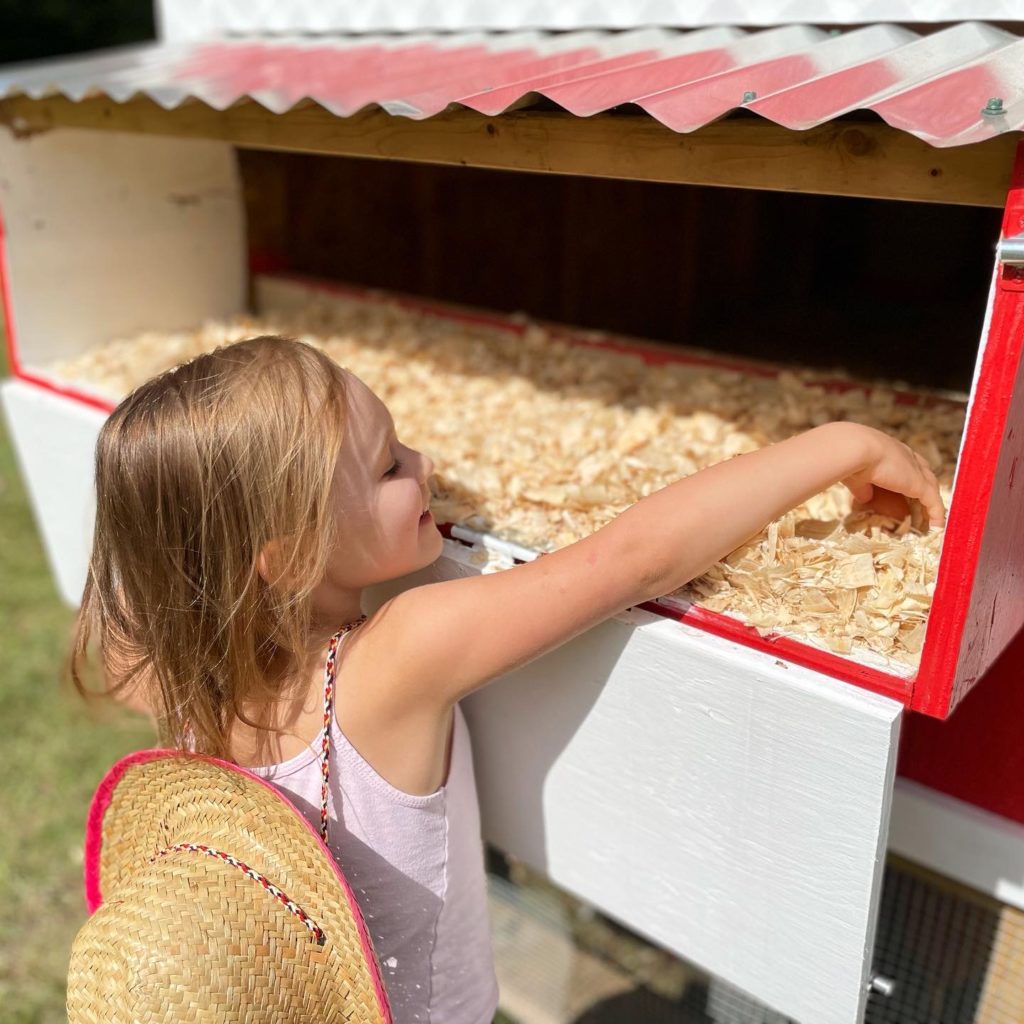
- Collecting eggs from the chickens.
- Managing compost buckets.
- Making beds and cleaning their own rooms.
- Clearing the table after meals.
The differentiation is crucial: work that helps the self is a duty; work that helps the organization is a job.
Official Responses and Psychological Context
While the Frugalwoods approach is a personal family strategy, it aligns with several emerging theories in developmental psychology and financial education.
The "Scaffolded" Learning Model:
Financial experts often suggest that children as young as five can grasp the concept of "opportunity cost." By allowing children to handle physical currency—counting coins and reading price tags—parents are using "scaffolded learning," where basic skills (counting) lead to complex behaviors (comparison shopping).
The Role of Anxiety:
Many parents avoid discussing money for fear of inducing "financial anxiety." However, the Frugalwoods methodology suggests the opposite. By explaining that "Mama is paid money for her work, which we then use for groceries," the parents are removing the "magic" and "mystery" from the appearance of goods. Transparency, in this context, acts as a stabilizer rather than a stressor.
The "Safe Failure" Concept:
Educational consultants often advocate for "safe failures" in childhood. Losing a "sparkly heart wallet" at a science museum or regretting a $13 plastic unicorn are low-stakes errors. The "official" consensus among many financial literacy advocates is that it is better for a child to lose $10 and learn the importance of "tracking their stuff" than to lose $10,000 in their twenties due to the same lack of discipline.

Implications: Money as a Tool, Not a Status
The long-term goal of this rigorous Vermont-based experiment is not merely to create "frugal" children, but to cultivate a healthy psychological relationship with wealth.
Demystifying the "Adult World"
By involving children in the mechanics of transactions—having them order their own desserts and pay the cashier directly—the parents are stripping away the social anxiety often associated with commerce. The children are learning to see money not as a reflection of their "self-worth" or "emotional wellness," but as a neutral tool, much like a hammer or a tractor.
The Future of the "Parental Bank"
The next phase of the Frugalwoods strategy involves the introduction of "The Bank of Parental Units." This internal family bank will pay interest on the children’s savings, shifting the focus from "earning and spending" to "capital growth." This transition marks the move from a labor-based economy to an investment-based understanding of wealth.
Conclusion: The Vermont Blueprint
The Frugalwoods’ approach to parenting in a consumerist society suggests that financial literacy is a form of "life hygiene." Just as children are taught to brush their teeth or cross the street safely, they are being taught to navigate the marketplace.

The implications for the broader parenting community are clear: by setting firm boundaries, allowing for "safe" debt, and requiring labor for luxury, parents can insulate their children against the "instant gratification" culture of the modern age. As Kidwoods’ own "book" about her mother’s job concluded: "They are serious but kind." In the world of finance, there may be no better description of a successful strategy.