Crisis at the FDA: Commissioner Nominee Faces Scrutiny Amid Staffing Shortages and Ingredient Oversight Debates
Executive Summary: A Regulatory Agency at a Crossroads
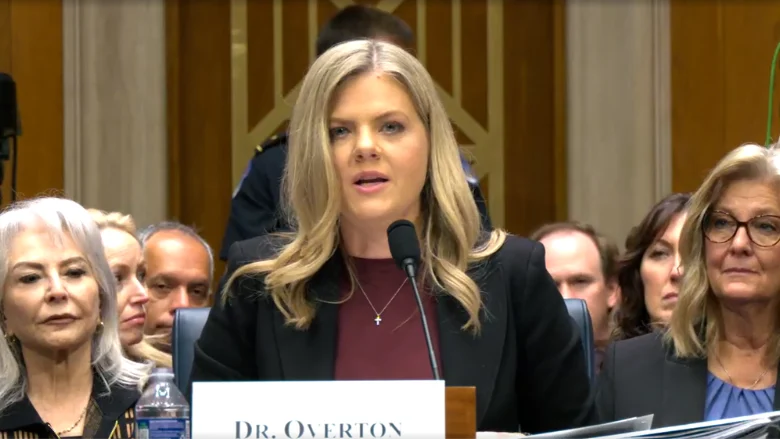
On September 24, the Senate Committee on Health, Education, Labor, and Pensions (HELP Committee) convened to evaluate the nomination of Heidi Overton, M.D., Ph.D., as the next Commissioner of the U.S. Food and Drug Administration (FDA). The hearing served as a high-stakes litmus test for the future of federal food regulation under the current administration. Dr. Overton, a board-certified public health and general medicine practitioner with experience in both Trump Administrations, faced intense questioning regarding the FDA’s capacity to manage its Human Foods Program (HFP).
The primary friction point centered on the "Generally Recognized as Safe" (GRAS) pathway—a regulatory framework long criticized by consumer advocates as a loophole—and the agency’s ability to fulfill the ambitious ingredient safety goals set by Health Secretary Robert F. Kennedy Jr. As the agency grapples with historic workforce reductions, the hearing underscored a deepening divide between the administration’s regulatory philosophy and the practical requirements of safeguarding the nation’s food supply.
A Chronology of Regulatory Contraction
To understand the current crisis, one must look at the recent trajectory of the FDA’s Human Foods Program. The agency’s internal infrastructure has been systematically altered over the past two years:
- Early 2025: The start of the current administration marked the beginning of significant workforce attrition. By mid-year, the HFP began reporting steady declines in personnel, a trend that would accelerate throughout 2026.
- Late 2025: Former Commissioner Jim Jones warned that the agency was "very under-resourced" regarding post-market chemical reviews. His warnings culminated in his resignation following a wave of "indiscriminate" layoffs that decimated the HFP’s institutional knowledge.
- Summer 2026: The U.S. experienced a massive spike in foodborne illnesses, most notably the nation’s largest-ever cyclosporiasis outbreak linked to Taylor Farms lettuce, which resulted in nearly 13,000 illnesses and two deaths.
- August 2026: Fulfilling a directive from Secretary Kennedy, the FDA proposed a rule to mandate GRAS notifications. This proposal aimed to close the voluntary loophole that allows companies to market new ingredients without formal FDA review.
- September 24, 2026: During the HELP Committee hearing, Senators highlighted that the FDA has lost 4,500 staff members—roughly 20% of its workforce—since the beginning of the administration, leaving the agency at its lowest inspection capacity since 2005.
The GRAS Dilemma: Can the FDA Keep Pace?
At the heart of the current debate is the FDA’s proposed rule to mandate notifications for GRAS substances. Currently, manufacturers determine the safety of an ingredient internally and often choose not to disclose these findings to the FDA. The proposed rule would make notification mandatory, intended to provide the agency with the data required for post-market surveillance.
However, the question remains: Does the FDA have the personnel to review these filings?
Senator Jim Banks (R-IN) posed this exact query to Dr. Overton during the hearing. Her response was a candid admission of the agency’s limitations. "To my understanding, the agency would need more resources in its Human Foods Program to properly be able to process or review all of those mandatory notifications," she stated. While Dr. Overton noted that Congressional proposals for increased funding exist, she failed to offer a concrete strategy for how the FDA would clear the inevitable backlog of reviews.
Supporting Data: The Impact of RIFs and Budget Cuts
The legislative scrutiny during the hearing was supported by a grim statistical reality. Senator Patty Murray (D-WA) noted that the HFP currently employs approximately 1,700 people—a 13% reduction from the start of 2025.
Furthermore, the data suggests that these staffing cuts have had direct consequences on public health. Senator Tim Kaine (D-VA) presented data indicating a 16-fold increase in foodborne illness outbreaks in 2026 compared to 2025. This correlation between reduced oversight and increased health incidents has become a rallying point for those opposing the administration’s "Reduction in Force" (RIF) policies.
The Coordinated Outbreak Risk and Evaluation (CORE) Network, the unit responsible for rapid response to foodborne outbreaks, has been particularly hard hit. When questioned by Senator Murray about the role of the CORE Network, Dr. Overton struggled to identify the team’s specific function, raising alarms among committee members about her readiness to manage the agency’s most critical public health missions.
Official Responses and the Funding Paradox
Throughout the hearing, Dr. Overton sought to balance her support for the administration’s agenda with the reality of the agency’s failing metrics. When pressed on how the FDA would fulfill its duties with a diminished workforce, she emphasized a pivot toward "user fees."
"FDA is hiring to have the best people in the best positions," Overton claimed, citing a push for increased foreign facility user fees as a primary mechanism to fund inspections. However, critics argue that relying on industry-paid fees creates a conflict of interest and is an insufficient substitute for robust federal appropriations, especially as the agency moves toward shifting more routine inspection duties to state-level entities.
Senator Lisa Murkowski (R-AK) expressed deep skepticism regarding this shift. Currently, states conduct roughly 60% of food facility inspections nationwide. If the administration succeeds in its reported plan to further offload these responsibilities to state agencies—many of which are also facing budget constraints—the result could be a fractured regulatory system with inconsistent safety standards across state lines.
Implications: Federal Preemption and the "National Standard"
The debate over ingredient safety has transcended the FDA and entered the realm of constitutional federalism. As states like California pass aggressive laws banning specific toxic additives, the industry has pushed for "federal preemption"—a policy that would override state-level bans with a single federal standard.
When asked about her stance on this issue, Dr. Overton suggested that a "strong national standard" might be necessary to ensure uniformity. While this would provide clarity for food manufacturers operating across multiple states, consumer advocacy groups fear that a federal preemption would act as a "ceiling" rather than a "floor," preventing states from acting when the federal government is too slow or under-resourced to protect the public.
Conclusion: A Nominee Without a Food Safety Pedigree
Dr. Overton’s lack of a background in food policy or food safety remains a central point of contention for her critics. In a role that requires navigating complex scientific, legal, and public health landscapes, her reliance on general administrative experience has left many experts questioning her ability to manage the "Make America Healthy Again" (MAHA) initiative effectively.
As the Senate prepares to vote on her confirmation, the FDA stands in a precarious position. The agency is expected to oversee a massive influx of mandatory GRAS notifications and manage increasingly frequent foodborne outbreaks, all while operating with a decimated workforce and a budget that appears increasingly misaligned with its core mission. Whether Dr. Overton can bridge the gap between political ambition and operational reality remains to be seen. If confirmed, she will inherit an agency that is not merely understaffed, but one that is struggling to retain its identity as the final line of defense in the American food supply chain.