Navigating the ‘Next Level of Adulting’: A Financial Deep Dive into Debt, Housing, and Mid-Career Stability

HARTFORD, CT – For many mid-career professionals, the transition from the lean years of their 20s to the established stability of their 30s is often fraught with a phenomenon known as "lifestyle creep" and the lingering shadow of consumer debt. In a detailed financial case study emerging from central Connecticut, Brian and Michael, both 34, have opened their ledgers to reveal the complexities of managing a six-figure household income while navigating high-interest debt and the elusive dream of homeownership.
The couple, who have been together since 2013, find themselves at a critical juncture. Despite a combined gross income exceeding $167,000 and stable careers in the public sector, they describe a sense of being "held back" by financial decisions and the volatile economic climate of the post-pandemic era. Their story serves as a microcosmic view of the "HENRY" demographic (High Earners, Not Rich Yet) struggling to secure traditional milestones of adulthood.

Main Facts: The Paradox of High Income and Lingering Debt
Brian and Michael represent a significant portion of the American workforce: dedicated public servants with strong benefits but inconsistent liquid savings. Michael serves as a project coordinator for a state behavioral health agency and works a secondary role as a disability leadership coordinator. Brian is a quality assurance manager for a state-run hospital.
On paper, their financial health appears robust. Their combined gross annual income is approximately $167,544, resulting in a monthly net take-home pay of over $9,000. However, their balance sheet is complicated by $28,259 in consumer debt, primarily across three credit cards.

The couple currently resides in a "luxurious" two-bedroom, two-bathroom apartment in a refurbished industrial mill. While the space offers modern amenities and 12-foot ceilings, the $2,000 monthly rent, combined with high Connecticut utility rates and significant discretionary spending, has created a narrow margin for error. Their primary objective is twofold: achieving permanent debt freedom and transitioning from renters to homeowners.
Chronology: From Studio Living to the ‘Mill’ Transition
The couple’s current financial anxiety is rooted in a series of major life events that occurred between late 2022 and 2023. For eight years, Brian and Michael lived in a 600-square-foot studio apartment with a modest rent of $945 per month. This low overhead allowed them to manage their finances with relative ease, but the desire for "age-appropriate" space eventually led them to the rental market.

The transition was not as seamless as anticipated. The chronology of their current predicament includes:
- The Forced Move: In late 2022, the couple began a 3.5-month "scramble" to find a new residence amidst a tightening rental market.
- Personal Loss and New Responsibility: During this period, they faced the loss of their long-time cat, Rex. Shortly thereafter, they adopted two new kittens who required immediate and expensive veterinary care for gastrointestinal issues.
- The Rent Leap: Moving into the refurbished mill more than doubled their monthly rent, increasing it from $945 to $2,000.
- The Accumulation of ‘Treasures’: The move to a larger space facilitated the expansion of their personal belongings—which they refer to as "treasures"—including a media room and a home library. This expansion of lifestyle coincided with the use of credit cards to bridge the gap during the transition.
By mid-2023, the couple realized that while their environment had improved, their financial trajectory had stalled. The "cozy" stability of their 20s had been replaced by the "luxurious" but debt-heavy reality of their mid-30s.

Supporting Data: A Breakdown of the Ledger
To understand why a couple earning nearly $170,000 feels financially insecure, one must look at the granular data of their monthly outlays. Their annual net income is $109,455, but their reported annual spending sits at $96,414, leaving a theoretical surplus of roughly $13,000. However, much of this surplus is currently being consumed by minimum payments and "lifestyle leak."
Debt Portfolio
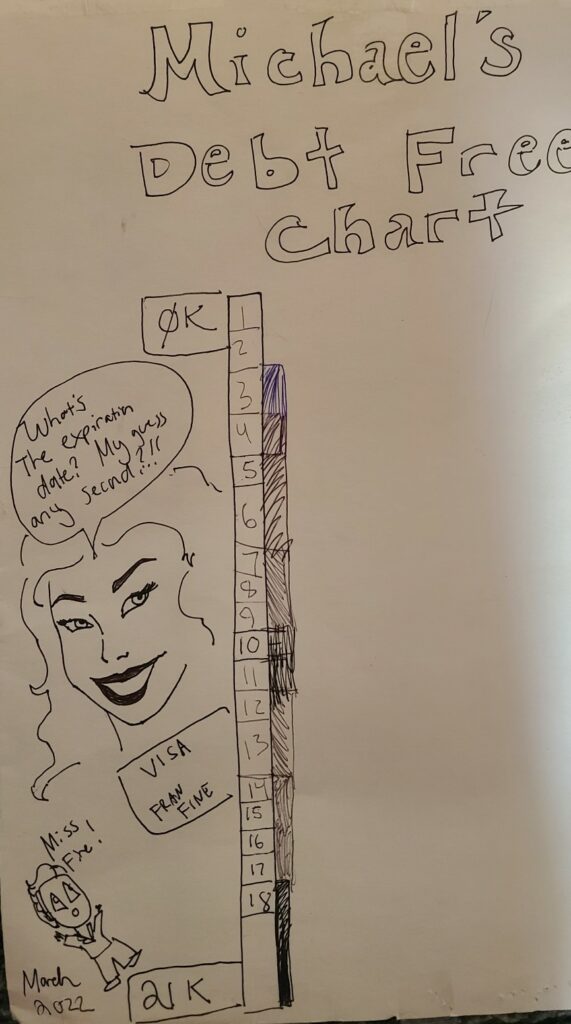
- Brian’s Visa (SCU): $16,057 (0% interest until Nov 2023, then 17.99%).
- Michael’s Visa Platinum: $9,700 (10.99% interest).
- Brian’s Visa (Navy Federal): $2,503 (0.99% until Nov 2023, then 17.74%).
The looming expiration of 0% interest windows in late 2023 creates a "ticking clock" scenario. Without aggressive intervention, their interest payments alone could soon exceed several hundred dollars a month.
Monthly Expenditure Highlights
The couple’s monthly budget of $8,035 includes several "reduceable" and "discretionary" items that analysts suggest are ripe for optimization:
- Pet Care: $517 (Averaged including emergency vet visits).
- Car Expenses: $1,064 (Driven by Brian’s recent major repairs on a 2007 vehicle).
- Groceries & Dining Out: $669 combined.
- Discretionary "Home Goods" & Personal Care: $350.
While they have $91,250 in total assets, the majority is locked in retirement accounts (401k, 403b, and Brian’s pension fund). Their liquid emergency fund stands at $7,000—less than one month’s worth of their current expenses—leaving them vulnerable to further "financial shocks."

Official Responses: The Strategic Roadmap for Recovery
Financial experts and consultants, including Elizabeth Willard Thames (known as "Liz Frugalwoods"), have analyzed the case and provided a strategic framework for Brian and Michael to regain control. The consensus is that the couple is in a "good position" but requires a disciplined "spending detox."
1. The Debt-Payoff Priority
The primary recommendation is to leverage their high income to eliminate the $28,259 debt before the 17% interest rates activate in November. By classifying expenses into "Fixed," "Reduceable," and "Discretionary," analysts suggest they could reduce monthly spending from $8,035 to approximately $6,665. This would allow them to plow over $4,400 per month into debt repayment, achieving total debt freedom in approximately six to seven months.

2. Retirement Optimization
Brian’s position as a state employee grants him access to a "Triple Crown" of retirement: a 403b, a 457b, and a pension. Experts advise maximizing these tax-advantaged accounts. Specifically, the 457b is highlighted as a powerful tool, as it allows for penalty-free withdrawals upon leaving an employer, regardless of age—a key asset for those considering early retirement or career shifts.
3. The Graduate School Debate
A significant point of contention in the couple’s plan is Brian’s desire to pursue a Master’s degree. Financial consultants have offered a stern warning: do not pursue further education unless there is a "guaranteed, iron-clad correlation" to a significant salary increase. In their current state, the added debt or time commitment of a degree could further delay homeownership and business-ownership goals.

4. Redefining the Emergency Fund
The couple was encouraged to view their emergency fund not as a static savings account, but as a "buffer from debt." An emergency fund should ideally cover 3–6 months of expenses. For Brian and Michael, this target should be roughly $25,000–$30,000, which should be prioritized immediately following the debt payoff.
Implications: The Psychological and Economic Reality of ‘Adulting’
The case of Brian and Michael highlights a broader societal issue: the psychological burden of financial shame. Both partners expressed feelings of being "behind" their peers, despite having stable careers and a high household income. This "comparison trap" often leads to compensatory spending—buying "treasures" or living in "luxurious" spaces to feel like an adult, even when the underlying balance sheet is fragile.

The Homeownership Hurdle
In the current economic climate, the "order of operations" for homeownership has changed. For this couple, the implication is clear: homeownership must wait. Until their high-interest debt is gone and their emergency fund is robust, a mortgage would be a liability rather than an asset. In Connecticut’s high-tax environment, the "true cost" of owning a home—including maintenance, taxes, and insurance—could easily exceed their current $2,000 rent.
The Stability of Public Sector Benefits
The couple’s saving grace is their employment. Brian’s "healthcare for life" and pension, combined with Michael’s remote work flexibility, provide a safety net that many in the private sector lack. This stability allows them to take aggressive risks with their spending cuts in the short term, knowing their long-term survival is anchored by state-backed benefits.

Conclusion
Brian and Michael’s journey to the "next level of adulting" is not a matter of earning more, but of managing what they have with greater intentionality. Their story underscores the necessity of tracking every dollar and aligning daily spending with long-term values. As they approach their 10th anniversary, the couple has the opportunity to pivot from a cycle of "debt and regret" to one of "savings and sovereignty." The path forward requires a temporary period of austerity to ensure a lifetime of financial peace.