The $1.70 Dinner: How Culinary Professionals are Engineering High-Flavor, Low-Cost Solutions for Weeknight Inflation
NASHVILLE, Tenn. — As grocery prices continue to squeeze household budgets across the nation, culinary researchers and recipe developers are turning to food science and strategic ingredient sourcing to keep weeknight dinners both affordable and satisfying. In a market where fast-casual dining averages upwards of $12 to $15 per person, food economists and chefs are proving that high-quality, nutritionally balanced meals can still be prepared at home for a fraction of the cost.
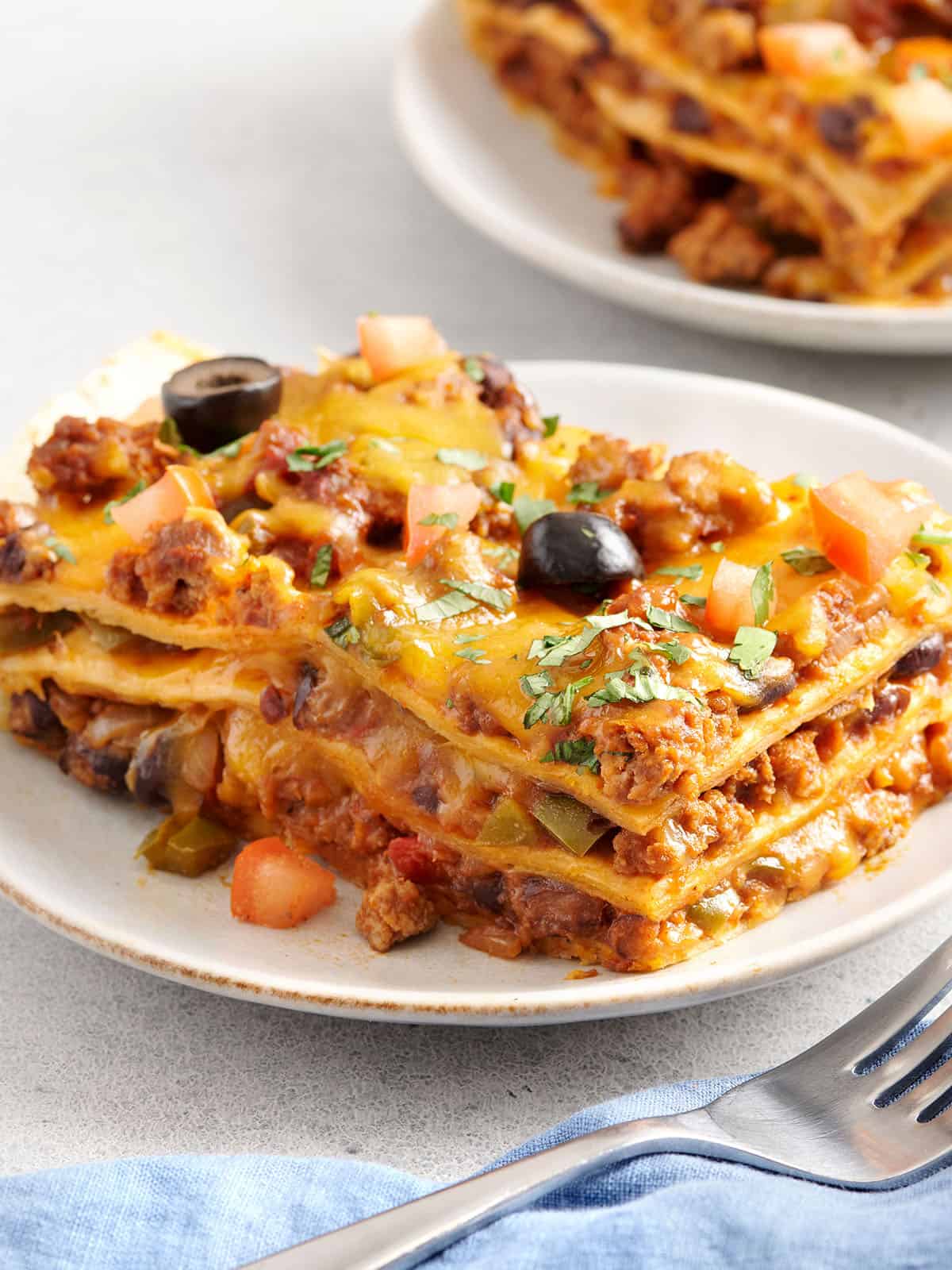
At the forefront of this movement is a newly optimized Taco Casserole protocol developed at the Nashville Test Kitchen. Engineered to maximize yield while minimizing waste, the dish leverages a structural layering technique that stretches one pound of ground beef into eight generous portions. With a total preparation and cook time of just 45 minutes, the recipe delivers a complete, family-style meal for $13.62 total—averaging just $1.70 per serving.
This culinary solution addresses a critical pain point for modern families: the desire for the vibrant flavors of Mexican-American cuisine without the tedious, time-consuming assembly line of traditional taco night, and without the premium price tag of restaurant takeout.
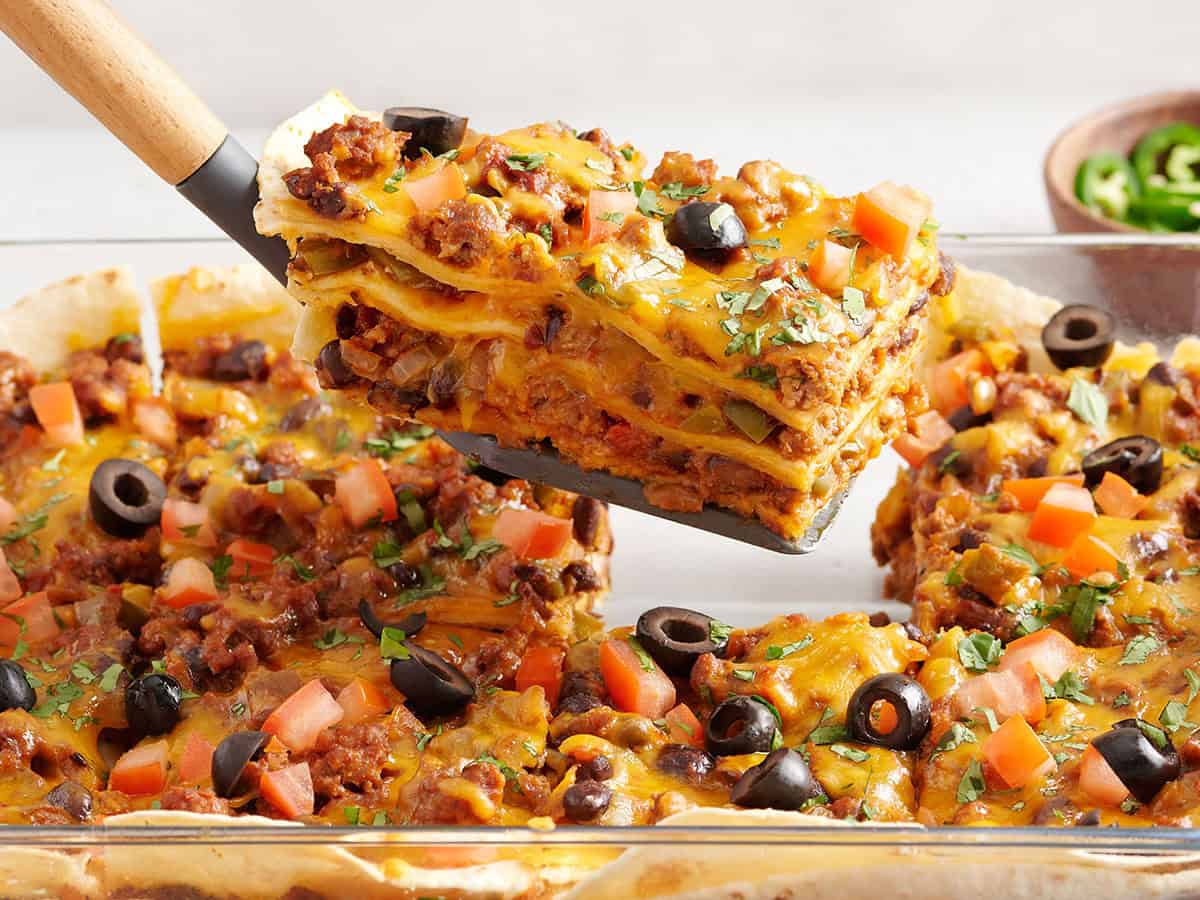
Chronology: The Step-by-Step Science of Casserole Assembly
The execution of the Taco Casserole relies on a precise sequence of thermal processing and moisture control. Unlike traditional casseroles, which can suffer from structural collapse or sogginess, this method utilizes sequential layering and moisture-reduction steps to ensure a clean, sliceable final product.
[Prep & Preheat] ──> [Sauté Beef & Veggies] ──> [Drain Excess Fat]
                                                        │
[Build 3-Tier Layering] <── [Incorporate Beans & Salsa] <── [Toast Spices]
         │
[Bake Uncovered (20 mins)] ──> [Rest & Set (5 mins)] ──> [Slice & Serve]
Phase 1: Thermal Initialization and Aromatics (Minutes 1–10)
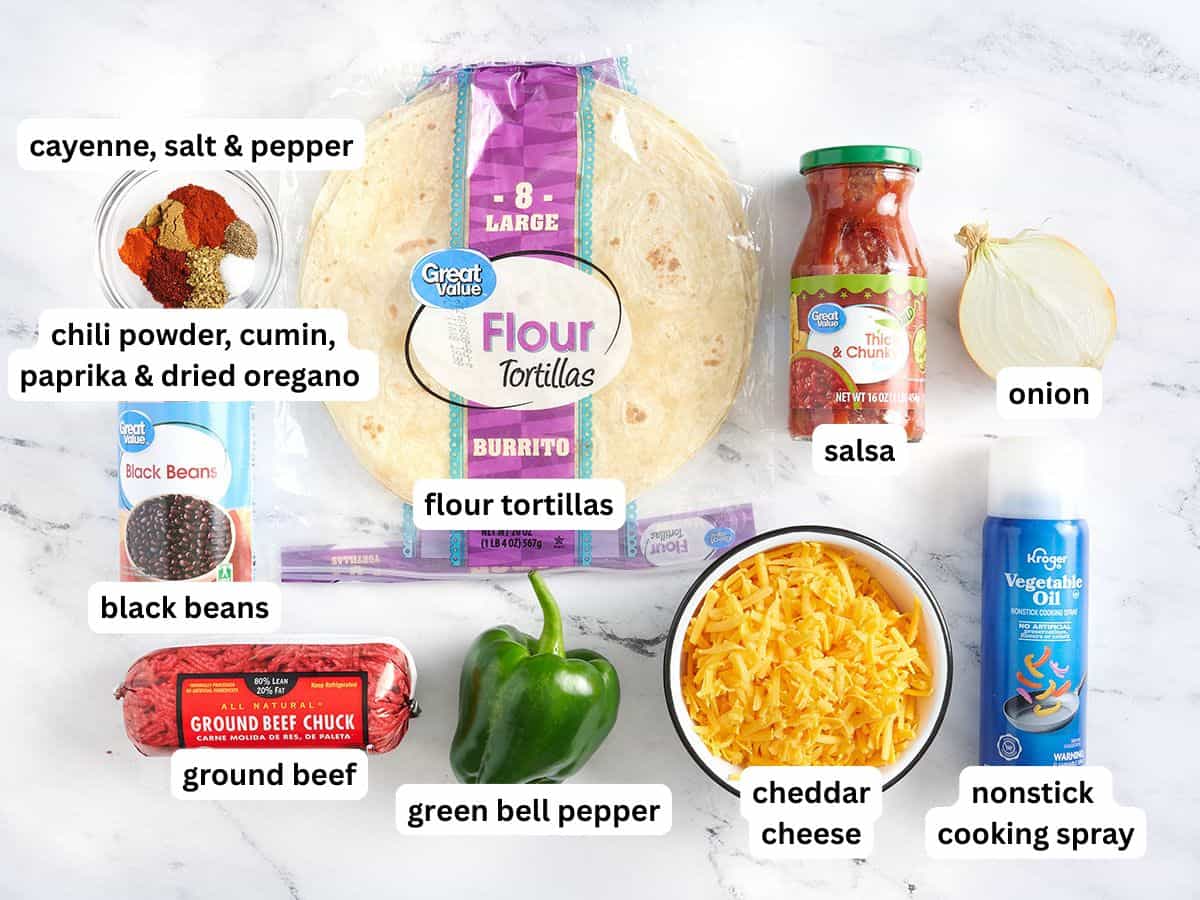
The process begins with preheating a standard oven to 350°F (177°C) and prepping a 9×13-inch oven-safe baking dish with a light coating of nonstick cooking spray.
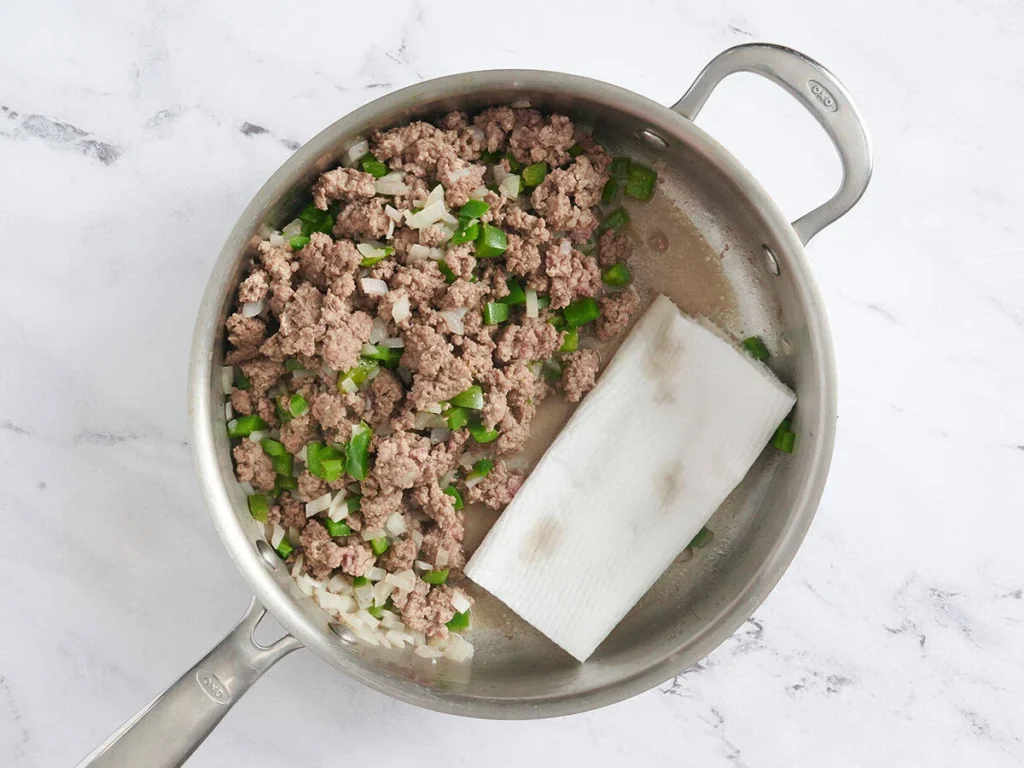
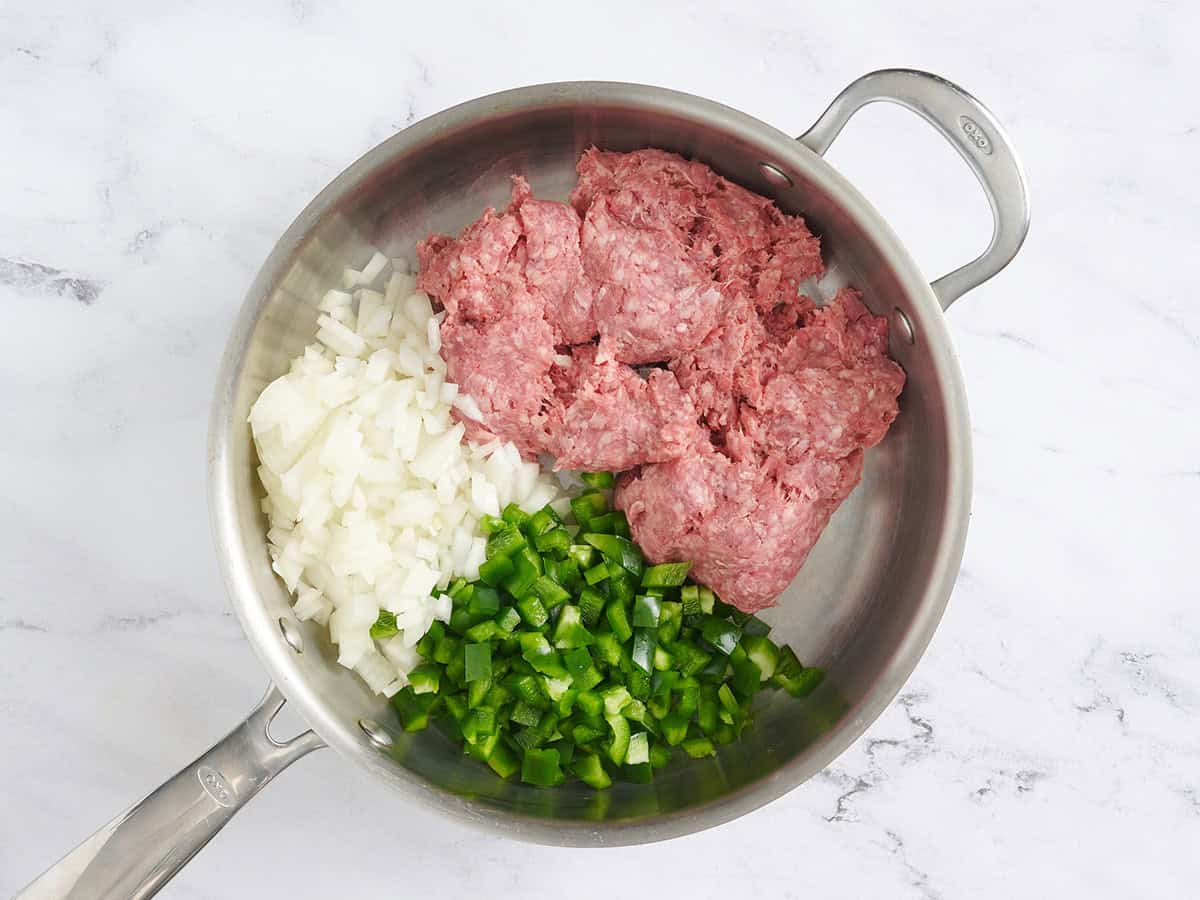
A medium skillet is placed over medium heat. One pound of 80/20 ground beef is introduced alongside half of a finely diced yellow onion and one whole diced green bell pepper. The mixture is cooked for approximately five minutes. During this phase, the chef uses a spatula to break the beef into fine crumbles, ensuring even heat distribution until the meat reaches an internal temperature of 160°F (71°C) and no pink remains. The vegetables undergo partial caramelization, softening while retaining their structural integrity.
Phase 2: Lipid Management and Spice Bloomer (Minutes 10–15)
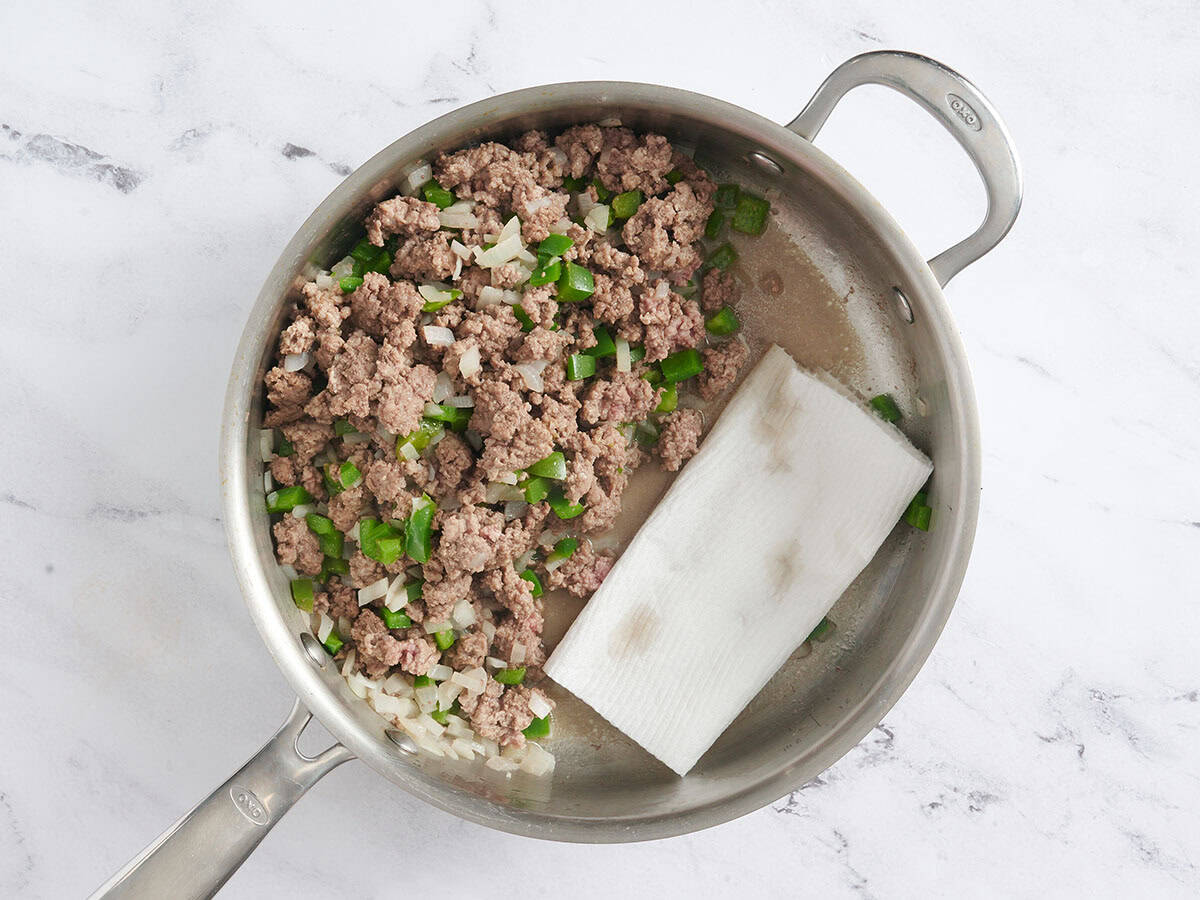
To prevent the casserole from becoming greasy, the rendered fat is carefully drained from the skillet. Alternatively, home cooks can blot the skillet using paper towels held securely with kitchen tongs.
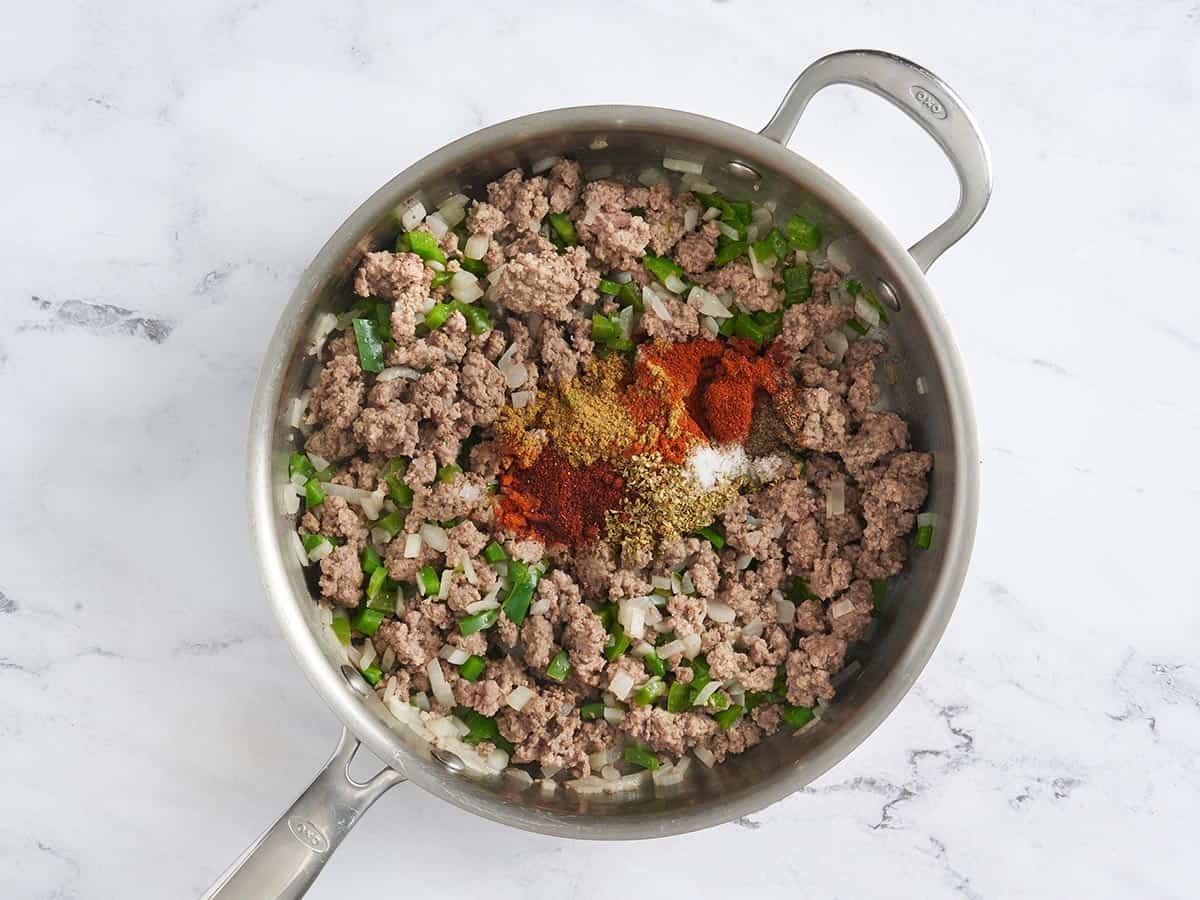
Once the excess lipids are removed, the heat is maintained to initiate "spice blooming"—a culinary technique where fat-soluble flavor compounds are unlocked through direct dry heat. The following dry spice matrix is added directly to the meat and vegetables:
- 1 tablespoon chili powder
- 1 teaspoon ground cumin
- 1 teaspoon paprika
- ½ teaspoon dried oregano
- ¼ teaspoon cayenne pepper
- ¼ teaspoon salt
- ¼ teaspoon freshly cracked black pepper
This mixture is stirred constantly for exactly one minute. The brief thermal exposure toasts the spices, releasing volatile oils that significantly deepen the Tex-Mex flavor profile.
Phase 3: Hydration Balancing and Simmering (Minutes 15–20)
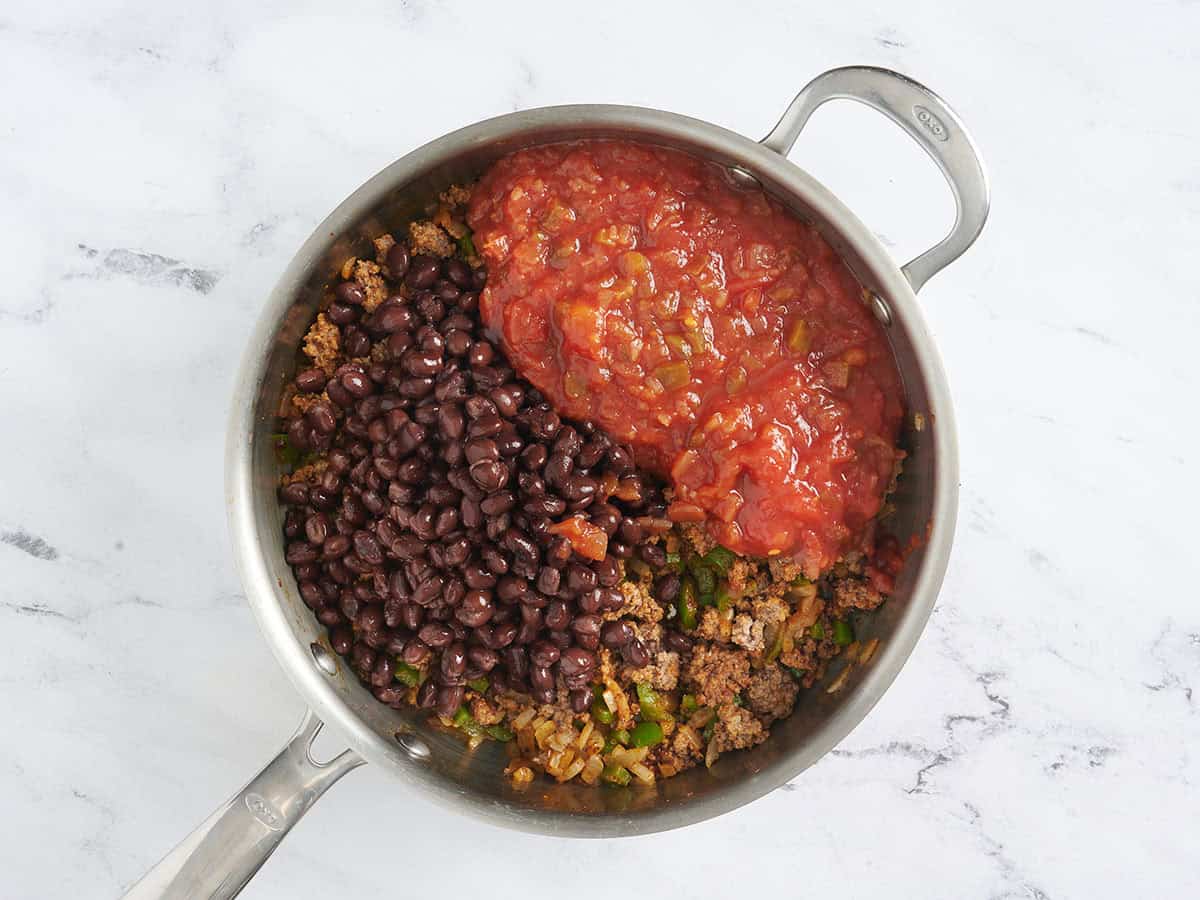
To convert the seasoned beef into a cohesive filling, one 16-ounce jar of mild, thick, and chunky salsa is stirred into the skillet along with one 15-ounce can of drained black beans.
The mixture is simmered for four minutes. The critical quality-control metric during this phase is moisture reduction: when a spatula is dragged across the bottom of the skillet, no loose liquid or watery pool should form in its wake. Eliminating excess water prevents the flour tortillas from absorbing moisture and turning gummy during the baking phase.
Phase 4: Structural Layering (Minutes 20–25)
The architecture of the casserole is built in three distinct, repeating tiers within the prepared 9×13-inch dish:
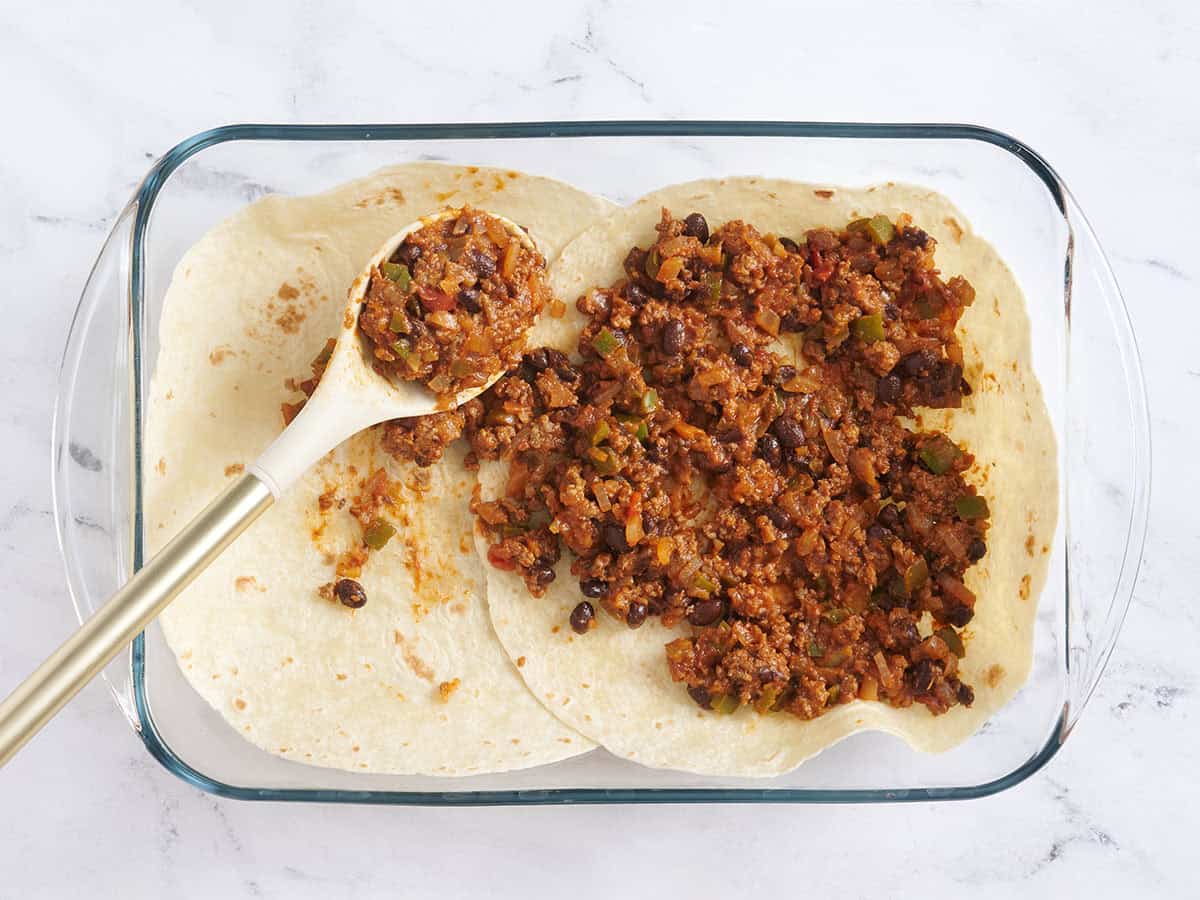
- Base Layer: Two large, burrito-size flour tortillas are overlapped across the bottom of the dish, allowing the curved edges to fold slightly up the vertical sides of the pan to act as a structural retaining wall.
- Filling Layer: One-third of the hot beef, bean, and vegetable mixture is spread evenly over the tortillas, ensuring coverage extends fully to the corners.
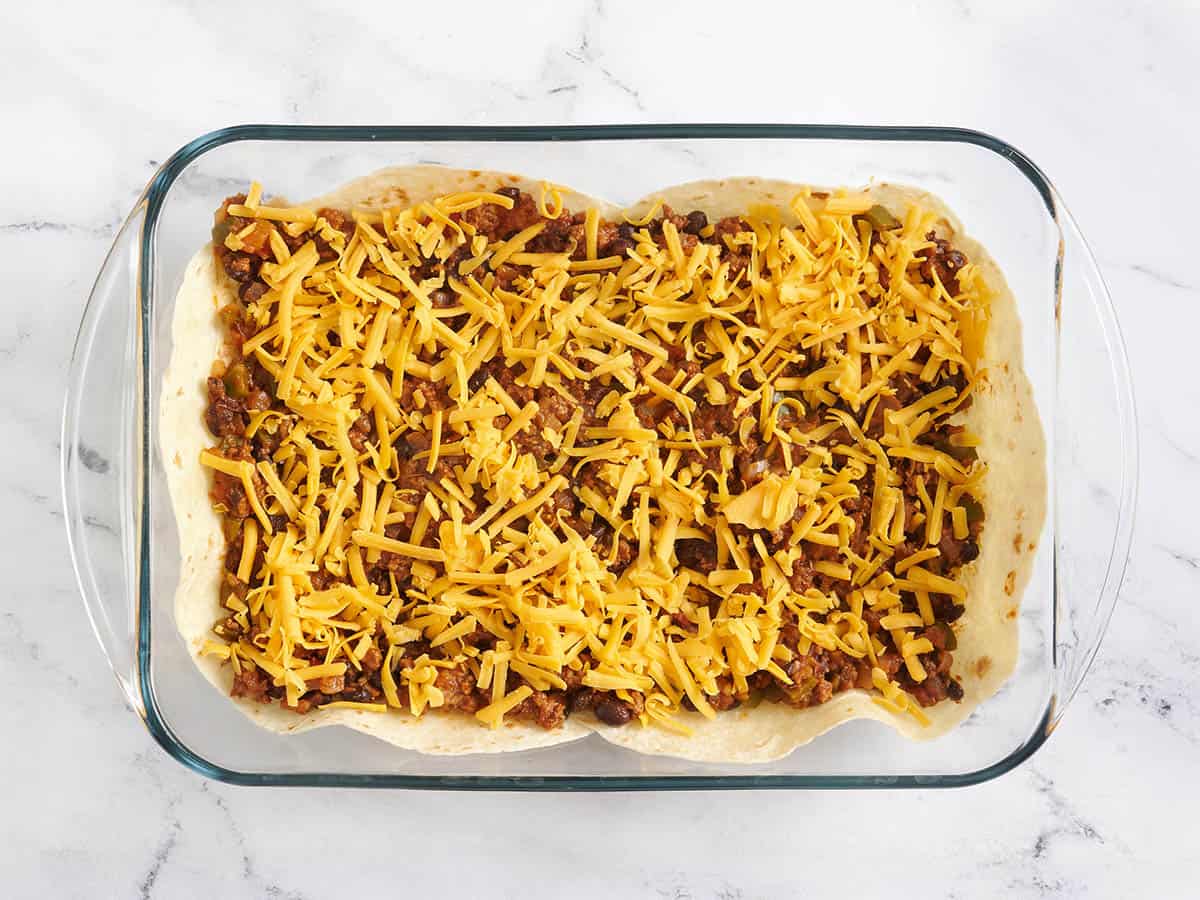
- Cheese Layer: One-third of a shredded cheddar cheese allotment is distributed evenly over the meat filling.
This sequencing is repeated twice more, utilizing a total of six burrito-size tortillas to yield a clean, three-layer stack topped with a final layer of melted cheese.
Phase 5: Baking and Gelatinization (Minutes 25–45)
The assembled casserole is placed uncovered in the preheated oven and baked for 20 minutes. During this period, the cheese undergoes complete melting and light browning, while the exposed edges of the flour tortillas dehydrate slightly, turning golden brown and crisp.
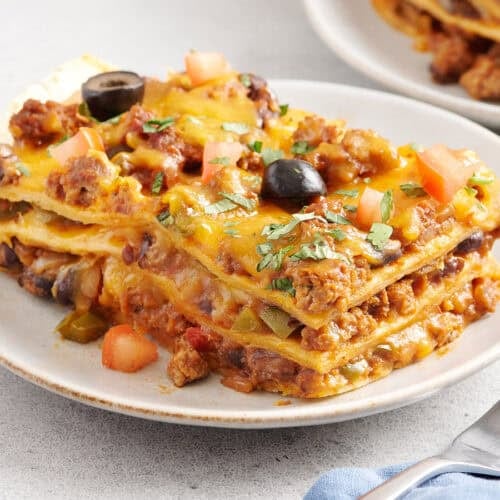
Upon removal from the oven, the casserole must rest undisturbed for five minutes. This resting window allows the proteins and starches to cool slightly and solidify, ensuring that when the dish is sliced into eight portions, the layers hold their structural definition on the plate.
Supporting Data: Financial and Nutritional Analysis
To verify the economic and nutritional viability of the recipe, developers conducted a rigorous cost and nutritional audit of the ingredients. The data demonstrates that strategic ingredient pairing can yield a highly satiating meal that meets modern dietary needs on a strict budget.
Ingredient Cost Analysis
By utilizing high-yield, low-cost staples such as canned black beans and store-brand salsa, the recipe successfully minimizes the overall cost of animal proteins.
| Ingredient | Quantity | Estimated Cost (USD) |
|---|---|---|
| Ground Beef (80/20) | 1 lb. | $4.99 |
| Yellow Onion | ½ unit | $0.40 |
| Green Bell Pepper | 1 unit | $0.75 |
| Black Beans (Canned) | 15 oz. | $0.85 |
| Thick & Chunky Salsa | 16 oz. | $1.50 |
| Flour Tortillas (Burrito Size) | 6 units | $1.80 |
| Shredded Cheddar Cheese | 8 oz. | $2.50 |
| Pantry Spice Blend | Various | $0.83 |
| Total Recipe Cost | — | $13.62 |
| Cost Per Serving (8 Servings) | — | $1.70 |
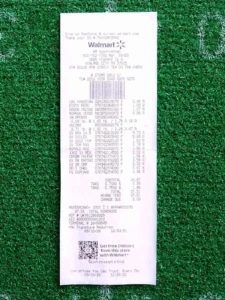
Note: Pricing is based on average national supermarket retail data, specifically leveraging high-value store brands such as Walmart’s Great Value line.
Nutritional Profile
From a nutritional standpoint, the integration of black beans alongside ground beef provides a dual-source protein delivery system while significantly boosting dietary fiber.
- Calories: 425 kcal (21% Daily Value)
- Carbohydrates: 30 g (10% Daily Value)
- Protein: 24 g (48% Daily Value)
- Fat: 23 g (35% Daily Value)
- Sodium: 851 mg (37% Daily Value)
- Dietary Fiber: 7 g (29% Daily Value)
The high protein (24g) and fiber (7g) content are particularly noteworthy, as this combination is clinically proven to promote satiety, making the $1.70 serving highly effective at keeping consumers full.
Professional Insights: The Culinary Philosophy of Chef Melissa Nolan
The development of this recipe was led by Melissa Nolan, an experienced recipe developer at Budget Bytes. Nolan, an alumnus of Johnson & Wales University’s culinary arts program, brings a sophisticated fine-dining perspective to budget-friendly cooking. Her background includes a prestigious internship at Thomas Keller’s Michelin-starred Per Se in New York City, followed by years of working in Northeast Florida’s premier kitchens and teaching as a Chef Instructor at JAX Cooking Studio.
"The goal of professional recipe development isn't just to make food cheap;
 it's to apply classical culinary techniques to affordable ingredients to
 maximize their sensory potential."
 -- Chef Melissa Nolan, Recipe Developer
"In high-end kitchens, we focus intensely on moisture management, seasoning balance, and texture contrast," says Nolan. "When designing a budget meal like this Taco Casserole, those same principles apply. We don’t use pre-packaged taco seasoning because they often contain cornstarch fillers and excessive sodium, which require added water and can make the tortillas soggy. By blending dry pantry spices directly in the hot fat of the beef, we bloom the spices, creating a richer, more concentrated flavor without adding unnecessary liquid."
Nolan also emphasizes the importance of ingredient selection when working under strict financial constraints. "We recommend using an 80/20 ground beef blend because it is significantly more affordable than lean grinds, and the fat carries flavor. However, the key is to meticulously drain or blot that fat after browning. This gives you the flavor benefits of the fat during the initial cook without leaving the final casserole greasy."
For those looking to customize the dish based on dietary preferences or ingredient availability, Nolan offers several professional recommendations:
- Protein Substitutions: Ground turkey or ground chicken function seamlessly in this recipe. Because poultry has a lower fat content, home cooks may need to add a tablespoon of cooking oil to the skillet when sautéing the vegetables.
- Salsa Selection: A thick, jarred salsa is mandatory. Fresh pico de gallo or watery, thin salsas contain too much free water, which will migrate into the flour tortillas during baking, compromising the casserole’s structural integrity.
- Cheese Variations: While cheddar provides a classic, sharp flavor, semi-hard cheeses like Monterey Jack, Colby, or Pepper Jack (for added capsaicin heat) offer excellent melting properties.
Implications: Domestic Dynamics and the Future of Budget Meal Prep
The introduction of optimized, low-cost casserole recipes like this one has broader implications for domestic food management, family psychology, and the growing meal-prep industry.
The Psychology of the "Mini Fiesta"
In an era characterized by high cognitive load and decision fatigue, the traditional "taco night" can paradoxically introduce stress. Preparing separate bowls for meat, cheese, lettuce, tomatoes, onions, and various salsas, followed by the physical assembly of individual tacos, creates substantial cleanup and prep time.
By consolidating these elements into a single baking dish, the Taco Casserole eliminates the assembly line. Serving the dish family-style alongside a curated "toppings bar" (such as fresh cilantro, green onions, sliced black olives, or shredded lettuce) preserves the interactive, celebratory element of a taco night—what developers call a "mini fiesta"—while reducing active kitchen labor.
Advanced Food Prep and Physical Chemistry
As meal prepping continues to grow as a mainstream household strategy, understanding the physical chemistry of stored food is vital.
Meal Prep Strategy: Keep Components Separate
┌────────────────────────┐      ┌────────────────────────┐
│  Cooked Taco Filling   │      │    Shredded Cheese     │
│  (Airtight Container)  │      │  (Airtight Container)  │
└───────────┬────────────┘      └───────────┬────────────┘
            │                               │
            └───────> Assemble & Bake <─────┘
                     (Just before serving)
Food scientists warn against assembling the Taco Casserole ahead of time for storage in the refrigerator. Over hours, the starch molecules in the flour tortillas will act as a sponge, drawing moisture from the salsa and beef. This results in a degradation of the tortilla’s gluten network, leading to a mushy texture upon baking.
Instead, culinary experts recommend a fragmented meal-prep strategy:
- Component Storage: Cook the seasoned beef and bean filling and shred the cheese ahead of time, storing them in separate, airtight containers in the refrigerator for up to three days.
- Just-In-Time Assembly: Layer the cold components with fresh tortillas immediately before baking. Because the ingredients start cold, cooks should extend the oven time by 5 to 10 minutes, keeping the dish covered with foil for the first half of baking to prevent the cheese from burning before the center is hot.
- Freezer Dynamics: For long-term storage, individual slices of the fully baked and cooled casserole can be frozen for up to three months. While the freezing and thawing process will inevitably soften the tortillas, reheating the slices in an oven or toaster oven—rather than a microwave—helps re-crisp the edges and restore structural integrity.
Ultimately, the Taco Casserole represents a successful marriage of food economics, professional culinary technique, and practical home cooking. By understanding the science of moisture control and flavor extraction, home cooks can bypass expensive processed foods and restaurant bills, delivering a satisfying, nutritious, and festive meal to the table for under two dollars a serving.