The Art of the Collection: Why Luxury Homeowners Are Bringing Wine Out of the Basement
By Alia Akkam | August 31, 2026
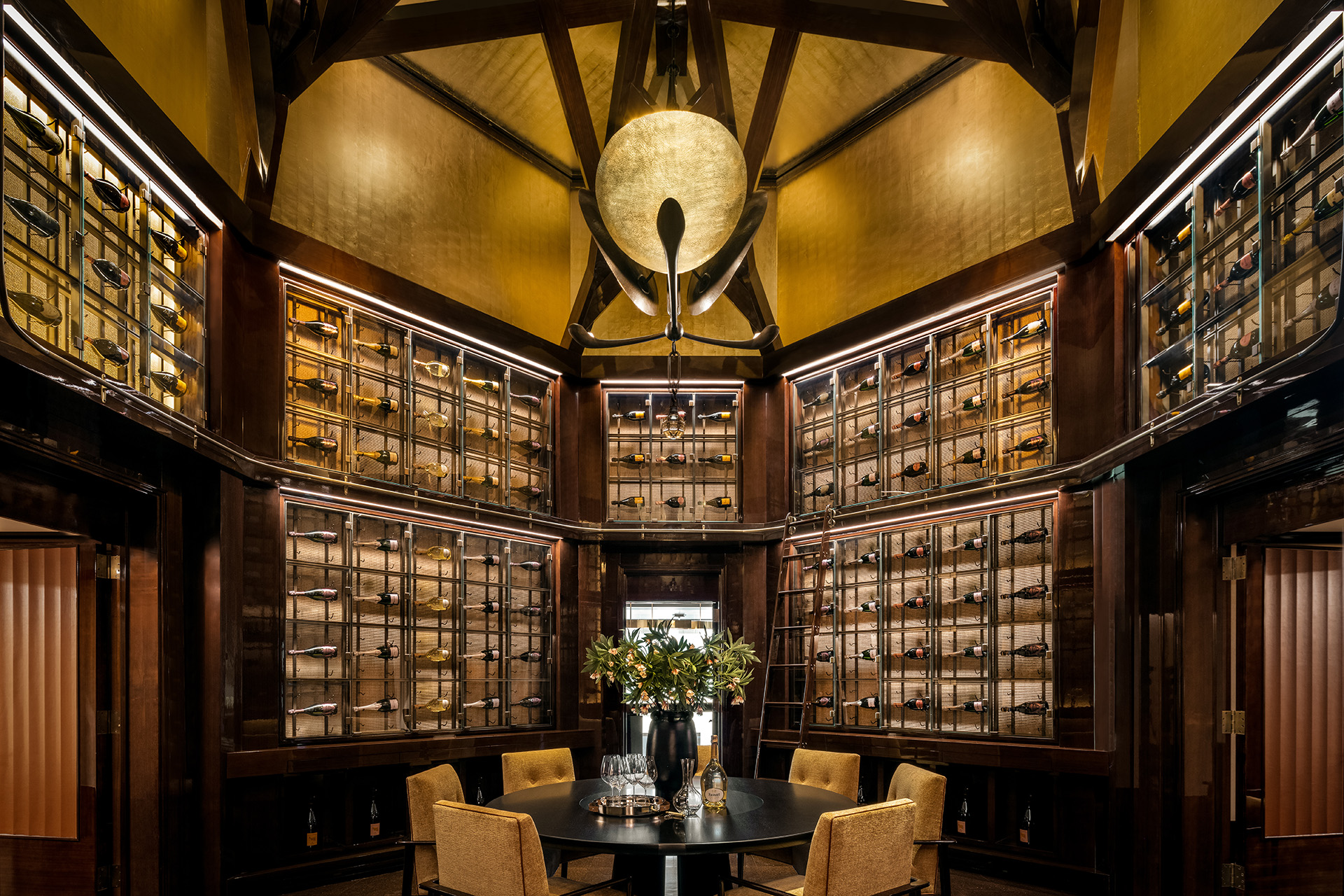
For the residents of 53 West 53—the gravity-defying Midtown Manhattan residential tower envisioned by architect Jean Nouvel and the late interior designer Thierry Despont—the perks of high-end living extend far beyond panoramic skyline views. Among the building’s most coveted amenities is a temperature-controlled wine vault that feels less like a storage unit and more like a private sanctuary.
Crowned with an octagonal, double-height gold-leaf ceiling and finished with walnut flooring and metallic accents, the space operates as a members-only club. Here, residents convene for tastings led by an in-house sommelier or host intimate dinners surrounded by their private vintages. However, this trend is no longer confined to the elite corridors of luxury vertical living. Across the country, the traditional, subterranean wine cellar is undergoing a radical evolution. Today’s oenophiles are opting to bring their collections into the light, transforming wine storage into a central, social, and aesthetic pillar of the modern home.
The Evolution of Oenology in Architecture
The shift away from the "dungeon-style" cellar—a cold, dark, and often forgotten basement room—represents a fundamental change in how we perceive the act of collecting. Historically, wine cellars were utilitarian spaces, designed solely for the long-term preservation of bottles. Today, the focus has shifted toward accessibility, display, and integration.
"It’s not just about racking wine anymore; people want to make sure the space is showstopping," says Jerry Garcia, a custom wine cellar specialist at Wine Enthusiast. "In the last few months, I’ve seen a marked increase in customers who want to mix their wine cellar with a bar and custom cabinetry. It’s a move toward luxury and a highly personalized, custom feeling."
This evolution is fueled by a desire to bridge the gap between the cellar and the living room. Modern homeowners are increasingly viewing their collections as curated galleries, akin to art collections or antique libraries, meant to be enjoyed, discussed, and displayed.
A Flexible Alternative to the Traditional Cellar
The rigid constraints of a conventional wine cellar often limit its utility. In response, design firms are creating "multi-purpose" wine rooms that serve as the heartbeat of the home.
David Ries, principal of the New York-based design studio Ries Hayes, notes that his firm is currently witnessing a "deluge" of client requests for spaces that perform dual functions. "A traditional wine cellar is fairly locked into a single function," Ries explains. "But moving the wine into display refrigeration allows the collection to become part of almost any room."

Case Study: The Water Mill Residence
In a recent project in Water Mill, Long Island, Ries Hayes integrated imposing glass-and-steel wine refrigerators to flank a custom bar. Rather than isolating the wine, the design creates a fluid transition between storage and social space. "Because it opens directly to the larger living room, it feels less like a separate, specialized room and more like an extension of how the house is actually lived in," Ries notes.
The design utilizes a sophisticated palette—driftwood-toned stained oak, quartz floor tiles, and charcoal quartzite—to mirror the home’s coastal environment. The success of the space, according to Ries, lies in its lighting. "Layering in light at low, mid, and high levels makes the room visually dramatic and playful," he adds, emphasizing that the goal is to make the room an inviting, rather than an intimidating, environment.
Putting the Collection Front and Center
Paul Kropp, co-founder and COO of Bakes & Kropp, a Michigan-based cabinet maker, recalls a time when home entertaining was dominated by "spiffed-up basements." Today, the narrative has changed. Wine is now viewed as a symbol of the "good life," and collectors want to showcase their investment with the same pride one might reserve for heirlooms on a mantelpiece.
"Passionate wine collectors want to live in a space where they can see their collection," Kropp explains. "They’re proud of it; they’ve likely spent decades working on it, and they want to show it off."

Bespoke Functionality
In a coastal Michigan project, Bakes & Kropp worked alongside Chatham House Interiors to design a refrigerated room capable of holding 350 bottles. The design team incorporated a back bar for boat-side entertaining, nesting the wine storage between dark, truffle-hued cabinets with intricate metalwork. The result is a seamless, functional wall that acts as the focal point of the room.
Kropp’s advice for those looking to integrate wine storage into a living area is simple: "Design the storage as a shallow space that extends along the length of the wall. That way, it serves more as a piece of artwork at the end of a room. Even the labels themselves are artwork."
The Architecture of the Ritual
Beyond the aesthetics, there is a psychological shift occurring. For many, the ritual of choosing a bottle is as important as the wine itself. Jennifer Miller, founder of the Los Angeles-based Jennifer Miller Studio, argues that while a cellar is a storage facility, a wine room is an experience.
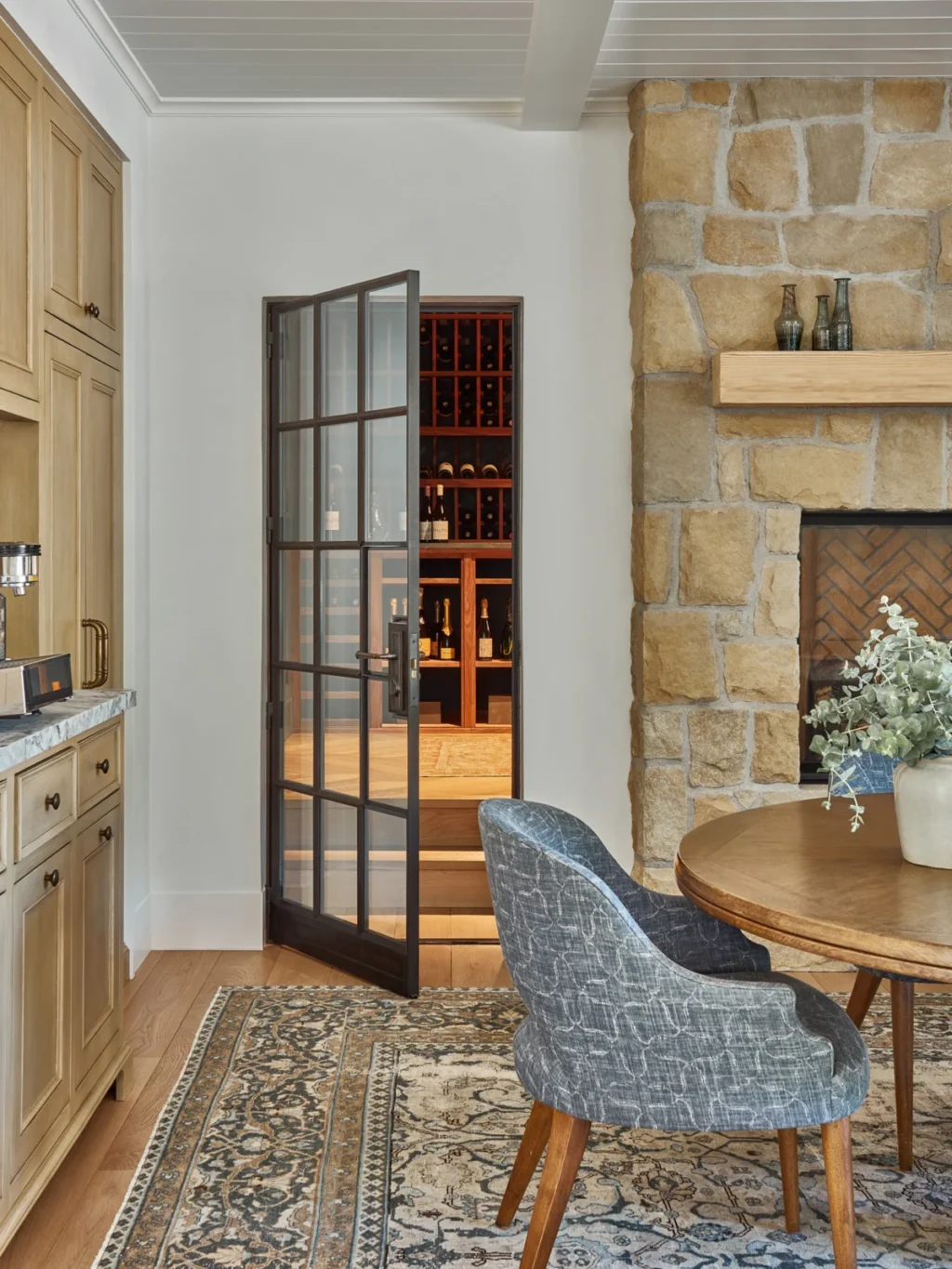
"People want a space that’s about the ritual of choosing a bottle," says Miller. Her work on a Montecito, California residence illustrates this perfectly. By placing the wine room adjacent to the dining area and utilizing a steel-and-glass door, she ensured that the room remains part of the home’s visual landscape even when closed.

Lighting as Jewelry
Miller emphasizes that lighting is the "jewelry of the room." In the Montecito project, a custom fixture positioned directly over the tasting counter creates a warm, intimate pool of light. This draws guests into the center of the room, effectively shifting the focus of the evening from a passive dining experience to an interactive, sensory one.
Implications: The Future of Residential Wine Design
The shift toward visible, integrated wine storage reflects broader trends in luxury real estate: the blurring of lines between "service" areas and "living" areas. As homeowners demand more from their square footage, the wine cellar is being liberated from the shadows.
Key Considerations for Modern Collectors:
- Accessibility: Bringing wine storage to the main floor allows for spontaneous hosting.
- Integration: Using materials like walnut, steel, and quartzite helps the cellar blend into the home’s overall interior design language.
- Lighting: High-quality, low-heat LED lighting is essential for both preservation and visual impact.
- Social Flow: The most successful wine rooms are those that act as extensions of the living room or dining room, encouraging interaction rather than isolation.
As Jerry Garcia concludes, "If someone is into wine, they want to show off their collection and incorporate it into gatherings with family and friends. They want to make it the talk of the day."
This transformation suggests that the future of wine collecting in the home is not about hiding away the fruits of one’s labor, but about celebrating them. Whether in a high-rise in Midtown Manhattan or a beach house in Michigan, the wine room has officially emerged from the basement to take its rightful place as the crowning jewel of the modern residence. By blending high-performance technology with high-end interior design, homeowners are creating spaces that are not only functional but deeply personal—a testament to the fact that, in the world of luxury design, the collection is the conversation.