The Cybercab Gambit: Tesla’s High-Stakes Pivot to an Autonomous Future
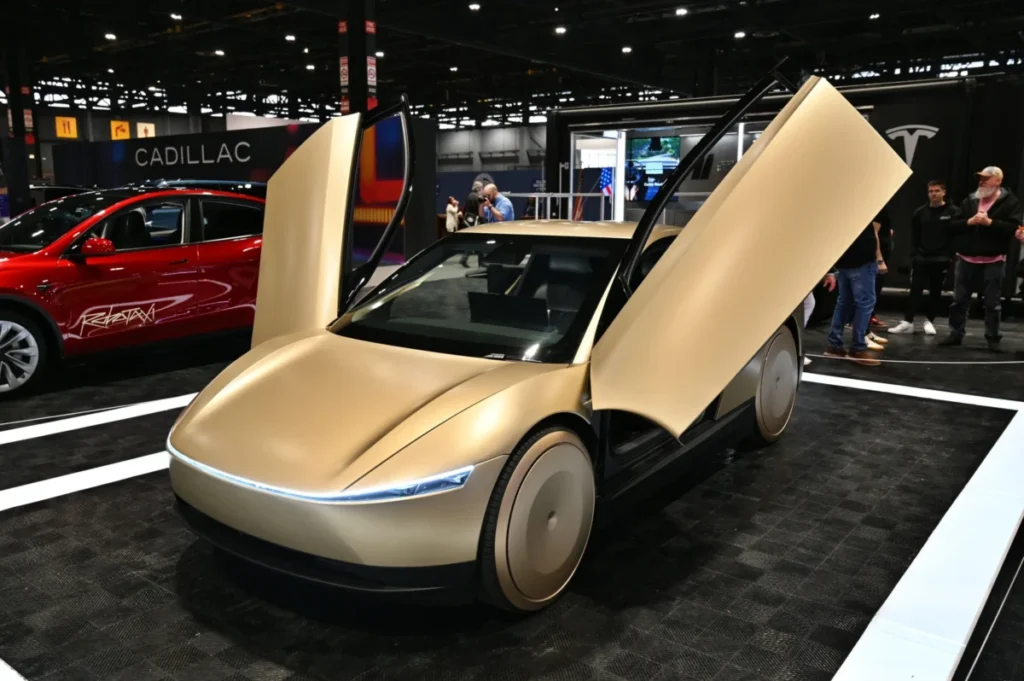
The matte-gold exterior of the Tesla Cybercab, with its sharply sloped silhouette and conspicuous absence of a steering wheel, serves as a beacon for the curious. Yet, beneath the aesthetic flash, the vehicle represents the most significant existential pivot in the history of the world’s most valuable electric-vehicle manufacturer. This Thursday, at its Austin, Texas, headquarters, Tesla is set to host a pivotal event aimed at moving the Cybercab from a prototype concept to a tangible, scalable reality.
For Tesla, the event is more than a product showcase; it is a declaration of intent. The company is attempting to transition from a traditional automotive manufacturer into an AI-first robotics enterprise. Whether the Cybercab will revolutionize urban transit or remain a futuristic curiosity depends on a complex convergence of software reliability, regulatory clearance, and the notoriously difficult logistics of fleet management.
The Chronology of a Vision
The journey to this week’s event has been marked by a blend of rapid innovation and long-standing promises. Tesla first unveiled the Cybercab prototype during a highly orchestrated event on the Warner Bros. studio lot in 2024. That debut was the spark; the current deployment in Texas is the fire.
Tesla has been running a pilot program in Austin since the summer of 2026. This initiative has slowly expanded to select cities across Texas and Florida, with active permit applications progressing in Arizona and Nevada. The company’s footprint is growing: recent filings indicate that Tesla has added 51 Cybercabs to its Texas-registered fleet, which already includes 263 Model Y vehicles.
However, the rollout remains fragmented. While Tesla has clear ambitions to scale, the "robotaxi" dream faces a patchwork of state-level legal hurdles. In the San Francisco Bay Area, for instance, Tesla’s driverless operations remain grounded due to a lack of regulatory authorization. This disparity underscores the primary challenge for the company: building a car is a hardware problem, but deploying a robotaxi service is a legal and jurisdictional minefield.
The "Flood" Strategy: Scaling to Autonomy
The internal optimism at Tesla is palpable. Ashok Elluswamy, Tesla’s head of AI software, recently posted on X, "The streets won’t be the same anymore," signaling a shift in the company’s internal morale. When prompted by an X user regarding whether the Cybercabs would eventually "flood" the streets of Austin, Elon Musk responded with a succinct, "Yes."
This rhetoric is characteristic of Musk, who has spent nearly a decade promising that Tesla vehicles are merely one software update away from full autonomy. Yet, the reality has been more nuanced. Musk admitted earlier this year that, contrary to earlier assertions, some older Tesla models would require physical hardware upgrades to achieve true driverless capabilities.
This admission highlights the core of Tesla’s technical thesis: that a vehicle can safely navigate the chaos of public roads using only inexpensive, camera-based vision systems. It is a controversial stance that separates Tesla from its industry peers.
Industry Friction: The Lidar Debate
The industry’s divide over autonomous technology is perhaps best exemplified by the ongoing rivalry between Tesla and Waymo. While Tesla doubles down on its camera-only approach, Waymo—the clear industry leader in terms of deployment—has taken a different path.
Last month, Waymo issued a blunt critique of the camera-only philosophy, stating in a blog post, "Cameras are incredible, but they aren’t enough." Waymo’s autonomous systems rely on a "sensor fusion" approach, integrating high-fidelity lidar and radar with cameras to provide a multi-layered perception of the environment.
Tesla’s counter-argument is economic. By avoiding the high cost of lidar and radar sensors, Tesla believes it can deploy its fleet at a fraction of the cost of its competitors. However, safety regulators remain unconvinced. The National Highway Traffic Safety Administration (NHTSA) opened an investigation in 2024 into Tesla’s "Full Self-Driving" (FSD) system following a string of crashes and reports of the system faltering in poor visibility conditions. As of this writing, that federal probe remains ongoing, casting a long shadow over the company’s ambitions.
The Economics of Utilization
Beyond the glitz of the software and the sleekness of the design, the success of the Cybercab will be determined by the "nitty-gritty" of fleet operations. J.D. Alexander, founder of AVFleetTech, notes that in the world of autonomous vehicles, the balance sheet is often more important than the sensor array.
"These AV companies are spending so much money getting this technology in place, but in order to scale up the business, the economics come down to utilization," Alexander explains.
Efficiency in the robotaxi business is defined by the "three pillars of operation": charging, cleaning, and maintenance. To achieve profitability, a robotaxi must be on the road for the vast majority of its lifespan. If a vehicle spends too much time at a charging depot or requires frequent manual intervention for cleaning, the unit economics collapse.
Competitors have largely opted for partnerships to solve these logistical headaches. Waymo, for example, has outsourced its heavy lifting: Avis manages its fleet logistics and maintenance in Dallas, while other partners handle depot management in Arizona and beyond. Tesla, by contrast, has historically preferred a vertical integration model.
Tesla’s plan appears to involve utilizing its existing network of service centers for repairs and maintenance. Furthermore, the company is experimenting with automation to handle the "cleanliness" factor. A Texas state architectural permit filed in June 2025 revealed that Tesla’s primary robotaxi hub will feature a "cleaning robot," though details on this technology remain locked behind a promotional video released last year.
Implications: A Shifting Business Model
The fundamental question facing investors and consumers alike remains: Is the Cybercab a product to be sold, or a service to be accessed?
While the business model is still taking shape, Musk has remained adamant that Tesla will sell Cybercabs directly to consumers by the end of 2026. This creates a fascinating tension. If Tesla sells the cars, it creates a new revenue stream; if it operates them as a fleet, it competes directly with ride-hail giants like Uber and Lyft.
Seth Goldstein, a senior equity analyst at Morningstar, believes the stakes are clear. "Longer term, the software is the most important piece," Goldstein says. "This is a very important step, to put the Cybercab in production, but ultimately, it only matters if the software can allow a car to navigate safely."
The Path Ahead
As Austin prepares for this week’s unveiling, the broader implications for the auto industry cannot be overstated. If Tesla succeeds in proving that its camera-only software can achieve level-five autonomy at scale, it will have rewritten the rules of the automotive sector.
However, the current pilot testing tells a more cautious story. Even now, testing in Austin typically requires a safety monitor in the front passenger seat—a human "fail-safe" ready to intervene when the algorithms reach their limits.
The Cybercab is, in many ways, the ultimate test of Elon Musk’s leadership and Tesla’s engineering prowess. It is a high-stakes bet that the company can overcome its regulatory, technical, and logistical hurdles simultaneously. For now, the gilded, steering-wheel-free vehicles rolling through the streets of Texas are a symbol of a future that is tantalizingly close, yet still anchored by the complexities of the present. Whether they will truly "flood" the streets or remain a niche experiment will be decided by the data generated in the months—and thousands of miles—to come.