The Glyphosate Verdict: Supreme Court Ruling Shields Bayer as Industry Faces a Reckoning

In a landmark decision that has sent shockwaves through the agricultural, environmental, and consumer advocacy sectors, the U.S. Supreme Court ruled 7-2 in late June in the case of Monsanto v. Durnell. The ruling effectively shields Bayer—the parent company of agrochemical giant Monsanto—from a deluge of future state-level liability lawsuits alleging that its flagship herbicide, Roundup, is a carcinogen.
For millions of Americans, the decision marks a definitive, if controversial, turning point in a decades-long war over the safety of glyphosate, the world’s most widely used weed killer. By prioritizing federal regulatory authority over state-level consumer warnings, the Court has provided a massive legal reprieve for Bayer, saving the corporation from the potential for billions of dollars in future damages. Yet, the ruling has left a broad coalition of stakeholders—from environmental justice groups to disillusioned political allies—grappling with the implications for public health, soil vitality, and the future of the food and wine industries.
The Core of the Conflict: Monsanto v. Durnell
The litigation originated in 2019, when Missouri gardener John Durnell filed suit against Monsanto, alleging that his diagnosis of non-Hodgkin lymphoma was the direct result of decades of exposure to Roundup. Durnell’s legal team argued that Monsanto was negligent for failing to warn consumers about the potential carcinogenic risks associated with glyphosate, the primary active ingredient in the product.
While the Supreme Court ultimately sided with the chemical giant, the case highlights the immense volatility surrounding Roundup. Over the last decade, Monsanto has faced over 100,000 cancer-related lawsuits. Despite Bayer’s consistent position that its products are safe, the company has already paid out more than $10 billion in settlements to resolve past claims. The Supreme Court’s recent ruling effectively halts the momentum of hundreds of thousands of pending class-action lawsuits, establishing a legal precedent that state-mandated warning labels are preempted by the Environmental Protection Agency’s (EPA) current regulatory stance.
A Chronology of Controversy
The legal battle over glyphosate is not a sudden development; it is the culmination of years of escalating tension.
- 2015: The International Agency for Research on Cancer (IARC), a branch of the World Health Organization, classified glyphosate as "probably carcinogenic to humans," igniting a global firestorm.
- 2019: John Durnell initiates his lawsuit in Missouri, setting the stage for the eventual Supreme Court showdown.
- 2025: Amidst rising public outcry, Senator Cory Booker introduces the "Pesticide Injury Accountability Act," aimed at providing a pathway for victims of manufacturer-caused illnesses to seek damages.
- February 2026: President Trump issues an executive order mandating increased domestic production of glyphosate, citing national security and the stability of the food supply chain.
- June 2026: The Supreme Court issues its 7-2 opinion in Monsanto v. Durnell, favoring the "uniformity" clause of the Federal Insecticide, Fungicide, and Rodenticide Act (FIFRA).
- October 2026: The EPA is scheduled to complete a comprehensive re-examination of glyphosate’s safety profile, a milestone that both proponents and opponents are watching with bated breath.
The Regulatory Divide: Science vs. Litigation
The crux of the Supreme Court’s majority opinion rested on the concept of federal preemption. The justices noted that because the EPA has concluded that glyphosate is "not likely to be carcinogenic to humans," state-mandated cancer warnings on labels would create a conflict with federal law. Justices Ketanji Brown Jackson and Neil Gorsuch, who filed the two dissenting opinions, argued against this rigid interpretation, suggesting that federal oversight should not necessarily bar states from implementing more stringent health protections.
"The EPA’s determination that glyphosate is safe—provided it is used according to the label—remains the gold standard for our regulatory framework," says Alex LeBeau, an exposure consulting toxicologist. "The science is clear: the dose determines the risk. When used correctly, the health impacts are negligible."
However, critics point to the recent scandal involving the retraction of a 25-year-old study, once considered a cornerstone of glyphosate safety research. The journal that published the paper retracted it in late 2025 after evidence emerged that Monsanto scientists had played a significant role in ghostwriting and conceptualizing the research. This revelation has emboldened activists who argue that the regulatory "safety" data has been tainted by corporate influence for decades.
Implications for the Wine Industry and Agriculture
While the government continues to maintain the safety of the chemical, the wine industry—an sector deeply tied to the land—is increasingly divided. In Napa Valley, producers like Grgich Hills Estate have become vocal critics of chemical reliance.
"Consumers need to be aware of the devastating effects on their health and the health of soil," says Ivo Jeramaz of Grgich Hills. "There is nothing worse for the vitality of your soil than spraying glyphosate. It kills all life, resulting in a fragile, fertilizer-dependent system."
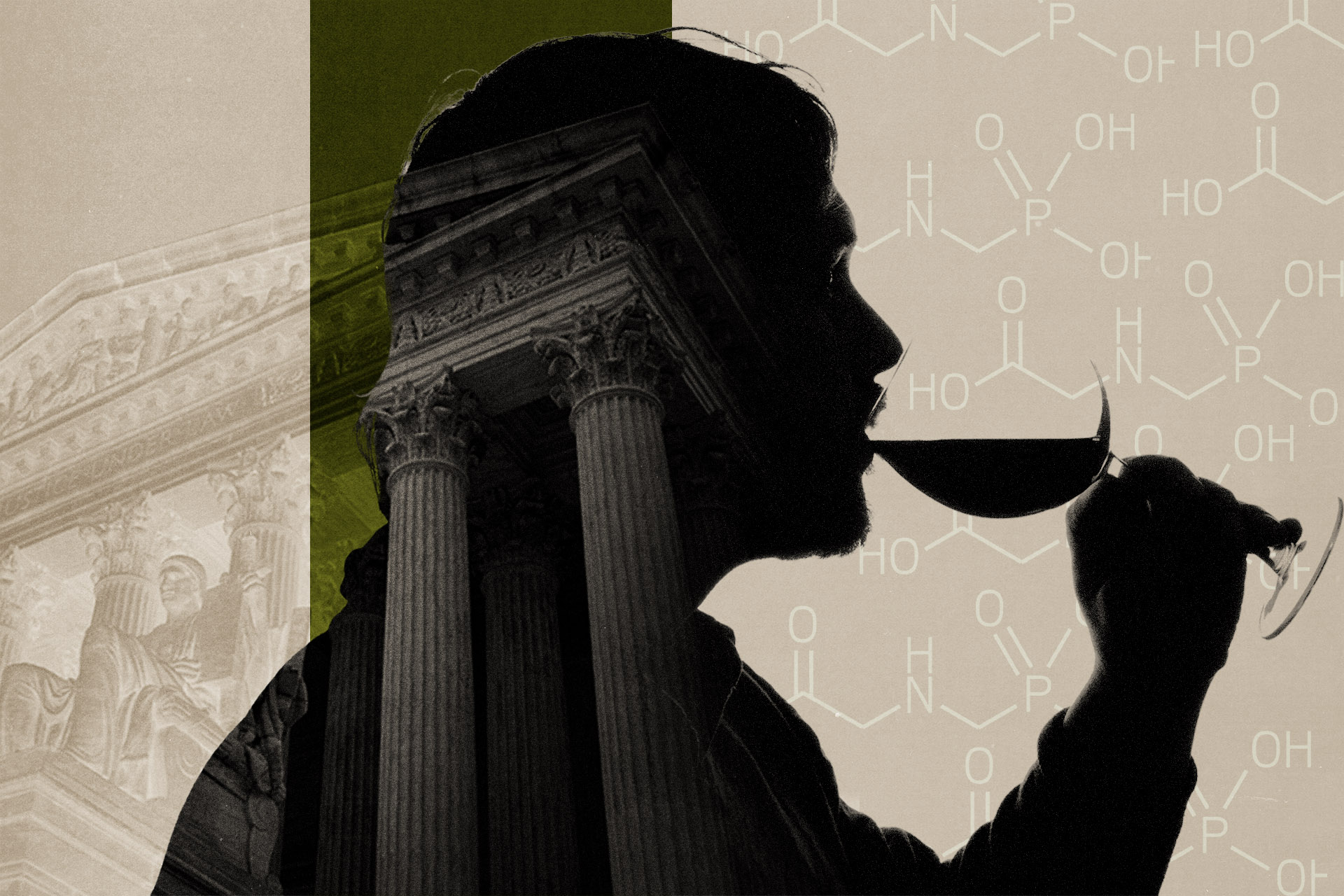
Yet, the transition to organic farming is neither easy nor inexpensive. In regions like Italy’s Prosecco-producing Conegliano Valdobbiadene, a 2019 ban on glyphosate was initially hailed as a victory for sustainability. Today, however, the reality is more nuanced. Diego Tomasi, director of the local wine consortium, notes that the "increasingly unsustainable costs" of managing "heroic" vineyards—steep, difficult terrain—has led some growers to call for a reintroduction of the herbicide to maintain economic viability.
For others, the risks are intensely personal. Nick Dugmore, founder of Stoke Wines on Australia’s Kangaroo Island, shares a harrowing account of waking up in rashes after working near a sprayed field, followed by a Stage 4 cancer diagnosis. "I’ve had hundreds of messages from people sharing similar stories of illness," Dugmore says. "The chemical is everywhere."
Supporting Data: The Ubiquity of Glyphosate
The prevalence of glyphosate in the environment is supported by a growing body of data, which often contradicts the narrative that the chemical is easily contained.
- Dietary Exposure: The FDA has reported that 59% of corn and soy samples contain traces of glyphosate.
- Human Biomonitoring: The CDC estimates that 81% of the U.S. population has detectable levels of the chemical in their systems.
- Waterways: A study by the U.S. Geological Survey found the herbicide in 66 out of 70 streams and rivers tested.
- Contamination: Testing of grocery store beverages, including wine and beer, has frequently turned up positive results for glyphosate, even in vineyards that claim to practice regenerative agriculture.
Official Responses and Political Fallout
The political landscape surrounding the ruling is complex. The Trump administration’s decision to prioritize domestic production of glyphosate has alienated segments of the "Make America Healthy Again" (MAHA) movement, a key coalition of voters who expected a more aggressive stance against industrial chemicals.
David Murphy, a spokesperson for MAHA and finance director for Robert F. Kennedy Jr.’s presidential campaign, expressed sharp frustration. "A lot of MAHA voters are realizing they’ve been snookered," Murphy told The Hill. "They’ve been had by Republicans who had no intention of protecting their health. It was just a talking point."
Conversely, U.S. Secretary of Health and Human Services Robert F. Kennedy Jr. has attempted to balance his personal history as a litigator against Monsanto with the realities of his current cabinet position. Defending the administration’s executive order, Kennedy noted on social media that the American agricultural system is currently too dependent on these chemicals to abandon them without a massive economic collapse. "If these inputs disappeared overnight, crop yields would fall, food prices would surge," Kennedy stated.
Conclusion: The Road Ahead
The Supreme Court’s decision in Monsanto v. Durnell effectively closes the door on a specific legal avenue for cancer victims, but it does not resolve the societal anxiety regarding synthetic pesticides. As the agricultural world navigates the tension between the economic necessity of high-yield farming and the rising public demand for non-toxic products, the label "USDA Organic" is expected to carry significantly more weight in the coming years.
For winemakers like Adam Casto of Ehlers Estate, the ruling is a wake-up call. "Eliminating consequences for companies that choose to not properly warn users of the well-known, significant health hazards their products pose does a level of harm to society that is hard to overstate," he says.
As October 2026 approaches, the EPA’s upcoming safety re-examination will serve as the next major flashpoint. Whether the government continues to back the status quo or acknowledges the mounting evidence of environmental and human risk remains to be seen. In the interim, both the chemical industry and the organic movement remain locked in a struggle that is, at its heart, a debate over the future of the American landscape.