The Rise of the AI Notetaker: A Hands-On Survey of Emerging Hardware
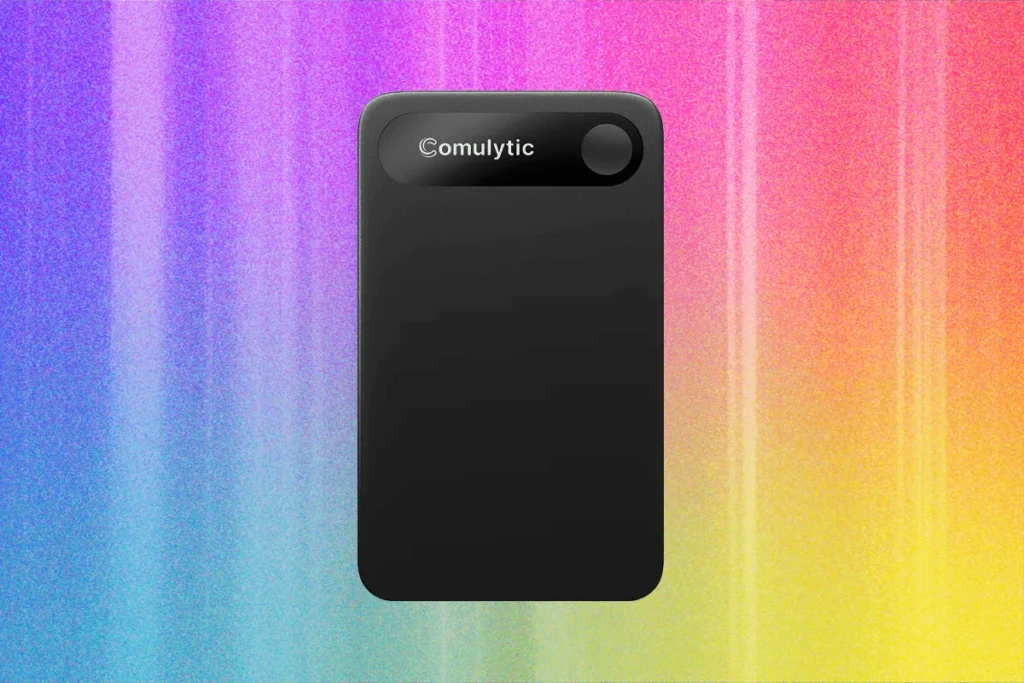
The landscape of productivity is undergoing a radical shift as artificial intelligence migrates from the cloud-based desktop app to the physical world. A new, nascent category of hardware has emerged: the AI notetaker. These devices—ranging from smart rings and lapel pins to specialized pens—aim to solve the "meeting fatigue" crisis by automating the transcription, summarization, and documentation of our daily conversations.
While the market is currently flooded with experimental gadgets, our recent testing reveals a polarized reality. For every device that offers a seamless, professional experience, there is another that serves as a cautionary tale in premature product deployment. As companies like Omi, Boya, Mobvoi, and SwitchBot prepare to flood the sector with next-generation hardware, it is critical to evaluate what works, what fails, and whether these devices currently offer value beyond what a standard smartphone can provide.
Chronology: The Evolution of the Voice Recorder
The evolution of the AI notetaker is a rapid departure from the analog tape recorders of the late 20th century. For decades, the handheld voice recorder was a tool primarily reserved for journalists and legal professionals. The transition to digital in the early 2000s improved storage capacity, but the "data retrieval" problem remained: a two-hour recording was still two hours of labor to transcribe.

In the last three years, the integration of Large Language Models (LLMs) with high-fidelity microphones has transformed these tools. The current wave of hardware—the "Plaud generation"—seeks to eliminate the smartphone’s biggest hurdle in meetings: the distraction of a glowing screen. By offloading recording to a dedicated piece of hardware, users are promised a "frictionless" capture experience. However, our testing suggests that while the hardware is becoming more miniaturized, the software ecosystems driving them are still very much in their infancy.
A Comparative Analysis of Current Hardware
Our testing of the current market leaders and niche entrants highlights significant gaps in performance and user experience.
1. Plaud NotePin S ($179)
The Plaud NotePin S is perhaps the most refined device in the category. Weighing in at a feather-light 18 grams, its versatility is its primary selling point; it can be worn as a lapel pin or a lanyard.

- The Pros: Excellent build quality, 64GB of internal storage, and 20 hours of battery life. The analysis engine behind the device is surprisingly robust, offering high-quality summaries.
- The Cons: It is expensive, and its business model is restrictive. Users are limited to a measly 300 minutes of transcription before being forced into a subscription tier. The lack of real-time transcription display is a notable drawback for users who need immediate feedback.
2. HiDock P1 ($169)
Targeting the desk-bound professional, the HiDock P1 is a 91-gram beast. It feels more like an old-school dictation machine than a modern AI peripheral.
- Performance: The microphone array is powerful, offering superior audio quality compared to smaller, wearable alternatives.
- The Verdict: While the AI analysis is fast when tethered to a PC, the P1 suffers from connectivity issues with mobile devices. It is best viewed as a specialized tool for fixed-office scenarios rather than a true "on-the-go" solution.
3. SpeakON ($129)
The SpeakON occupies a strange middle ground. At 27 grams, it functions less as an autonomous recorder and more as an extension of your phone’s existing speech-to-text system.
- The Dealbreaker: The device only functions while a button is held down. This manual constraint makes it useless for long-form meetings or presentations. It serves as a note-capture tool for quick thoughts, but fails as a comprehensive meeting assistant.
4. Looki L1 ($249)
Perhaps the most ambitious—and perhaps the most confusing—device we tested is the Looki L1. It is a necklace-worn gadget that includes a camera for capturing video.

- The Implication: It tries to turn daily life into content for social media, offering "unique comics" and vlogs. While it does offer meeting summarization, the feature feels secondary to its gimmickry. It is slow to process and, given the price, hard to justify for professional use.
5. Flowtica Scribe ($159)
The Flowtica Scribe attempts to combine the physical sensation of writing with digital AI processing. It is a 33-gram ballpoint pen that records audio as you write.
- The Flaw: The execution is poor. Our tests produced unusable, garbled transcripts where spaces were stripped from the text. Furthermore, the multilingual support is inconsistent, with some summaries inexplicably defaulting to Chinese. It is a case study in why form factor should never precede core functionality.
6. Vocci Ring ($299)
The Vocci Ring is a marvel of miniaturization. At 3.5 grams, it is essentially invisible on the finger.
- Performance: Despite initial hurdles with the unit and a finicky charging case, the output was impressive. It provides quick, concise summaries and reliable transcription. For those who prioritize discretion and constant availability, this may be the future of the category, provided the quality control improves.
7. iFLYTEK AI Recorder P1 ($119)
Despite the pedigree of the manufacturer, the P1 was the most disappointing entry. The device is plagued by "half-baked" software, requiring users to hunt for the compatible "Deepting" app.

- Failure Points: The device consistently failed to save recordings, and the AI summarization engine frequently returned errors. It is a prime example of hardware pushed to market before the software was ready for prime time.
Supporting Data: The Cost of Convenience
The economic model of the AI notetaker industry is almost universally built on the "Hardware + Subscription" (HaaS) framework. While a device like the Vocci Ring or Plaud NotePin may seem reasonably priced at the point of sale, the total cost of ownership (TCO) is significant.
For instance, the Plaud NotePin S requires a $100 annual subscription for a moderate 1,200 minutes of transcription per month. Heavy users, or those needing unlimited access, are looking at $240 per year. When you aggregate these costs across a team of 10 employees, the "convenience" of an AI pin quickly becomes a significant line item, raising questions about whether these devices offer better ROI than simply using the native dictation features found in modern smartphones or integrated meeting software like Microsoft Teams or Zoom.
Official Responses and Industry Outlook
In correspondence with manufacturers, the overarching theme is one of rapid iteration. Many of these companies acknowledge that the software, specifically the latency of AI processing and the accuracy of specialized transcription, is the primary hurdle.

The industry is currently in a "Gold Rush" phase. We are seeing a race to see which form factor will win the "daily driver" status. The Vocci Ring proves that users want unobtrusive, wearable tech, while the HiDock P1 proves that professionals still require desktop-grade audio fidelity. The middle ground—the lapel pin—remains the most contested territory.
Implications: The Privacy and Utility Paradox
The emergence of these devices carries profound implications for privacy and workplace culture. A device that is "always listening" or "always recording" creates a friction point in social and professional settings.
- Privacy Concerns: Unlike a smartphone, which is clearly visible when recording, a small pin or ring can record conversations without the explicit awareness of other participants. Legal and ethical frameworks surrounding consent in the workplace will need to adapt rapidly.
- The Utility Gap: We are currently at a point where the hardware is "cool," but the utility is often "thin." A high-end smartphone with a good AI app often outperforms these dedicated devices in transcription accuracy and processing speed.
- Future Consolidation: It is likely that this category will consolidate. Many of the companies listed above may not exist in three years. The survivors will likely be those that integrate their hardware into existing enterprise workflows (Salesforce, Notion, Slack) rather than those that treat hardware as an isolated, proprietary silo.
Conclusion
For the average professional, the market for dedicated AI notetakers is not yet mature enough for a universal recommendation. If you require a tool for high-stakes meetings, the Plaud NotePin S offers the most stable experience, provided you are willing to pay the subscription tax. If you are an early adopter looking for the most discreet form factor, the Vocci Ring shows promise, albeit with significant teething issues.

However, for most users, the best "AI notetaker" is the device already in your pocket. As software-based AI tools continue to improve, the need for dedicated hardware will depend entirely on whether manufacturers can offer features that a phone simply cannot—such as superior, localized microphone arrays and seamless, zero-touch physical integration. Until then, approach this category with cautious skepticism.