The Silent Revolution: Could Potassium Chloride Be the Key to a Healthier Future?
Main Facts
In a world grappling with a myriad of diet-related health crises, one insidious threat stands out: dangerously high dietary sodium intake. Often synonymous with "salt," this ubiquitous ingredient is now recognized as the leading dietary risk factor globally, silently claiming millions of lives each year. Its devastating impact primarily manifests through elevated blood pressure, significantly increasing the risk of strokes, heart attacks, and severe kidney damage. Hypertension, the medical term for high blood pressure, remains aptly dubbed the "silent and invisible killer" because it rarely presents symptoms until it’s too late, yet it is a formidable predictor of premature death.
Paradoxically, while sodium floods our modern diets, a crucial counterpart—potassium—is severely lacking. Humanity evolved on a diet naturally rich in potassium and remarkably low in sodium, a nutritional pattern completely inverted in contemporary eating habits. This dramatic dietary flip reflects a global shift away from traditional, plant-based foods—fruits, vegetables, roots, and tubers—and towards highly processed, salty foods stripped of their natural potassium content. Consequently, potassium is now classified as a "nutrient of public health concern," with an astonishing 98% of the U.S. population failing to meet the recommended minimum daily intake. Low potassium intake itself is a significant contributor to high blood pressure and cardiovascular disease.
Against this backdrop, a compelling solution is emerging from the scientific community: potassium chloride. This naturally occurring mineral salt offers a dual benefit by simultaneously reducing sodium intake and boosting potassium levels. Initial research and groundbreaking large-scale trials suggest that replacing conventional sodium chloride with potassium chloride in cooking and food products could lead to significant reductions in blood pressure, a halving of hypertension risk, and even a substantial decrease in cardiovascular disease and all-cause mortality. This "win-win" proposition represents a potential paradigm shift in public health, offering a simple yet profound intervention to combat one of the leading causes of preventable death.
Chronology: Tracing the Scientific Journey of Salt and Health
The understanding of sodium’s detrimental effects and potassium’s protective role has evolved significantly over the past century, culminating in the recent surge of interest in potassium chloride salt substitutes.
The scientific journey began with early observations linking salt consumption to blood pressure. As far back as the early 20th century, clinicians noted that restricting dietary salt could lower blood pressure in some hypertensive patients. However, the precise mechanisms and the population-wide impact remained subjects of ongoing research and debate for decades. By the mid-20th century, epidemiological studies began to establish stronger correlations between high sodium intake and hypertension prevalence in various populations. The advent of modern medical research tools allowed for more rigorous investigations.
Parallel to this, the crucial role of potassium in human physiology started to gain recognition. Researchers observed that populations consuming diets rich in plant-based foods, naturally high in potassium and low in sodium, exhibited lower rates of hypertension and cardiovascular disease. This led to the hypothesis that the sodium-potassium balance, rather than just sodium alone, was critical for cardiovascular health. Studies began to demonstrate that increasing potassium intake could have a blood pressure-lowering effect, often counteracting some of the negative impacts of sodium.
The concept of using salt substitutes, primarily potassium chloride, emerged as a logical extension of these findings. If high sodium was harmful and low potassium was problematic, then a substitute that addressed both issues simultaneously seemed promising. Early studies, often smaller in scale, focused on the immediate physiological effects, such as blood pressure reduction in hypertensive individuals. These trials, typically randomized and controlled, consistently showed that replacing a portion of sodium chloride with potassium chloride could indeed lower systolic and diastolic blood pressure.
However, the leap from physiological effect to actual disease prevention and mortality reduction required larger, long-term studies. The 21st century has witnessed the culmination of this research, with pivotal randomized controlled trials providing irrefutable evidence. The veterans’ retirement home study, for instance, demonstrated a remarkable reduction in cardiovascular disease mortality. This was followed by the truly groundbreaking China Salt Substitute Study (SSaSS), a massive undertaking involving tens of thousands of participants over several years. This study not only confirmed blood pressure reduction but also unequivocally showed significant decreases in stroke, major cardiovascular events, and—critically—all-cause mortality. These landmark findings have propelled potassium chloride salt substitutes from a niche nutritional curiosity to a powerful, evidence-backed public health intervention.
Supporting Data: The Evidence Unpacked
The case for potassium chloride as a health-enhancing intervention is built upon a robust foundation of scientific evidence, detailing the profound dangers of excessive sodium, the vital benefits of adequate potassium, and the proven efficacy of salt substitutes.
The Silent Scourge of Sodium and Hypertension
High dietary sodium intake is not merely a dietary concern; it’s a global public health crisis. It is estimated to be the leading dietary risk factor worldwide, contributing to millions of deaths annually. The primary mechanism through which sodium exerts its harm is by increasing blood pressure. According to a study published in PubMed, high dietary sodium intake is indeed the leading risk factor for health issues. Hypertension, or high blood pressure, rarely presents with symptoms, earning it the ominous moniker of the "silent and invisible killer." Yet, its insidious progression leads to a cascade of life-threatening conditions, including stroke, heart attack, and kidney damage. Data from PubMed confirms that hypertension remains a powerful independent predictor of our leading causes of death. The global burden of hypertension is staggering, affecting an estimated 1.13 billion people worldwide, with prevalence projected to rise further.
The Evolutionary Mismatch: Sodium-Potassium Imbalance
Our bodies are finely tuned to an ancestral dietary pattern characterized by high potassium and low sodium. This balance was maintained through diets rich in fruits, vegetables, roots, and tubers. However, modern industrialized diets have completely reversed this natural equilibrium. The proliferation of processed foods, laden with added salt and stripped of natural nutrients, has led to an alarming deficiency in potassium. A concerning statistic reveals that 98% of the U.S. population does not even meet the recommended minimum daily intake for potassium, which is now considered a "nutrient of public health concern."
The implications of this imbalance are profound. While excessive sodium directly raises blood pressure by increasing fluid retention and arterial stiffness, insufficient potassium intake is independently implicated in hypertension and cardiovascular disease. Potassium plays a critical role in maintaining fluid balance, nerve signals, muscle contractions, and crucially, relaxing blood vessel walls. This evolutionary mismatch, as noted in PubMed, underscores the urgency of addressing both ends of the spectrum: reducing sodium and increasing potassium.
The Power of Potassium: Beyond Blood Pressure
The benefits of adequate potassium extend far beyond its blood pressure-lowering effects. Research indicates a significant reduction in stroke risk that is independent of blood pressure effects, as highlighted in PubMed. This suggests other protective mechanisms are at play. Potassium has been shown to reduce clot formation, decrease arterial stiffening, and mitigate the generation of harmful free radicals. These multifaceted benefits contribute to overall cardiovascular health.
The contrast between sodium and potassium’s impact on longevity is stark. Higher sodium intake is associated with a 20% increased risk of dying prematurely, while, conversely, higher potassium intake is linked to a 20% reduced risk of dying prematurely, according to research in PubMed. While a healthier diet inherently means more plant foods and less junk, making potassium a marker for overall healthy eating, randomized controlled trials (RCTs) confirm the direct cause-and-effect relationship. RCTs, the gold standard of scientific evidence, unequivocally demonstrate that sodium reduction leads to blood pressure reduction, as reported by BMJ. Similarly, RCTs show that supplemental potassium can lower blood pressure, further solidifying its direct impact, as indicated in PubMed.
Potassium Chloride: The "Win-Win" Solution
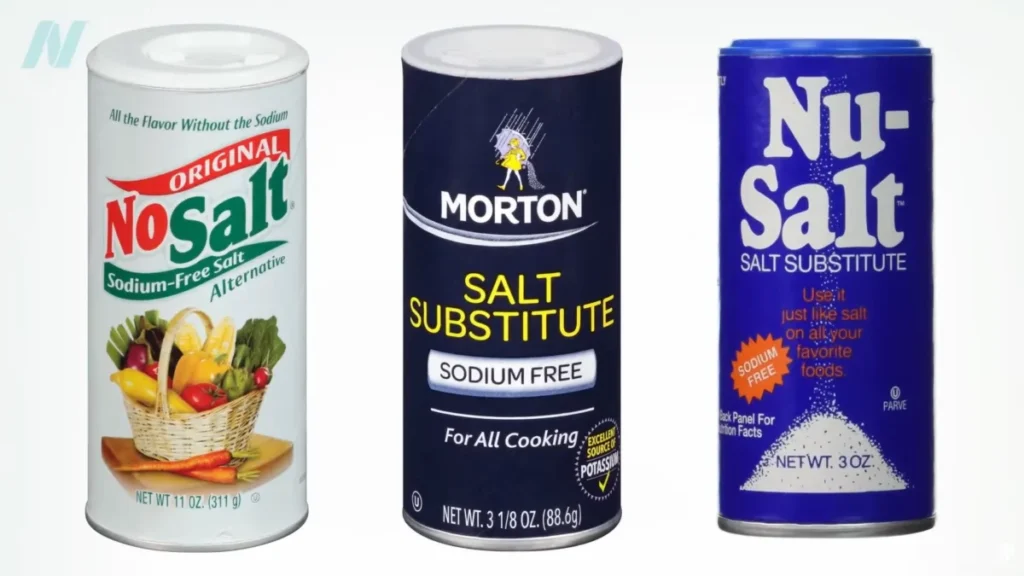
Given the dual problem of excess sodium and deficient potassium, the idea of using potassium chloride as a salt substitute presents an elegant "win-win" solution. Potassium chloride is a naturally occurring mineral salt, processed similarly to regular sodium salt. Its taste profile is remarkably similar to sodium chloride, making it a viable culinary substitute without significant sensory compromise for many users.
The efficacy of potassium chloride salt substitutes has been rigorously tested. A meta-analysis of 10 studies, comprising 11 randomized controlled trials, consistently shows that swapping even a portion of regular salt for potassium chloride leads to significant reductions in blood pressure, particularly in individuals with hypertension. These findings, noted in PubMed, suggest that salt substitutes may also play a crucial role in preventing the onset of hypertension.
Landmark Trials: From Hypertension Prevention to Mortality Reduction
The impact of potassium chloride extends beyond merely lowering existing blood pressure.
-
Preventing Hypertension: One significant randomized controlled trial replaced household salt with a blend containing just a quarter potassium chloride. The results were compelling: most participants either couldn’t distinguish the taste or even preferred the potassium-mixed salt. Crucially, the use of this quarter salt substitute was associated with a staggering halving of the risk of developing hypertension, as published in PubMed. This demonstrates a powerful preventative potential.
-
Reducing Cardiovascular Mortality and Extending Life: To assess the impact on hard endpoints like cardiovascular disease mortality, a long-term randomized controlled trial was conducted in a veterans’ retirement home. Five kitchens were randomized over two and a half years, with one group using regular salt and the other unknowingly using a 50/50 blend of potassium chloride. The results were extraordinary: participants in the half-potassium group experienced an approximate 40% reduction in their risk of dying from cardiovascular disease and lived nearly a year longer. The study highlighted that the life expectancy difference at age 70 was "equivalent to that which would have naturally occurred in 14 [years]," suggesting that merely switching to half-potassium salt effectively made individuals more than a decade younger in terms of their risk of death.
-
The China Salt Substitute Study (SSaSS): A Global Game Changer: The most definitive evidence comes from a massive randomized controlled trial conducted in China, involving 600 villages and over 20,000 participants over five years. Participants were randomly assigned to either receive a salt substitute made of a quarter potassium chloride or continue using regular salt. The findings, published in JACC, were nothing short of revolutionary: the salt substitute not only significantly reduced strokes and cardiovascular events in general, but it also reduced the risk of death from all causes. This unprecedented scale and the robust nature of the evidence firmly establish potassium chloride salt substitutes as a highly effective public health intervention. China proved an ideal setting for this study because up to 75% of the population’s sodium intake comes from salt added in home kitchens or dining rooms, making direct salt substitution highly impactful, as noted in PubMed. In contrast, a larger proportion of sodium in Western diets, particularly in the U.S., comes from prepackaged and processed foods.
Official Responses and Industry Landscape
The overwhelming scientific evidence supporting potassium chloride salt substitutes presents both an opportunity and a challenge for public health officials, medical professionals, and the food industry.
Public Health Recommendations and Medical Practice
Leading health organizations worldwide, including the World Health Organization (WHO), the Centers for Disease Control and Prevention (CDC), and the American Heart Association (AHA), have long advocated for reduced sodium intake as a cornerstone of cardiovascular health. These new findings provide a powerful, actionable strategy to achieve this goal while simultaneously addressing potassium deficiency. The China study, in particular, is likely to influence global dietary guidelines and public health campaigns, potentially leading to more explicit recommendations for the use of salt substitutes.
However, a significant gap remains in medical practice. The original article highlights that "few physicians actually consider telling their patients to eat more potassium-rich foods, like fruits and vegetables, to better control blood pressure." This points to a need for greater education within the medical community. Integrating potassium intake advice and the potential benefits of salt substitutes into routine patient consultations could be a simple yet impactful step in preventing and managing hypertension. This requires updated clinical guidelines and increased awareness among healthcare providers about the compelling evidence.
The Food Industry’s Role and Challenges
The question "Why haven’t more food companies switched over themselves?" is central to the broader adoption of potassium chloride. While individual consumers can make choices in their home kitchens, a significant portion of sodium intake, especially in Western countries, comes from processed and prepackaged foods. For widespread impact, industry-level reformulation is crucial.
Several factors contribute to the industry’s hesitation:
- Consumer Perception and Taste: While many studies show that consumers either don’t notice the difference or even prefer the taste of salt substitutes, there can be a perception issue. Brands are often wary of changing established product flavors for fear of consumer backlash.
- Cost and Scale: Reformulating thousands of products across vast supply chains can involve significant research, development, and production costs.
- Regulatory Environment: While potassium chloride is generally recognized as safe (GRAS), specific labeling requirements or potential regulatory hurdles might deter companies.
- Marketing Challenges: Promoting "reduced sodium" products can sometimes be seen as less appealing than other health claims, and the educational effort required to inform consumers about potassium chloride’s benefits might be substantial.
Despite these challenges, the mounting evidence, especially from the SSaSS study, could provide the impetus for food manufacturers to seriously consider reformulating their products with potassium chloride. This would represent a massive public health win, making healthier food choices the default rather than the exception.
The "Ready for Prime Time?" Debate
The scientific community is increasingly asking, "Is Salt Substitution Ready for Prime Time?" as a commentary in PubMed queries. A Mayo Clinic review even suggested "Achieving the Benefits of a High-Potassium, Paleolithic Diet, Without the Toxicity" through such substitution, as cited in PubMed. The convincing arguments about the benefits are now undeniable, yet discussions persist about the practicalities of widespread implementation and, critically, potential safety considerations. The original article provocatively raises the specter of "potentially fatal salt substitutes," indicating that while the benefits are clear, the full picture—including any downsides—must be carefully examined. This critical dialogue ensures that public health interventions are not only effective but also safe for diverse populations.
Implications: A Path Towards a Healthier Global Population
The findings regarding potassium chloride salt substitutes carry profound implications for individual health, public health strategies, and the global burden of disease. This simple dietary modification could usher in a new era of preventative medicine.
Transforming Individual Health
For the average person, the implications are empowering. It offers a tangible, accessible way to improve cardiovascular health without drastic dietary overhauls or significant lifestyle changes. Simply swapping out regular salt for a potassium chloride alternative in home cooking can contribute to lower blood pressure, reduce the risk of stroke and heart attack, and potentially extend lifespan. This is particularly relevant for individuals who find it challenging to drastically reduce their overall salt intake or increase their consumption of potassium-rich whole foods. While whole plant foods remain the gold standard for comprehensive nutrition, salt substitutes offer a practical stepping stone or complementary strategy.
Unleashing Public Health Potential
On a public health scale, the potential impact is immense. Given that high sodium intake is the leading dietary risk factor globally, a widespread adoption of potassium chloride salt substitutes could prevent millions of premature deaths and alleviate a massive burden of chronic disease. Imagine the reduction in healthcare costs associated with fewer strokes, heart attacks, and kidney failures. The SSaSS study, by demonstrating reduced all-cause mortality, suggests that this intervention could add years of healthy life to populations, particularly in regions where home-added salt is a primary source of sodium. This is a rare example of a public health intervention that is both highly effective and relatively low-cost.
Guiding Policy and Industry Reform
The robust evidence demands policy action. Governments and public health bodies should consider:
- Public Awareness Campaigns: Educating consumers about the dangers of high sodium and the benefits of potassium, including the role of salt substitutes.
- Food Industry Reformulation Mandates/Incentives: Encouraging or even mandating food manufacturers to reduce sodium and incorporate potassium chloride in processed foods. This would be a crucial step in countries like the U.S. where most sodium comes from packaged goods.
- Availability and Affordability: Ensuring that potassium chloride salt substitutes are widely available and affordable for all socioeconomic groups.
- Integration into Clinical Practice: Updating medical guidelines to include recommendations for potassium intake and the use of salt substitutes for patients at risk of or with hypertension.
Future Research and Addressing Nuances
While the benefits are clear, the discussion around potassium chloride is not without its nuances. The original article’s mention of "potentially fatal salt substitutes" points to the importance of considering specific populations. Individuals with certain medical conditions, particularly advanced kidney disease, may need to carefully monitor their potassium intake, as their bodies may struggle to excrete excess potassium, leading to hyperkalemia (dangerously high potassium levels). This highlights the need for continued research into optimal formulations, individual suitability, and careful medical guidance. However, for the vast majority of the population, who are potassium deficient and sodium overloaded, the evidence strongly supports the judicious use of potassium chloride.
In conclusion, the scientific journey has brought us to a critical juncture. Potassium chloride salt substitutes represent a powerful, evidence-backed tool to combat the dual dietary threats of excessive sodium and insufficient potassium. By embracing this "win-win" solution, we have the potential to significantly enhance global health, prevent countless deaths, and improve the quality of life for millions, paving the way for a silent revolution in public health.
Doctor’s Note
This is the second in a three-part series on salt and potassium. If you missed the first video, see The Mineral Intake Recommendations Only 1 in 6,000 U.S. Adults Meet. We finish the series with Are Potassium Chloride Salt Substitutes Safe and Effective?.
I talk about the randomized controlled trials for sodium in The Evidence That Salt Raises Blood Pressure.