The Silent Revolution: Why the Future of Wearable Tech is Invisible
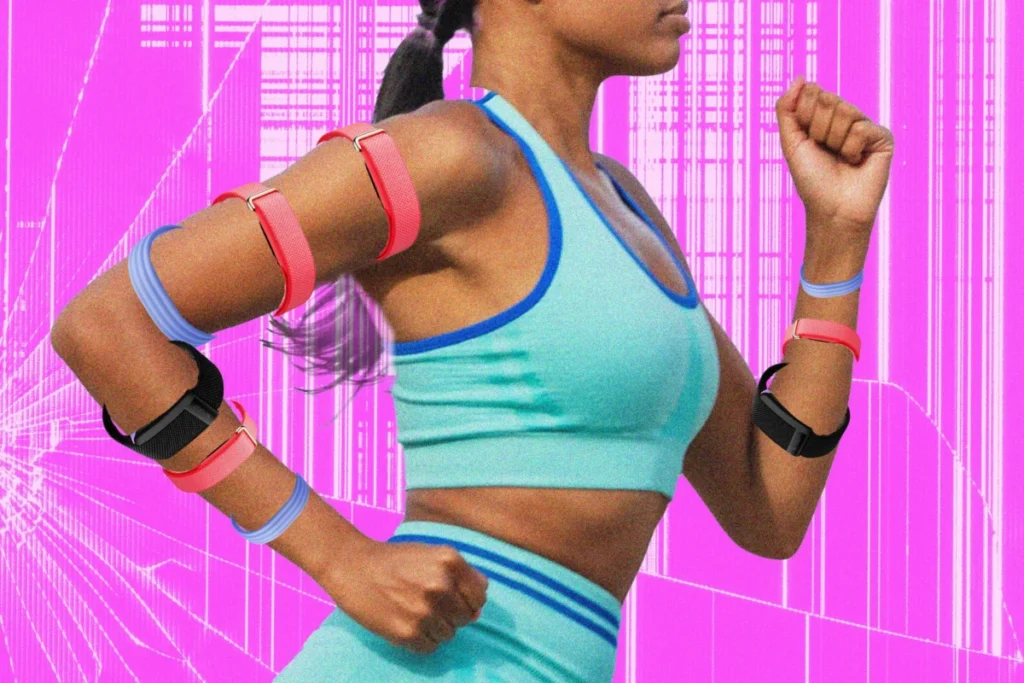
There is a new breed of gadget quietly infiltrating store shelves, designed for a singular, radical purpose: to be ignored. These are the screen-free wearables, a category of health trackers that demand almost nothing of your cognitive bandwidth. Unlike the frantic, buzzing smartwatches that dominate our wrists, these devices operate in the periphery. They collect granular health metrics—heart rate, sleep cycles, respiratory patterns—day and night, storing them away until you have the intention and the time to review them on your smartphone.
This shift represents a significant pivot in consumer technology. As we find ourselves increasingly exhausted by "attention-hoarding" devices and the relentless pull of social media, the market is responding with a minimalist counter-movement. From the Garmin Cirqa and the Google Fitbit Air to the Polar Loop, the Amazfit Helio Strap, and the industry pioneer, Whoop, the message is clear: health tracking should not come at the cost of your peace of mind.
The Chronology: From Clip-Ons to AI-Driven Wellness
To understand where we are, we must look at where we started. The history of the wearable is a pendulum swinging between invisibility and total immersion.
The Early Days (2009–2012)
The original wave of fitness trackers, including the early Fitbits of 2009, were primarily utilitarian. In 2011, the Fitbit Ultra was a modest device that clipped to your clothing. It was so unobtrusive that it was easy to forget—sometimes, literally, as users frequently misplaced them. Even the 2012 Fitbit Zip, with its quirky, low-resolution "Tamagotchi-style" face, was never intended to be a hub for communication. It was a passive collector of data.
The Era of "Always-On" Overload (2013–2025)
Following the release of the first Apple Watch in 2015, the industry underwent a paradigm shift. Wearables became extensions of the smartphone. They became screens for emails, notifications, and social media pings. The user experience shifted from "monitoring health" to "managing digital demands." We became conditioned to raise our wrists reflexively at the slightest vibration, fostering a pathological obsession with "sleep scores" and "move alerts."
The Return to Subtraction (2026 and Beyond)
We have now entered the age of "design subtraction." By stripping away the OLED screens, haptic notification engines, and app ecosystems, companies are returning to the core utility of the wearable: gathering data without the friction of digital interaction. As Bloomberg has reported, even Apple is now exploring concepts that lean into this minimalist philosophy, signaling that the industry giants recognize a growing consumer appetite for "tech that stays out of the way."
Supporting Data: Why We Are Tuning Out
The surge in popularity of screen-free devices is not merely a design trend; it is a defensive reaction to "technostress."
According to research from the University of Nottingham, digital tools have fostered a cycle of information overload and constant interruption. Elizabeth Marsh, a doctoral researcher specializing in the digital workplace, notes that these devices create a "predictable by-product" where digital demands outpace human capacity.
- The Cost of Connectivity: Studies indicate that notifications often trigger anxiety, anger, and feelings of inadequacy among users who feel pressured to respond instantaneously.
- The Myth of Multi-Tasking: The belief that a smartwatch helps you be more efficient is increasingly challenged by data suggesting that constant task-switching significantly lowers cognitive performance.
- The AI Factor: AI has become a double-edged sword. On one hand, it provides sophisticated health insights; on the other, it is the primary engine behind the "attention economy." Users are increasingly seeking ways to leverage the benefits of AI-driven health data without being subjected to the constant pings of AI-driven notification systems.
Official Perspectives and Industry Shifts
The industry’s evolution is perhaps best exemplified by Whoop. Launched in 2015 as a "performance optimization system exclusively designed for elite athletes," the company has pivoted significantly. Today, a Whoop band is marketed to the general public as a tool for improving daily life, sleep, and recovery. This transition from "elite tool" to "mass-market wellness companion" mirrors the broader industry shift toward accessibility and, crucially, low-distraction design.
Peter Richardson, vice president and cofounder of Counterpoint Research, observes that the use of AI in health monitoring is currently in its infancy but is rapidly maturing. "AI is the bridge between raw data and meaningful insight," Richardson notes. "By removing the screen, manufacturers are allowing the smartphone app to act as the primary interface, which is a much more natural environment for AI-driven, long-form health analysis."
However, this shift also serves a commercial interest. Without a screen, the device relies on the app experience to maintain user engagement. Companies like Google have introduced "Google Health Premium" to turn raw numbers into conversational, AI-generated narratives. While some power users find these AI explanations useful, others view them as condescending, preferring to interpret their own data. This tension highlights the primary challenge for the next generation of wearables: balancing helpful guidance with intrusive, automated chatter.
The Implications: Moving Toward "Digital Mindfulness"
The shift toward screen-free devices is not just about hardware; it is a manifestation of what researchers call "digital mindfulness."
The Three Pillars of Digital Mindfulness
Elizabeth Marsh argues that reclaiming our attention requires three specific behaviors:
- Intention: Having a clear, deliberate purpose for engaging with a device, rather than reacting to a notification.
- Attention: Focusing on the task at hand without the intrusion of external digital noise.
- Attitude: Practicing self-kindness when we fail to meet our own standards for tech usage, rather than spiraling into self-criticism.
Screen-free wearables are uniquely positioned to support this mindset. Because they lack a display, they remove the temptation to "doom-scroll" or reflexively check for updates. With a device like the Garmin Cirqa, a user can track a complex run or a full day of activity without ever having to touch a button or address a buzz. The device becomes a silent observer of your life, rather than a vocal participant.
The Death of the "Charge-Coddling" Culture
Another significant implication of removing the screen is the drastic increase in battery efficiency. Users are tired of "charge-coddling"—the daily ritual of placing a device on a magnetic dock. By removing power-hungry OLED screens and constant Bluetooth syncing for notifications, these new devices can last for days, or even weeks, on a single charge. This contributes to a "set it and forget it" lifestyle that allows the user to focus on their actual physical well-being rather than their device’s power percentage.
Conclusion: The Quiet Future
The rise of the screen-free wearable is a testament to the fact that we have reached a saturation point with digital technology. We are no longer impressed by devices that can do everything; we are impressed by devices that help us do one thing well while leaving the rest of our lives untouched.
As we move toward 2027, the success of these devices will depend on whether they can truly offer "reset" buttons for our digital habits. If they can successfully transition from being the "nag on our wrist" to an invisible partner in our health, they may prove to be the most meaningful development in consumer electronics in the last decade.
We are learning that in a world of infinite, distracting connectivity, the ultimate luxury is the ability to disconnect. The most advanced piece of technology you can own today might just be the one you never have to look at.