The Unsung Hero: How Oatmeal Revolutionized Diabetes Care, Past and Present

Main Facts
In an era before the life-saving discovery of insulin, a humble grain, oatmeal, emerged as an unlikely beacon of hope for individuals grappling with diabetes. While often perceived today as a simple breakfast staple, historical medical records reveal oatmeal’s profound impact on diabetes management, prolonging and improving countless lives. This surprising legacy, first documented in the early 20th century, has since been validated by over a century of scientific inquiry, revealing the intricate ways in which oats, particularly their unique fiber content and the absence of animal protein, exert significant beneficial effects on blood sugar control and overall metabolic health. Far from being a mere historical footnote, modern research continues to underscore oatmeal’s potency, positioning it as a cornerstone of dietary intervention for prediabetes and type 2 diabetes, albeit with crucial medical oversight.
Chronology: From Skepticism to Scientific Acclaim
The story of oatmeal’s role in diabetes management begins in 1903 with German physician Carl von Noorden. His groundbreaking findings on the "oatmeal diet" for diabetic patients were initially met with considerable skepticism within the medical community. At a time when dietary interventions for diabetes were largely experimental and often involved severe carbohydrate restriction, von Noorden’s approach, which incorporated a significant amount of a carbohydrate-rich grain, seemed counterintuitive. However, the sheer weight of compelling evidence, meticulously collected and presented, gradually began to sway his critics.
By the end of the decade, the efficacy of the oatmeal diet had garnered significant attention from prominent clinicians worldwide. Dr. James B. Herrick, an acclaimed American physician initially doubtful of von Noorden’s claims, began to implement the oatmeal diet with his own patients. His astonishment at the positive results was palpable, leading to a pivotal proclamation in 1909: "no case of juvenile or adolescent diabetes should be deprived of the benefits of the oatmeal cure." This statement marked a significant shift in medical thought, establishing oatmeal as a legitimate and powerful therapeutic tool in the pre-insulin landscape.
Perhaps one of the most fervent advocates and keen observers of the oatmeal diet was Dr. Elliott Joslin, the visionary founder of the world’s oldest and largest diabetes clinic. Joslin, whose clinic would later become a global leader in diabetes research and care, described the effects of oatmeal as "sometimes magical." He openly acknowledged the "oatmeal cure" as an "unsolved mystery" and "one of the greatest puzzles in diabetes." While the precise mechanisms remained elusive to the medical minds of the early 20th century, Joslin and his contemporaries did glean a crucial clue: for the diet to be effective, animal protein had to be strictly excluded. They observed that its inclusion appeared to "annihilate the favorable action of oatmeal-type diets."
More than a century later, modern nutritional science has provided the long-awaited answers to Joslin’s puzzle. We now understand that excessive animal protein intake can intensify insulin resistance, a fundamental cause of prediabetes and type 2 diabetes. Conversely, a diet rich in plant-based foods, such as oatmeal, actively enhances insulin sensitivity – the very opposite and desired metabolic state. This retrospective understanding validates the empirical observations of early 20th-century physicians, bridging the gap between historical clinical success and contemporary scientific explanation.
Supporting Data: The Science Behind Oatmeal’s Efficacy
The historical observations of oatmeal’s benefits have been robustly supported by extensive contemporary research. A significant body of evidence confirms that higher consumption of whole grains, including oats, is consistently associated with a lower risk of developing diabetes. Furthermore, numerous randomized controlled trials (RCTs), considered the gold standard in clinical research, have meticulously demonstrated that oats can significantly improve both short-term and long-term blood sugar control in individuals with existing diabetes. These trials have also consistently noted an additional benefit: a reduction in cholesterol levels, highlighting oatmeal’s multifaceted positive impact on cardiovascular health, a common concern for diabetic patients.
The Power of Beta-Glucan and the Gut Microbiome
The primary driver behind oatmeal’s profound metabolic benefits is believed to be a unique fermentable fiber known as beta-glucan. This soluble fiber, abundant in oats, works through several intricate mechanisms within the body:
-
Viscosity and Nutrient Absorption: Upon consumption, beta-glucan forms a gel-like substance in the digestive tract. This increases the viscosity of the gut contents, slowing down the digestion and absorption of carbohydrates. The result is a more gradual rise in blood sugar levels after a meal, preventing sharp spikes and reducing the burden on the body’s insulin response.
-
Short-Chain Fatty Acid Production: As beta-glucan travels through the digestive system, it reaches the large intestine where it becomes a preferential food source for beneficial gut bacteria. These bacteria ferment the fiber, producing a variety of short-chain fatty acids (SCFAs), such as acetate, propionate, and butyrate. These SCFAs are not merely waste products; they are powerful signaling molecules with wide-ranging systemic effects. Butyrate, in particular, is a primary energy source for colon cells and plays a crucial role in maintaining gut barrier integrity. All SCFAs have demonstrated anti-inflammatory properties, contributing to overall metabolic health.
-
Enhancing Insulin Sensitivity: SCFAs, especially propionate, have been shown to influence glucose metabolism directly. They can improve insulin sensitivity in peripheral tissues, meaning cells become more responsive to insulin’s signal to take up glucose from the bloodstream. This directly counters insulin resistance, the hallmark of type 2 diabetes.

-
Cholesterol Lowering: The gut microbiome’s manipulation by beta-glucan also contributes to its cholesterol-lowering effects. SCFAs can interfere with cholesterol synthesis in the liver, and the binding of bile acids by beta-glucan promotes their excretion, forcing the liver to use more cholesterol to produce new bile acids, thus lowering circulating cholesterol levels.
-
Prebiotic Action: Oat fiber acts as a potent prebiotic, selectively stimulating the growth and activity of beneficial gut bacteria, particularly Lactobacillus and Bifidobacteria species. A thriving, diverse gut microbiome, rich in these fiber-feeding bacteria, is increasingly recognized as a critical factor in preventing and managing metabolic diseases like type 2 diabetes. By fostering a healthier microbial ecosystem, oatmeal helps to alleviate systemic inflammation and improve metabolic function.
It is this powerful synergy – the inherent lack of insulin-resistance-promoting animal protein and animal fat, combined with the abundance of prebiotic, fermentable fiber – that makes oatmeal diets so remarkably effective in the clinical routine for diabetes treatment.
Rapid and Lasting Results: The "Oatmeal Days" Phenomenon
One of the most compelling aspects of oatmeal’s therapeutic potential is the speed and duration of its beneficial effects. Several studies have investigated "oatmeal days" – short-term, intensive dietary interventions – demonstrating surprisingly rapid and persistent improvements in blood sugar control.
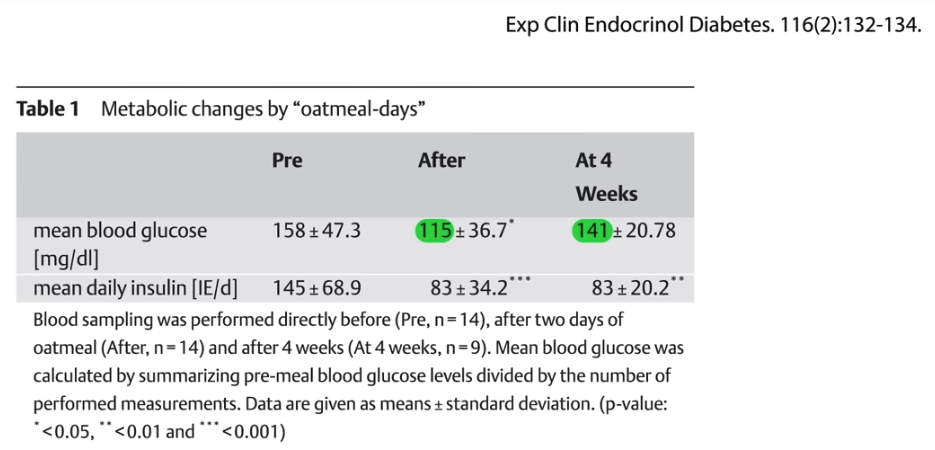
In a randomized, controlled, crossover trial, participants on an oatmeal diet experienced a remarkable drop in insulin needs, approximately 40%, within just two days. This was significantly more effective than simply restricting calories alone through a hypocaloric diabetic diet. Even more astonishing was the lasting impact: a measure of long-term blood sugar control (likely HbA1c or fructosamine) taken four weeks later still reflected the significant benefit, even after participants had returned to their regular diets.
Other contemporary studies have corroborated these findings. A two-day oatmeal intervention consistently reduced the required amount of insulin and improved blood sugar levels, with beneficial effects persisting for up to four weeks. Patients with uncontrolled type 2 diabetes on this short oatmeal diet experienced a 40% reduction in their insulin dosage, accompanied by an almost normalization of their average blood sugars. The researchers noted a "lasting significant reduction of insulin dosage and ameliorated mean blood sugars for weeks after the participants were dismissed from the study," underscoring the powerful and sustained metabolic reprogramming initiated by even brief dietary changes.
The benefits extend beyond insulin reduction. When individuals adopt a more comprehensive plant-based diet rich in oats, beans, fruits, vegetables, and nuts, the population of their gut’s "fiber-feeders" – beneficial bacteria that thrive on dietary fiber – rapidly increases. Within one month, fasting diabetic blood sugars can drop by approximately 25%. Crucially, studies have shown a direct correlation: the more fiber-feeders individuals fostered, the better their blood sugar control. When the fiber-promoted short-chain fatty acid producers were present in greater diversity and abundance, participants exhibited better improvements in their hemoglobin A1c levels, providing a clear link between gut microbiome modulation and long-term glycemic control. These findings are often illustrated with compelling charts demonstrating the reduction in blood sugar and insulin dosage after just two days of oatmeal, and how high-fiber diets can profoundly alter the gut microbiome to improve blood sugars in those with type 2 diabetes.
Official Responses: Medical Guidance and Practical Considerations
Given the powerful effects of oatmeal, medical professionals emphasize the need for careful management when patients embark on an oatmeal-rich diet, particularly those already on blood sugar-lowering medications.
Glycemic Index: Understanding Different Oat Forms
While whole grains are universally recognized as beneficial, the form in which they are consumed can influence their glycemic impact. The "wholiest" form of oats is the oat groat, which has only its inedible outer husk removed.
- Steel-Cut Oats (Pinhead/Irish Oats): These are oat groats sliced into two to four pieces. They are considered a low-glycemic-index (GI) food, typically averaging under 55. Their minimal processing means they take longer to digest, leading to a slower and more sustained release of glucose into the bloodstream.
- Old-Fashioned Rolled Oats: These are oat groats that have been steamed and flattened. While still a whole grain, the steaming and rolling process slightly increases their surface area, making them quicker to digest than steel-cut oats. They typically have a GI of around 55.
- Instant Oats: These are steamed for longer and rolled even more thinly, resulting in a significantly higher degree of processing. This makes them cook very quickly but also raises their glycemic index substantially, scoring around 79. While still better than some highly processed breakfast cereals (which can reach GIs in the 80s or 90s), instant oats should be consumed with caution by individuals managing diabetes.
For optimal blood sugar control, healthcare providers generally recommend opting for less processed forms of oats, such as steel-cut or old-fashioned rolled oats, to maximize their slow-release carbohydrate benefits and fiber content.
The Crucial Need for Medical Supervision
The "downside" of integrating an oatmeal-rich diet for diabetes management is that it can be too effective, potentially leading to dangerously low blood sugar levels (hypoglycemia). Therefore, any significant dietary change, especially one as potent as an oatmeal intervention, must be undertaken under close medical supervision.
Physicians must be prepared to rapidly deprescribe or adjust dosages of blood sugar-lowering medications, including insulin and oral hypoglycemics, as the body’s insulin sensitivity improves and blood sugar levels naturally decline. Patients must be carefully monitored, and an open line of communication with their healthcare provider is essential. Oatmeal interventions are generally not recommended for patients who might have difficulties reporting symptoms of low blood sugar, such as those with cognitive impairments or certain neurological conditions. The paramount concern is patient safety, ensuring that the therapeutic benefits are realized without inducing adverse events.
Implications: A Broader Paradigm Shift and Culinary Versatility
The compelling evidence supporting oatmeal’s role in diabetes management has broader implications for public health and the future of dietary recommendations. It reinforces a growing understanding within the medical community: whole, unprocessed plant-based foods are powerful tools not just for prevention, but for the active treatment of chronic diseases.
A Dietary Paradigm Shift
The journey of oatmeal from an "unsolved mystery" to a scientifically validated intervention highlights a fundamental shift in nutritional science. It underscores the importance of a holistic approach that considers not just macronutrient ratios, but also the intricate interplay between dietary fiber, the gut microbiome, and systemic metabolic processes. This perspective moves beyond simplistic calorie counting or blanket restrictions, embracing the profound therapeutic potential of specific food components. The success of the oatmeal diet, particularly when devoid of animal protein, also bolsters the case for plant-based dietary patterns as a cornerstone of diabetes prevention and reversal strategies.
Lifestyle Medicine and Future Directions
Oatmeal’s efficacy positions it squarely within the burgeoning field of lifestyle medicine, which emphasizes evidence-based therapeutic lifestyle interventions to treat and often reverse chronic diseases. Integrating dietary changes like incorporating oatmeal, alongside physical activity, stress management, and adequate sleep, offers a comprehensive and sustainable path to improved health outcomes for individuals with diabetes.
Future research will likely delve deeper into personalized nutrition, exploring how individual gut microbiomes respond to specific fiber types and how these interactions can be optimized for maximum benefit. Long-term studies on adherence to oatmeal-rich diets and their sustained impact on diabetes progression and complications will also be crucial.
Jazzing Up Oatmeal: Beyond the Basic Bowl
Far from being a monotonous therapeutic food, oatmeal is an incredibly versatile whole grain, offering a canvas for culinary creativity that can appeal to diverse palates while maximizing nutritional benefits.
A popular and highly nutritious base is "BROL" – a blend of Barley, Rye, Oats, and Lentils, offering an even broader spectrum of fibers and plant proteins. However, a simple oat base remains a fantastic starting point.
When craving something sweet, the options are endless and can be both delicious and health-promoting. Consider a "chocolate-covered-cherry sensation":
- Base: Cooked steel-cut or old-fashioned oats.
- Toppings: A generous handful of frozen dark red cherries (rich in antioxidants), a tablespoon of unsweetened cocoa powder (flavanols for heart health), a few finely chopped dates for natural sweetness, and a sprinkle of walnuts or pumpkin seeds for healthy fats and additional fiber. This combination provides complex carbohydrates, fiber, antioxidants, and healthy fats, ensuring a balanced and satisfying meal that won’t spike blood sugar.
For those who prefer savory flavors, oatmeal can be transformed into an exciting main course or side dish. Imagine a "savory BROL bowl with sautéed greens":
- Base: Cooked oats (or BROL).
- Preparation: Sauté a medley of dark leafy greens like spinach, kale, or Swiss chard with garlic and a splash of low-sodium vegetable broth.
- Toppings: Add a sprinkle of nutritional yeast for a cheesy flavor, toasted sesame seeds, a drizzle of tamari or soy sauce, and perhaps some sautéed mushrooms or roasted vegetables (broccoli, bell peppers, onions) for added texture and nutrients. Herbs like fresh cilantro or chives can elevate the flavor profile further.
- Other Savory Ideas: Explore dishes involving curry spices, sun-dried tomatoes, black beans, corn, or even a poached egg (if incorporating a minimal amount of animal protein, under medical guidance).
The key is to embrace the whole grain and load it with nutrient-dense, fiber-rich plant-based toppings, steering clear of added sugars, refined grains, and high amounts of animal fats and proteins. This approach not only makes oatmeal a delightful and varied meal but also amplifies its therapeutic potential, empowering individuals to take an active and enjoyable role in managing their diabetes.
In conclusion, oatmeal’s journey from an early 20th-century medical "puzzle" to a modern, scientifically-backed dietary intervention is a testament to the enduring power of whole plant foods. Its ability to rapidly and sustainably improve blood sugar control, enhance insulin sensitivity, and modulate the gut microbiome offers a potent, accessible, and delicious strategy for those living with diabetes, provided it is implemented with appropriate medical supervision. The humble oat, indeed, stands as an unsung hero in the ongoing quest for metabolic health.