Tufts University Unveils Innovation Hub: A New Frontier for Food and Materials Technology
By The Editorial Team
In a significant move to accelerate the transition from laboratory discovery to commercial viability, Tufts University has officially announced the launch of its Innovation Hub for Food and Materials. Located in Medford, Massachusetts, this ambitious project serves as a centralized nexus for startups, established industry leaders, and academic researchers to collaborate on the next generation of food science and biomaterials.
By bridging the gap between theoretical research and real-world application, the Hub aims to solve some of the most pressing challenges in global food sustainability, cellular agriculture, and material science. With a projected grand opening in the fall of 2026, the facility is poised to become a cornerstone of the burgeoning biotechnology ecosystem in New England.
Main Facts: A Hub for Cross-Disciplinary Innovation
The Innovation Hub for Food and Materials is not merely a laboratory; it is a comprehensive ecosystem designed to provide the shared infrastructure that many early-stage companies often find prohibitively expensive to build on their own. The 17,000-square-foot facility is designed to support the entire product development lifecycle, from initial prototyping and formulation to rigorous consumer and culinary testing.
Key features of the facility include:
- A Food and Materials Technology Core: A specialized facility offering high-level capabilities in cell culture, bioprocessing, and formulation.
- The "Technology Sandbox": A unique, flexible environment where equipment developers—such as those building next-generation bioreactors or extrusion tools—can test their hardware in an integrated, real-world setting.
- Incubator Space: In partnership with BioLabs, the Hub will host 46 laboratory benches and shared workspaces, specifically tailored to early-stage life science and biotechnology firms.
- Diverse Biological Resources: Access to an expansive cell bank, featuring animal and insect cells, as well as a plant cell repository containing over 2,000 species.
The project is the result of a massive financial commitment, with Tufts University contributing $4.6 million in shared research infrastructure. This investment is bolstered by a $2.1 million grant from the Massachusetts Technology Collaborative (MassTech), highlighting the state’s commitment to maintaining a leadership position in global biotechnology.
Chronology: From Vision to Infrastructure
The development of the Innovation Hub is the culmination of years of strategic growth at Tufts University, specifically leveraging the synergy between the School of Engineering and the Gerald J. and Dorothy R. Friedman School of Nutrition Science and Policy.
- Early Conceptualization: Tufts identified a critical "valley of death" in the food-tech sector, where promising research often stalled due to a lack of pilot-scale equipment and culinary testing space.
- Strategic Investment Phase: Following the alignment of the Tufts University Center for Cellular Agriculture and the Food and Nutrition Innovation Institute, the university began earmarking significant funding for centralized infrastructure.
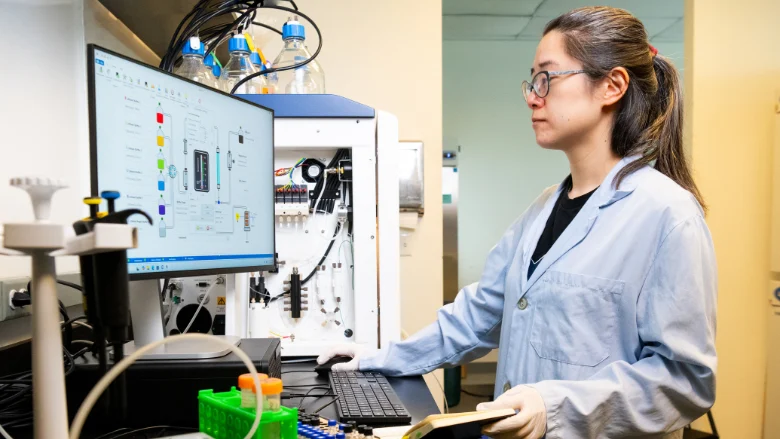
- Securing External Support: The partnership with MassTech solidified the project’s financial foundation, allowing for the acquisition of high-end analytical equipment, such as the amino acid analyzer currently being utilized by researchers like Dr. Lennie Cheung.
- Interim Launch: While the primary 17,000-square-foot facility is under construction, Tufts has made interim space available to immediate partners to begin the collaborative process.
- Full Launch Target: The facility is scheduled to open its doors in full by the fall of 2026, marking a new chapter in commercial-academic partnership.
Supporting Data: Addressing the Scale-Up Gap
The food-tech industry faces a specific, structural challenge: many innovations that succeed at the bench scale fail to translate into cost-effective, high-volume production. According to industry analysis, the cost of accessing private, high-spec facilities for fermentation or extrusion can be upwards of tens of thousands of dollars per month—a hurdle that often bankrupts startups before they can secure a Series A round of funding.
The Innovation Hub addresses this through a "shared infrastructure" model. By distributing the costs of high-end equipment—such as bioreactors, material characterization tools, and analytical chemistry suites—across multiple users, Tufts effectively lowers the barrier to entry for innovators.
Furthermore, the integration of a Test Kitchen provides a critical feedback loop. By allowing scientists to test how a novel protein or biomaterial performs in a culinary context, researchers can pivot their formulations in real-time, ensuring that "lab-grown" products meet the sensory expectations of the end consumer before they ever hit the market.

Official Responses and Strategic Partnerships
The Hub is designed to act as a magnet for intellectual capital, drawing heavily on the existing strengths of two major Tufts institutions:
- The Tufts University Center for Cellular Agriculture: This center has gained global recognition for its interdisciplinary approach to cultivated proteins, hybrid plant-animal cell systems, and novel biomaterials. The Hub will provide the physical "scale-up" capabilities that the Center’s theoretical research has been calling for.
- The Tufts Food and Nutrition Innovation Institute: Led by the Friedman School, this institute provides the regulatory, nutritional, and market-focused expertise needed to ensure that innovations are not just technologically possible, but nutritionally viable and economically scalable.
"We are building a bridge between the classroom and the consumer," said a university representative. "By providing the physical tools for prototyping alongside the intellectual expertise in nutrition and bioprocessing, we are creating a unique environment where the next generation of food can be born."
The inclusion of BioLabs—a leader in operating shared laboratory space—ensures that the incubator environment is managed with industry-standard protocols, facilitating a smooth transition for startups looking to eventually move into independent commercial facilities.
Implications: The Future of Global Food Systems
The launch of the Innovation Hub has profound implications for the future of food safety, sustainability, and global nutrition.
Redefining Sustainability
As the global population approaches 10 billion, traditional agricultural models are under extreme pressure. The research facilitated by the Hub—particularly in the realms of insect cell culture, plant-based biomaterials, and cellular agriculture—offers a pathway to significantly lower the carbon footprint of food production. By providing the tools to optimize these systems, Tufts is directly contributing to a more resilient and sustainable food supply chain.
Bridging the Regulatory Gap
The "Technology Sandbox" and the involvement of the Friedman School are particularly vital. As regulatory bodies like the FDA and USDA continue to refine the rules governing cell-cultured proteins and novel ingredients, having a facility that integrates "regulatory-ready" testing is a massive advantage. Startups can use the Hub to gather the data required for safety dossiers, essentially "baking in" compliance from the earliest stages of product development.
Economic Impact
By concentrating this level of infrastructure in Medford, Massachusetts, Tufts is further cementing the state’s status as a global hub for biotechnology. This facility is expected to act as a talent incubator, training the next generation of food scientists and engineers who will be required to manage the complex, high-tech food systems of the 21st century.
A Catalyst for Collaboration
Perhaps the most significant implication is the forced collision of disciplines. By placing food scientists, materials engineers, chefs, and nutritionists in the same physical space, the Hub encourages a cross-pollination of ideas. A material scientist might solve a texture issue for a plant-based meat company, or a nutritionist might discover a new way to stabilize bioactive compounds in a shelf-stable format, all within the same hallways.
As the industry looks toward the 2026 opening, the Innovation Hub for Food and Materials stands as a beacon of progress. It represents a shift away from isolated, proprietary research and toward a collaborative, open-access model that prioritizes global impact over individual gain. For the food-tech industry, the future is not just being imagined in Medford; it is being built.