Unlocking the "Forever" Code: UCR Researchers Map the Chemical Blueprint for Destroying PFAS
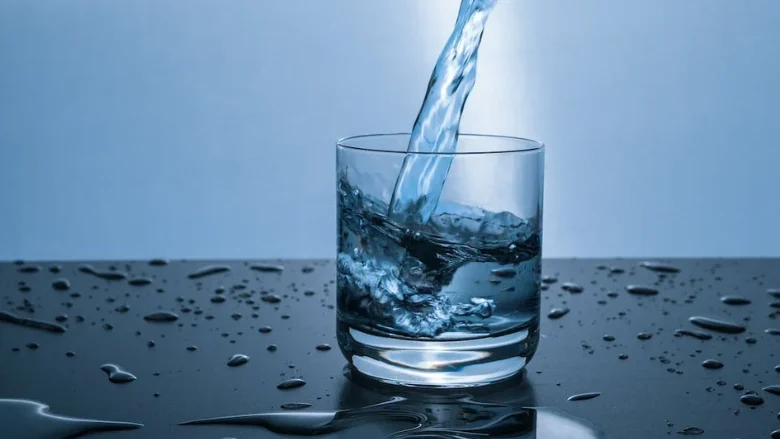
In a breakthrough that could reshape the global approach to water purification, researchers at the University of California, Riverside (UCR) have successfully mapped the complex chemical pathways required to dismantle per- and polyfluoroalkyl substances (PFAS)—the notoriously resilient pollutants commonly known as "forever chemicals."
The study, recently published in the journal Nature Water, provides a definitive look at how ultraviolet (UV) light can be harnessed to sever the exceptionally stable carbon-fluorine bonds that have made these substances a persistent menace to public health and the environment. By identifying the precise mechanisms of degradation, the UCR team has provided a scientific roadmap that could move PFAS treatment from experimental stages to widespread, optimized industrial application.
The PFAS Problem: A Legacy of Persistence and Health Harms
Since their commercial introduction in the 1940s, PFAS have been lauded for their unique ability to repel oil, water, and heat. This chemical utility made them a staple in a vast array of consumer and industrial applications, from nonstick cookware and stain-resistant fabrics to specialized firefighting foams and grease-proof food packaging. However, the very properties that make PFAS desirable—the strength of the carbon-fluorine bond—are what make them an ecological disaster.
These bonds are among the strongest in organic chemistry, resisting natural degradation processes such as microbial activity, sunlight, and heat. Consequently, once PFAS enter the environment, they stay there. They accumulate in soil, infiltrate groundwater, and eventually permeate the food chain, appearing in agricultural crops, livestock, and drinking water supplies.
The mounting evidence regarding the health implications of PFAS exposure is stark. Longitudinal studies have linked these substances to a spectrum of severe medical conditions, including elevated cholesterol levels, liver damage, compromised immune system response, developmental complications in children, and an increased risk of several types of cancer. As global regulatory bodies scramble to set safety limits, the necessity for robust, scalable, and effective remediation technologies has reached a fever pitch.
Chronology of a Chemical Challenge
The quest to destroy PFAS has been marked by decades of trial and error. Because these chemicals are so chemically inert, conventional water treatment methods—such as activated carbon filtration or reverse osmosis—often fail to actually destroy the molecules. Instead, they merely capture them, shifting the burden of the pollutant from the water to a filter or brine that still requires hazardous waste disposal.
For years, environmental engineers have experimented with Advanced Oxidation Processes (AOPs), including UV-based systems, to tackle the problem. However, the field has been plagued by a lack of fundamental understanding. Many earlier reports in scientific literature suggested mechanisms for degradation based on theoretical assumptions rather than rigorous, evidence-based experimentation.
The UCR research project, led by Dr. Jinyong Liu, Associate Professor of Chemical and Environmental Engineering, sought to replace these assumptions with empirical data. Over the course of their investigation, the team utilized controlled laboratory environments to track the transformation of PFAS molecules in real-time when exposed to UV light in the presence of sulfite. This methodical approach allowed the researchers to identify not only the primary degradation pathways but also the specific intermediate byproducts that emerge during the breakdown process.
Supporting Data: The Anatomy of Degradation
The findings detailed in Nature Water provide a granular view of the chemistry involved. The researchers discovered that when PFAS molecules are exposed to UV light and sulfite, the process triggers the generation of highly reactive, hydrated electrons.
These electrons are the "heavy hitters" in the chemical reaction; they launch a targeted attack on the carbon-fluorine bonds. As the study illustrates, this is not a singular event but a complex, multi-step sequence:
- Initiation: The hydrated electrons initiate the breakdown of the carbon-fluorine bonds, stripping fluorine atoms from the molecular chain.
- Fluoride Release: The stripped fluorine atoms are released into the water as harmless fluoride ions, effectively "defluorinating" the structure.
- Fragmentation: As the fluorine is removed, hydroxyl radicals and hydroxide ions move in to facilitate the breaking of carbon-carbon bonds. This effectively shreds the backbone of the PFAS molecule.
- Sequential Breakdown: The process creates shorter-chain compounds, which the researchers found to be less stable and more susceptible to further, rapid defluorination.
This cascade effect is significant because it suggests that once the initial "shield" of the molecule is breached, the remainder of the structure can be dismantled with increasing efficiency.
Official Responses and Scientific Implications
The significance of the UCR study lies in its utility for the next generation of environmental engineering. According to Dr. Liu, the primary goal of the study was to move beyond the "black box" approach to water treatment.
"Knowing this degradation mechanism gives us a better understanding of how to optimize the conditions for PFAS destruction and achieve deeper degradation," Dr. Liu stated. "It gives us a much better roadmap for improving the technology."
By understanding exactly which conditions—such as specific light intensities, pH levels, or chemical additives—favor the most complete destruction, engineers can now begin to design treatment systems that are more cost-effective and energy-efficient. Furthermore, the study serves as a corrective to the wider scientific community, highlighting the danger of relying on theoretical models that have not been tested under rigorous laboratory conditions.
Beyond immediate remediation, the research offers a potential pathway for preventative design. If the chemical industry can understand how these bonds are broken, they can potentially redesign future fluorinated compounds to be "benign-by-design"—materials that retain their utility during their lifecycle but possess "weak links" that allow for easier degradation once they reach a treatment facility.
"By knowing the degradation mechanisms, we can give solid input to the fluorocarbon industry to tell them how to design compounds that can more easily be treated to protect the environment," Dr. Liu added.
The Future of PFAS Remediation
The UCR study arrives at a critical juncture in the global fight against "forever chemicals." As governments move to enact stricter legislation and communities demand cleaner water, the ability to destroy PFAS at the source—rather than just isolating them—is becoming the "holy grail" of environmental protection.
However, the researchers caution that the transition from a laboratory breakthrough to a municipal-scale application will require further development. Scaling the UV-sulfite process will require careful consideration of energy consumption, the management of water chemistry, and the integration of these systems into existing water treatment infrastructure.
Nevertheless, the UCR team’s work provides the fundamental scientific foundation required to make these advancements. By mapping the chemical pathways that finally allow us to "unmask" and dismantle these stubborn compounds, researchers have taken a giant leap toward a future where "forever chemicals" may no longer be quite so permanent.
As the industry reviews these findings, the focus will likely shift toward pilot programs that test these mechanisms in real-world water matrices—complex environments containing organic matter and minerals that could influence reaction efficiency. If the success in the lab can be mirrored in the field, the UCR study may well be remembered as the turning point in the effort to purge our water systems of one of the most persistent threats of the 21st century.