Unpacking the Plate: The Alarming Link Between Processed Meats and Cancer
Washington D.C. – For decades, the convenience of a bacon breakfast, a ham sandwich, or a hot dog at a ballgame has been a staple of the American diet. Yet, beneath the surface of these everyday meals lies a stark warning from the world’s leading cancer research institutions: processed meats are unequivocally linked to cancer. A comprehensive analysis, including critical insights from health experts, quantifies these risks, revealing a public health challenge of significant proportions.
The Unmistakable Verdict: Processed Meats as Group 1 Carcinogens
In 2018, the International Agency for Research on Cancer (IARC), a highly respected arm of the World Health Organization (WHO), delivered a groundbreaking report that sent ripples through the food industry and public health communities alike. The agency formally classified processed meats—a category encompassing bacon, ham, hot dogs, sausage, and lunch meats—as a Group 1 carcinogen. This designation places them in the same category as substances like asbestos and tobacco, indicating "sufficient evidence" that these foods cause cancer in humans.
The IARC’s director at the time underscored the findings, stating that they "further support current public health recommendations to limit intake of meat." However, the classification was not without its detractors. Critics, including those with ties to the pesticide industry, immediately questioned the perceived equivalence, provocatively asking how eating a hot dog could be in the same league as exposure to mustard gas or asbestos.
The distinction, as clarified by leading health educators, lies in the nature of the classification itself. Group 1 designation pertains to the strength of evidence that an agent causes cancer, not necessarily the magnitude of danger it poses. As one expert explains, while both plutonium and a pastrami sandwich might be Group 1 carcinogens (meaning both are known to cause cancer), it is undeniably safer to consume the latter. This nuance is crucial for understanding the IARC’s position and the subsequent public discourse. The classification means that the scientific community has amassed robust evidence confirming a causal link, not that the immediate risk level is identical across all Group 1 substances.
Quantifying the Risk: From Relative to Absolute Impact
So, just how dangerous are these seemingly innocuous foods? The IARC report, alongside subsequent analyses, provides a clearer picture. Consuming just 50 grams of processed meat daily—roughly equivalent to one hot dog, two breakfast sausage links, or two slices of Canadian bacon or ham—is associated with an 18% increased relative risk of colorectal cancer.
To put this into perspective:
- A daily sandwich containing one or two slices of bologna could elevate an individual’s colorectal cancer risk by 18%.
- A more substantial portion, such as a half-pound pastrami on rye, could escalate that risk by as much as 80%.
Understanding the difference between absolute risk and relative risk is vital here. While an 18% relative increase might sound alarming, it translates differently at an individual level. Given that the lifetime absolute risk of developing colorectal cancer is approximately 5% (or 1 in 20), an 18% relative increase would nudge that absolute risk from 5% to about 6%. For an individual, this might seem like a small shift.
However, the impact on a population scale is profound. An 18% reduction in risk, if applied across the entire United States population, could prevent an estimated 25,000 new cases of colorectal cancer every year. This translates to 25,000 fewer families grappling with a devastating diagnosis annually, highlighting the immense public health potential of even seemingly minor dietary adjustments—such as swapping a daily bologna sandwich for hummus or choosing a veggie dog.
Colorectal Cancer: A Silent Nemesis
Colorectal cancer holds a grim distinction in the United States, ranking as the second leading cause of cancer death for men and women combined, surpassed only by lung cancer. For individuals who do not smoke, colon and rectal cancer often emerge as the primary cancer threat. The good news, however, is that this risk is significantly modifiable through diet. By eliminating just one serving of processed meat from the daily diet, individuals can reduce their risk of developing this formidable disease by approximately one-fifth.
The severity of this risk can be further illuminated through striking comparisons. During testimony before the Dietary Guidelines Scientific Committee, one health expert presented a powerful, albeit initially provocative, metaphor: "We try not to smoke around our kids, why would we send them to school with a bologna sandwich?" This statement, far from hyperbole, is grounded in scientific data. The Surgeon General has reported that living with a smoker increases an individual’s lung cancer risk by 15%. This means that chronic exposure to secondhand smoke carries a lung cancer risk almost identical to the colorectal cancer risk incurred by daily consumption of a serving of processed meat. Both are preventable exposures with significant health consequences.
Official Responses and Industry Counterarguments
The IARC’s classification and the subsequent calls for dietary changes were met with strong reactions, particularly from the meat industry. Critics challenged the report, often downplaying the cancer risk and emphasizing other perceived "benefits" of processed meats, such as convenience and affordability. The industry’s argument often pivoted on the idea that dietary recommendations must balance risks with benefits before advising consumers on what to eat. In this context, the "benefits" of lunch meat, such as its ease of preparation and shelf stability, were frequently highlighted as outweighing the health risks.
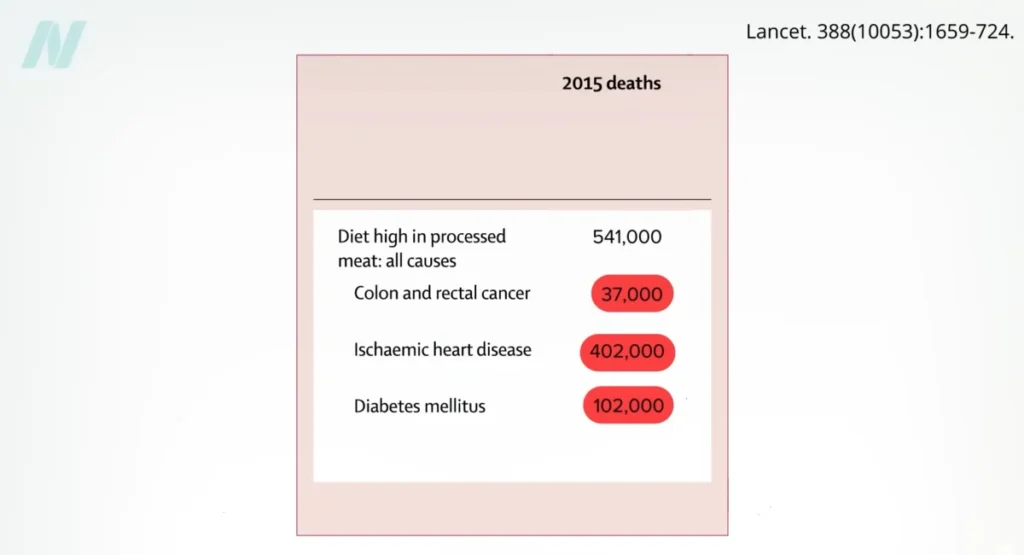
However, a closer examination of the broader health landscape reveals a more comprehensive and alarming picture. While the initial focus of the "meat terrorism" accusation against the WHO centered on the 37,000 colorectal cancer deaths attributed to higher processed meat intake, this figure represents only a fraction of the total burden. When accounting for other major diseases linked to processed meat consumption—such as the estimated 100,000 deaths from diabetes and 400,000 deaths from heart disease—the actual annual mortality attributable to processed meats in the United States could soar to half a million deaths. This expanded view underscores that the health implications of processed meat extend far beyond just colorectal cancer, encompassing a spectrum of chronic illnesses.
Furthermore, post-IARC decision research has continued to solidify and expand the understanding of processed meat’s carcinogenic potential. Subsequent studies have indicated potential links between processed meat consumption and an increased risk of other cancers, including prostate, breast, and pancreatic cancers, painting an even broader picture of its detrimental impact on public health.
Stalled Progress and Policy Gaps
Despite the mounting scientific evidence and growing public health concerns, data indicates a worrying stagnation in consumer behavior. Research reveals that "despite growing public health concerns about processed meat consumption, there have been no changes in the amount of processed meat consumed by US adults over the last 18 years." This lack of behavioral shift points to significant gaps in public health messaging and policy.
A critical point of failure has been the absence of explicit, science-based statements regarding processed meat in official dietary guidelines. For instance, the US Dietary Guidelines for Americans, despite the IARC’s definitive classification, have conspicuously avoided mentioning processed meat as a carcinogen. Advocates argue that publishing "an explicit and science-based statement on processed meat" in these guidelines would be a crucial step in informing the public and influencing dietary choices. However, the scientific committee responsible for the 2020 Dietary Guidelines made no such recommendation, representing a missed opportunity to address a major public health concern at a national policy level.
The challenge extends beyond government guidelines into the medical community itself. Shockingly, studies have found that "70% of cancer patients have never received nutrition advice from their [medical] providers during or after treatment." This significant disconnect means that even individuals grappling with a cancer diagnosis—a moment when lifestyle changes could be most impactful—are often left without crucial guidance on dietary interventions that could improve their prognosis or quality of life. The implication is that medical education and practice are not adequately integrating nutritional science into patient care, leaving a vast majority of patients uninformed about potentially life-saving dietary adjustments.
Moving Forward: Public Health Action and Industry Innovation
The urgency of addressing processed meat consumption has led to calls for robust public health action. As one scientific cancer-research journal article asserted, "despite the continued obfuscation of the issue by the meat industry—they learned well from the tobacco merchants—meat should continue to be a focus of public health action." This strong statement highlights the perceived parallels between the tactics employed by the tobacco industry in the past and those currently used by segments of the meat industry to downplay health risks.
Encouragingly, some jurisdictions are taking decisive steps. New York City, for example, is leading the way by passing legislation to ban processed meats from school meals. This proactive measure reflects a growing recognition that protecting the health of future generations requires bold policy decisions, ensuring that children are not routinely exposed to known carcinogens in their daily diets. The concept of "not giving our kids carcinogens" is, for many, a common-sense approach to public health.
Meanwhile, the processed meat industry itself is exploring avenues for reformulation. This approach is akin to pharmaceutical strategies where additional drugs are prescribed to mitigate the adverse effects of a primary medication. In this context, companies are investigating ways to alter processed meat products to reduce their harmful impact, rather than abandoning them altogether. For instance, the addition of fiber to hot dogs is being explored as a potential strategy to counterbalance some of the associated risks, aiming to "reduce the cancer load by changing how it’s processed instead of by banning processed meat altogether." While such innovations could offer incremental improvements, public health advocates emphasize that fundamental dietary shifts remain the most impactful strategy for mitigating the comprehensive health risks associated with processed meat consumption.
Conclusion
The evidence is clear and compelling: processed meats are a significant dietary contributor to colorectal cancer and are implicated in a much broader spectrum of chronic diseases, including heart disease and diabetes. While the debate around absolute versus relative risk can be complex, the population-level impact is undeniable, potentially preventing tens of thousands of cancer cases and hundreds of thousands of deaths annually.
The reluctance of official dietary guidelines to explicitly address these risks, coupled with the lack of nutritional counseling in medical settings, represents a critical failure in public health. As cities like New York take bold steps to protect their citizens, the broader conversation must shift from debating the existence of the risk to implementing effective strategies for prevention. Empowering individuals with accurate information, integrating nutrition into healthcare, and enacting supportive public policies are essential steps toward reducing the burden of preventable diseases linked to our dietary choices. The time for a frank and widespread acknowledgment of the risks associated with processed meats is long overdue, paving the way for healthier food environments and better health outcomes for all.
Further Reading:
- IARC: Processed Meat Like Bacon Causes Cancer (For more on the initial classification)
- Highlights from the 2020 Dietary Guidelines Hearing (For insights into official policy discussions)