The Art of the Rustic Galette: A Masterclass in Gluten-Free Baking
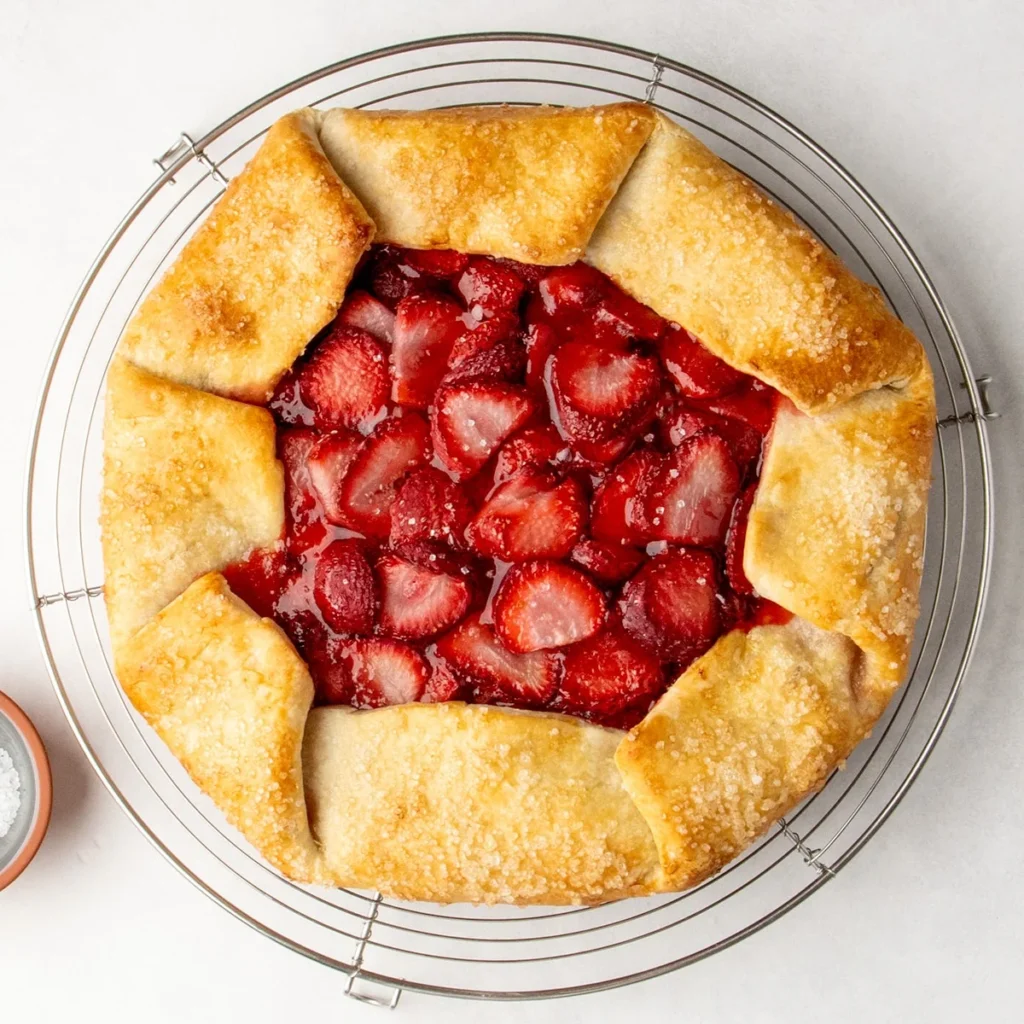
In the world of professional pastry, the galette is often heralded as the ultimate test of a baker’s intuition. Unlike the structured, often intimidating geometry of a traditional double-crust pie, the galette—a free-form, rustic French tart—offers an elegant solution for those seeking the quintessential summer dessert without the structural anxieties of a pie pan. For the gluten-free community, this dessert has become a revelation, proving that one can achieve a buttery, shattering, golden-brown crust without the use of wheat.
As fresh, seasonal berries hit their peak, home bakers and culinary enthusiasts are turning their attention toward this forgiving, yet sophisticated, treat. By prioritizing high-quality, gluten-free flour blends and precise temperature control, the gluten-free galette has evolved from a “good-for-gluten-free” alternative into a staple that rivals any traditional bakery offering.
Main Facts: The Anatomy of a Perfect Galette
The defining characteristic of a successful galette is the balance between a crisp, sturdy base and a vibrant, jammy fruit center. When working without gluten—the protein responsible for elasticity and structure in traditional doughs—bakers must rely on specific techniques to ensure the pastry remains flaky rather than brittle or gummy.

The recipe’s success hinges on three primary pillars:
- Temperature Management: Keeping butter cold is non-negotiable. Cold butter creates small pockets of steam as it hits the oven heat, which is the secret to a flaky, multi-layered crust.
- Starch Science: Incorporating the correct amount of thickening agent—typically tapioca starch—is vital. It interacts with the juices released by macerated strawberries to create a glossy, stable filling that doesn’t bleed into the crust.
- The "Fold and Pleat" Method: Because there is no pan to contain the filling, the crust must be rolled slightly thicker (roughly 1/4-inch) and pleated around the fruit, creating a natural, decorative border that traps the filling while allowing the center to caramelize.
Chronology: A Step-by-Step Approach to Assembly
Creating a gluten-free galette requires a methodical approach. For those looking to replicate this at home, the process follows a strict timeline designed to ensure maximum structural integrity.
Phase 1: The Crust Development
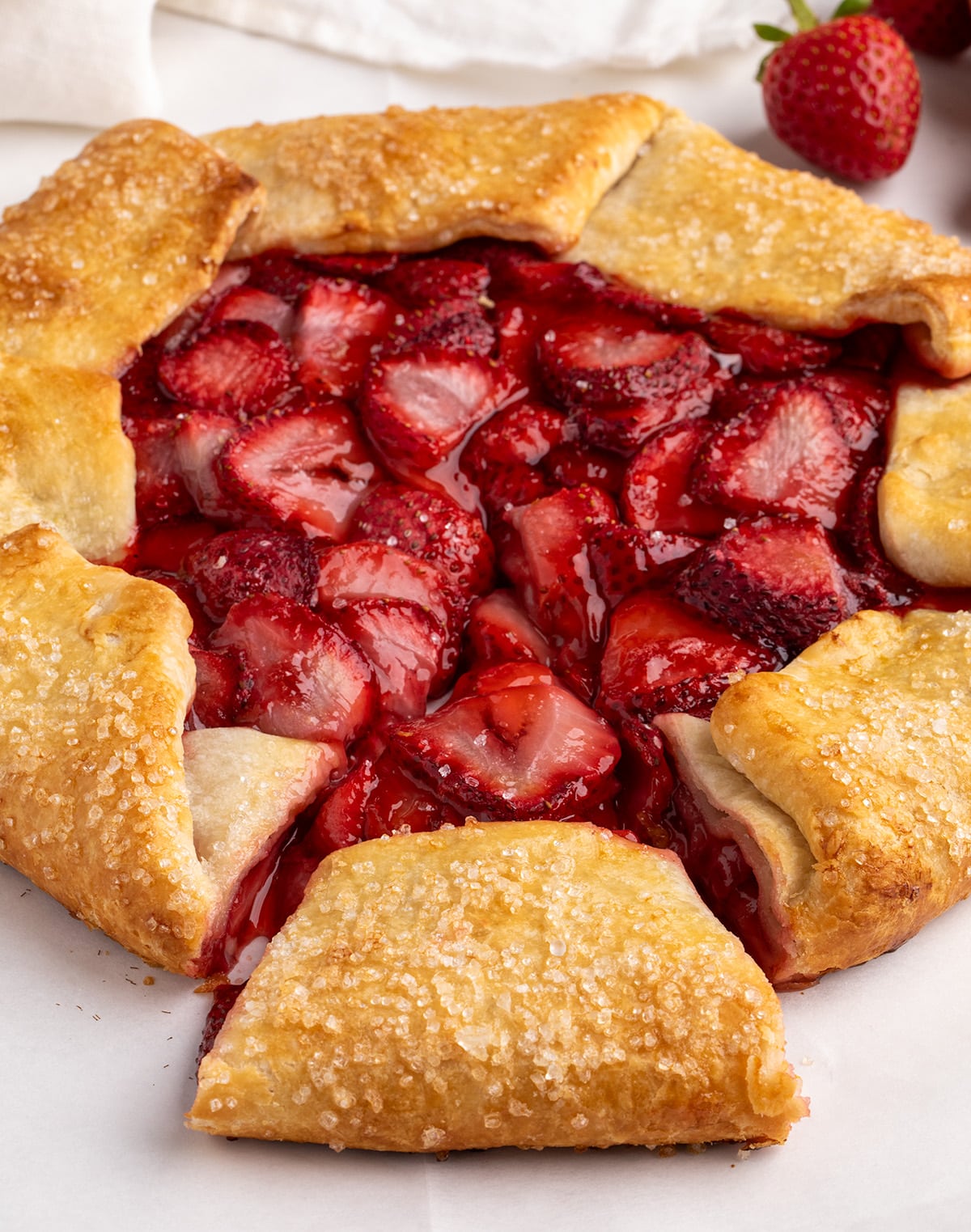
The process begins by whisking dry ingredients—a high-quality gluten-free flour blend, baking powder, and a touch of salt. The inclusion of xanthan gum is critical if not already present in the flour blend, as it mimics the binding properties of gluten. Once the cold, chopped butter is integrated into pea-sized shards, ice-cold water is added sparingly. The goal is a dough that is just hydrated enough to hold its shape. The disk is then chilled for at least 30 minutes to firm up the fats.
Phase 2: Preparing the Macerated Filling
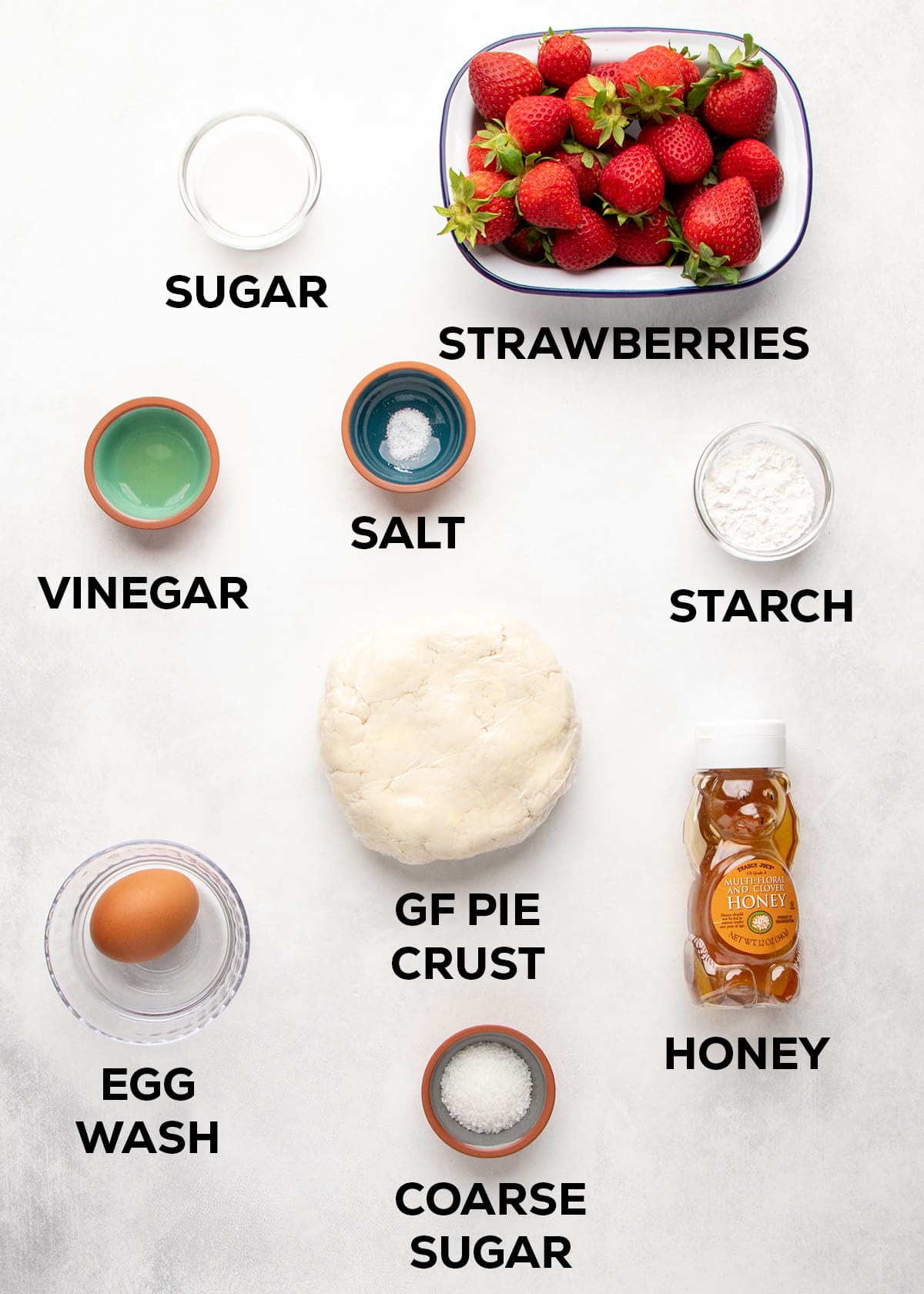
While the dough rests, the strawberries are hulled and thickly sliced. By tossing the berries with granulated sugar, a dash of salt, and a hint of vinegar, bakers can draw out excess moisture. The addition of tapioca starch is the final step in this phase, ensuring that as the berries release their natural sugars and juices in the oven, they thicken into a rich syrup rather than a runny liquid.
Phase 3: The Assembly and Bake
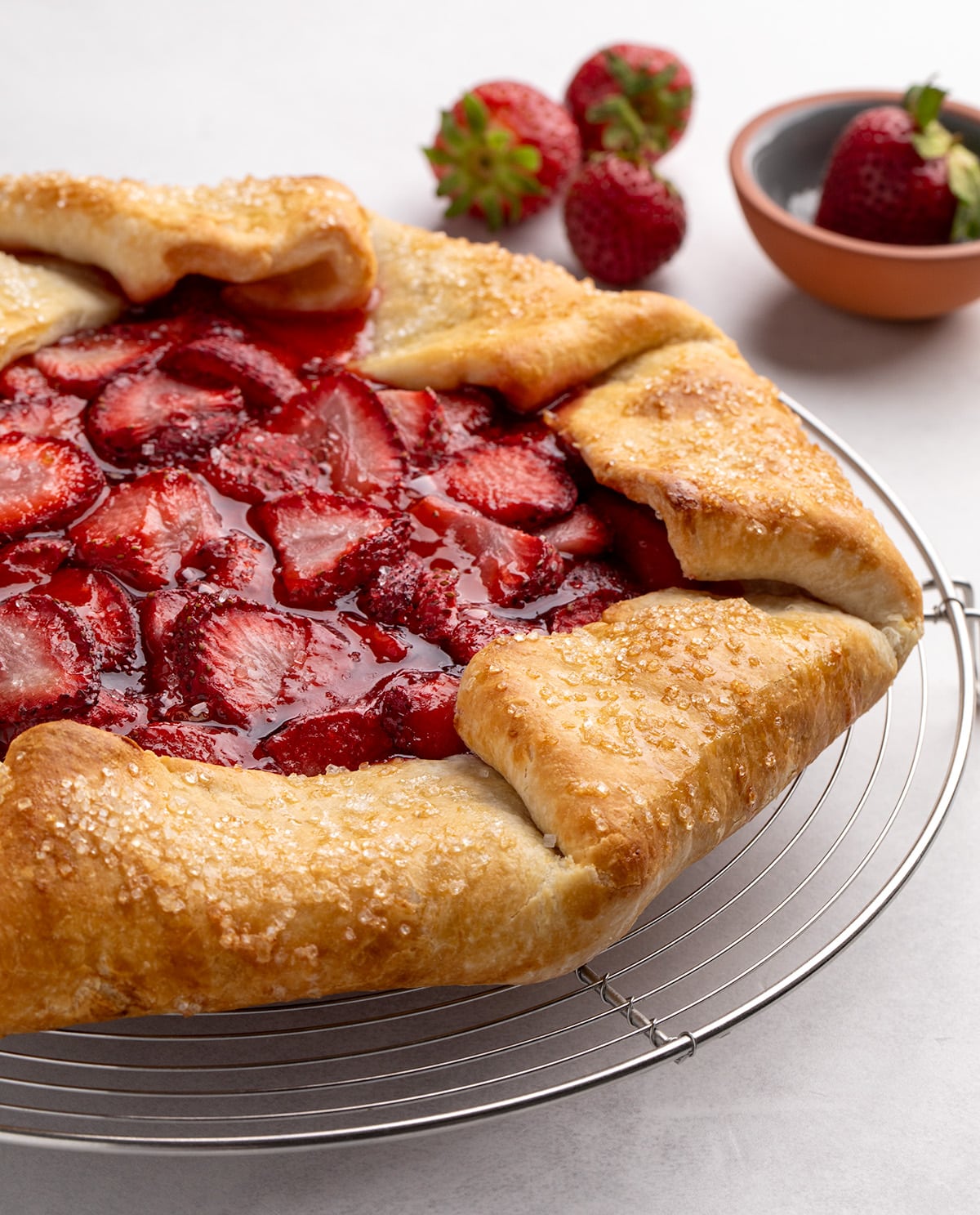
Once the dough is rolled out on a floured surface to a 13-to-14-inch round, it is transferred to parchment paper. A light brush of honey serves as a "glue" and browning agent. The fruit is piled in the center, leaving a two-inch margin, which is then folded up and over the edges of the fruit. A final brushing of egg wash and a dusting of coarse sugar provide the signature golden, crunchy exterior before the entire assembly is returned to the refrigerator for a final chill—a professional secret that ensures the butter remains solid until the very moment it hits the oven’s heat.
Supporting Data: Nutritional and Technical Considerations
For many, the transition to gluten-free baking is fueled by necessity, but the result here is a dessert that fits within a moderate nutritional profile. Each slice contains approximately 320 calories, with 14 grams of fat and 6 grams of protein.
| Metric | Amount per Serving |
|---|---|
| Calories | 320 kcal |
| Carbohydrates | 41g |
| Protein | 6g |
| Fat | 14g |
| Sugar | 10g |
From a technical perspective, the choice of starch is significant. While cornstarch is common, tapioca starch is frequently favored by professionals for its ability to create a clear, glossy sheen. Unlike potato or arrowroot starch, which can occasionally impart a cloudy or "starchy" mouthfeel when used in high volumes, tapioca creates a smooth, translucent finish that visually highlights the freshness of the strawberries.
Official Responses and Expert Insights
Industry experts, including recipe developer Nicole Hunn, emphasize that the greatest barrier to entry for many home bakers is the fear of failure. "Gluten-free baking doesn’t have to be a compromise," Hunn notes. "When you understand how to manipulate the fat and manage the moisture, the result is indistinguishable from traditional wheat-based pastry."
Professional bakers often caution against "over-hydration." In gluten-free dough, once the moisture level crosses the threshold from "hydrated" to "wet," the structural integrity of the crust collapses. The use of a simple syrup or honey wash, as suggested in the recipe, is an industry-standard technique to ensure that even the most moisture-heavy fruits do not compromise the crispness of the base.
Implications: The Future of Home Baking
The resurgence of the galette in home kitchens signals a broader trend: a move toward simplified, ingredient-focused desserts. As consumers become more educated about gluten-free options, the expectation for quality has risen. No longer are people willing to accept dense, flavorless pastries. This recipe illustrates that with the right flour blend—such as Better Batter or Bob’s Red Mill 1-to-1—the rustic charm of a fruit tart is accessible to everyone.
Furthermore, the versatility of the galette holds profound implications for waste reduction. Because the recipe is easily adapted to seasonal stone fruits, apples, or frozen berries, it allows home bakers to utilize whatever is currently in season or in their pantry.
Final Recommendations for Success:
- The "Pre-Chill" Rule: Never bake a warm crust. If the butter has softened during the assembly process, the crust will lose its shape and flakiness. A 15-minute stint in the freezer or refrigerator before baking is the most important step in the process.
- Storage for Success: While the galette is best served warm on the day it is baked, it remains viable for up to five days when refrigerated. To restore its original texture, a quick reheat in a toaster oven at 300°F is highly recommended.
- Dairy-Free Adaptations: For those with dairy sensitivities, the transition to vegan butter or shortening is seamless, provided the fat remains cold. A 50/50 mix of vegan butter and shortening often yields the best structural results.
In conclusion, the gluten-free strawberry galette is a testament to the fact that constraints in the kitchen often lead to the most creative and rewarding culinary outcomes. By mastering the delicate balance of heat, starch, and fresh fruit, any baker can bring a slice of the French countryside to their own table, proving that simplicity is, indeed, the ultimate form of sophistication.