The Last Guardian of the Vine: Emidio Pepe and the End of an Era

When Emidio Pepe began bottling wine in the rugged, sun-drenched hills of Abruzzo in 1964, the Italian wine industry was undergoing a radical metamorphosis. Across the country, the post-war industrial boom was ushering in an age of stainless steel, precise chemical additives, and rapid mechanization. The prevailing philosophy was one of efficiency and uniformity; modern enology promised to strip away the "imperfections" of nature to create wines that were consistently clean, stable, and commercially viable for the burgeoning international market.
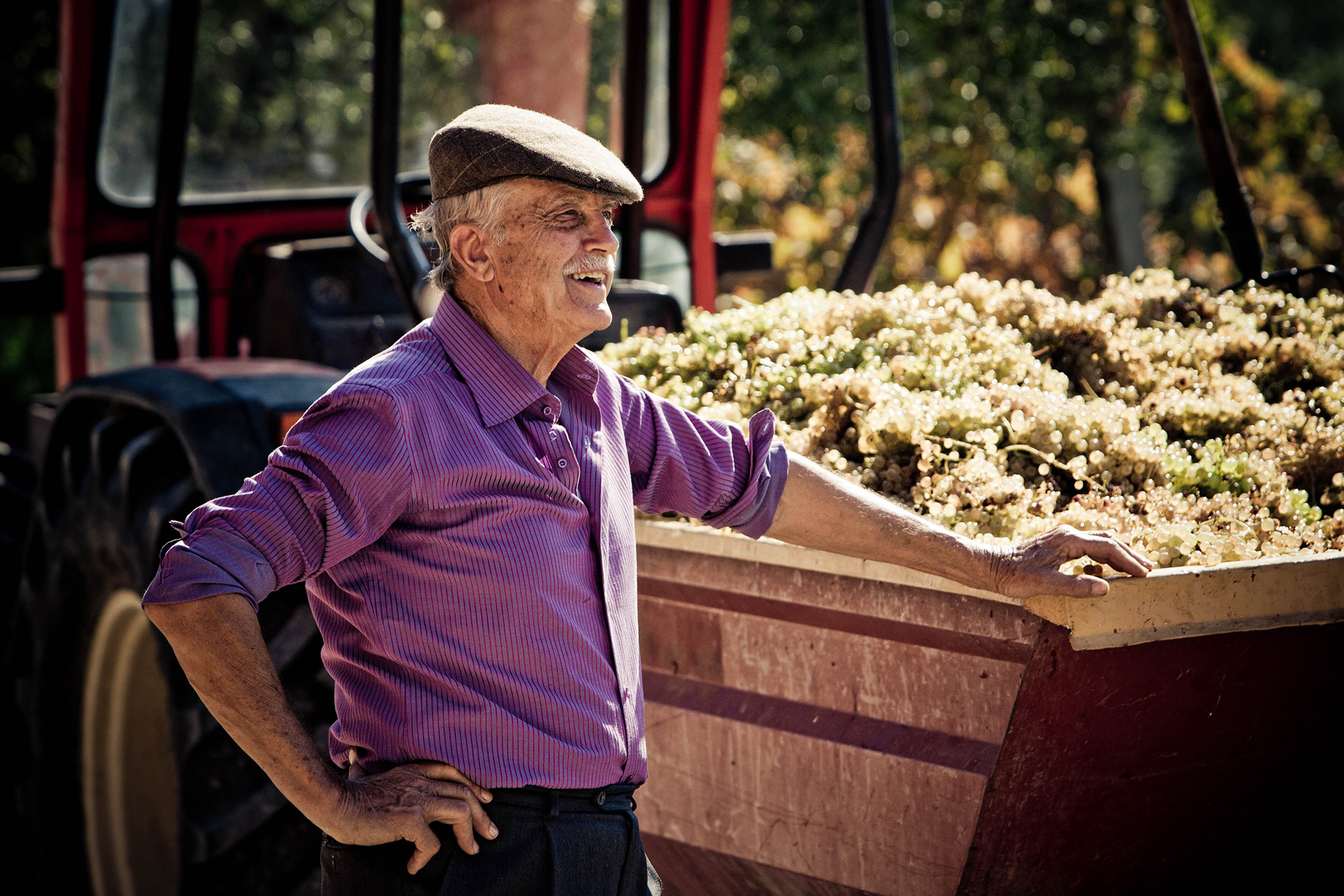
Emidio Pepe chose a different path. He chose to look backward to move forward, grounding his practice in the ancestral wisdom of his predecessors. On July 28, 2026, just one day after celebrating his 94th birthday, Pepe passed away. While the world would eventually come to label him a pioneer of "natural" and "biodynamic" wine, such monikers feel reductive. Pepe was, in truth, a living bridge—a man who stood firmly between the archaic, pre-industrial agricultural world of his youth and the hyper-modern global wine industry that eventually circled back to find him.
A Chronology of Stubborn Continuity
Emidio Pepe’s life was not a narrative of adaptation, but of persistence. Born into a world where farming was an extension of the land itself, he never viewed his work as "winemaking" in the industrial sense.
- 1964: The inaugural bottling. While his peers were installing automated presses and industrial filters, Pepe began his journey with just 1.5 hectares, focusing on the native Montepulciano and Trebbiano grapes.
- The 1970s–1980s: A period of professional isolation. As the Italian wine industry aggressively embraced synthetic pesticides and heavy intervention, Pepe’s refusal to use chemicals or commercial yeasts was viewed as eccentric, if not professionally reckless.
- 2016: The cultural turning point. Decades after he began his work, a new generation of wine enthusiasts in cities like New York began to fetishize "low-intervention" wines. At events like Big Glou in Williamsburg, his granddaughters, Chiara and Elisa, represented a legacy that had finally become the vanguard of global taste.
- 2026: A legacy solidified. Following his death, the wine world mourned not just a producer, but a standard-bearer who had remained entirely unchanged by the trends that sought to define him.
The Method: A Rejection of Industrialism
To understand the magnitude of Pepe’s legacy, one must understand the radical nature of his cellar. In an era where "cleanliness" was achieved through lab-grade intervention, Pepe’s winery remained a sanctuary of tradition.
Vineyards were cultivated entirely by hand, eschewing synthetic chemicals in favor of a deep, ecological understanding of the soil. The winemaking process was similarly archaic: whites were crushed by foot, reds were meticulously destemmed by hand, and fermentations were left to occur spontaneously in glass-lined concrete vats. There was no filtration, no stabilization, and, crucially, no added sulfites.
This approach was not a marketing tactic; it was a lifestyle. During a 2019 visit to the estate, observers noted that the rhythms of the winery were indistinguishable from the rhythms of the home. Whether it was the maintenance of the vines, the simple, honest meals shared by the family, or the quiet ritual of reading the newspaper, Pepe’s life was defined by a seamless integration of existence and labor. He did not see a reason to abandon what worked, even when the rest of the world insisted that he was a relic of a "kinder, simpler past."
Supporting Data: The Longevity of Conviction
Critics of natural winemaking often point to the lack of chemical stability as a fatal flaw. However, the cellar at the Pepe estate serves as an irrefutable data point against this skepticism. Emidio Pepe’s wines have consistently demonstrated a capacity for aging that defies conventional enological logic.
During a visit to the legendary cellar of the late Luigi Veronelli—a transformative Italian writer who shared Pepe’s belief that wine should be "cultivated, not manufactured"—the proof was in the glass. A 1975 Montepulciano, more than four decades after its harvest, was found to be remarkably vibrant, possessing a structural integrity that most modern, mass-produced wines could only dream of. Similarly, a 1971 Trebbiano, tasted over half a century after it was bottled, offered a sensory experience that stood as a definitive rebuke to the idea that modern additives are necessary for longevity.
Pepe’s habit of holding back a significant portion of every vintage—sometimes more than 50%—was not merely a logistical choice; it was an act of archiving history. These bottles represent the objective proof that native Abruzzo grapes, when treated with respect and patience, possess a soul that cannot be synthesized.
Official Responses and Reflections
The passing of Emidio Pepe has prompted a global reflection on the role of the vigneron. His granddaughter, Chiara de Iulis Pepe, who has become the face of the winery’s future, captured the essence of his final years:
"He lived an absolutely incredible life, full of all things," Chiara remarked. "He felt he had to prove himself his whole life, and towards the end, he got the moral recognition he was looking for."
This "moral recognition" is perhaps the most significant development in the late-stage career of the patriarch. Having been dismissed for decades as an old-fashioned farmer clinging to outdated tools, he lived to see his methods heralded as the gold standard of environmental stewardship and artistic integrity.
His daughters, Sofia and Daniela, alongside Chiara and the rest of the family, have issued a collective commitment to the future. "We feel the privilege to have had him in our lives and to have learned from him," they stated. "We will work relentlessly to honor the legacy he has left us."
The Implications for the Global Wine Industry
Emidio Pepe’s death marks the passing of one of the final direct links to a world before wine became a corporate industry. His life serves as a profound case study in the tension between modernization and authenticity.
The Return to the Source
The modern wine industry is currently in a state of flux. As consumers become increasingly concerned with the provenance of their food and drink, the "natural wine" movement has surged in popularity. However, for many producers, "natural" is a branding exercise. For Pepe, it was an ontological state. The implication for the industry is clear: true sustainability cannot be achieved through the application of new technology, but through the cultivation of deep, generational knowledge.
The Farmer as Philosopher
Pepe’s life suggests that the most radical thing one can do in an era of hyper-acceleration is to slow down. By dancing the waltz, growing his own tomatoes, and pruning his own fruit trees, he rejected the artificial separation between the man and his work. He taught that the "perfection" of a wine is not found in the lab, but in the patience of the farmer who is willing to wait for the soil to speak.
A Legacy Beyond the Bottle
As the industry moves forward, it faces a crossroads. Will it continue to pursue the path of the factory, or will it learn the lesson that Emidio Pepe taught for over sixty years? His legacy is not just a collection of bottles or a specific technique of winemaking; it is a challenge to the industry to reconsider what it values.
In the end, Emidio Pepe did not change. He remained steadfast in his refusal to modernize what he believed did not need improving. And in a final, poetic irony, the modern world—with all its complexity and confusion—eventually circled back to find that the answer had been there all along, buried in the soil of Abruzzo, waiting for someone with the patience to let it grow. His life serves as a reminder that while fashions in wine may shift, the truth of the vine remains constant.