The Siri Paradox: Why Apple’s AI Revolution is Facing a Quiet Identity Crisis
When Apple first unveiled the developer beta of its overhauled Siri AI, the tech world was abuzz with the promise of a truly personal, context-aware digital companion. Early hands-on testing—such as using the assistant to navigate the complex, hilly streets of San Francisco—revealed an interface that felt distinctly "Apple-y": sleek, intuitive, and impressively reliable. For a brief moment, it seemed that the long-standing punchline of the tech industry had finally graduated into a genuine "everything tool."
Yet, as the novelty of the iOS 27 beta wore off, a curious phenomenon emerged. For many early adopters, the initial excitement gave way to a subtle, almost imperceptible drift back toward old habits. While the tool remains objectively more powerful than its predecessors, its role in the daily lives of power users is far from the revolution many had anticipated. This is the story of the Siri Paradox: a leap forward in capability that is struggling to overcome the inertia of human behavior.
The Chronology of a Summer Fling
The Initial Infatuation
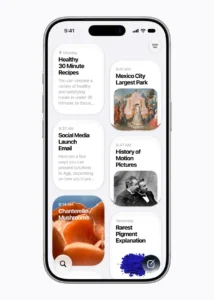
In the early days of the iOS 27 beta, the integration of Siri AI felt like a genuine breakthrough. The system’s ability to tap into "personal context"—indexing the chaotic sprawl of one’s own digital life, from years-old text messages to buried camera roll photos—was a revelation. Searching for a specific confirmation number or a photo from a trip five years ago became a task of seconds rather than minutes. The interface, shifting away from the static, voice-only interactions of the past toward a fluid, chatbot-style experience, felt sophisticated and purposeful.
The Gradual Decline
However, as the summer months progressed, the frequency of interaction began to taper off. This decline was not born of frustration or technical failure; the tool continued to function exactly as advertised. Instead, the decline was a symptom of habit. Despite the power of the new assistant, the impulse to manually scroll through Instagram or perform an "aimless Yelp expedition" remained deeply ingrained. The friction of opening a chatbot, even one as sleek as Apple’s, often felt like a greater hurdle than the manual effort of searching for information oneself.
The Shift to Neutrality
By the time autumn arrived, the relationship between user and AI had shifted from enthusiastic adoption to a lukewarm neutrality. The assistant had effectively become the new, souped-up search bar for the smartphone—a utility to be used when strictly necessary, rather than an omnipresent companion. Old habits, it turns out, are not easily overwritten by software updates, no matter how sophisticated the underlying Large Language Models (LLMs) may be.
Supporting Data: The Power User vs. The Mainstream
While my own experience trended toward disuse, the broader market outlook tells a more complex story. The divergence between "power users" and the general public is significant.
The Power User Disconnect
For those who have already integrated third-party AI agents like Anthropic’s Claude into their daily workflow, Siri AI faces stiff competition. When a user has already spent months training their own prompts, workflows, and preferences into a dedicated AI app, the "switching cost" of migrating those tasks to Siri—even with its deep system-level integration—can feel prohibitive.
The "Default" Advantage
Conversely, industry analysts argue that the habits of a few vocal enthusiasts do not represent the trajectory of the massive iPhone installed base. Dipanjan Chatterjee, vice president and principal analyst at Forrester, notes that the vast majority of users prioritize the path of least resistance.
"Will Siri bear the weight of criticism for not being as good as some of its peers?" Chatterjee asks. "Sure. Will it make a difference to the vast installed base of iPhone users and cause them to look elsewhere? Not a chance."
For the average consumer, the fact that Siri is the "default" software—built into the OS, requiring no extra downloads, and operating within the familiar Apple ecosystem—is its most powerful feature. It does not need to be the best in the world to succeed; it only needs to be convenient enough.
Official Perspectives and Market Implications
Trust as the Competitive Edge
Apple’s long-standing, aggressive stance on user privacy serves as a critical differentiator in the AI arms race. As public skepticism regarding how AI companies harvest data continues to grow, Apple’s model—which emphasizes on-device processing and granular data controls—offers a level of comfort that competitors often struggle to match.
Ramon Llamas, a research director at the International Data Corporation (IDC), suggests that this trust is the primary bridge Apple will use to bring its user base into the AI era. "Users deep in the Apple ecosystem who previously had qualms about the safety of other AI tools may be open to trying the new Siri," Llamas explains. The brand equity associated with "privacy-first" computing is a moat that other AI-native startups simply do not possess.
The "Skeptic" Segment
Not every user is being swayed by these improvements, however. A segment of the population remains deeply skeptical of generative AI, viewing it with either moral objection or a broader, existential distrust. For these individuals, slapping the "AI" label on Siri does not make it a more attractive tool; it makes it a suspicious one. These holdouts are unlikely to be moved by better dictation or faster indexing, as their resistance is philosophical rather than functional.
The Counter-Narrative: Finding Real Utility
Despite the anecdotal cooling of enthusiasm, there are power users who have genuinely found their productivity transformed. Avi Greengart, founder and lead analyst at Techsponential, reports a significant shift in his own usage. "In the past, I was unwilling to trust that Siri could do anything useful," Greengart says. "But with the latest beta software, I’m finding myself not only using it more, but for more things. Siri is now able to find information buried on my phone faster and more efficiently than any other method."
For users like Greengart, the improvement in "world knowledge" and the efficiency of system-level dictation have reached a threshold where the AI finally provides more value than it demands in effort.
Implications for the Future of the Smartphone
The struggle to integrate Siri AI into the daily life of the average user highlights a fundamental question for the tech industry: Is the "AI Assistant" actually the future of mobile interaction, or is it destined to be a utility-grade search feature?
1. The Death of the "Everything Tool" Dream
The hope that AI would replace the "doomscrolling" and manual app navigation of the modern smartphone seems, at least for now, premature. We are creatures of habit. The muscle memory of tapping a browser, opening a social app, or swiping through a photo gallery is deeply embedded. For an AI to truly replace these actions, it must provide a value proposition that is not just "better," but "transformative."
2. Privacy as a Pillar
Apple’s bet is that while it may not be the first to market with the most aggressive LLM, its focus on privacy will ensure it is the last one standing. By positioning Siri as the "safe" AI, Apple is playing a long game—one where trust eventually overcomes the initial hype cycle.
3. The Fragmentation of AI
We are entering an era of AI fragmentation. The average user will likely have a "primary" AI for work (perhaps a specialized tool like Claude or ChatGPT) and a "system" AI (Siri) for navigating their personal device. The dream of a single, all-encompassing AI that manages one’s entire digital existence remains a vision of the future, not a reality of the present.
Conclusion: It’s Not You, It’s the Paradigm
Ultimately, my summer fling with the new Siri AI was a revealing experiment in the limits of technology. It was a step-change in performance, a masterclass in privacy-focused engineering, and yet, it could not compete with the sheer weight of human habit.
As Apple continues to refine its assistant, the challenge will not be technical. It will be cultural. It will be about proving that an AI can be more than just a smarter search bar—it must be a seamless extension of the user’s intent. Until then, many of us will continue to exist in that middle ground: occasionally summoning the assistant to find an old receipt, but ultimately reaching for the screen and scrolling for ourselves. It is not that the AI has failed; it is simply that the way we live our digital lives is more complex than a chatbot can currently map.