The Credibility Crisis in Nutrition Science: Unpacking Corporate Critiques and the Battle for Dietary Guidelines
Main Facts
A contentious debate continues to simmer within the scientific and public health communities regarding the legitimacy of nutrition research, particularly the role and credibility of observational studies. Corporate entities, often with vested interests in the food industry, frequently leverage criticisms of these studies to undermine dietary guidelines that advocate for reduced consumption of their products, such as sugar and red meat. This corporate playbook asserts that observational studies provide "low-quality evidence" and therefore cannot be trusted to inform public health recommendations, a claim often rooted in the inappropriate application of methodologies designed for pharmaceutical trials to the complex realm of diet. However, a growing consensus among nutrition scientists and public health officials contends that while Randomized Controlled Trials (RCTs) are the gold standard for drug efficacy, observational studies are not only indispensable for understanding dietary impacts on health but often yield findings remarkably consistent with RCTs when proper context and specialized evaluation tools are applied. The stakes are high: accurate, trustworthy dietary guidance is crucial for preventing chronic diseases, while its erosion can lead to public confusion and significant health consequences.
Chronology
The narrative of corporate influence on dietary guidelines is not new, but it gained particular prominence following key developments in recent years.
The 2015 Dietary Guidelines and Industry Pushback
The stage was set around 2015 when the U.S. Dietary Guidelines Advisory Committee recommended significant reductions in sugar consumption, aligning with a growing body of evidence linking excessive sugar intake to various health issues, including obesity, type 2 diabetes, and cardiovascular disease. This recommendation posed a direct threat to the financial interests of the sugar industry, prompting a concerted effort to discredit the scientific basis of such advice.
The Sugar Industry’s Offensive (2016)
In a notable move, a paper published in the Annals of Internal Medicine in 2016, funded by the sugar industry, concluded that dietary guidelines advocating for reduced sugar intake were untrustworthy due to their reliance on "low-quality evidence." This paper notably utilized the GRADE (Grading of Recommendations Assessment, Development and Evaluation) system, a framework primarily designed for assessing evidence in drug trials, to evaluate nutrition research. The application of GRADE, which inherently prioritizes RCTs and often downgrades observational studies, predictably led to the conclusion that evidence for dietary sugar reduction was weak, thereby serving the funders’ agenda by casting doubt on public health recommendations.
The Development of Specialized Tools
In response to the perceived inadequacy of applying drug-centric evaluation methods like GRADE to nutrition, the scientific community began developing specialized tools. NutriGrade, a scoring system specifically designed to assess and judge the level of evidence in nutrition research, emerged as a crucial alternative. Similarly, HEALM (Hierarchies of Evidence Applied to Lifestyle Medicine) was developed, explicitly recognizing that existing tools like GRADE are often not feasible or appropriate for questions that cannot be fully addressed through randomized controlled trials, especially in lifestyle medicine. These tools represented a direct counter-response to the "inappropriate use of the drug trial paradigm in nutrition research."
The Meat Industry Follows Suit (2019)
The pattern of challenging dietary guidelines through the selective application of evidence assessment tools was replicated by the meat industry. An institution funded by the meat industry hired the same lead author who helped conceive and design the sugar industry-funded study. Unsurprisingly, this individual became the lead author of a paper published in 2019, again utilizing GRADE methods, to assert that dietary guidelines recommending reduced red and processed meat consumption were based on "low-quality evidence." This study, like its sugar-focused predecessor, predictably concluded that despite current dietary guidelines recommending limiting meat consumption, the evidence for such advice was "of low quality." This parallel strategy underscored a coordinated effort by segments of the food industry to undermine public health messaging that could negatively impact their sales.
The Irony of Inconsistency
Adding another layer of complexity, the sugar industry-funded paper also pointed to an alleged "inconsistency" in sugar guidelines over a 20-year period as a reason to question their quality. While guidelines naturally evolve with new science, the paper highlighted a specific outlier: the 2002 Institute of Medicine guideline that controversially suggested a quarter of one’s diet could be straight sugar without leading to deficiencies. The irony lies in the fact that this particular outlier guideline was partly funded by an institute receiving significant financial support from major beverage and confectionery companies like Coca-Cola, PepsiCo, and various cookie and candy manufacturers. Thus, an industry-influenced guideline from the past was then cited by the same industry to argue that guidelines are generally untrustworthy, creating a self-serving loop of doubt.
Supporting Data
The corporate criticism hinges on a misunderstanding or deliberate misrepresentation of how evidence is generated and evaluated in nutrition science. While randomized controlled trials (RCTs) are indeed the pinnacle for establishing cause and effect in many medical contexts, their applicability to diet is severely limited by practical and ethical constraints.
The Challenge of Dietary RCTs
RCTs, often lauded as the "gold standard," are highly reliable for assessing interventions like drugs because they allow for precise control, blinding (where participants and researchers don’t know who receives the intervention), and randomization to minimize bias. However, applying this model to diet presents formidable challenges:
- Duration: Many diet-related diseases (e.g., cancer, heart disease) take decades to develop. Conducting an RCT for 20-30 years with strict dietary adherence is logistically and financially impractical, if not impossible.
- Blinding: People cannot eat "placebo food." It’s impossible to blind participants to what they are consuming, making true double-blind studies for specific foods virtually unachievable.
- Adherence: Maintaining strict adherence to an assigned diet over many years is extremely difficult for participants, introducing significant confounding factors.
- Hard Endpoints: Observing effects on "hard endpoints" like cancer or heart disease requires immense sample sizes and durations that RCTs typically cannot provide for dietary interventions.
This is precisely why nutrition science heavily relies on observational studies. These studies track large populations over extended periods, collecting data on their diets and health outcomes to identify correlations between specific foods and diseases. While they cannot definitively prove cause and effect (as confounding factors might exist), they are crucial for generating hypotheses and identifying strong associations in real-world settings.
Surprising Concordance: Observational Studies vs. RCTs
Crucially, the assertion that observational studies are inherently unreliable is often overstated. Research comparing data obtained from observational population studies versus randomized trials, particularly in drug research, has revealed a remarkable degree of concordance. On average, there is little evidence for significant differences between their findings. A comprehensive review found that the effects were not only in the same direction but also of the same general magnitude in approximately 90% of the treatments examined. This suggests that while RCTs offer higher certainty for specific causal links, well-designed observational studies can provide highly consistent and valuable insights, especially when the magnitude of the effect is substantial.
The Hormone Replacement Therapy Case Study
A frequently cited example of a perceived disparity between observational and randomized evidence involves hormone replacement therapy (HRT). Early observational studies suggested that women taking Premarin had fewer heart attacks, leading to widespread recommendations. However, subsequent randomized controlled trials appeared to show the opposite effect, leading to a dramatic shift in medical practice. Upon closer examination of the data, it turns out the discrepancies were rooted in the timing of when Premarin was started relative to menopause. When observational data were re-analyzed to account for this critical factor, the studies actually showed similar results. This case illustrates not an inherent flaw in observational studies, but rather the importance of meticulous data analysis, understanding confounding variables, and careful interpretation of findings. When properly contextualized, observational studies can prove robust and reliable.
Risk vs. Evidence: A Proportionality Argument
Another critical aspect of this debate is the proportionality of evidence required based on the intervention’s risk profile. The article rightly argues that the level of certainty needed for prescribing a drug should be far higher than for recommending dietary changes. This is because prescription drugs carry substantial risks; they are the third leading cause of death in Europe and the United States, following heart disease and cancer. Approximately 100,000 Americans die annually from the side effects of prescription drugs, even when taken as directed. Given these massive risks, there absolutely must be rock-solid evidence, ideally from randomized, double-blind, placebo-controlled trials, that the benefits unequivocally outweigh the risks. In contrast, telling someone to eat more broccoli or drink less soda carries minimal, if any, inherent risk. The evidence standard, therefore, does not need to be identical; "playing with fire" (drugs) demands a higher evidentiary bar than offering low-risk lifestyle advice.
Specialized Tools for Nutrition Research
Recognizing the unique challenges and characteristics of nutrition science, new tools have been developed to assess evidence more appropriately:

- NutriGrade: This scoring system is tailored for nutrition research, offering a more nuanced evaluation than general medical evidence tools. Crucially, NutriGrade explicitly incorporates funding bias as a factor, downgrading industry-funded trials. This mechanism directly addresses the concern that financial interests can influence research outcomes and reporting, making it a powerful tool against the kind of industry-sponsored critiques seen with sugar and meat.
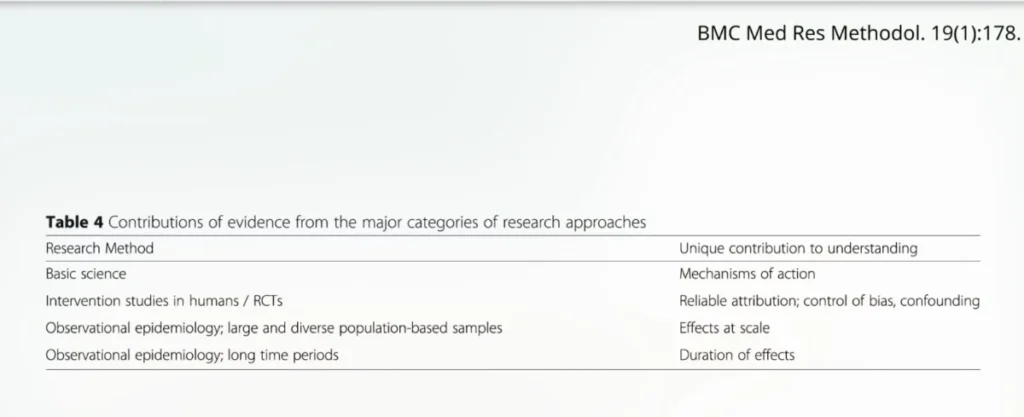
- HEALM (Hierarchies of Evidence Applied to Lifestyle Medicine): Designed specifically for lifestyle medicine, HEALM acknowledges that a rigid hierarchy prioritizing RCTs above all else is impractical when many questions cannot be fully explored through such trials. It emphasizes that each research method—from laboratory studies exploring mechanisms to RCTs establishing cause-and-effect, and large population studies tracking trends over decades—contributes uniquely to the overall understanding. This holistic approach ensures that valuable evidence from diverse sources is not dismissed simply because it doesn’t fit a narrow, drug-centric paradigm.
The Trans Fat Success Story
The story of trans fats serves as a compelling example of how a combination of evidence, including observational studies, led to a major public health victory without requiring "hard endpoint" RCTs. Observational studies revealed a strong link between higher trans fat consumption and increased rates of heart disease in the population. Simultaneously, shorter-term randomized controlled trials demonstrated that trans fats negatively impacted risk factors for heart disease, such as increasing LDL ("bad") cholesterol and decreasing HDL ("good") cholesterol. Together, these lines of evidence built an unassailable case for the harmful effects of trans fat. As a consequence, trans fats were largely removed from the U.S. food supply, a public health intervention estimated to prevent as many as 200,000 heart attacks every year. It’s true that no randomized controlled trials looked directly at heart attacks or death from trans fats, as that would have required randomizing people to consume large amounts of Crisco for years—an impractical and unethical undertaking. This case perfectly illustrates the principle that "you can’t let the perfect be the enemy of the good" when tens of thousands of lives are at stake.
Unethical to Randomize: Lessons from Environmental Toxins
The ethical and practical limitations extend beyond diet. Consider how tolerable upper limits for lead exposure or polychlorinated biphenyls (PCBs) are determined. Public health officials do not, and ethically cannot, randomize children to drink different amounts of leaded water or be exposed to varying levels of PCBs and then follow them to observe who develops "tolerable brain damage." Such experiments are unthinkable. Instead, evidence is painstakingly compiled from as many sources as possible—including animal studies, occupational exposure studies, and population-level observational data—to make the best possible approximations for public health protection. This precedent reinforces that when RCTs are impossible or unethical, other robust forms of evidence are not just acceptable but essential for informed policy.
Observational Studies for Cancer Prevention
Even in the absence of or impossibility of RCTs, observational studies provide a wealth of evidence on the nutritional causes of many cancers. For instance, numerous large-scale observational studies have consistently linked red meat consumption to an increased risk of colorectal cancer. If dietary guidelines for cancer prevention were to be assessed solely with the drug-designed GRADE approach, they would similarly be dismissed as based on "low-quality evidence." This highlights the inherent bias of applying an inappropriate tool, leading to conclusions that undermine crucial public health advice based on a substantial body of scientific inquiry.
Official Responses
The scientific community and public health bodies have not remained silent in the face of these industry-funded critiques. Their responses articulate a clear defense of appropriate methodologies and the integrity of dietary guidelines.
Rejection of the "Drug Trial Paradigm"
A primary "official response" is the outright rejection of the "drug trial paradigm" as the sole or even primary lens through which to evaluate nutrition research. Experts argue that applying a tool like GRADE, which was designed for evaluating drug interventions, to complex dietary patterns and long-term lifestyle behaviors is an "inappropriate use." This isn’t a rejection of GRADE’s utility in its intended domain, but rather a strong assertion that different scientific questions require different, tailored evaluative frameworks. The complexity of diet, involving hundreds of compounds interacting over a lifetime, simply does not fit neatly into the binary, short-term, cause-and-effect model of a drug trial.
The Need for Contextualized Evidence Assessment
Public health officials emphasize that their mandate is to work with the "best available balance of evidence" to protect and improve population health. This means acknowledging the unique contributions of various research methodologies and understanding their strengths and limitations in context. It involves synthesizing findings from laboratory studies, animal models, short-term human interventions, and long-term observational studies to build a comprehensive picture. The development of specialized tools like NutriGrade and HEALM is a direct "official response" to the need for evaluation systems that are better suited to the nuances of nutrition and lifestyle medicine. These tools provide a robust and scientifically sound alternative to the one-size-fits-all approach of GRADE, particularly by factoring in crucial elements like funding bias.
Countering Industry-Driven Narratives
The development and promotion of NutriGrade and HEALM can also be seen as an active measure to counter industry-driven narratives that seek to discredit legitimate public health advice. By providing a transparent and context-specific method for assessing evidence quality in nutrition, these tools empower researchers and policymakers to push back against biased interpretations of scientific literature. The explicit inclusion of funding bias in NutriGrade is a direct acknowledgment of the systemic problem of industry influence and an attempt to mitigate its impact on evidence evaluation. This move signals a commitment to scientific integrity over commercial interests.
A Call for Transparency
Implicit in the scientific community’s response is a call for greater transparency in research funding and potential conflicts of interest. The fact that industry-funded papers consistently reach conclusions favorable to their sponsors, often employing methodologies deemed inappropriate by broader scientific consensus, underscores the critical need for researchers, journals, and policymakers to scrutinize financial ties. The "Doctor’s Note" in the original article, highlighting the series on how industries impact dietary and health guidelines, exemplifies this ongoing effort to expose and address corporate influence.
Implications
The ongoing battle over the credibility of nutrition science and dietary guidelines carries profound and far-reaching implications for public health, scientific integrity, and public trust.
Public Confusion and Health Risks
Perhaps the most immediate and damaging implication is the generation of public confusion and skepticism. When industry-funded studies successfully cast doubt on well-established dietary advice, the public becomes uncertain about what to believe. This "information pollution" can lead to inaction on critical health behaviors. If people are told that advice to cut down on sugar or red meat is based on "low-quality evidence," they may feel justified in ignoring those recommendations, potentially increasing their risk of chronic diseases like heart disease, diabetes, and certain cancers. This undermines decades of public health efforts to educate and empower individuals to make healthier choices.
Delayed Public Health Interventions
The strategy of discrediting nutrition guidelines can also significantly delay or even reverse vital public health interventions. Just as the trans fat story demonstrated the power of combined evidence to effect positive change, the current challenges to sugar and meat guidelines threaten to stall progress. If policymakers are swayed by arguments that evidence is "low quality," they may hesitate to implement policies (e.g., sugar taxes, clearer labeling, public education campaigns) that could protect population health. This delay can translate directly into preventable illnesses, increased healthcare costs, and a diminished quality of life for millions. The "perfect being the enemy of the good" applies here: waiting for ethically impossible RCTs on hard endpoints means accepting ongoing harm.
Erosion of Scientific Credibility
Beyond specific dietary advice, these corporate campaigns contribute to a broader erosion of scientific credibility. When scientific findings are selectively challenged based on financial interests, it fosters a general distrust in science itself. This can have ripple effects, making it harder to communicate other crucial scientific information, whether related to climate change, vaccine efficacy, or other public health crises. The deliberate manipulation of scientific discourse for commercial gain undermines the very foundation of evidence-based policy-making.
The Imperative of Evidence-Based Policy
The entire episode underscores the imperative of maintaining robust, unbiased scientific evidence as the cornerstone of public health policy. It highlights the critical need for independent research, transparent funding, and evaluation methodologies that are appropriate for the specific scientific questions being addressed. Policymakers must be equipped with the knowledge and tools to distinguish legitimate scientific debate from financially motivated attacks on consensus science.
Looking Ahead: The Battle for Dietary Truth
The conflict surrounding the credibility of observational studies in nutrition is far from over. As the "Doctor’s Note" suggests, the next focus will be on the recent articles in the Annals of Internal Medicine concerning meat consumption, indicating a continuing struggle. The battle for dietary truth will require ongoing vigilance from the scientific community, robust development and application of appropriate evidence assessment tools like NutriGrade and HEALM, and persistent efforts to educate both the public and policymakers about the nuances of nutrition science and the insidious influence of industry funding. Ultimately, safeguarding the integrity of dietary guidelines is not just about academic rigor; it’s about protecting public health and ensuring that science, not corporate profit, guides our path to a healthier future.