Weight Bias: The Pervasive and Disturbing Reality of the "Last Acceptable Bias"
Please note: This article discusses the important and troubling issue of weight bias and discrimination, which may be a sensitive topic for some readers.
Weight bias, often described as the "last acceptable" form of societal prejudice, represents a deeply entrenched and pervasive system of discrimination and stereotyping directed towards individuals perceived as overweight or obese. Far from being a fringe issue, this form of bias is rampant, affecting daily lives, educational opportunities, employment prospects, and critically, access to and quality of healthcare. This investigative deep dive explores the alarming prevalence of weight stigmatization, tracing its historical roots, examining its contemporary manifestations across various societal sectors, and highlighting its profound implications for public health and social justice.
The Insidious Nature of Weight Stigma: Main Facts
At its core, weight stigma is the systemic devaluation and mistreatment of individuals based on their body size. It manifests through a spectrum of behaviors, from overt harassment and insults to subtle microaggressions, physical barriers, and discriminatory practices in professional settings. The impact is not merely psychological; it has tangible consequences, affecting educational attainment, career progression, and, most critically, health outcomes. Studies consistently reveal that individuals with higher body weights face widespread prejudice, often enduring a level of disdain comparable to or even exceeding that directed at other marginalized groups. The sheer frequency of these experiences underscores a societal blind spot, where weight-based discrimination is frequently overlooked, tolerated, or even justified.
A Troubling Chronology: How Bias Has Worsened Over Time
The roots of weight bias run deep, and alarmingly, the problem appears to be intensifying rather than receding. Historical studies provide a stark chronology of this worsening societal attitude.
Early Onset: Bias in Childhood
The seeds of weight stigma are sown remarkably early in life. Research indicates that children as young as three years old begin to internalize and express negative stereotypes about their overweight peers. These young children often describe heavier classmates using pejorative terms such as "mean," "stupid," "lazy," and "ugly." As children age, this negative language and the associated prejudices only become more pronounced and entrenched, reflecting a societal narrative that they absorb and perpetuate. This early exposure to and adoption of bias highlights the pervasive nature of the problem within cultural conditioning.
The Landmark 1961 Study and Its Alarming Follow-Up
Perhaps one of the most revealing longitudinal studies on weight stigma dates back to 1961. This seminal research involved children from diverse social, cultural, and ethnic backgrounds across California, Montana, and New York. Participants in summer camps and schools were presented with a series of images depicting different children and asked to rank them based on who they liked best. The images included a child with crutches and a leg brace, a child in a wheelchair, a child missing a hand, a facially disfigured child, and an obese child. The findings were chilling in their "remarkable uniformity": in every single group tested, the obese child consistently ranked dead last. This study provided early, undeniable evidence of widespread anti-fat bias even among children.
Fast forward to 2003, researchers undertook a 40-year follow-up study, repeating the exact methodology. The title of their published work, "Getting Worse: The Stigmatization of Obese Children," speaks volumes. The results were not just consistent; they were more severe. The obese child was liked even less in the 2003 follow-up than in the original 1961 study. This finding parallels broader societal trends, with national surveys recording a near 70% jump in perceived weight discrimination since the mid-1990s. The evidence is unequivocal: rather than progressing towards greater acceptance and understanding, society has become demonstrably more prejudiced against individuals with higher body weights over the past half-century.
Supporting Data: Manifestations of Weight Bias Across Society
The pervasive nature of weight stigma is illuminated by a wealth of supporting data, detailing its impact across everyday life, employment, education, and critically, the healthcare system.
The Daily Burden: Everyday Experiences of Stigmatization
For many individuals, weight stigmatization is not an occasional occurrence but a constant, draining presence in their daily lives. A study involving fifty overweight women who kept diaries of their experiences over a single week revealed over a thousand instances of perceived stigmatization. This translates to an average of approximately three instances of harassment, physical barriers, or discrimination per day for an overweight woman. These experiences can range from verbal insults and name-calling to encountering physical environments not designed for larger bodies, such as public seating that is too small, or receiving noticeably poorer service in restaurants and retail stores.
The burden, however, is not evenly distributed. Obese men, while still experiencing discrimination, report these instances about three times less frequently than women of the same size, suggesting it might be a daily occurrence for them rather than multiple times a day. This gender disparity highlights how intersecting identities can amplify the experience of weight bias.
Barriers to Opportunity: Employment Bias
The professional realm is another significant arena where weight bias manifests, often with severe economic consequences. Studies utilizing professional actors posing as job applicants have shed light on this discrimination. When these actors appeared at their normal weight, they received a standard level of consideration. However, when made up with theatrical prostheses to appear overweight, they were significantly more likely to face discrimination during the application process. This employment bias was particularly pronounced and prejudiced against overweight women compared to men, reinforcing the double burden faced by women with higher body weights in the workplace. Such discrimination can limit career opportunities, reduce earning potential, and contribute to economic insecurity.
Societal Contempt: Public Attitudes and Perceptions
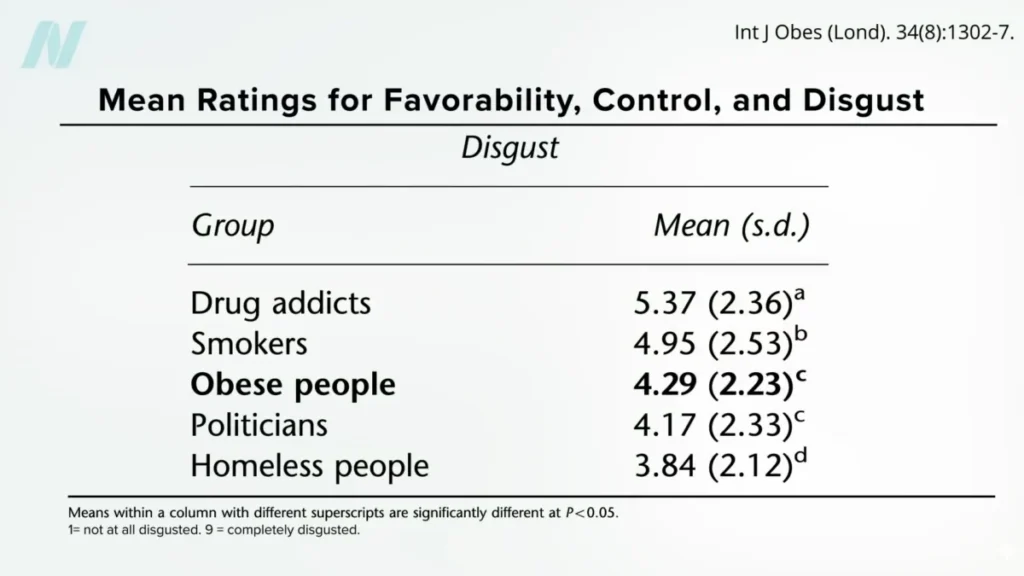
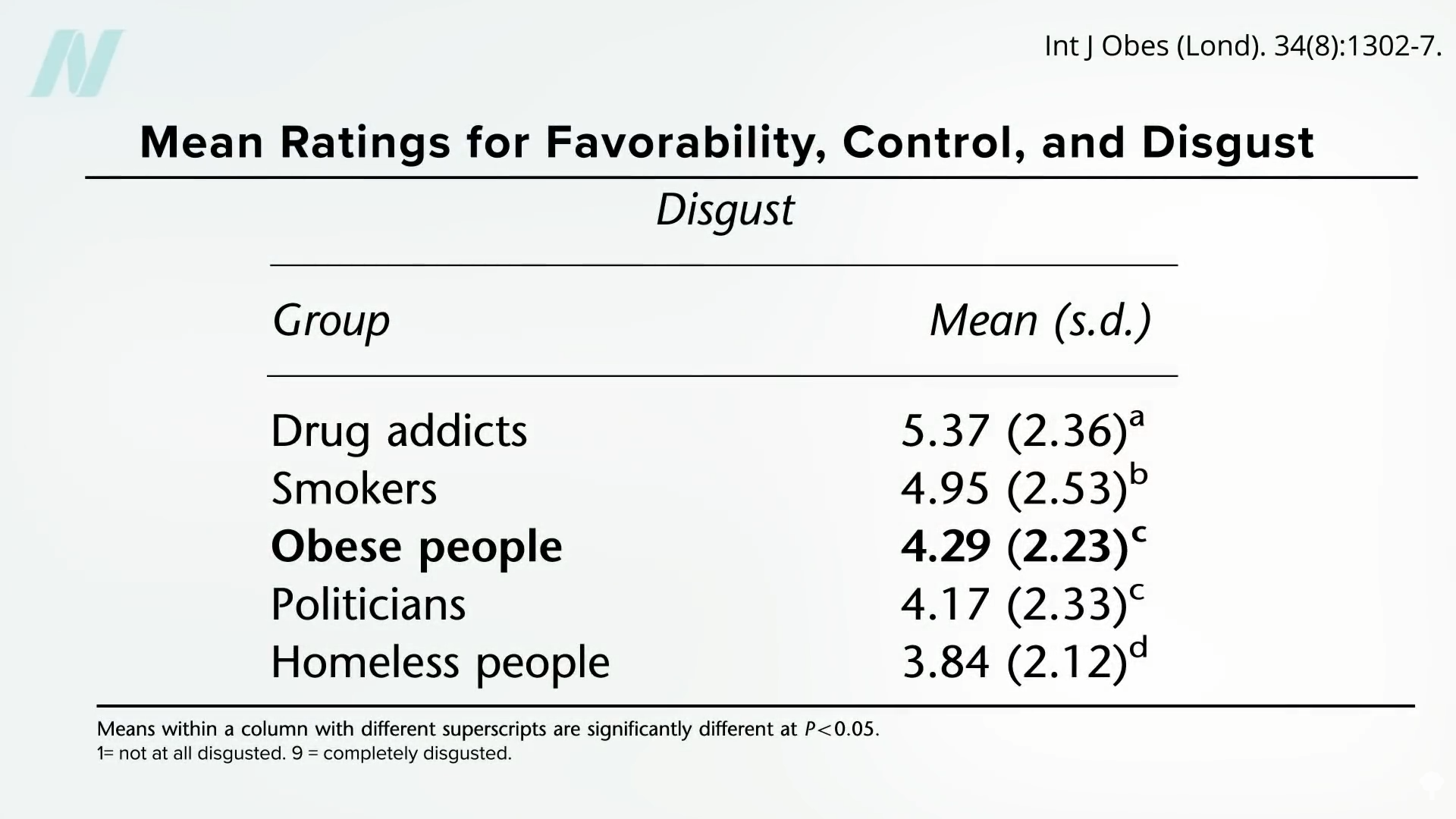
Beyond individual experiences, surveys reveal a broader societal contempt for individuals with obesity. In a comparative study of 16 stigmatized social groups, including people experiencing homelessness, the findings were stark: "only drug addicts and smokers were seen as more disgusting than obese people." This places individuals with obesity among the most reviled groups in public perception, underscoring a profound lack of empathy and understanding.
Adding a cynical twist, the researchers further noted an effective tie: "obese people were rated just as disgusting as politicians." While perhaps intended with a touch of dark humor, this observation nonetheless highlights the deeply negative public sentiment associated with obesity. This widespread societal disdain creates an environment where discrimination is not only tolerated but often tacitly approved.
Institutional Bias: Education and Family Settings
The impact of weight bias extends into foundational institutions like schools and even within families.
Educational Environments: Attitudes among educators and school staff are a critical concern. A significant proportion of teachers and other school personnel surveyed—more than a quarter—felt that becoming obese is "one of the worst things that could happen to a person." Such deeply negative personal beliefs held by those in positions of authority can profoundly influence how they interact with, assess, and support students with higher body weights, potentially impacting academic performance, social integration, and self-esteem.
Parental Bias: Even within the family unit, the effects of weight bias can be observed. Studies have shown that parents can exhibit bias, for instance, providing less financial and emotional support for college for their overweight daughters compared to their thinner siblings. This heartbreaking reality prompted two prominent obesity researchers to comment, "It is strong prejudice indeed when parents discriminate against their own children." This illustrates the insidious depth of weight stigma, capable of fracturing even the most fundamental bonds.
The Healthcare Paradox: Discrimination from Caregivers
Perhaps the most alarming manifestation of weight bias occurs within the healthcare system, where individuals seeking help are met with judgment rather than care. This paradox creates a significant barrier to effective treatment and exacerbates existing health disparities.
Physician and Nurse Attitudes: A representative national survey found that over half of all physicians "viewed obese patients as awkward, unattractive, ugly, and noncompliant." Similarly, approximately a quarter of nurses agreed or strongly agreed with the statement: "Caring for an obese patient usually repulses me." These deeply negative personal attitudes held by medical professionals directly compromise the quality of care provided. When caregivers harbor such biases, it becomes exceedingly difficult to deliver compassionate, respectful, and effective treatment.
Serious Health Consequences: This antagonism has grave health consequences, particularly for those who may need medical intervention the most. Obese women, for example, face a higher risk for developing cervical, endometrial, and ovarian cancers. Despite this increased risk, they are significantly less likely to be screened for these conditions. Morbidly obese patients, in particular, have only about half the odds of receiving their recommended pelvic exams.
Part of this disparity can be attributed to patient avoidance, driven by anticipated stigma or past negative experiences. However, a troubling number of healthcare providers actively turn away obese patients. A Sun Sentinel investigation, which polled OB/GYN practices in Florida, revealed that as many as one in seven refused to see heavier women, with some setting weight cut-offs for new patients as low as 200 pounds. This outright denial of care is a profound ethical breach and a direct threat to public health.
Reduced Quality of Care: Even when doctors do "welcome" obese patients, the quality of care can suffer. In one study, physicians randomized to review a medical chart of a migraine patient presented as average weight, overweight, or obese indicated they would allocate approximately 28% less of their time to the obese patient. Furthermore, this reduced time is often of lower quality. Recorded doctors’ visits have shown that physicians tend to build "less emotional rapport with overweight and obese patients," leading to less thorough discussions, diminished patient trust, and ultimately, suboptimal health outcomes.
Bias Among "Specialists": Disturbingly, even obesity specialists are not immune to these biases; in fact, they have been found to profess increasingly explicit anti-fat attitudes. Surveys conducted between 2001 and 2013 showed a worsening trend, with obesity specialists describing fat people as "significantly more lazy…stupid…and worthless…compared to thin people." This phenomenon is particularly troubling, as those dedicated to treating obesity should ideally be at the forefront of compassionate, non-judgmental care.
Bias in Medical Literature: The stigmatization is so ingrained that it even appears in formal medical literature. An example from the Annals of Internal Medicine chillingly states: "Obesity is an aesthetic crime: it is ugly." Such language, published in respected journals, legitimizes and perpetuates a harmful narrative, undermining the professional and ethical standards of medicine.
The Illusion of Respect: A study aptly titled "Obese Patients Overestimate Physicians’ Attitudes of Respect" uncovered a disquieting truth. Despite the deeply negative attitudes harbored by doctors toward their obese patients, these same patients often expressed satisfaction with their providers. The researchers concluded that while "physicians may be successfully playing the part, the lack of true respect suggests…the authenticity of the patient-physician relationship should be questioned." This implies a superficial level of interaction, where the patient’s immediate comfort masks a deeper, unaddressed prejudice that ultimately compromises genuine care and trust.
The Call for Systemic Change: Addressing Official Responses and Their Absence
The pervasive nature of weight bias, as evidenced across everyday interactions, employment, education, and healthcare, underscores a critical societal failing. While there are no explicit "official responses" in the original article in terms of government policies or widespread organizational initiatives to combat weight bias, the data implicitly highlights the profound absence of adequate systemic protection and ethical guidelines.
The fact that teachers, parents, and medical professionals—individuals in positions of trust and authority—exhibit such widespread prejudice points to a significant institutional and professional blind spot. These are the very communities that should be leading efforts to dismantle stigma, yet they are often complicit in its perpetuation. The "good news" that patients overestimate their doctors’ respect is, in fact, alarming. It reveals a professional facade that allows deep-seated biases to persist unchecked, leading to inauthentic relationships and compromised care.
This situation necessitates a multi-faceted approach to generate meaningful official responses:
- Policy Development: Governments and legislative bodies must recognize weight discrimination as a protected characteristic, similar to race, gender, and religion, enacting laws that prohibit discrimination in employment, housing, and public accommodations.
- Professional Training and Education: Mandatory anti-bias training must be implemented across all professional sectors, particularly in healthcare and education. This training should go beyond superficial awareness, delving into the psychological roots of bias, its impact on individuals, and strategies for providing equitable and respectful service. Medical curricula, in particular, need to be revised to address weight stigma explicitly and promote a weight-inclusive approach to care.
- Ethical Guidelines: Professional organizations (e.g., medical associations, teaching federations) must strengthen their ethical guidelines to explicitly condemn weight discrimination and provide clear frameworks for accountability.
- Public Awareness Campaigns: Large-scale public health campaigns are needed to challenge stereotypes, promote body diversity, and educate the public on the harms of weight stigma.
- Research and Data Collection: Continued research is vital to understand the evolving landscape of weight bias, its intersection with other forms of discrimination, and the effectiveness of intervention strategies.
Without these concerted official responses, the cycle of prejudice and harm will continue unabated, further marginalizing individuals and compromising public health.
Profound Implications and the Urgent Need for Action
The implications of unchecked weight bias are far-reaching and deeply concerning, extending beyond individual suffering to impact public health, social equity, and the very fabric of compassionate society.
Eroding Health and Well-being
The direct health consequences are perhaps the most urgent. When individuals avoid medical care due to fear of judgment, or when healthcare providers offer subpar care due to personal biases, preventable diseases go undetected, and treatable conditions worsen. The denial of screenings for cancers, the reduced time and emotional rapport in consultations, and the outright refusal to see patients based on weight are not just ethical lapses; they are life-threatening practices. This creates a vicious cycle where stigma contributes to poorer health outcomes, which can then be used, erroneously, to further justify the initial bias.
Beyond physical health, the psychological toll of constant stigmatization is immense. Individuals facing weight bias often experience increased rates of depression, anxiety, low self-esteem, and disordered eating. The relentless barrage of insults, the daily experience of being judged, and the systemic barriers create an environment of chronic stress that undermines mental well-being and overall quality of life.
Undermining Social Justice and Equity
Weight bias is fundamentally an issue of social justice. It perpetuates inequality, denying individuals equal opportunities in education, employment, and public life. It creates a segment of the population that is systematically disadvantaged and dehumanized, echoing patterns seen in other forms of prejudice. In a society that ostensibly values fairness and respect, the widespread acceptance of weight stigma represents a profound moral failure.
A Call to Collective Action
The evidence is clear: weight bias is a rampant, insidious problem that is actively worsening. It impacts individuals from childhood through adulthood, infiltrating even the most critical institutions designed to help and protect people. Addressing this deeply ingrained prejudice requires more than individual awareness; it demands systemic change, robust policy interventions, comprehensive education, and a collective commitment to fostering a more inclusive and empathetic society.
The journey toward dismantling weight bias begins with recognizing its existence, understanding its profound impact, and challenging the harmful stereotypes that perpetuate it. Only then can we hope to create a world where every individual is treated with the dignity and respect they deserve, regardless of their body size.
For a deeper exploration of the personal and societal toll of this issue, please refer to the next blog in this two-part series, "The Burden of Weight Bias." Both articles are drawn from the comprehensive insights presented in the book "How Not to Diet."