The Art of the Meal: Resurrecting America’s Forgotten Culinary History
By Craig Sauers
Originally published in the December 2026 Family Issue of Wine Enthusiast.
In the digital age, where dining out is documented in real-time through filtered social media posts and instantaneous reviews, the ephemeral nature of the menu has largely been forgotten. Yet, for Eugen Beer and Barbara McMahon, a British duo operating out of the United Kingdom, these printed artifacts are not merely scraps of paper—they are time capsules.
Since 2012, Beer and McMahon have dedicated their lives to the recovery and preservation of American menu art. Their project, Vintage Menu Art, has grown from a curious hobby into a comprehensive digital and physical archive, salvaging over 1,500 pieces of graphic design history that chronicle the evolution of American dining, social ambition, and artistic expression.
The Genesis: A Rabbit Hole of Paper
The story began over a decade ago in the U.K., where Beer, a publicist, and McMahon, a journalist, were collaborating on a home project. While navigating the vast, digitized archives of the University of Nevada, they stumbled upon a scan of a menu from the Café Anglais in Paris—a legendary establishment that shuttered its doors in 1913.
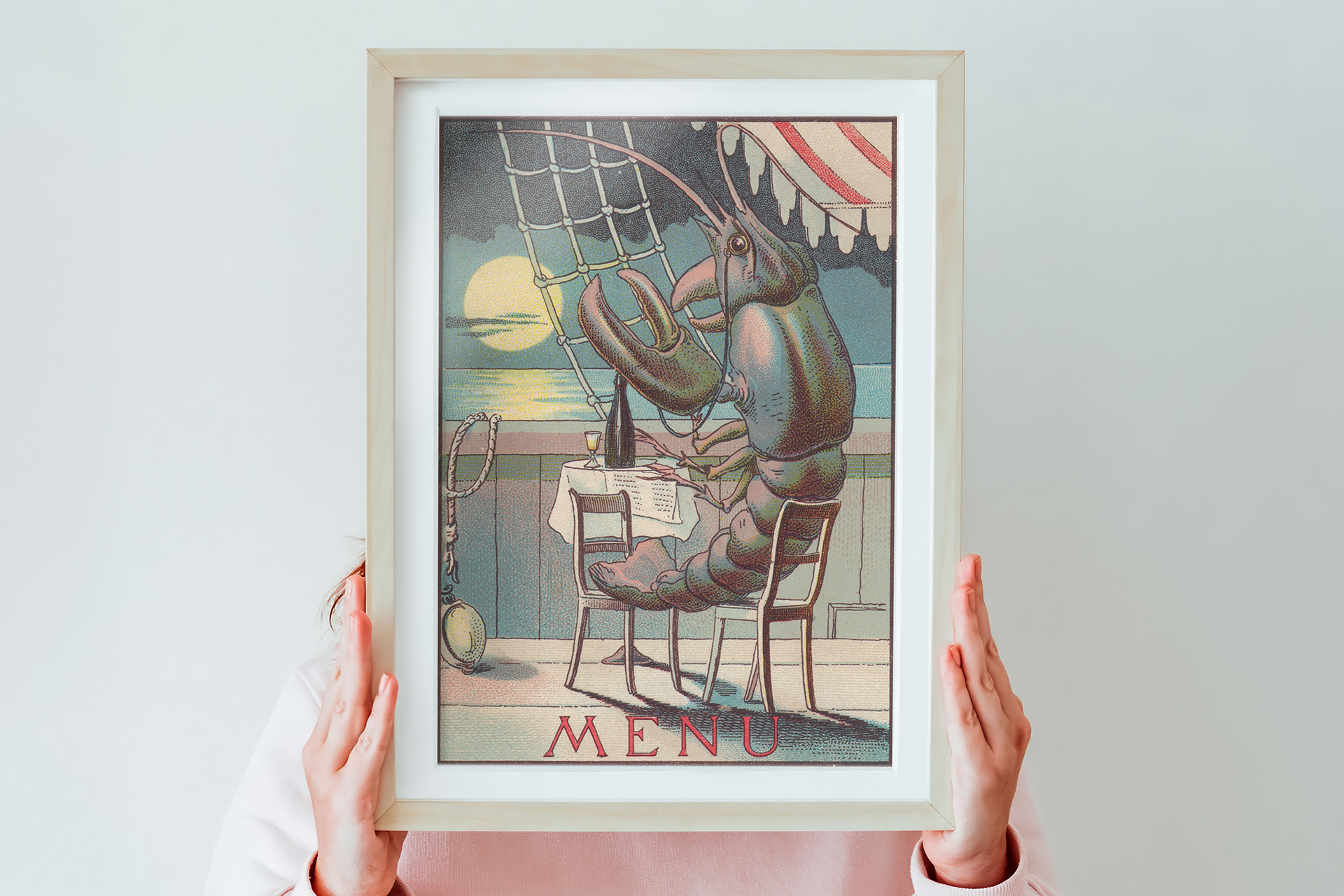
The menu was striking, featuring an illustration of a young boy feeding a piece of meat to the moon. "We were just completely charmed," Beer recalls. "It opened a giant rabbit hole for us."
What followed was an immersion into a clandestine world of archivists, specialized dealers, and private collectors. They discovered that the United States, in particular, was a goldmine of forgotten graphic design. From the hand-painted cards of late-19th-century New York banquets to the mid-century masterpieces commissioned for Hawaiian resorts, the couple found a visual language of American life that had been largely ignored by mainstream historians.
A Chronology of American Appetite
To understand the significance of these menus, one must look at the timeline of American dining culture. Before the turn of the 20th century, eating out in the United States was a functional necessity, closely tied to the expansion of the American frontier.
The Frontier Expansion (1880s–1910s)
As the concept of "Manifest Destiny" pushed Americans westward, the growth of new cities necessitated a hospitality infrastructure. "There was no dining-out culture in the U.K.—except for the very rich—until the ’60s," Beer notes. "But in the U.S., whenever a place like Dodge City emerged, one of the first things they did was establish a hotel and import a bartender from the East Coast."
These early menus were utilitarian, often printed on heavy cardstock with elaborate, Victorian-era typography. They were the first advertisements for the "civilization" of the American West.
The Post-Prohibition Boom (1930s–1950s)
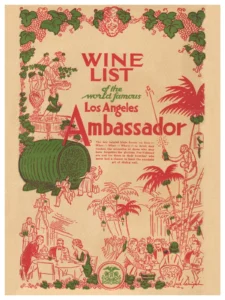
The end of Prohibition in 1933 triggered a renaissance in American nightlife. Suddenly, restaurants were not just places to eat; they were stages for social performance. Owners began hiring prominent graphic artists to design menus that would distinguish their establishments in a saturated market.
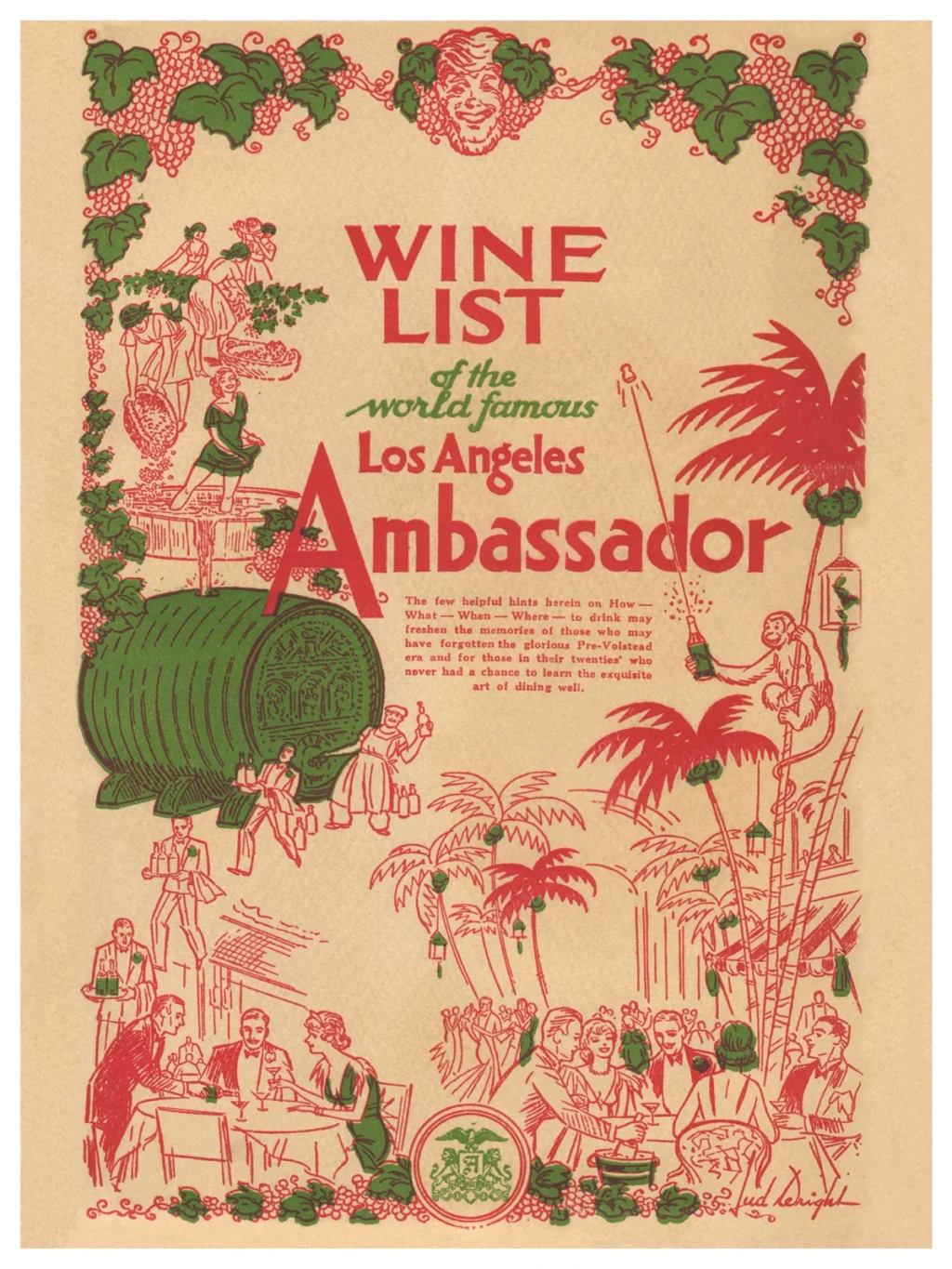
During this era, menus became highly illustrative, leaning into the exotic and the whimsical. Whether it was a menu promoting a "zombie cocktail" in a Waikiki tiki bar or a sophisticated bistro in Manhattan, these cards served as marketing tools designed to turn an ordinary Tuesday dinner into a memorable event.
The Masters of the Menu: Design and Symbolism
One of the most significant revelations in the Beer-McMahon collection is the discovery of commercial work by some of the 20th century’s most influential artists. The duo has unearthed rare menu designs by Saul Bass and Paul Rand, masters of modern graphic design whose work typically commands high prices in the fine art world.

Perhaps most surprising was the discovery of a 1947 menu for Welton’s in Worcester, Massachusetts, designed by William Steig—the very same artist who would later achieve global fame as the creator of Shrek. The menu, which listed Cognac at a mere 75 cents, serves as a bridge between the commercial illustration of the mid-century and the contemporary pop culture icons of today.
Supporting Data: The Economics of the Past
The menus serve as more than just artistic statements; they are primary source documents for economic historians. By examining the price points of the era, the collection illustrates the shifting purchasing power of the American dollar.
Beer points to a menu from the iconic Los Angeles restaurant Tail o’ the Cock in the 1940s. At the time, a filet mignon was priced at $4.95, while a bottle of Château Margaux could be ordered for $5.75. These figures provide a granular look at the competitive nature of post-war dining, where restaurants fought to undercut one another while maintaining an air of luxury.
Why did these menus survive in the U.S. when they were so often discarded in Europe? Beer attributes this to the American penchant for souvenir culture and the rising disposable income of the mid-20th-century middle class. "Americans held onto them," Beer explains. "They were tucked into scrapbooks, preserved as memories of a birthday, an anniversary, or a road trip."
The Custodians of History: Official Responses and Collaborations
Accessing these documents was not always easy. For years, major institutions like the Culinary Institute of America (CIA) and the New York Public Library held tens of thousands of menus, but they were often buried in backrooms, accessible only by appointment and limited by strict handling protocols.
The turning point for Vintage Menu Art came through a partnership with private collector Henry Voigt. A former DuPont executive, Voigt began acquiring menus at auction in the 1990s and eventually amassed a staggering collection of over 10,000 items.

Voigt, who has since donated over 2,600 pre-20th-century menus to the American Antiquarian Society, views his work as a preservation of "the history of everyday life." For Voigt, the menus are conduits for empathy and historical context. He highlights a specific menu from Springfield, Massachusetts, dated April 16, 1865—the day after the assassination of Abraham Lincoln.
"The menu has a black border," Voigt explains. "At first glance, you think it’s a printing error. Then you realize it was a somber tribute to the president. You put yourself in that dining room, and through dinner, you’re hearing church bells all over Springfield because they rang all day that Sunday."
Implications: A Living Heritage
Today, the work of Beer, McMahon, and collectors like Voigt ensures that these documents remain in the public consciousness. Vintage Menu Art operates by scanning and meticulously cleaning these artifacts—removing decades of stains and creases—before printing them on high-quality archival paper.
These reproductions are now sold online, at a permanent stall in the Los Angeles Farmers Market, and at art fairs across the West Coast. According to Beer, the reaction from the public confirms that the menus still hold the same power they did eighty years ago.
"These were designed to entertain, to make people anticipate a nice time, and they’re still doing that," Beer says. "When people pick up a print, they go, ‘Wow, have you seen this?’ They whip themselves up into a frenzy of excitement."
The implication of this work is profound: by treating menus as art rather than trash, we gain a clearer, more colorful understanding of the American experience. They remind us that dining is not just about sustenance; it is a cultural ritual defined by the art that surrounds the table. As Beer concludes, these pieces are "a slice of Americana that Americans forgot," and in the act of remembering them, we reconnect with the social fabric of our past.