Beyond the Honey Deuce: The Evolution of the "Tennis Cocktail" Phenomenon
Since its debut in 2006, the Honey Deuce has evolved from a simple tournament concession into an untouchable cultural monolith. Synonymous with the U.S. Open, this melon ball-garnished cocktail has reigned for nearly two decades as the undisputed end-of-summer “it” drink. However, as the 2026 tennis season concludes, a new challenger has emerged, signaling a potential shift in how major sporting events leverage beverage marketing to capture the fleeting, viral attention of a global audience.
The Anatomy of an Icon: The Honey Deuce Effect
To understand why a cocktail becomes a phenomenon, one must look at the intersection of prestige, price, and social currency. The Honey Deuce, created by hospitality consultant Nick Mautone in collaboration with Grey Goose, was designed with a singular purpose: to be the visual shorthand for the U.S. Open experience.
Holding the drink has become the ultimate "flex" for spectators. It signals not only attendance at the USTA Billie Jean King National Tennis Center but also an entry into a specific, high-end consumer bracket. At a price point exceeding $20 per glass, the beverage is a luxury commodity. The numbers are staggering: according to data from Grey Goose, the tournament moved over 740,000 units in 2025 alone. Since 2011, more than 3.5 million Honey Deuces have been sold, cementing its status as one of the most successful marketing campaigns in the history of the spirits industry.

This success has birthed "The Honey Deuce Effect"—a phenomenon where sporting events are no longer just about the match, but about the "signature serve." The drink has permeated the broader hospitality industry, with high-profile bars like Dante in New York City and London reporting year-round demand for their own iterations of the recipe.
A Brief Chronology of Tennis Mixology
The evolution of the "tennis cocktail" can be mapped through a timeline of strategic marketing and consumer behavior:
- 2006: The Honey Deuce makes its debut at the U.S. Open. Its signature blend of vodka, lemonade, raspberry liqueur, and honeydew melon balls captures the public imagination.
- 2011–2020: The rise of Instagram transforms the cocktail into a status symbol. The drink becomes a staple of tournament photography, appearing in millions of social media posts.
- 2022–2024: The "spillover effect" occurs. Establishments worldwide begin offering "tennis-inspired" menus, capitalizing on the prestige associated with the U.S. Open branding.
- 2025: The "Watermelon Slice" is introduced as a direct competitor to the Honey Deuce’s dominance.
- 2026: The Watermelon Slice returns for a second year, signaling that the "signature cocktail" strategy is now a permanent fixture of tournament planning.
The Challenger: The Watermelon Slice
In 2025, the U.S. Open saw the emergence of a serious contender: the Watermelon Slice. Developed by IHG Hotels & Resorts, a key tournament sponsor, the cocktail was engineered with the same "optics-first" philosophy that fueled the Honey Deuce.

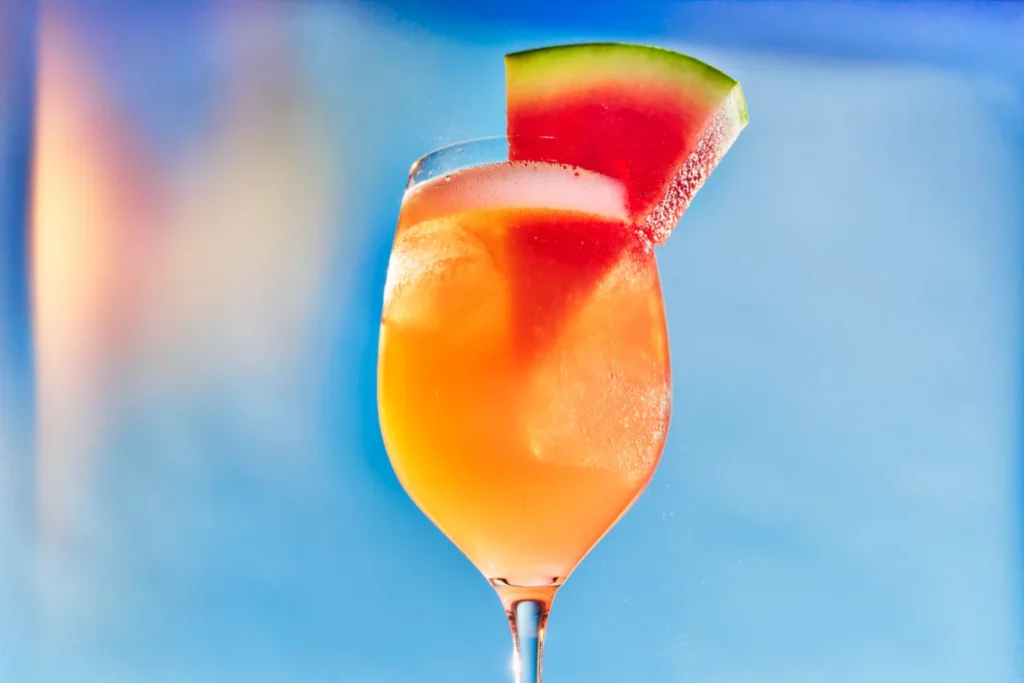
The drink features a crisp, bubbly profile—combining Champagne, a splash of St. Germain, watermelon juice, and a sharp hit of lime to balance the sweetness. However, it is the presentation that has truly turned heads. Served in a fluorescent, tennis-ball-yellow wine glass and topped with a vibrant red slice of fresh watermelon, the drink is designed to be impossible to ignore on a broadcast feed.
The marketing brilliance lies in its visual impact. Connor Smith, VP of Masterbrand Strategy at IHG Hotels & Resorts, notes that the neon cup is "instantly recognizable." The intention was to create a "double-take" moment—where a patron sees the drink in someone else’s hand and immediately feels compelled to procure one of their own.
The Economics of Exclusivity
One of the most intriguing aspects of these viral drinks is their pricing. The Watermelon Slice retails for $39—a price point that, rather than deterring consumers, serves as a filter of exclusivity.

"The price is part of the appeal," says Nancy Santiago, beverage director at IGC Hospitality Group in New York City. "It offers fans a premium experience that feels special and elevated." In the age of social media, where the "cost per experience" is often secondary to the "value of the content," these drinks serve as high-end props. They are the liquid equivalent of a VIP pass, and their high cost reinforces their desirability.
Industry Perspectives: Is There Room for Two?
While the Honey Deuce maintains a legacy advantage, industry experts see the rise of the Watermelon Slice as a healthy evolution of the category. Dylan Wells, general manager at Ray’s Brooklyn, highlights the common thread: "Both cocktails rely on a strong visual element that is inherently Instagram-worthy."
For bars that cater to tennis fans, this is a boon. During the Wimbledon season, venues like Dante have successfully marketed their own variations of tennis cocktails, proving that the appetite for these drinks extends far beyond the physical grounds of the USTA Billie Jean King National Tennis Center.

However, there is a consensus that the Honey Deuce remains the "North Star" of the category. As Wells notes, "There will only ever be one Honey Deuce." While other tournaments have their own signatures, the Honey Deuce has achieved a level of cultural saturation that is likely impossible to replicate, even if the Watermelon Slice continues to gain ground.
Implications for Future Event Marketing
The success of these cocktails suggests a fundamental shift in how brands approach event sponsorship. The "signature cocktail" is no longer just a beverage; it is a vital component of the event’s brand identity.
- The Visual Imperative: Future event-based beverages must be designed with social media in mind. If a drink doesn’t look good in a photo, it will struggle to achieve the viral status required to justify its marketing spend.
- The "Scarcity" Strategy: By tying a cocktail to a specific, limited-time event, brands create a sense of urgency. The "only available at the U.S. Open" narrative drives demand and justifies premium pricing.
- Cross-Platform Synergy: The most successful drinks are those that are featured prominently in live broadcasts. By integrating the drink into the visual language of the event coverage, brands effectively turn the audience into unpaid marketers.
How to Recreate the Watermelon Slice at Home
While the experience of sipping a $39 cocktail at the U.S. Open is unique, the flavor profile of the Watermelon Slice is highly replicable for those who want to bring a taste of the tournament to their own end-of-summer gatherings.

Ingredients:
- 1.5 oz St. Germain (Elderflower Liqueur)
- 2 oz Fresh Watermelon Juice
- 0.5 oz Fresh Lime Juice
- 3 oz Moët & Chandon Imperial Brut (or any dry Champagne)
- Fresh watermelon slice for garnish
Instructions:
- Base: In a high-quality wine glass, add the St. Germain, watermelon juice, and lime juice.
- Incorporate: Stir gently to ensure the elderflower and citrus are fully integrated with the watermelon juice.
- Chill: Fill the glass with large, clear ice cubes.
- Finish: Top the mixture with 3 oz of chilled Champagne. Stir once more with a long spoon to lift the ingredients without losing the carbonation.
- Garnish: Finish with a fresh, triangular slice of watermelon on the rim of the glass.
Conclusion
The Honey Deuce has set a high bar, but the emergence of the Watermelon Slice proves that the "Tennis Cocktail" is a genre, not a one-off hit. As brands continue to refine their approach to on-site hospitality, we can expect to see more innovative, high-priced, and visually stunning beverages at the world’s biggest sporting events.

Whether these drinks are a sign of excess or a clever evolution of modern marketing, one thing is clear: the modern spectator expects more than just a match. They expect an experience, and if that experience comes with a garnish and a high price tag, they are more than willing to pay for it. As the 2026 U.S. Open draws to a close, the Watermelon Slice has firmly staked its claim, ensuring that when the players leave the court, the party continues—one glass at a time.