Collision Course: Tesla’s Cybercab Debut Overshadowed by Federal Scrutiny
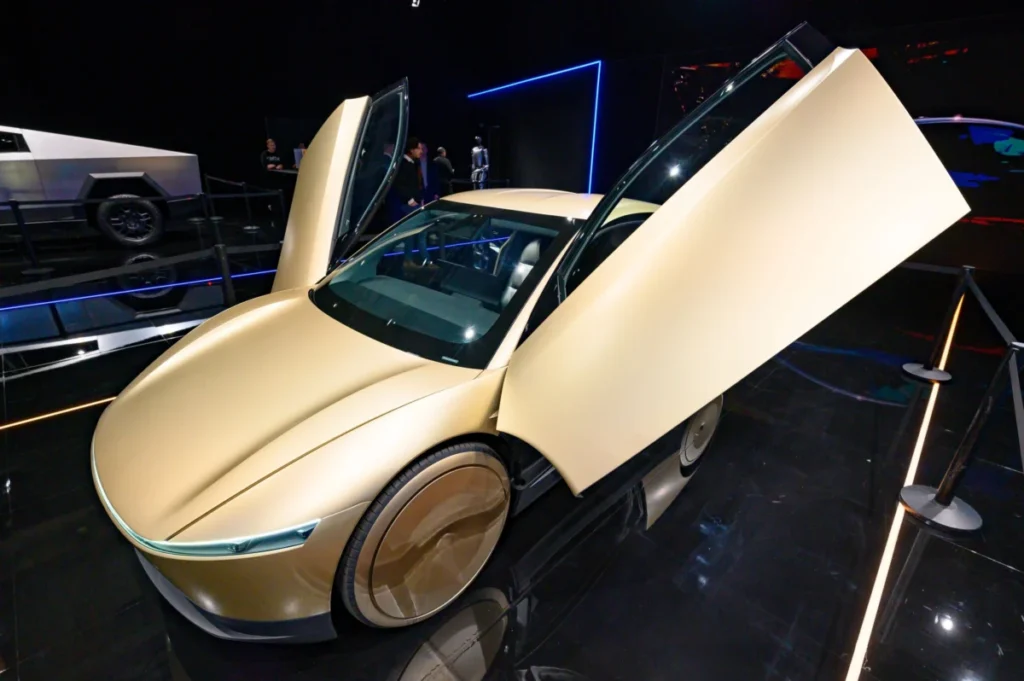
The landscape of American transportation is currently undergoing its most radical transformation since the dawn of the Model T. Yet, as Tesla’s sleek, steering-wheel-free Cybercab begins its maiden voyages on the streets of Austin, Texas, the celebratory atmosphere is being rapidly eclipsed by a looming confrontation with federal regulators. The National Highway Traffic Safety Administration (NHTSA) has launched a formal investigation into the automaker’s compliance with federal safety standards, casting a long shadow over Elon Musk’s vision for an autonomous, driverless future.
The Main Facts: A Bold Vision Meets Regulatory Reality
Tesla’s Cybercab, a two-seater vehicle devoid of traditional manual controls—no steering wheel, no brake pedals—represents the vanguard of the company’s pivot from a traditional automaker to a robotics and artificial intelligence powerhouse. For Tesla, these vehicles are the cornerstone of a planned Robotaxi ride-hailing network intended to scale into a fleet of millions.
However, the debut of these vehicles to the public in downtown Austin has triggered an immediate response from the US federal government. The NHTSA has opened an "Audit Query," a formal investigative procedure designed to scrutinize the data and decision-making processes Tesla utilized to conclude that its vehicle meets existing Federal Motor Vehicle Safety Standards (FMVSS).
At the heart of the conflict is a fundamental disagreement over procedure. While Tesla maintains that its vehicles are fully compliant with the law, the NHTSA and various legal experts argue that the absence of physical controls necessitates a formal exemption process—a path already successfully navigated by industry peers like Amazon’s Zoox.
Chronology: From Debut to Investigation
The timeline of this friction is compressed and high-stakes. The tension began to mount as Tesla invited hundreds of enthusiasts and public members to experience the Cybercab firsthand in Austin. The event, intended to signal the viability of the Robotaxi fleet, was followed within hours by the news of the NHTSA investigation.
- Pre-Launch: Tesla finalized the deployment of its initial fleet in Texas and Florida, asserting that the Cybercab’s design aligns with current federal mandates.
- The Debut: Hundreds of fans gathered in downtown Austin to witness the public deployment of the autonomous vehicles.
- The Regulatory Trigger: Shortly after the first passengers began utilizing the service, the NHTSA initiated an Audit Query.
- The Escalation: Legal experts and former regulators began publicly criticizing Tesla’s "go-it-alone" approach, noting that the company’s defiance of the exemption process signals a significant departure from standard industry protocols.
The Regulatory Gap: Why Current Standards Are Struggling
The NHTSA is currently in the midst of a complex, long-term effort to update vehicle standards to accommodate the reality of autonomous driving. The agency is in the process of "tweaking" eight key rules that currently govern how vehicles are built. Many of these rules, written decades ago, mandate the presence of components that are functionally redundant in an AI-driven vehicle, such as rearview mirrors, traditional windshield wipers, and, most crucially, manual brake pedals.
Until these updates are finalized, manufacturers are bound by years-old standards. While the agency acknowledges the need for innovation, it remains steadfast in its mandate to prioritize public safety. The "Audit Query" serves as a mechanism for the government to force transparency from a company that has historically preferred to operate with a high degree of autonomy.
Supporting Data and Industry Precedents
To understand the severity of the current situation, one must look at how other companies have handled the transition to steering-wheel-free vehicles. Earlier this summer, Amazon subsidiary Zoox set a significant industry precedent. Zoox, which produces a similarly designed, manual-control-free vehicle, sought and received a federal exemption. This exemption allows them to operate a limited fleet—capped at 2,500 vehicles annually—on public roads.
Tesla’s stance, however, is markedly different. By insisting that it does not require an exemption, Tesla is essentially telling the federal government that its interpretation of existing laws renders the exemption process unnecessary. This position has drawn sharp criticism.
Ann Carlson, a professor of environmental law at UCLA and a former acting NHTSA administrator, suggests that the agency’s frustration with Tesla is reaching a boiling point. "For Tesla to slap them in the face and ignore that [the exemption process]—that is gobsmacking," Carlson noted in recent discussions regarding the investigation. The prevailing sentiment among regulators is that Tesla is attempting to bypass the established bureaucratic guardrails that ensure vehicle safety for the broader motoring public.
Official Responses and the "Gobsmacking" Stance
The response from the federal government has been firm and carefully worded. NHTSA Administrator Jonathan Morrison issued a statement emphasizing that while the agency "fully supports the safe development and deployment of automated vehicles," it remains the primary arbiter of safety laws. "As the federal regulator, we need to ensure that all of our laws are followed," Morrison stated, signaling that the agency is not willing to grant Tesla a pass simply due to its market influence or technological ambition.
Tesla, true to its recent pattern of reduced communications, did not immediately respond to requests for comment. The silence from the Austin headquarters speaks volumes about the company’s "move fast and break things" philosophy, which has frequently placed it at odds with regulators regarding Autopilot and Full Self-Driving (FSD) software in the past.
Implications: What Happens Next?
The consequences of an Audit Query can be far-reaching. The investigation is not merely a bureaucratic hurdle; it is a potential precursor to enforcement action. Should the NHTSA determine that Tesla’s compliance claims are unfounded or that the vehicles pose an inherent risk, the agency has several tools at its disposal:
- Mandated Design Changes: The NHTSA could force Tesla to retrofit or redesign the Cybercab to include redundant safety features, effectively halting the current rollout.
- Civil Penalties: History shows that the agency is willing to impose massive fines for non-compliance. In 2023, Volvo Group North America paid $130 million in penalties following an investigation into its recall processes, accompanied by three years of third-party oversight.
- Operation Limitations: The agency could move to restrict the number of Cybercabs allowed on public roads, forcing Tesla into a process similar to the one Zoox underwent—a scenario that would significantly impede Musk’s goal of deploying millions of units annually.
Beyond the legal and financial implications, this investigation represents a pivotal moment for the future of autonomous vehicles. If Tesla successfully navigates this without an exemption, it effectively rewrites the rules for the entire automotive industry, allowing for faster, less regulated deployment of AI-driven fleets. Conversely, if the NHTSA wins this battle, it reinforces the necessity of federal oversight in the AI era, ensuring that the "robotics company" of the future remains beholden to the safety standards of the past.
Conclusion: The Road Ahead
As the Cybercabs continue to navigate the streets of Austin, the eyes of the entire automotive world are fixed on the interaction between Tesla’s software and the federal government’s enforcement powers. Elon Musk’s vision of a world defined by autonomous robotics is undeniably compelling, but the transition to that future is proving to be as much a legal and regulatory challenge as a technological one.
The tension between Tesla’s ambition and the NHTSA’s mandate is not just a clash over hardware or pedals; it is a fundamental debate over who holds the authority to define safety in the 21st century. As the Audit Query proceeds, one thing is clear: the road to a driverless future will be paved with more than just sensors and algorithms—it will be defined by the complex, often adversarial, relationship between innovation and the rule of law. Tesla’s ability to reconcile its vision with the government’s requirements will determine whether the Cybercab is the beginning of a new era or a cautionary tale of overreach.