Enhancing Industrial Hygiene: Slipnot Unveils ‘Sweep’ to Revolutionize Dry Processing Safety
In the high-stakes environment of food, pharmaceutical, and industrial manufacturing, the intersection of worker safety and sanitation efficiency is a critical friction point. Traditional slip-resistant flooring solutions—often relying on grit-based coatings, abrasive tapes, or aggressive surface texturing—have long presented a paradox: while they prevent falls, they frequently act as magnets for organic dust, debris, and bacterial harborage.
Slipnot, a leader in high-traction metal flooring solutions, has officially launched its latest innovation, Slipnot Sweep. Designed specifically for low- to medium-hazard dry processing environments, this patent-pending product aims to bridge the gap between high-traction safety requirements and the rigorous sanitary standards mandated by modern manufacturing facilities.
The Evolution of Industrial Flooring: Addressing the “Cleanup Conundrum”
For decades, facilities managers in sectors such as dairy powder production, baking, and plastic manufacturing have struggled with a recurring maintenance challenge. In environments where wet washdowns are restricted or entirely prohibited to protect sensitive ingredients or equipment, keeping the floor clean is an arduous task.
Traditional flooring often utilizes aggressive textures or abrasive coatings to ensure a high coefficient of friction. However, these microscopic grooves and raised features act as traps for fine powders, flour, and organic dust. Over time, these materials accumulate, becoming difficult to remove with standard vacuuming or dry-brushing techniques. This buildup not only creates a sanitation liability—potentially harboring pathogens or cross-contaminating product lines—but also degrades the effectiveness of the anti-slip properties themselves.
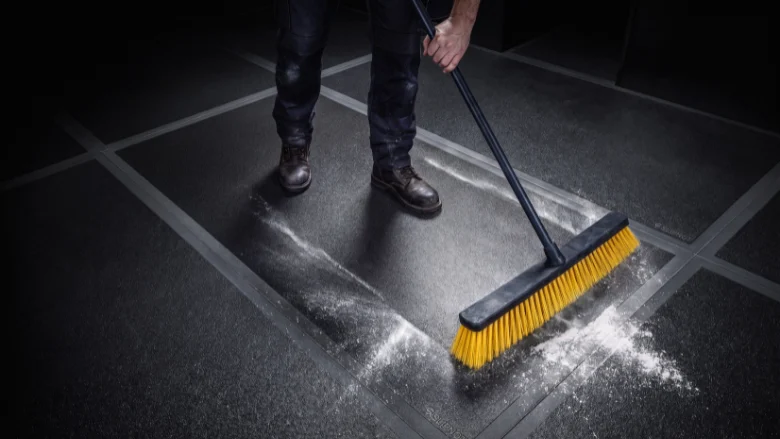
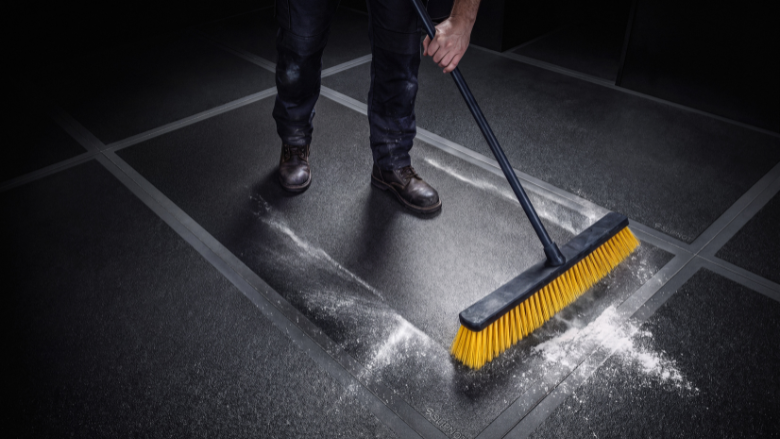
Slipnot Sweep was engineered to neutralize this issue. By utilizing a smooth-yet-highly-tractioned stainless steel surface on a stainless steel substrate, the product eliminates the "trap" mechanisms inherent in older flooring technologies. Because the surface is entirely grit-free, it avoids the common failure point of particle shedding, a critical concern in pharmaceutical and food-grade cleanrooms.
Chronology: From Concept to Industry Implementation
The development of Slipnot Sweep represents a significant investment in research and development, focusing on the specific pain points of dry-processing facility managers.
- Initial Research and Design (2022–2023): Slipnot’s engineering team conducted deep-dive audits into the maintenance workflows of high-volume baking and dry-powder facilities. The recurring theme identified was the trade-off between labor-intensive cleaning and worker safety.
- Prototyping and Material Selection: The team moved away from traditional epoxy-grit coatings, which are prone to peeling and chipping, and instead focused on a proprietary stainless steel surface treatment.
- Performance Validation: Throughout 2023, the product underwent rigorous internal testing to ensure that the material could maintain its high-traction performance without sacrificing its "cleanability."
- Launch and NFSI Certification (2024): Following successful pilot programs, the product received official high-traction certification from the National Floor Safety Institute (NFSI), cementing its place as a viable, durable solution for commercial application.
Supporting Data: Quantifying Performance and Efficiency
The efficacy of Slipnot Sweep is supported by both independent certification and internal productivity studies.
Traction Metrics
The primary requirement for any industrial flooring is its ability to prevent slip-and-fall accidents. Slipnot Sweep has demonstrated superior performance in laboratory conditions:
- Wet Dynamic Coefficient of Friction (DCOF): Exceeding 0.88.
- Dry DCOF: Achieved 0.71.
These figures place the product well within the "high-traction" classification, providing peace of mind for facility managers navigating Occupational Safety and Health Administration (OSHA) compliance and general worker safety protocols.
Productivity Gains
Perhaps the most compelling argument for the adoption of Slipnot Sweep in high-volume facilities is the quantifiable reduction in sanitation downtime. Slipnot reports that their new flooring solution can reduce sanitation time by 15 to 30 minutes per production line.
In a high-output environment operating on 24/7 cycles, reclaiming nearly half an hour per line per shift translates to a significant increase in annual throughput. By streamlining the cleaning process, facilities can reduce the labor hours required for sanitation while simultaneously achieving a more thorough level of hygiene.
Engineering for Sanitation: The Seam-Welded Advantage
One of the most innovative features of Slipnot Sweep is the thoughtful integration of its installation process into its sanitary profile. In the food processing industry, the "bacterial harborage site" is the enemy. Gaps, seams, and uneven edges serve as the perfect breeding ground for Listeria, Salmonella, and other contaminants.
To mitigate this, Slipnot Sweep is designed to be fully seam-welded. The company has implemented a strategic "pre-masking" process for the perimeter edges of the flooring panels. By masking these edges prior to applying the surface treatment, installers can perform high-quality, full-seam welds that fuse the panels into a seamless, unified surface. Because the treatment does not extend to the immediate edge, the weld is not compromised, and the transition between panels is smooth, eliminating crevices where liquids or dry debris might collect.
Implications for Industry Segments
The rollout of Slipnot Sweep has far-reaching implications across several specialized industrial sectors:
Food and Beverage
In baking and dairy powder facilities, where moisture control is vital to product integrity, the ability to clean effectively without power washing is a game-changer. The grit-free nature of the product also mitigates the risk of foreign object contamination, a critical KPI in HACCP (Hazard Analysis Critical Control Point) planning.
Pharmaceutical Manufacturing
The pharmaceutical industry demands the highest standards of cleanroom hygiene. Particle shedding—a common drawback of traditional abrasive floor coatings—is a major contamination risk in the production of sensitive medications. By utilizing a stainless-steel-on-stainless-steel construction, Slipnot provides a non-shedding environment that aligns with Good Manufacturing Practice (GMP) standards.
Plastics and Wood Processing
In these industries, fine particulates can often create slick, dangerous surfaces even in dry environments. The durability of Slipnot Sweep ensures that it can withstand the heavy foot traffic and mechanical wear-and-tear associated with these sectors, far outlasting temporary solutions like anti-slip tapes or paints, which require constant re-application and maintenance.
A Sustainable, Long-Term Investment
For many facility managers, the choice of flooring is often a compromise between upfront cost and long-term maintenance burden. Traditional solutions like tapes and paints may seem cost-effective initially, but the recurring labor costs for maintenance, re-application, and the downtime associated with those repairs often lead to a higher Total Cost of Ownership (TCO).
Slipnot Sweep is positioned as a durable, permanent capital improvement. Its resistance to wear means that the slip-resistant properties remain consistent over the product’s lifespan, rather than degrading as the grit wears away or the tape peels back. By investing in a high-grade stainless steel solution, firms can move away from a reactive maintenance model to a proactive, standardized sanitation protocol.
Conclusion: Setting a New Standard for Workplace Safety
The introduction of Slipnot Sweep is not merely a product launch; it is a response to the evolving demands of modern industry. As regulatory scrutiny over food safety and worker welfare intensifies, the technologies used in the manufacturing environment must evolve in tandem.
By successfully marrying high-traction safety with the stringent requirements of sanitary design, Slipnot has addressed the "cleanliness gap" that has plagued dry processing environments for years. For facilities looking to optimize their safety records, reduce sanitation labor costs, and ensure a sterile production environment, Slipnot Sweep offers a robust, engineered solution that stands up to the rigors of the modern factory floor.
For further information on integrating Slipnot Sweep into your facility’s safety infrastructure, visit www.slipnot.com. As the industry continues to prioritize the health of its workers and the purity of its products, innovations like these will undoubtedly become the benchmark for the next generation of industrial design.