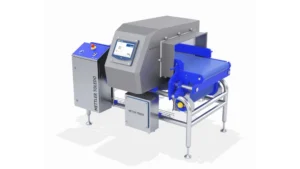
Enhancing Nut Quality Assurance: WECO Launches North America’s First Multiscan MXV-Bulk X-Ray Inspection System
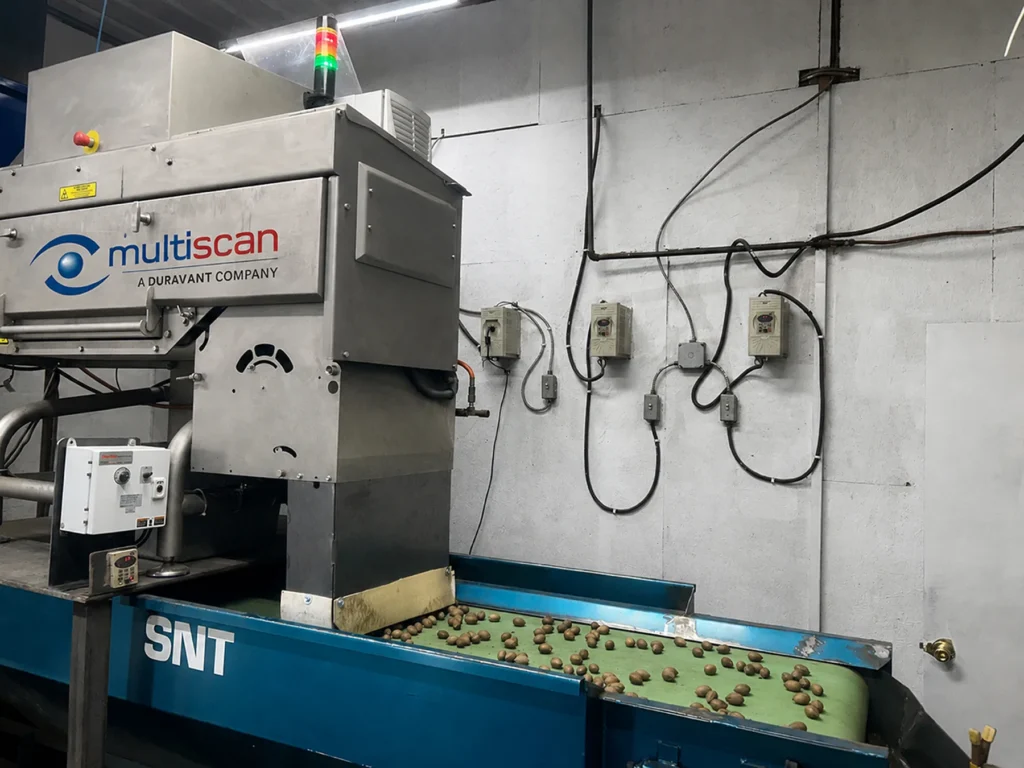
The global nut processing industry is currently undergoing a paradigm shift in quality control. As consumer expectations for food safety and product consistency reach unprecedented levels, the traditional reliance on external visual inspection is proving insufficient. Addressing this critical gap, WECO—a leader in food processing technology—has officially launched the Multiscan MXV-Bulk X-ray inspection system. This innovation marks a significant milestone as the first of its kind in North America specifically engineered to evaluate the internal quality of in-shell nuts, offering a sophisticated layer of defense against hidden defects and foreign material contamination.
Main Facts: A New Frontier in Internal Quality Assessment
The Multiscan MXV-Bulk system represents a technological leap forward for processors of pecans, walnuts, pistachios, peanuts, and other shelled varieties. Unlike conventional sorters that evaluate color, shape, or size, the MXV-Bulk utilizes advanced X-ray imaging to analyze density variations within each individual nut.
At its core, the system is designed to identify "invisible" defects—quality issues that leave no external trace on the shell. This includes internal mold, insect damage, and insufficient kernel fill. Furthermore, the system provides a robust solution for food safety by detecting high-density foreign materials such as stones, glass, ceramics, and embedded metal fragments that might otherwise bypass optical or mechanical sorting methods. By systematically removing these contaminants and low-quality kernels from the product stream, the MXV-Bulk enables processors to significantly elevate product grades and maximize the per-pound value of their harvest.
Chronology of Development: A Collaborative Synergy
The arrival of the MXV-Bulk is the result of a deliberate strategic alignment within the Duravant family of companies. The development process was characterized by a cross-pollination of expertise between WECO, renowned for its deep roots in the nut processing industry, and Multiscan Technologies, a pioneer in advanced sensor-based sorting.
- Phase 1: Conceptual Alignment: Recognizing the limitations of existing optical sorting technologies, WECO and Multiscan identified a market need for non-invasive internal density analysis that could operate at industrial, high-volume speeds.
- Phase 2: Technological Integration: Engineers combined Multiscan’s proprietary X-ray imaging algorithms with WECO’s specialized knowledge of nut handling and processing line dynamics. The goal was to create a system that could handle the variability of raw agricultural products without compromising throughput.
- Phase 3: Prototype and Field Testing: The technology underwent rigorous testing to ensure it could withstand the harsh environments of food processing plants while maintaining precision in identifying sub-surface defects.
- Phase 4: Market Introduction: Following successful validation, the system was launched globally. Recognizing the specific needs of the North American market, the system was made available for purchase worldwide, with flexible leasing options specifically offered in the U.S., Mexico, and Canada to facilitate rapid adoption.
Supporting Data: How the Technology Works
The effectiveness of the MXV-Bulk lies in its sophisticated mechanical and digital design. The process is broken down into three distinct stages:
1. Stabilization and Distribution
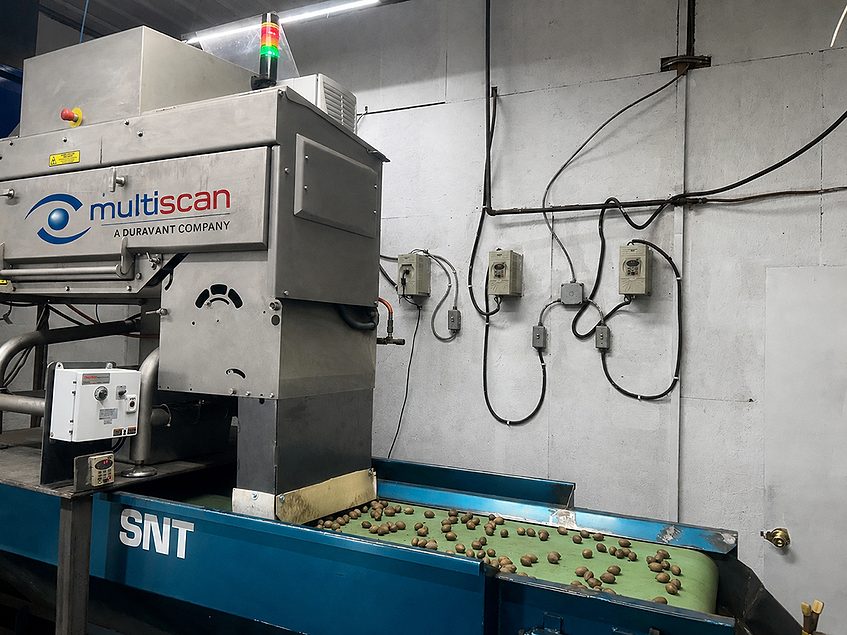
Nuts are introduced onto a specialized belt conveyor engineered to stabilize and evenly distribute the product. This consistency is vital; if nuts are bunched together, X-ray penetration can be inconsistent, leading to "false negatives" where defects might be obscured. By creating a uniform product layer, the system ensures that every individual nut is presented clearly to the sensors.
2. High-Speed Imaging and Analysis
As the nuts pass through the inspection zone, the system captures high-resolution X-ray images. The software analyzes these images in real-time, calculating the density of each object against a pre-defined threshold set by the operator via a user-friendly touchscreen interface. This allows for granular control—processors can define, for instance, exactly how "full" a nut must be to pass inspection. Because the system can evaluate fill within specific internal regions, it can be calibrated to account for the unique anatomical differences among different varieties of nuts.
3. Precision Ejection
Upon identifying an out-of-tolerance nut or a foreign object, the system communicates with high-speed air valves. These valves deliver a precise blast of air, ejecting the unwanted material from the production line with minimal impact on the surrounding good product, thereby maintaining high yield rates.
Implications for the Processing Line: A Multilayered Strategy
One of the most critical aspects of the MXV-Bulk is how it integrates into existing infrastructure. WECO emphasizes that the system is not intended to replace existing equipment but rather to serve as a vital component of a comprehensive "Defense in Depth" strategy.
Complementary Sorting Methodologies
Modern food processing plants typically utilize a combination of technologies, each serving a distinct purpose:
- Optical Sorters: These address external characteristics, such as color, size, shape, and surface condition. They are essential for identifying skin blemishes or variety-specific color sorting.
- Aspiration Systems: These rely on the aerodynamic properties and weight of the nuts, effectively removing light debris, husks, and dust.
- X-Ray Inspection (MXV-Bulk): This fills the "information gap" regarding internal density. By combining these technologies, processors can achieve a near-perfect quality assurance threshold that was previously impossible.
Official Responses and Operational Support
The introduction of the MXV-Bulk reflects a broader commitment from WECO to sustain the productivity of its clients. Because the system is designed for straightforward operation, it does not require a highly specialized or expensive technician to manage. This accessibility is a strategic move to ensure that processors can implement the technology without being hindered by labor shortages or training bottlenecks.
WECO has structured a comprehensive service ecosystem to support the MXV-Bulk. Beyond the initial sale or lease, the company provides:
- Installation and Startup Services: Ensuring the system is calibrated correctly for the specific nut type being processed.
- Preventive Maintenance: Scheduled check-ups to minimize the risk of unplanned downtime.
- Technology Upgrades: As software algorithms for defect detection improve, WECO provides the necessary updates to ensure the equipment remains at the cutting edge of inspection capability.
- 24/7 Emergency Assistance: Recognizing that food processing is often a time-sensitive, seasonal business, the availability of around-the-clock support is designed to protect production uptime during critical harvest windows.
The Future of Food Safety in the Nut Industry
The implications of this technology extend far beyond simple quality control. As global regulations regarding food safety—such as the Food Safety Modernization Act (FSMA) in the U.S.—continue to tighten, the burden of proof rests on the processor. The ability to demonstrate that every product has been scanned for internal hazards like glass, metal, and mold provides a significant competitive advantage and risk mitigation tool.
Furthermore, the economic impact for the grower and processor is substantial. By ensuring that only high-quality, fully filled nuts reach the market, processors can command premium pricing. Simultaneously, reducing the reliance on manual inspection—which is labor-intensive, prone to human error, and inconsistent—allows for a more lean, automated, and profitable operation.
As the industry moves toward more transparent supply chains, the adoption of advanced, data-driven inspection technologies like the Multiscan MXV-Bulk will likely become the industry standard. WECO’s initiative underscores a future where technology does not just assist in production, but actively guarantees the safety and quality of the global food supply.
For those seeking further information on food safety standards and the latest technological trends in processing, resources such as Food Safety Magazine and its AI-driven search tool, Ask FSM, provide ongoing analysis of industry developments, regulatory shifts, and technological breakthroughs that define the modern food safety landscape.