Redefining Protein Quality: A Public Health Imperative for the 21st Century

Introduction: The Shifting Paradigm of Protein
For decades, the concept of "protein quality" has been a cornerstone of nutritional science, guiding dietary recommendations and shaping public perception. However, a growing chorus of scientific voices is challenging this established definition, arguing that its biochemical focus on amino acid profiles no longer aligns with the complex public health challenges of the modern industrialized world. Far from the concerns of protein malnutrition that once dominated global health discussions, today’s developed nations grapple with an epidemic of chronic diseases, many of which are intricately linked to dietary patterns. This calls for a radical re-evaluation of what constitutes "quality" when it comes to the proteins we consume.
This article delves into the compelling public health case for modernizing the definition of protein quality, exploring landmark studies that highlight the profound differences between animal and plant-based proteins, not just in their amino acid composition, but in their ultimate impact on human health and longevity. We will examine the scientific mechanisms behind these observed effects, consider the broader implications for dietary guidelines and public policy, and underscore the urgent need for a paradigm shift that prioritizes long-term well-being over outdated biochemical metrics.
Main Facts: The Urgent Call for a Modern Definition
The conventional understanding of protein quality, often measured by metrics like the Protein Digestibility Corrected Amino Acid Score (PDCAAS) or the Digestible Indispensable Amino Acid Score (DIAAS), primarily assesses a protein’s ability to meet the body’s amino acid requirements for growth and repair. These metrics tend to favor animal-derived proteins—meat, eggs, and dairy—due to their complete amino acid profiles and high digestibility. This biochemical lens, while valuable in specific contexts such as addressing severe protein deficiency (kwashiorkor), inadvertently promotes the consumption of foods that, in excess, are increasingly linked to detrimental health outcomes in affluent societies.
In 2019, a pivotal paper titled "A Public Health Case for Modernizing the Definition of Protein Quality" was published by a team of prominent researchers including Dr. David Katz and Dr. David Jenkins. Their central argument was clear: the prevailing definition of protein quality creates a misleading impression that "more protein is better," and that animal protein is inherently superior, thereby encouraging dietary choices that contradict global public health goals aimed at increasing plant-food consumption.
The authors highlighted that while protein malnutrition remains a serious issue in many parts of the world, it is exceedingly rare in industrialized nations. Here, the "most formidable public health threats" stem from chronic diseases such as heart disease, type 2 diabetes, certain cancers, and obesity. The continued promotion of animal protein as the gold standard, without considering its broader health effects, therefore actively undermines efforts to combat these prevalent conditions. The call for modernization isn’t merely academic; it’s a strategic imperative to align nutritional science with contemporary public health realities.
Chronology: Unpacking Key Research Findings
The scientific foundation for this re-evaluation has been building over several years, with large-scale epidemiological studies providing robust evidence of the differential health impacts of various protein sources.
The Harvard Study (2016): A Landmark Revelation
A significant turning point came in 2016 with the publication of a landmark study from Harvard University. This extensive cohort study, involving more than 100,000 participants, meticulously tracked dietary intake and health outcomes over several years. The findings were stark and compelling: replacing animal protein with plant protein was consistently associated with a lower risk of premature death.
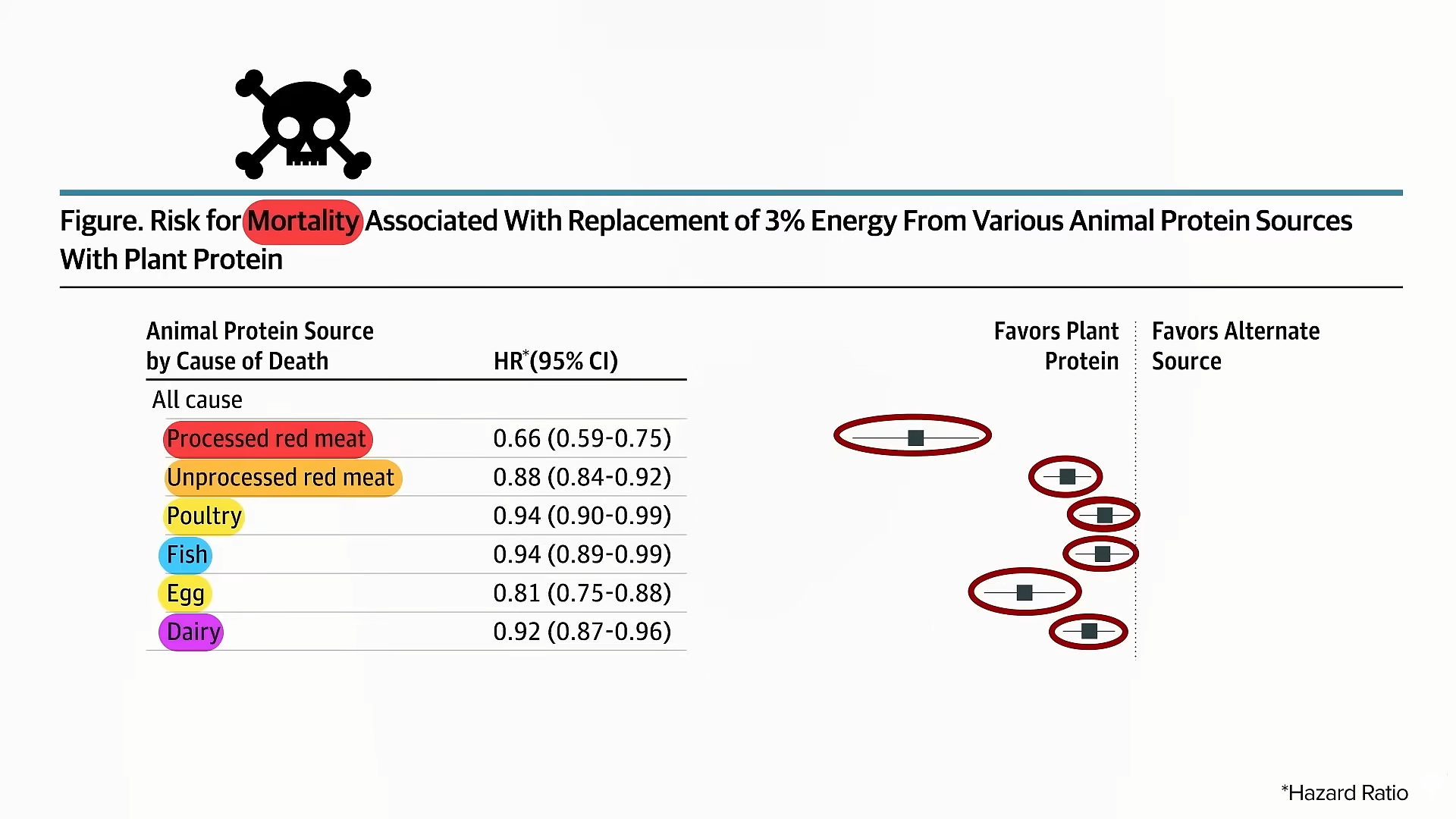
The study identified certain "worst offenders" among animal proteins, particularly processed meats like bacon, which showed a strong link to increased mortality risk. Surprisingly, egg protein, specifically from egg whites, also emerged as a significant contributor to adverse outcomes. However, the benefits of plant-based swaps were not limited to these specific items. The researchers found that even a modest substitution—just 3% of total caloric intake from plant protein in place of any animal protein (including processed meat, unprocessed meat, chicken, fish, eggs, or dairy)—was associated with a significantly lower risk of overall mortality. This 3% shift, seemingly minor, represented a profound impact on what is arguably the most critical health endpoint: the risk of dying prematurely.
(Image description: A chart or graph illustrating the inverse relationship between replacing animal protein with plant protein and the risk of premature death, showing specific percentages for different animal protein sources.)
The NIH-AARP Diet and Health Study: Reinforcing the Evidence
For those who might question the statistical power of a 100,000-person study, further evidence arrived from an even larger investigation: the U.S. National Institutes of Health–AARP Diet and Health Study. This monumental undertaking represents the largest diet cohort study in history, encompassing more than 400,000 participants. Its sheer scale provides an unprecedented level of statistical confidence in its findings.
Consistent with the Harvard research, the NIH-AARP study also revealed a clear association between dietary protein sources and mortality. Researchers found that simply replacing 3% of calories from animal protein with plant protein was linked to a 10% lower overall mortality risk. The benefits were even more pronounced when specific animal products were removed: eliminating eggs, for instance, nearly doubled this mortality reduction. This finding resonates with other research that has consistently associated egg consumption with an elevated risk of developing cardiovascular disease, further solidifying the argument against their unrestricted consumption.
These large-scale studies, representing hundreds of thousands of individuals and years of follow-up, provide a robust epidemiological basis for questioning the traditional emphasis on animal protein and advocating for a shift towards plant-based sources.
Supporting Data: Mechanisms Behind the Health Disparities
The question naturally arises: if protein is fundamentally "protein," how can its source dictate such vastly different health outcomes? The answer lies in several physiological and environmental factors that distinguish animal and plant proteins beyond their mere amino acid composition.

The Role of Branched-Chain Amino Acids (BCAAs)
One key differentiator lies in the levels of branched-chain amino acids (BCAAs)—leucine, isoleucine, and valine. Animal proteins are typically rich in BCAAs, while plant proteins generally contain lower concentrations. Emerging research suggests that this difference is crucial for metabolic health. Decreased consumption of BCAAs has been shown to improve metabolic health, influencing factors like insulin sensitivity and glucose metabolism. High levels of BCAAs, particularly when consumed in excess, can contribute to insulin resistance, a precursor to type 2 diabetes and a driver of metabolic syndrome. By favoring plant proteins, which are naturally lower in BCAAs, individuals may inadvertently be optimizing their metabolic pathways and reducing their risk for these chronic conditions.
(Doctor’s Note Integration): This directly relates to the concept discussed in "Are BCAA (Branched Chain Amino Acids) Healthy?" The article would elaborate on how the metabolic signaling pathways influenced by BCAAs, when overstimulated by animal protein, can contribute to negative health outcomes.
Insulin-like Growth Factor 1 (IGF-1) and Cancer Risk
Another significant factor is Insulin-like Growth Factor 1 (IGF-1), a powerful hormone known to promote cell growth and proliferation. While essential for development, persistently elevated IGF-1 levels in adulthood have been strongly implicated in the progression of various cancers, including breast, prostate, and colorectal cancers. Animal protein intake, particularly from "high-quality" sources as traditionally defined, is known to boost IGF-1 levels in the body.
The connection between animal protein, IGF-1, and disease is more than mere correlation. Evidence suggests a causal link: individuals born with naturally higher IGF-1 levels, irrespective of their diet, appear to experience higher rates of life-threatening conditions such as type 2 diabetes and heart disease. This genetic predisposition underscores the potent influence of IGF-1 on long-term health. Therefore, a diet that minimizes animal protein, and consequently reduces IGF-1 stimulation, could serve as a crucial preventative measure against several chronic diseases.
Toxic Pollutants: An Unseen Burden
Beyond intrinsic biochemical differences, animal proteins often carry an additional, insidious burden: toxic environmental pollutants. Dioxins and polychlorinated biphenyls (PCBs) are persistent organic pollutants that have contaminated the environment globally. These fat-soluble compounds bioaccumulate, meaning they become increasingly concentrated as they move up the food chain. Consequently, cattle, pigs, chickens, and fish, which are higher on the food chain, tend to accumulate significantly higher levels of these harmful chemicals in their tissues. When humans consume these animal products, these toxic pollutants end up on our plates and accumulate in our bodies.
These compounds are known endocrine disruptors, neurotoxins, and carcinogens, with long-term exposure linked to a range of health problems including immune system dysfunction, reproductive issues, developmental problems, and various cancers. Switching to plant-based proteins offers a direct and effective strategy to reduce this "body burden" of harmful pollutants. As one study concluded, "plant-based protein, besides other health benefits, stands as an important step to lower the body burden of harmful pollutants of dietary animal-protein origin." This environmental dimension adds another critical layer to the argument for prioritizing plant proteins.
The Cumulative Evidence: A Meta-Analysis Perspective
To synthesize the vast body of research on dietary protein and mortality, meta-analyses provide a powerful tool. When all available studies on dietary protein intake and mortality are pooled and analyzed, a consistent pattern emerges: individuals who consume more protein overall tend to experience shorter lifespans. However, this overarching finding is "mainly driven by a harmful association of animal protein."
In stark contrast, plant protein intake is inversely associated with mortality. This means that those who consume more plant protein tend to live longer, healthier lives. The evidence is unequivocal: more animal protein correlates with increased mortality, while more plant protein correlates with decreased mortality.
(Image description: A chart or graph illustrating the divergent trends of mortality risk, showing increasing risk with higher animal protein intake and decreasing risk with higher plant protein intake.)
This comprehensive view, combining epidemiological data with insights into specific biochemical and environmental mechanisms, paints a clear picture: the source of protein matters profoundly for long-term health. The traditional definition of protein quality, by focusing solely on amino acid completeness, overlooks these critical distinctions.
(Doctor’s Note Integration): The cumulative evidence also touches upon the question "Do Vegetarians Get Enough Protein?" The meta-analysis clearly shows that plant protein is not only sufficient but beneficial, debunking concerns about inadequacy. Additionally, the "Protein Combining Myth" can be addressed here, emphasizing that diverse plant-based diets naturally provide all necessary amino acids over the course of a day, without needing specific combinations at each meal.
Official Responses and Evolving Guidelines
While a formal, global "official response" to the specific Katz/Jenkins paper from major health organizations might still be evolving, the scientific community and national dietary guidelines are increasingly moving in the direction advocated by the paper. The call for modernizing protein quality isn’t happening in a vacuum; it aligns with broader shifts in nutritional science.
Alignment with Global Dietary Recommendations
Many national and international dietary guidelines, such as those from the World Health Organization (WHO), the EAT-Lancet Commission, and even updated versions of the USDA’s MyPlate, have been progressively emphasizing plant-based foods. They recommend reducing red and processed meat intake and increasing consumption of fruits, vegetables, whole grains, legumes, and nuts. This push towards more plants, even if not explicitly framed as a "redefinition of protein quality," implicitly acknowledges the superior health profile of plant-derived nutrients, including protein.
The EAT-Lancet Commission, for example, proposed a "planetary health diet" that aims to improve human health while ensuring environmental sustainability. This diet is overwhelmingly plant-forward, advocating for significant reductions in animal product consumption and a dramatic increase in plant protein sources. This aligns perfectly with the public health case for modernizing protein quality, as the health of individuals and the planet are intrinsically linked.
Challenges to Shifting Paradigms
Despite the mounting scientific evidence, changing deeply ingrained nutritional definitions and public perceptions is a formidable challenge. The conventional understanding of protein quality has been taught for decades and is firmly embedded in medical education, dietetics, and popular culture. The powerful lobbying efforts of the meat, dairy, and egg industries also play a significant role in maintaining the status quo, often emphasizing the "completeness" and "quality" of their products based on traditional biochemical metrics.
However, the growing body of evidence, especially from large cohort studies and meta-analyses, is making it increasingly difficult to ignore the public health implications. The scientific consensus is slowly but surely shifting, and papers like Katz and Jenkins’ serve as catalysts, providing a clear framework for a necessary paradigm shift.
Implications: Reshaping Diet, Health, and Policy
The modernization of protein quality’s definition carries far-reaching implications across individual dietary choices, public health policy, the food industry, and even global sustainability efforts.
Individual Dietary Choices
For the average consumer, a modernized understanding of protein quality would translate into a clearer message: prioritize plant-based protein sources. This means increasing the intake of legumes (beans, lentils, peas), whole grains, nuts, seeds, and plant-based meat alternatives. The message would shift from "how much protein" and "which animal source is best" to "which protein sources promote longevity and health."
This doesn’t necessarily mean absolute veganism for everyone, but a significant reduction in animal product consumption and a conscious effort to swap animal proteins for plant alternatives. The evidence suggests that even small, consistent changes, like replacing just 3% of calories from animal protein with plant protein, can yield substantial health benefits.
(Doctor’s Note Integration): This naturally leads to discussing "Are Beyond Meat and the Impossible Burger Healthy?" While these plant-based meats offer a lower environmental footprint and avoid many of the issues with animal protein (like dioxins, IGF-1), their processed nature means they still warrant a cautious approach compared to whole plant foods. The discussion would emphasize that whole plant proteins remain the ideal, but these alternatives can be a useful transition tool.
Public Health Policy and Guidelines
For public health organizations and policymakers, the implications are profound. Dietary guidelines would need to be updated to explicitly reflect the health advantages of plant protein over animal protein. This could involve:
- Rethinking protein recommendations: Shifting focus from merely meeting minimum amino acid requirements to optimizing for long-term health and disease prevention.
- Targeted public health campaigns: Educating the public about the benefits of plant-based proteins and the potential risks associated with excessive animal protein.
- Incentivizing plant-based food systems: Policies that support the production, accessibility, and affordability of plant-based foods, while potentially disincentivizing overconsumption of animal products.
This aligns with the meta-analysis conclusion that "Persons should be encouraged to increase their plant protein intake to potentially decrease their risk of death." Policy should reflect this encouragement.
Food Industry Innovation and Sustainability
The food industry would be compelled to innovate further in the plant-based sector. This isn’t just about creating more plant-based meat alternatives, but also about promoting whole plant foods and developing new, healthy, and appealing plant-protein options. A shift in demand driven by modernized protein quality definitions would accelerate investment in sustainable agriculture and plant-based food production, contributing positively to environmental goals such as reducing greenhouse gas emissions and preserving biodiversity.
A Holistic View of Nutrition
Ultimately, modernizing the definition of protein quality moves us towards a more holistic understanding of nutrition. It recognizes that food is more than just a collection of macronutrients and micronutrients; it’s a complex matrix of compounds that interact with our biology in myriad ways. It also acknowledges that health is not merely the absence of deficiency, but the presence of vitality and a reduced risk of chronic disease.
(Doctor’s Note Integration): The concept of "Caloric Restriction vs. Animal Protein Restriction" can be woven in here. The benefits often attributed to calorie restriction (e.g., increased longevity) might, in part, be driven by a reduction in animal protein intake, further highlighting the specific impact of animal protein on aging and disease pathways, independent of total calories.
Conclusion: A Healthier Future Through Plant-Powered Protein
The evidence is clear and compelling: the traditional, biochemically-driven definition of protein quality is insufficient and, in the context of modern public health challenges, potentially misleading. The vast majority of people in industrialized nations face threats from chronic diseases, not protein deficiency. Large-scale studies consistently demonstrate that plant-based proteins are associated with lower mortality rates and improved health outcomes, while animal proteins, particularly in excess, are linked to increased risks of chronic illness and premature death.
The mechanisms underpinning these differences—including the impact on branched-chain amino acid metabolism, IGF-1 levels, and the burden of environmental pollutants—provide a robust scientific basis for this paradigm shift. It is time for nutritional science, public health policy, and individual dietary choices to align with this modern understanding. By embracing a definition of protein quality that prioritizes overall human health and longevity, we can empower individuals to make more informed choices, drive innovation in the food industry, and ultimately foster a healthier future for all. The call to action is simple yet profound: increase plant protein intake, decrease animal protein intake, and redefine what truly constitutes "quality" in our diets.