Redefining Protein Quality: A Public Health Imperative for the 21st Century
Introduction: Challenging the Conventional Wisdom on Protein
For decades, the concept of "protein quality" has been largely defined by biochemical metrics, prioritizing the amino acid profile and digestibility of protein sources. This traditional understanding has inadvertently fostered a pervasive belief that "protein is good, and more is better," often leading to the assumption that animal proteins—meat, eggs, and dairy—are inherently superior. However, a growing body of scientific evidence suggests that this prevailing definition is not only outdated but potentially detrimental to public health, especially in industrialized nations grappling with an epidemic of chronic diseases.
Leading nutrition experts are now advocating for a radical re-evaluation, proposing a modernization of protein quality that aligns with holistic human health outcomes rather than just biochemical completeness. This paradigm shift underscores a critical divergence: what’s considered "high quality" by an isolated biochemical standard may not be optimal when considering the broader impacts on long-term health and disease prevention.
Main Facts: The Call for a Modernized Definition
The urgent need for this redefinition was powerfully articulated in 2019 by Dr. David Katz and his esteemed colleagues, including the influential researcher Dr. David Jenkins. Their seminal publication, "A Public Health Case for Modernizing the Definition of Protein Quality," challenged the status quo, arguing that the existing framework disproportionately favors animal protein sources. This traditional view, they contend, creates a misleading impression that increased consumption of meat, eggs, and dairy is desirable and preferable, directly contradicting contemporary nutrition guidelines that increasingly advocate for plant-rich diets.
In the industrialized world, the specter of protein malnutrition, such as kwashiorkor, is exceedingly rare. Instead, these societies face formidable public health threats from chronic diseases like heart disease, type 2 diabetes, and certain cancers—conditions frequently linked to dietary patterns rich in animal products. This stark reality highlights the inadequacy of a protein definition that overlooks the profound effects of different protein sources on human metabolic health and disease risk. The current definition, rooted in assessing protein’s ability to support growth in young animals, fails to consider the long-term health implications for adult humans in a context of caloric abundance. It’s a definition designed for a world struggling with basic nutrient deficiencies, not one struggling with chronic disease due to overconsumption and imbalanced diets.
Chronology: Unveiling the Evidence
The movement to redefine protein quality is not merely theoretical; it is underpinned by robust epidemiological and physiological research that has accumulated over recent years.
The 2019 Catalyst: Katz and Jenkins’s Public Health Stance
The 2019 paper by Katz and Jenkins served as a critical inflection point, formalizing the argument that the prevailing definition of protein quality, often measured by metrics like the Protein Digestibility Corrected Amino Acid Score (PDCAAS) or the Digestible Indispensable Amino Acid Score (DIAAS), is fundamentally flawed when applied to contemporary public health challenges. These scores primarily assess a protein’s capacity to meet essential amino acid requirements and its digestibility. While valuable for preventing acute protein deficiency, they do not account for the broader nutritional matrix of foods or the long-term physiological impacts of different protein sources.
For example, a traditional protein quality score might rate beef or eggs highly due to their complete amino acid profiles and high digestibility. However, this score does not factor in the saturated fat, cholesterol, or potential inflammatory compounds often associated with animal products, nor does it consider the beneficial fiber, antioxidants, and phytochemicals found abundantly in plant proteins. Katz and Jenkins argued that a modernized definition must incorporate a comprehensive assessment of a food’s overall impact on health, including its role in preventing or promoting chronic diseases, rather than isolating protein from its dietary context. Their work provided a framework for integrating epidemiological data and physiological mechanisms into a more relevant definition for the 21st century.
The Harvard Landmark Study of 2016: A Glimpse into Longevity
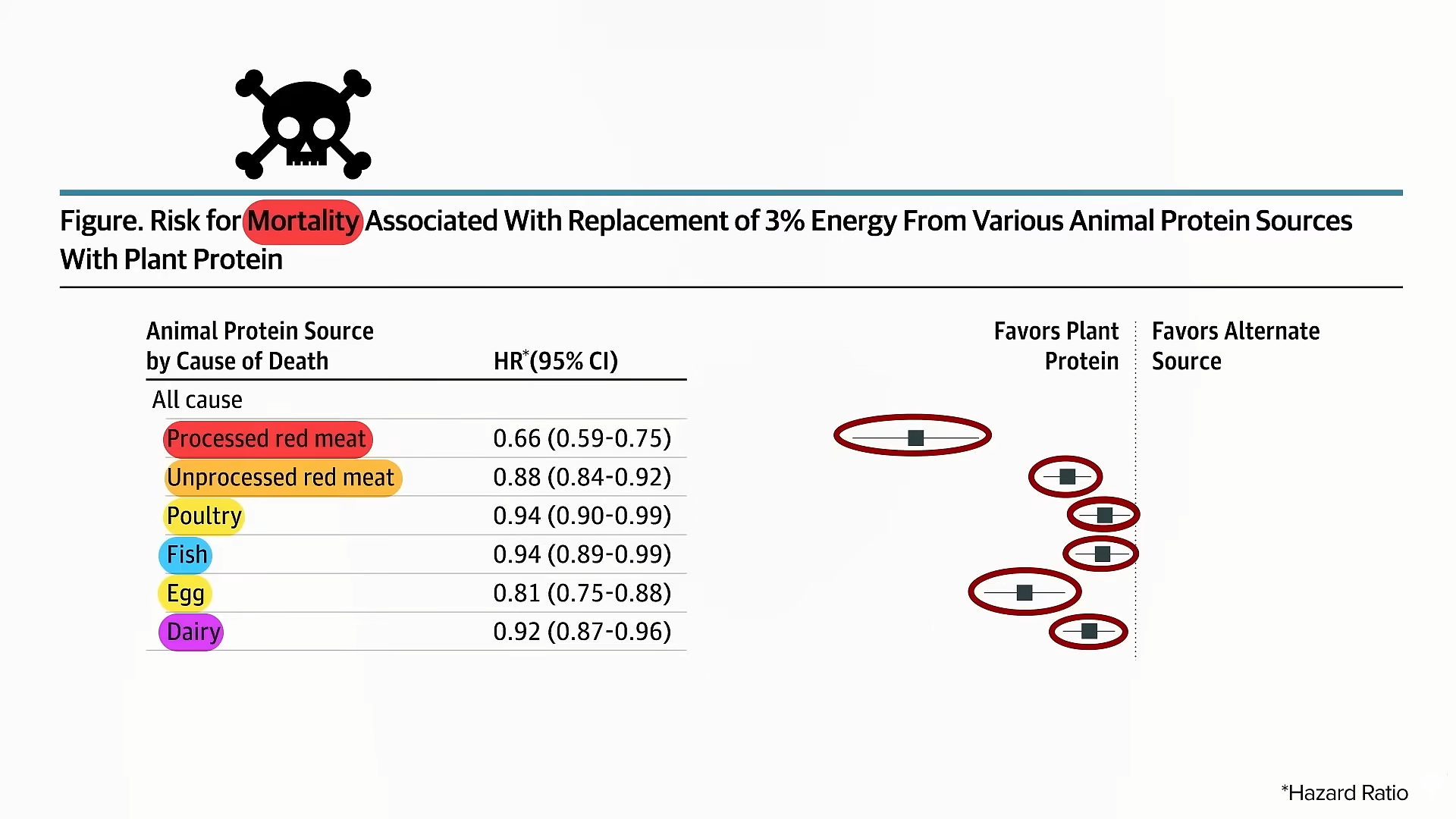
Prior to Katz and Jenkins’s formal proposal, a landmark study published in 2016 out of Harvard University provided compelling epidemiological evidence supporting a shift in dietary protein emphasis. This extensive study, involving more than 100,000 participants, meticulously tracked dietary patterns and health outcomes over several years. Its findings were unequivocal: replacing animal protein with plant protein was consistently associated with a lower risk of dying prematurely from all causes.
The research identified processed meats, such as bacon, and egg protein (specifically from egg whites) as particularly concerning. The study revealed that even a modest dietary adjustment—swapping in just 3% of calories from plant protein for any animal protein source (including processed meat, unprocessed meat, chicken, fish, eggs, or dairy)—was associated with a significantly lower risk of mortality. This "3% swap" represented a powerful testament to the impact of incremental dietary changes when sustained over time, offering a simple yet profound message for public health. The scale and rigor of this Harvard study underscored that the type of protein consumed has a measurable and meaningful impact on arguably the most important health endpoint: longevity. Visual representations from the study, often highlighted in educational videos like "Animal Protein vs. Plant-Based Protein," vividly illustrate these mortality trends, showing clear inverse relationships between plant protein intake and risk of death.
Further Validation: The NIH-AARP Diet and Health Study
For those seeking even greater statistical power, the conclusions drawn from the Harvard study were further reinforced by an even larger investigation: the U.S. National Institutes of Health–AARP Diet and Health Study. Recognized as the largest diet cohort study in history, this monumental research effort encompassed over 400,000 individuals, providing an unparalleled dataset for analyzing dietary patterns and health outcomes.

Once again, the findings echoed the earlier Harvard research. Researchers observed that merely replacing 3% of calories derived from animal protein with plant protein was associated with a 10% lower overall mortality risk. The study further revealed an enhanced benefit, nearly double that percentage, when eggs were entirely eliminated from the diet. This specific finding is particularly salient given the accumulating evidence linking egg consumption to an elevated risk of developing cardiovascular disease. The consistency across these massive cohorts—the Harvard study and the NIH-AARP study—lends considerable weight to the argument that the source of protein matters profoundly for long-term health and survival.
Supporting Data: Unpacking the Mechanisms
The question naturally arises: how can the body differentiate between protein from a plant and protein from an animal? Isn’t protein, fundamentally, just protein? The answer, as science reveals, is a resounding no. The distinction lies not just in the amino acid composition but also in the accompanying nutrients, bioactive compounds, and even environmental contaminants that are intrinsically linked to the protein source.
Beyond Saturated Fat: The Intrinsic Effects of Animal Protein
One immediate hypothesis for the observed adverse effects of animal protein often points to saturated fat, which is frequently co-located with animal protein sources. However, the researchers in the aforementioned studies meticulously adjusted for factors such as saturated fat intake. This crucial methodological step indicated that the negative associations with animal protein were not solely attributable to its fat content, suggesting that the protein itself, or other constituents uniquely present in animal products, played a significant role.
The Amino Acid Profile: Branched-Chain Amino Acids (BCAAs)
A key biochemical differentiator lies in the amino acid profile, particularly the concentration of branched-chain amino acids (BCAAs): leucine, isoleucine, and valine. Animal proteins are typically rich in BCAAs, whereas plant proteins generally contain lower levels. Emerging research has highlighted the metabolic implications of BCAA intake. Decreased consumption of BCAAs has been shown to improve metabolic health, influencing pathways related to insulin sensitivity and glucose metabolism. High levels of BCAAs, often associated with diets rich in animal protein, have been implicated in insulin resistance and the development of metabolic disorders. This suggests that the mere presence of these "essential" amino acids in high quantities, while necessary for muscle synthesis, may have adverse long-term metabolic consequences when consumed in excess or from specific sources. The topic of BCAA health implications is a complex one, warranting further exploration, as discussed in detailed analyses like "Are BCAA (Branched Chain Amino Acids) Healthy?"
Insulin-like Growth Factor 1 (IGF-1): A Growth Accelerator
Another compelling mechanism involves Insulin-like Growth Factor 1 (IGF-1), a powerful hormone known to promote cell growth and proliferation. While crucial for growth during childhood, elevated IGF-1 levels in adulthood have been consistently linked to increased risks of various cancers and accelerated aging. Animal protein intake, particularly from "high-quality" sources, has been shown to boost IGF-1 levels in the body.
The connection between IGF-1 and disease appears to be causal. Studies have shown that individuals genetically predisposed to higher IGF-1 levels, irrespective of their dietary habits, experience higher rates of life-threatening conditions such as type 2 diabetes and heart disease. This suggests that dietary choices that modulate IGF-1, such as reducing animal protein, could play a significant role in mitigating these risks. The implications are profound: a protein source that promotes growth may, in the long run, inadvertently promote disease when consumed in the context of an already well-nourished adult population.
Environmental Pollutants: The Hidden Burden
Beyond the intrinsic biological effects of protein and its associated nutrients, there’s another insidious factor: environmental pollutants. The Harvard researchers acknowledged that their models might not have fully controlled for all variables, particularly the accumulation of toxic pollutants. Dioxins and polychlorinated biphenyls (PCBs) are persistent organic pollutants that bioaccumulate up the food chain. This means that as smaller organisms are consumed by larger ones, these toxins become more concentrated at higher trophic levels. Consequently, cattle, pigs, chickens, and fish tend to accumulate significant levels of these harmful substances, which then end up on our plates when we consume animal products.
Plant-based proteins, by contrast, are typically much lower in these bioaccumulated toxins. Therefore, shifting towards plant-based protein intake offers an important, often overlooked, health benefit: it helps to lower the body burden of harmful pollutants of dietary animal-protein origin. This aspect underscores the multifaceted advantages of plant-centric diets, extending beyond macronutrient composition to include environmental toxicology.
The Cumulative Evidence: Meta-Analyses on Protein and Mortality
When the vast body of research on dietary protein intake and mortality is synthesized through meta-analyses, a clear pattern emerges. While overall protein intake can be associated with shorter lives, this association is "mainly driven by a harmful association of animal protein." Conversely, plant protein intake is inversely associated with mortality, meaning that individuals who consume more plant protein tend to live longer lives. This stark contrast is vividly illustrated in aggregated data, which consistently show that higher animal protein consumption correlates with increased mortality, whereas higher plant protein intake correlates with decreased mortality.
One comprehensive meta-analysis unequivocally concluded: "Persons should be encouraged to increase their plant protein intake to potentially decrease their risk of death." This robust conclusion, drawn from the totality of evidence, provides a strong directive for public health policy and individual dietary choices, emphasizing that the best of both worlds—optimal health and longevity—is achieved by increasing plant protein intake while decreasing animal protein.
Official Responses: The Disconnect and Evolving Guidelines
The scientific call to modernize the definition of protein quality highlights a significant disconnect between cutting-edge research and established nutritional guidelines and regulatory frameworks. While papers like Katz and Jenkins’s provide a compelling public health case, the official "definition" of protein quality, often relying on metrics like PDCAAS or DIAAS, is slow to change within governmental bodies and international food standards organizations. These traditional metrics are embedded in food labeling regulations and dietary recommendations, creating inertia.
Despite this institutional lag, there is an observable, albeit implicit, response from the broader scientific and public health community. Many national and international dietary guidelines have been subtly evolving to encourage more plant-based eating. For instance, the Dietary Guidelines for Americans increasingly emphasize a shift towards plant-rich patterns, recommending legumes, nuts, seeds, and whole grains as primary protein sources. Similarly, global initiatives like the EAT-Lancet Commission have explicitly advocated for a "planetary health diet" that drastically reduces animal product consumption in favor of plant-based foods, citing both human health and environmental sustainability benefits.
While these evolving guidelines may not directly reference Katz’s 2019 paper, they reflect a growing consensus that a diet emphasizing plant proteins is superior for long-term health. The absence of an explicit "official response" to a specific paper often lies in the nature of scientific consensus building, which is a gradual process. However, the consistent messaging from prominent health organizations encouraging plant-forward diets can be seen as an indirect, yet powerful, acknowledgment of the principles underpinning the call for a modernized protein quality definition. The challenge remains in translating this evolving scientific understanding into clear, actionable policy changes that explicitly redefine "protein quality" from a public health perspective, overcoming the vested interests and long-held traditions within the food industry and regulatory bodies.
Implications: Reshaping Public Health and Dietary Choices
The implications of a modernized definition of protein quality are far-reaching, touching upon public health policy, individual dietary choices, the food industry, and future research directions.
Public Health Transformation
A shift in the official definition of protein quality to prioritize overall health outcomes would be transformative for public health. It would empower health organizations to issue clearer, more effective dietary recommendations that actively guide populations towards plant-based protein sources. Such a change could lead to a significant reduction in the prevalence of chronic diseases like cardiovascular disease, type 2 diabetes, and certain cancers, which impose immense burdens on healthcare systems globally. By focusing on longevity and disease prevention rather than mere amino acid completeness, public health initiatives could become far more impactful in addressing the leading causes of mortality in industrialized nations.
Empowering Individual Dietary Choices
For individuals, a modernized definition would cut through the pervasive marketing and misinformation surrounding protein. Consumers would receive clearer guidance, understanding that not all protein is created equal when it comes to long-term health. This would empower them to make informed choices that align with optimal well-being, moving away from the "more meat is better" mentality towards a more nuanced appreciation of plant-based protein’s benefits. It would likely lead to increased consumption of legumes, whole grains, nuts, and seeds, fostering healthier eating habits across the population.
Impact on the Food Industry
The food industry would face significant pressure to adapt. The marketing of animal products as inherently "high-quality" protein sources would be challenged. This could spur innovation in the development of diverse and palatable plant-based protein options, extending beyond current plant-based meat alternatives. Manufacturers might reformulate existing products to reduce animal protein content or fortify plant-based options to enhance their nutritional profile further. While disruptive, this shift could ultimately lead to a more sustainable and health-conscious food supply chain.
Guiding Research and Education
The redefinition would also guide future nutritional research, encouraging studies that explore the complex interactions of protein sources within the broader dietary matrix and their long-term effects on human physiology. It would emphasize research into the unique benefits of various plant proteins and the potential risks associated with excessive animal protein. Furthermore, it would necessitate a complete overhaul of nutrition education, from medical schools to public health campaigns, ensuring that future generations are equipped with accurate, health-centric information about protein.
Addressing Common Protein Concerns
This new understanding also helps address several common misconceptions about protein. For instance, the long-held belief that plant proteins must be "combined" (e.g., rice and beans) in a single meal to form a "complete" protein is largely a myth; the body effectively combines amino acids over the course of a day. This is discussed in depth in resources like "The Protein Combining Myth." Similarly, concerns about vegetarians getting "enough protein" are often unfounded, as diverse plant-based diets naturally provide ample protein for human needs, as explored in "Do Vegetarians Get Enough Protein?" Even the burgeoning market of plant-based meat alternatives, such as Beyond Meat and the Impossible Burger, warrants careful consideration within this new framework, as their processing and added ingredients also contribute to their overall health impact. The benefits of calorie restriction, for example, might in part stem from an accompanying reduction in animal protein intake, a concept elaborated upon in "Caloric Restriction vs. Animal Protein Restriction."
In conclusion, the scientific community’s call to modernize the definition of protein quality is not merely an academic exercise; it is a public health imperative. By shifting our focus from narrow biochemical metrics to comprehensive health outcomes, we can better align our dietary recommendations with the overwhelming evidence that favors plant-based protein sources for longevity and chronic disease prevention. This profound re-evaluation promises to reshape our understanding of healthy eating and guide us towards a healthier future.