The $1.48 Dinner: How Culinary Professionals Are Re-Engineering Weeknight Meals Amid Rising Food Costs
Introduction
In an era defined by fluctuating grocery prices and heightened consumer sensitivity to food inflation, the demand for affordable, high-quality, and time-efficient home-cooked meals has reached an all-time high. Food developers and home economists are increasingly tasked with a challenging dual mandate: creating dishes that satisfy gourmet palates while adhering to strict budgetary and temporal constraints.
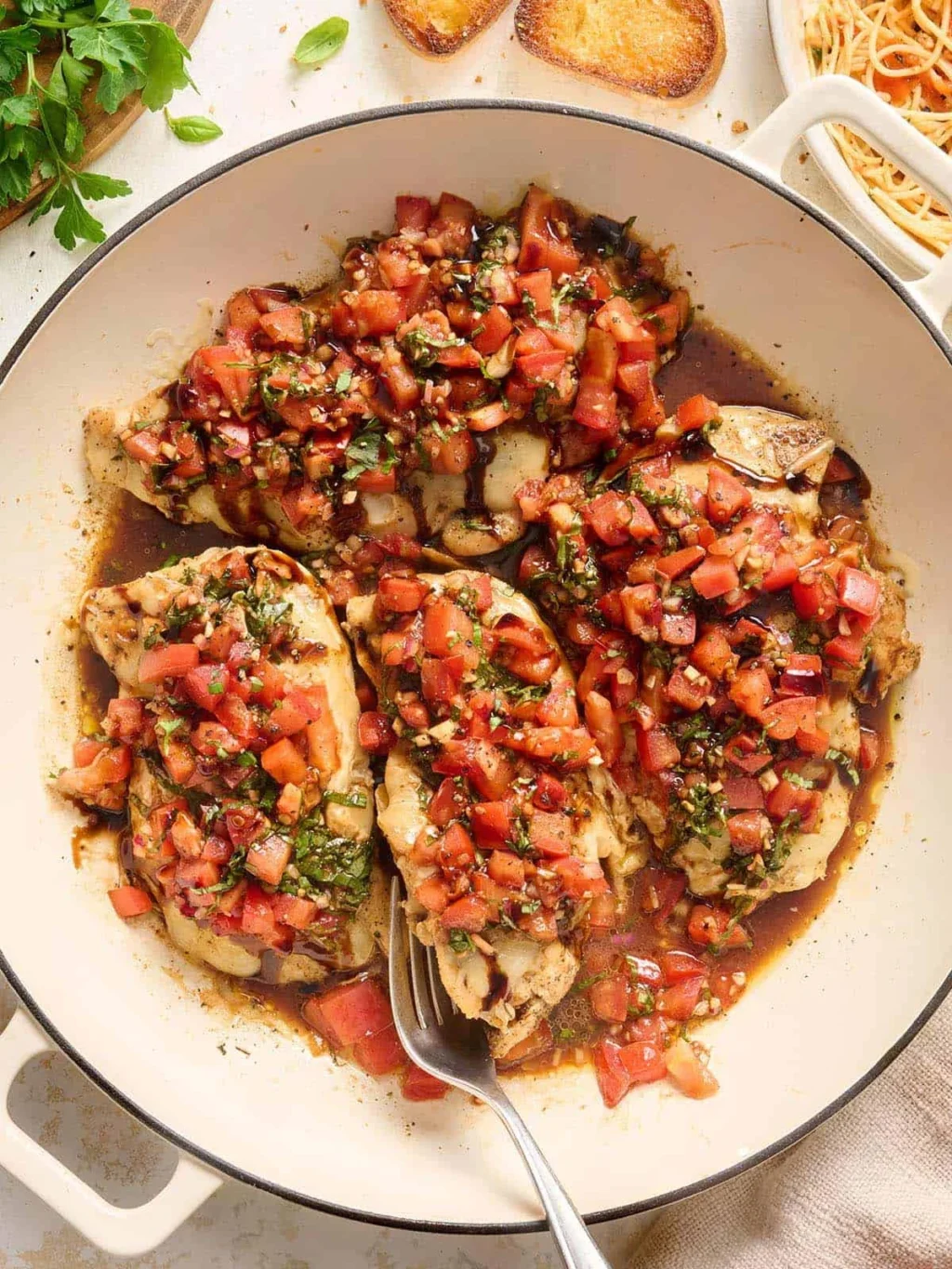
A prime example of this culinary optimization is the newly released Bruschetta Chicken recipe developed by the culinary team at the Nashville Test Kitchen for the popular budget-focused cooking platform, Budget Bytes. Priced at just $1.48 per serving ($5.93 for a full four-serving recipe) and requiring only 25 minutes of active preparation and cooking time, the dish represents a significant structural shift in how weeknight dinners are conceptualized. By combining the fresh, vibrant profiles of classic Italian bruschetta with the high-protein appeal of chicken breast, this skillet-based recipe offers a case study in modern kitchen efficiency, ingredient maximization, and smart food prep.
Main Facts: Deconstructing the Bruschetta Chicken Formula
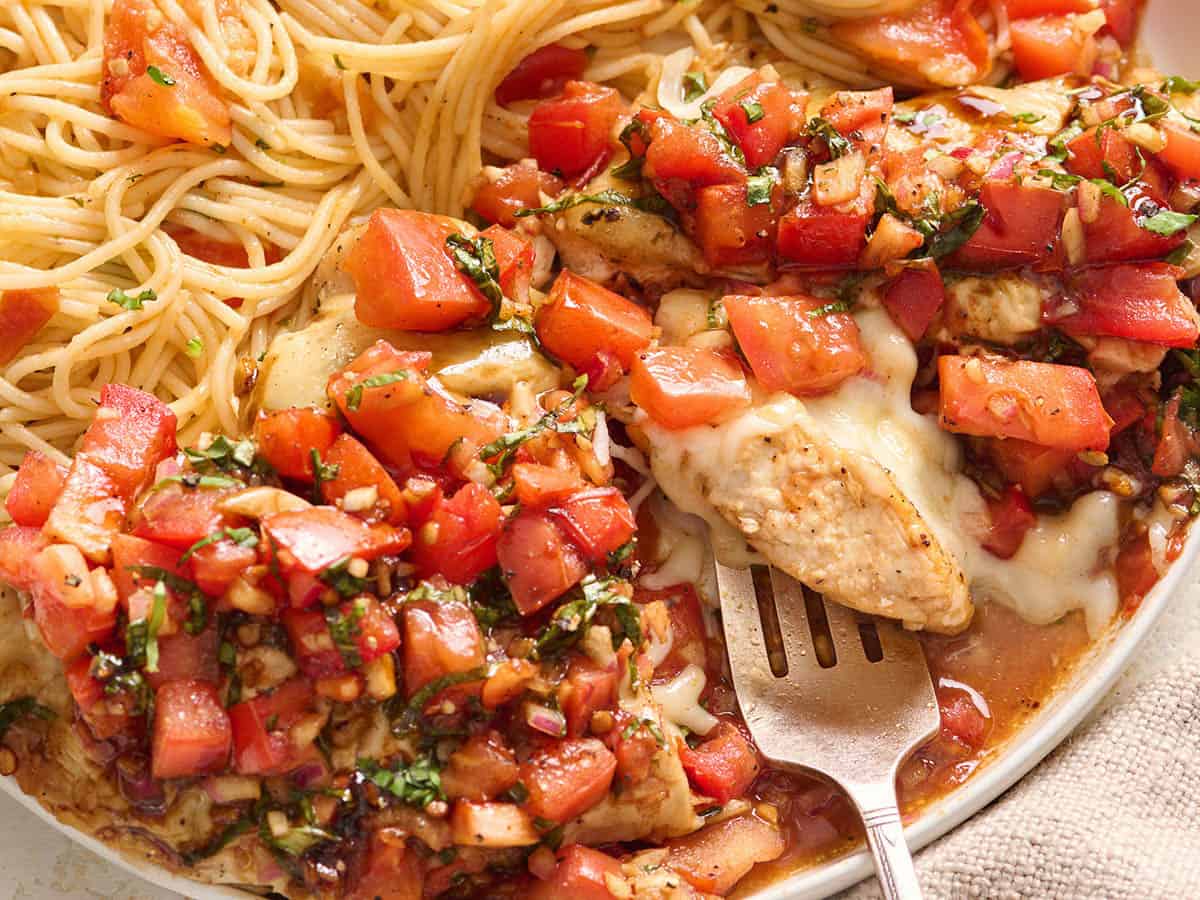
The Bruschetta Chicken recipe is designed to bridge the gap between two popular culinary concepts: the fresh, herbaceous profile of an Italian tomato bruschetta appetizer and the rich, comforting elements of traditional Chicken Parmesan. However, unlike traditional Chicken Parmesan—which requires labor-intensive breading, shallow frying, and prolonged baking in marinara sauce—this skillet adaptation streamlines the process to minimize heat, energy consumption, and ingredient costs.
Key Culinary Mechanics
-
Protein Maximization via Horizontal Slicing:
The recipe utilizes one pound of boneless, skinless chicken breasts (typically sold as two large breasts). To optimize cooking times and stretch the protein further, the developer slices each breast horizontally into two thinner cutlets, yielding four portions. This physical alteration serves a dual purpose: it ensures rapid, even heat distribution in the skillet and visually expands the portion sizes, making a single pound of meat comfortably feed a family of four. -
Skillet-Only Execution:
Designed primarily for summer utility, the entire cooking process is confined to a stovetop skillet. This eliminates the need to preheat an oven, keeping home kitchens cool during hot weather and significantly reducing domestic energy usage. -
No-Marinade Flavor Layering:
To bypass the planning phase required by traditional marinara or yogurt-based marinades, flavor is built dynamically throughout the cooking process. The chicken is seasoned directly with dry spices (garlic powder, Italian seasoning, salt, and black pepper) before searing, while the tomato-basil topping macerates separately to create its own natural sauce.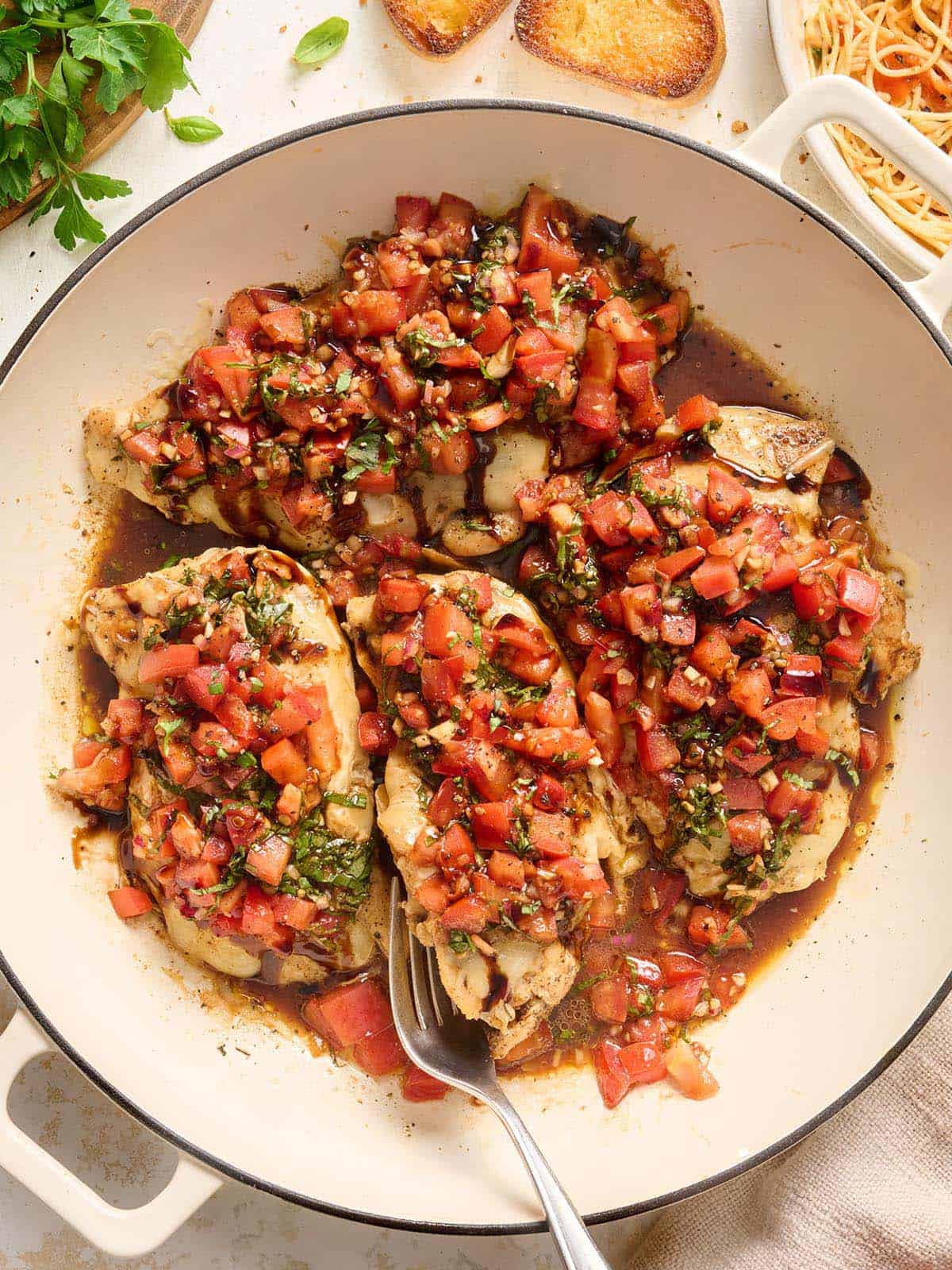
-
Strategic Cheese Placement:
A modest half-cup of freshly shredded mozzarella is divided among the four cutlets. By melting the cheese under a covered skillet on low heat, the dish achieves the signature "melty" texture of baked pasta dishes without requiring a broiler.
Chronology: From Prep to Plate in 25 Minutes
To achieve the promised 25-minute timeline, the preparation and cooking steps are organized in a precise, overlapping sequence. This minimizes downtime and allows the flavors of the fresh ingredients to mature while the protein cooks.
[Minute 0–5]   --> Step 1: Dice Roma tomatoes, red onion, garlic, and basil. Combine with olive oil, balsamic vinegar, sugar, salt, and pepper. Set aside to macerate.
[Minute 5–10]  --> Step 2: Slice chicken breasts horizontally into four cutlets. Pat dry and season with dry spices.
[Minute 10–18] --> Step 3: Heat olive oil in a skillet. Sear chicken for 3–5 minutes per side until internal temperature reaches 165°F.
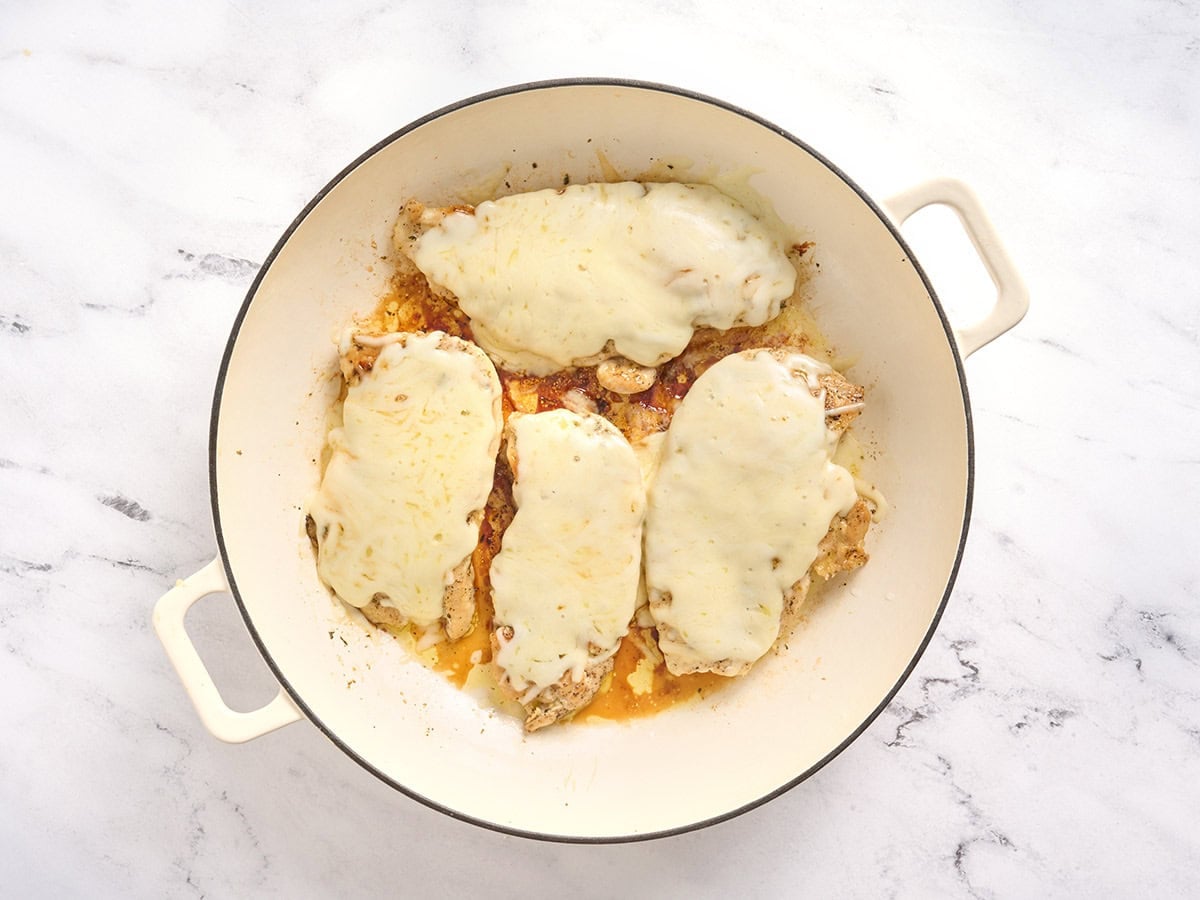
[Minute 18–22] --> Step 4: Reduce heat, top chicken with shredded mozzarella, cover skillet, and let melt for 2–4 minutes.
[Minute 22–25] --> Step 5: Remove from heat. Spoon the fresh tomato-basil mixture over the chicken and drizzle with balsamic glaze. Serve immediately.
Step 1: The Maceration Phase (Minutes 0 to 5)
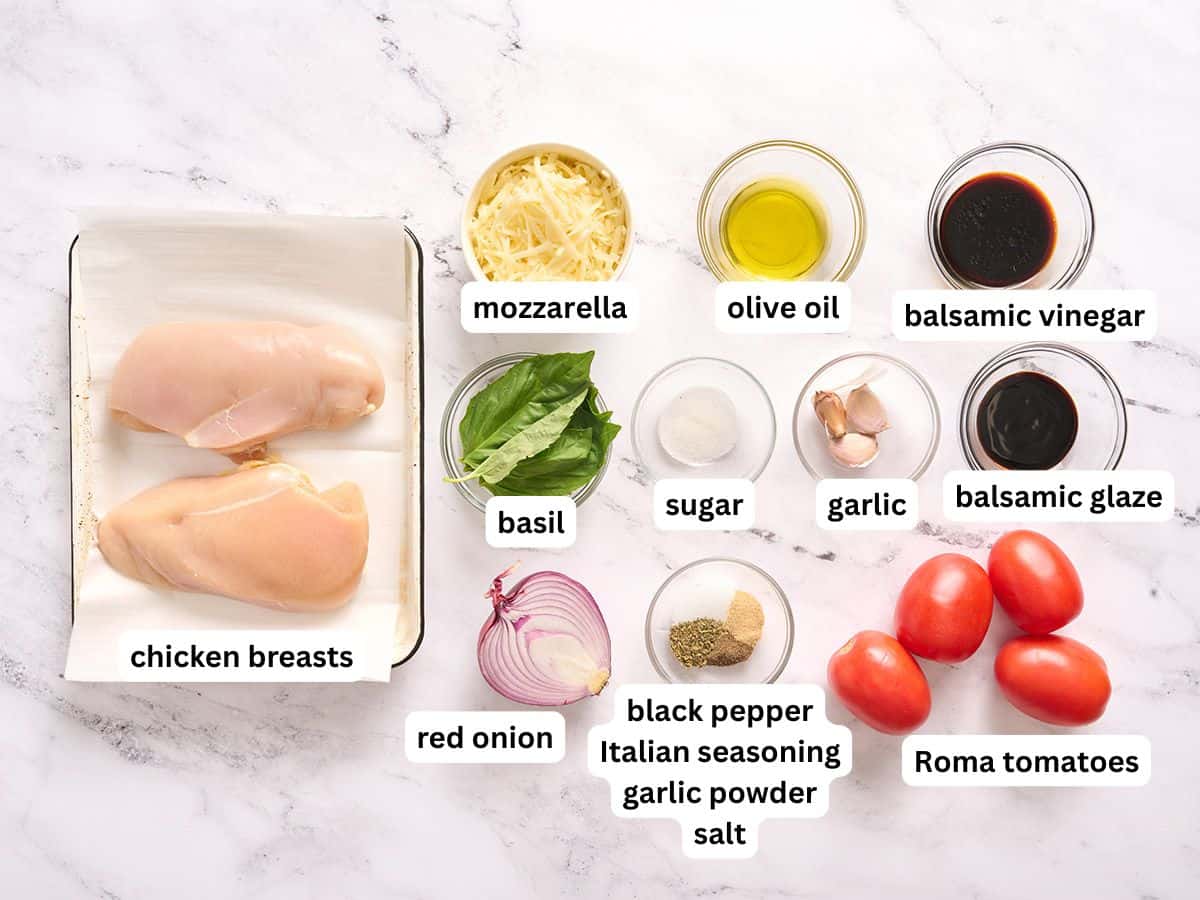
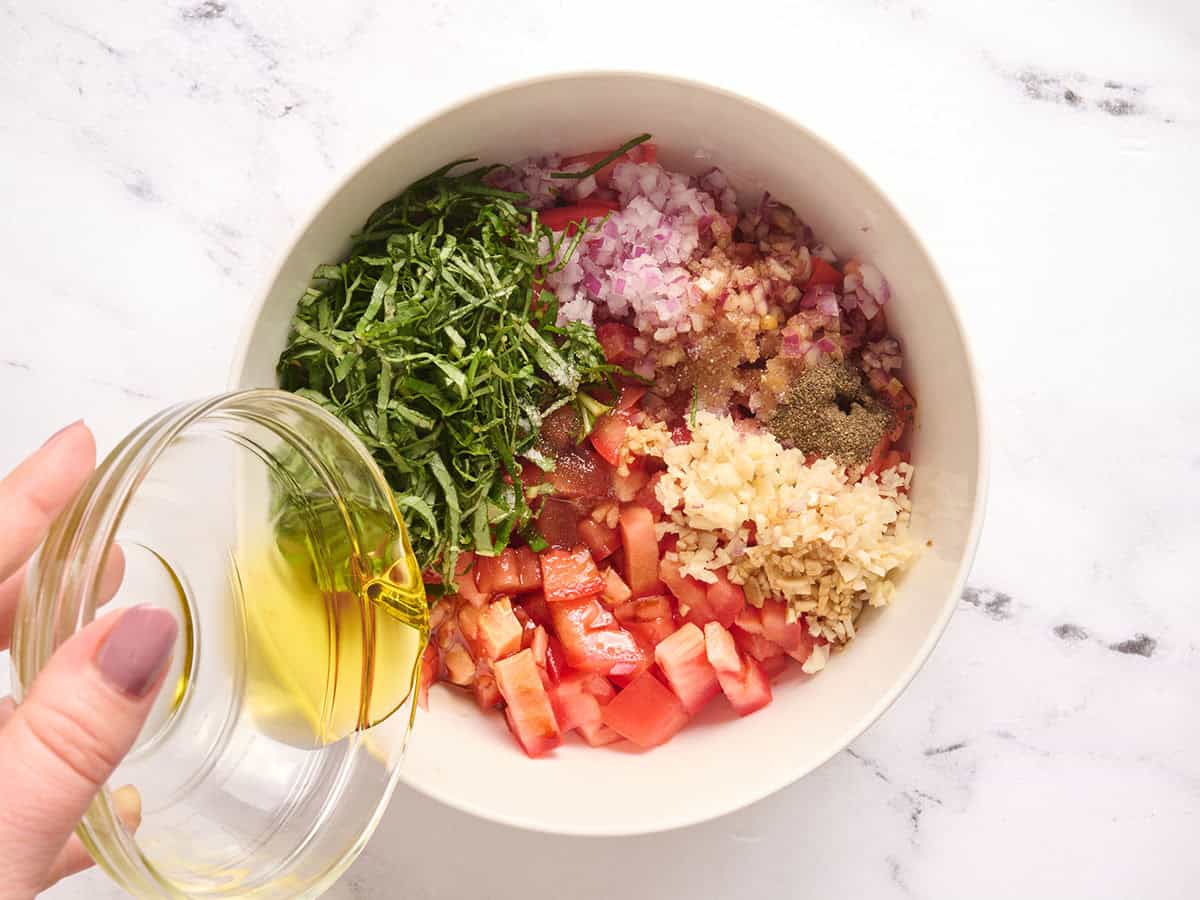
The process begins with the preparation of the fresh bruschetta topping. The cook combines four diced Roma tomatoes, three minced garlic cloves, two tablespoons of finely diced red onion, and two tablespoons of thinly sliced fresh basil in a medium bowl. This mixture is dressed with one tablespoon of olive oil, one tablespoon of balsamic vinegar, a half-teaspoon of sugar (to balance the acidity of the tomatoes), and a quarter-teaspoon each of salt and black pepper.
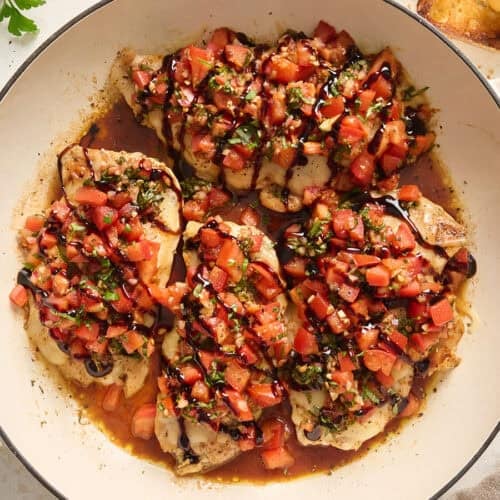
By mixing this topping first, the developer introduces a critical holding period. As the mixture sits, the salt draws out the natural juices of the tomatoes, dissolving the sugar and mingling with the garlic and basil to create a rich, self-generated dressing at the bottom of the bowl.
Step 2: Protein Preparation (Minutes 5 to 10)
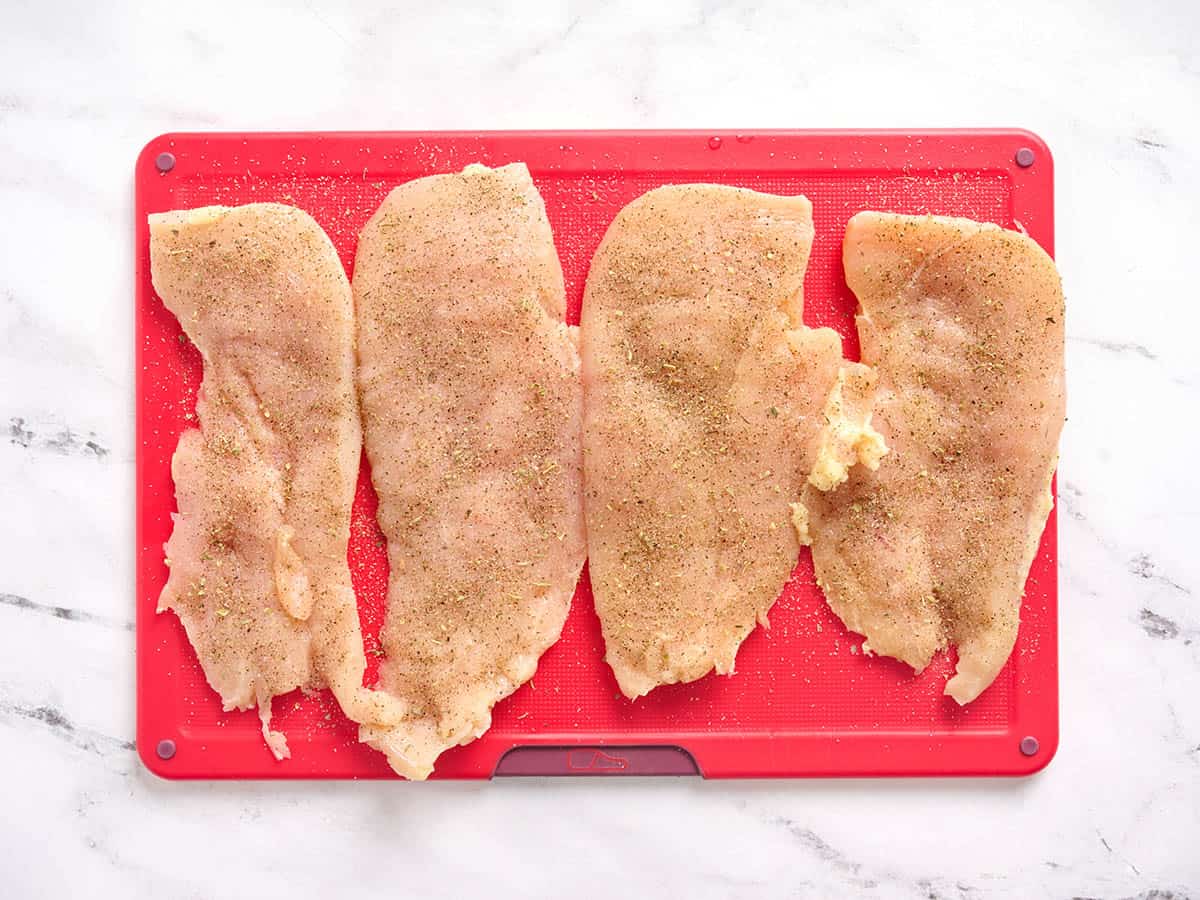
While the tomatoes macerate, attention turns to the protein. One pound of chicken breasts is pat dry with paper towels—a crucial step to ensure a deep, golden-brown sear rather than steaming. The breasts are halved horizontally and seasoned with one teaspoon of salt, a half-teaspoon of black pepper, one teaspoon of garlic powder, and a half-teaspoon of Italian seasoning.
Step 3: The Sear (Minutes 10 to 18)
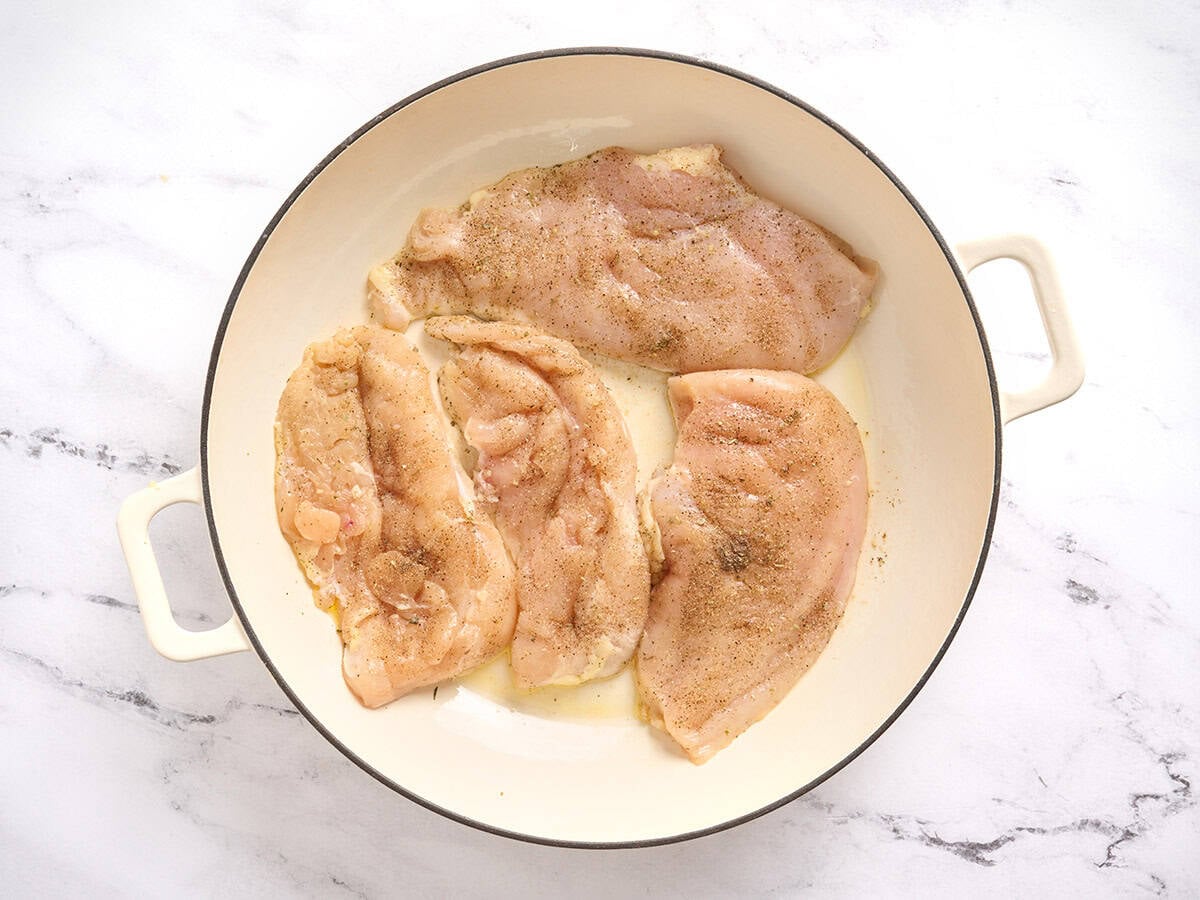
One tablespoon of olive oil is heated in a large skillet over medium-high heat. The seasoned chicken cutlets are added in a single layer, searing for three to five minutes per side. The goal is to develop a caramelized crust while ensuring the interior remains juicy. The chicken is cooked until it reaches an internal temperature of 165°F.
Step 4: The Melt (Minutes 18 to 22)
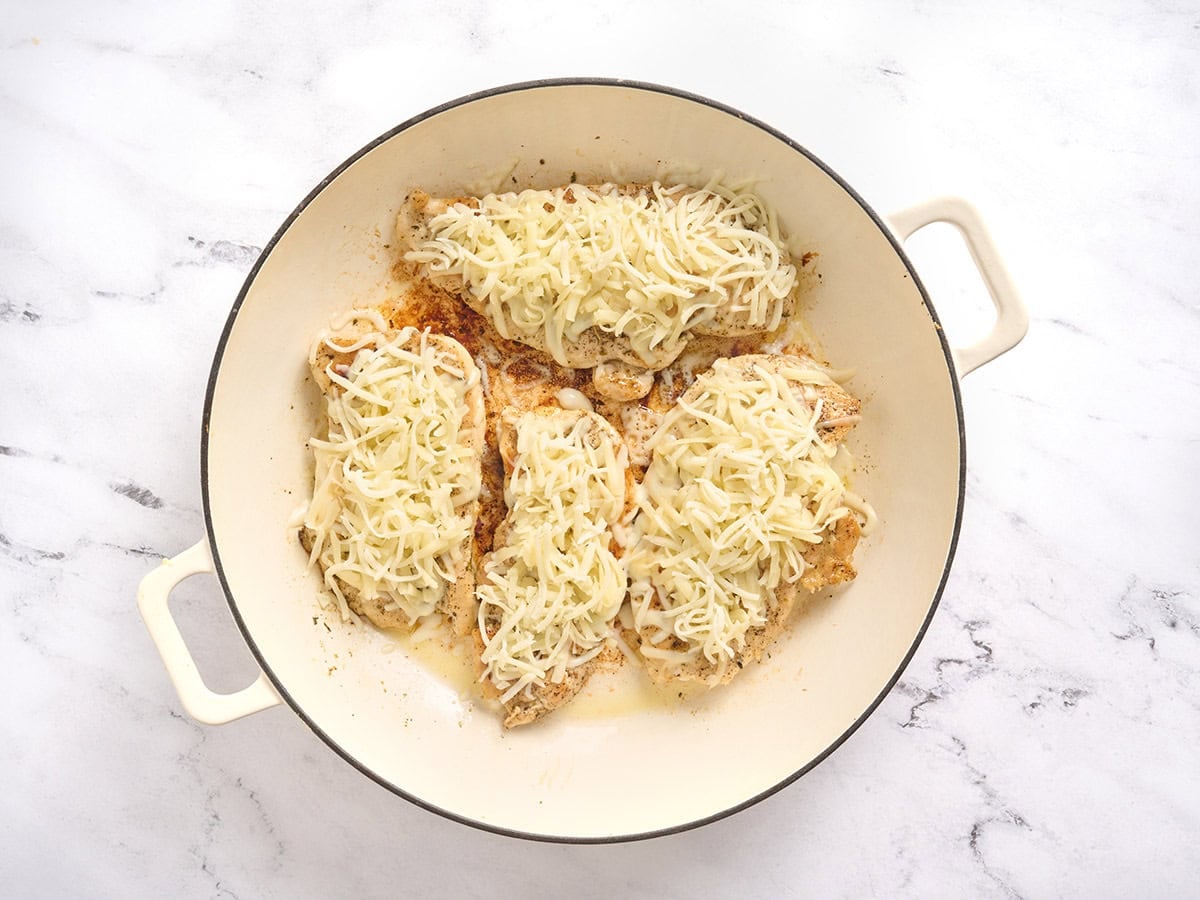
Once the chicken is fully cooked, the burner is turned down to low. One-half cup of shredded mozzarella is distributed evenly across the four cutlets. The skillet is covered with a lid or aluminum foil for two to four minutes, trapping residual steam to melt the cheese smoothly without drying out the meat.
Step 5: Assembly and Finishing (Minutes 22 to 25)
The skillet is removed from the heat source. The macerated tomato-basil topping is spooned over the melted cheese. Finally, the dish is finished with a one-tablespoon drizzle of thick balsamic glaze, adding a sweet and tangy visual and flavor contrast.
Supporting Data: Financial and Nutritional Analysis
To validate the viability of this recipe for budget-conscious households, the culinary team at the Nashville Test Kitchen conducted a rigorous cost and nutritional analysis.
Cost Breakdown
The total cost of the recipe is calculated at $5.93, translating to an exceptionally low $1.48 per serving. This pricing structure is achieved through several strategic ingredient choices:
- Roma Tomatoes: Chosen over beefsteak or heirloom varieties for their lower water content, consistent year-round pricing, and meaty texture, which holds up well when diced.
- Bulk Chicken Purchasing: The recipe assumes the utilization of value-pack chicken breasts, which are routinely priced lower per pound than individual portions.
- Pantry Staples: Ingredients like garlic powder, dried Italian seasoning, olive oil, and sugar are classified as pantry staples, minimizing the need for single-use purchases.
Nutritional Profile
The nutritional profile of the Bruschetta Chicken highlights its suitability for high-protein, low-carbohydrate, and gluten-free dietary patterns:
| Nutrient | Amount Per Serving | % Daily Value (DV)* |
|---|---|---|
| Calories | 266 kcal | 13% |
| Protein | 28 g | 56% |
| Fat | 13 g | 20% |
| Carbohydrates | 8 g | 3% |
| Sodium | 951 mg | 41% |
| Dietary Fiber | 1 g | 4% |
*Percent Daily Values are based on a 2,000-calorie diet.
With 28 grams of protein per serving and only 266 calories, the dish offers high satiety. The moderate fat content (13g) is driven primarily by the heart-healthy olive oil and the mozzarella cheese. The sodium content (951 mg) is relatively high, reflecting the seasoning of both the chicken and the tomato mixture, but can be adjusted by home cooks managing sodium intake.
Official Responses and Expert Culinary Insights
The Developer’s Perspective: Designing for Practicality
Jennie Alley, a professional recipe developer with extensive background in both front-of-house and back-of-house hospitality, spearheaded the development of this dish in the Nashville Test Kitchen.
"When we test recipes, our focus is always on the intersection of ease, affordability, and flavor," Alley stated. "For this Bruschetta Chicken, the breakthrough was keeping the tomato topping completely fresh. A lot of skillet chicken recipes have you simmer the tomatoes in the pan, but that turns them mushy and dampens the bright, summery flavors of the fresh basil. By layering the cool, macerated tomatoes over the hot, cheesy chicken right at the end, you get this amazing contrast of hot and cold, rich and fresh."
The Science of the Melt: Fresh vs. Pre-Shredded Cheese
Culinary experts from the test kitchen also highlighted a common pitfall in home cooking: the choice of cheese.
"We strongly advocate for freshly-shredded mozzarella rather than pre-bagged varieties," Alley noted. "Pre-shredded cheeses are treated with anti-caking agents, such as potato starch or powdered cellulose, to prevent the shreds from clumping in the bag. Unfortunately, these starch barriers also prevent the cheese from melting smoothly, resulting in a grainier texture. Grating your own cheese takes less than a minute but completely changes the quality of the melt."
Vinegar vs. Glaze: A Critical Distinction
The recipe notes emphasize that balsamic vinegar and balsamic glaze are not interchangeable. Balsamic vinegar is a thin, highly acidic liquid used to macerate the tomatoes and cut through the richness of the cheese. Balsamic glaze, by contrast, is a reduction of balsamic vinegar and sugar, yielding a syrup-like consistency that clings to the top of the dish, providing a sweet finish.
Implications: The Future of Budget-Minded Home Cooking
The success of streamlined, low-cost recipes like Bruschetta Chicken reflects broader shifts in consumer behavior and the home-cooking landscape.
1. The Death of the Complex Weeknight Marinade
As work schedules compress, the traditional requirement of marinating meats for several hours or overnight is increasingly viewed as a barrier to home cooking. Recipes that build flavor "on the fly"—using dry spice rubs combined with highly flavorful, wet toppings—allow consumers to make spontaneous cooking decisions without sacrificing taste.
2. Strategic Meal Prepping
The Bruschetta Chicken recipe addresses a common complaint regarding meal prep: the degradation of texture over time. By instructing home cooks to store the cooked chicken and the fresh tomato topping in separate containers, the recipe ensures that the tomatoes do not make the chicken soggy during refrigeration. The chicken can be reheated independently, and the cold topping applied just before consumption, preserving the dish’s original hot-cold contrast.
3. Adapting to Climate and Energy Realities
As global summer temperatures continue to break records, the culinary shift away from oven-roasting and baking toward fast-cooking skillet meals is both a comfort measure and an environmental one. Minimizing the use of heavy kitchen appliances reduces indoor heat load, lowering air conditioning demands and household utility bills.
Conclusion
Ultimately, the $1.48 Bruschetta Chicken serves as a model for modern recipe development. By understanding the physical properties of ingredients—such as slicing chicken to alter cook times and using salt to naturally extract tomato juices—culinary professionals can deliver dishes that are economically accessible, nutritionally dense, and highly satisfying to the modern palate.