The Aerial Revolution: Why the Antigravity A1 is Changing How We See the World
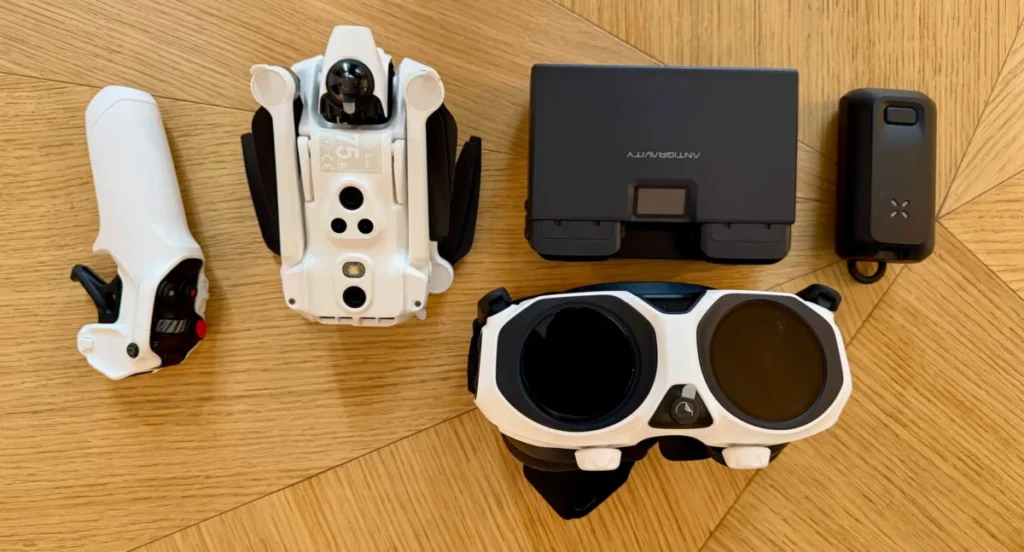
The landscape of drone cinematography has long been dominated by the gimbal. For over a decade, professional and amateur filmmakers alike have relied on mechanical stabilization to keep horizons level and subjects centered. However, the release of the Antigravity A1 in late 2025 has signaled a seismic shift in the industry. By abandoning the traditional gimbal in favor of a dual-lens, 360-degree capture system, the A1 has transformed the act of aerial photography from a feat of piloting precision into a process of creative direction.
The Core Concept: "Fly Now, Frame Later"
At its heart, the Antigravity A1 is designed to solve the most common frustration for aerial photographers: the "missed shot." In traditional drone flight, the pilot is tethered to the constraints of the camera’s orientation. If the drone is moving forward, the camera is locked into a forward-facing perspective. If a subject moves unexpectedly to the left or right, the pilot must aggressively yaw or bank the aircraft to capture the action, often resulting in jerky, unusable footage.
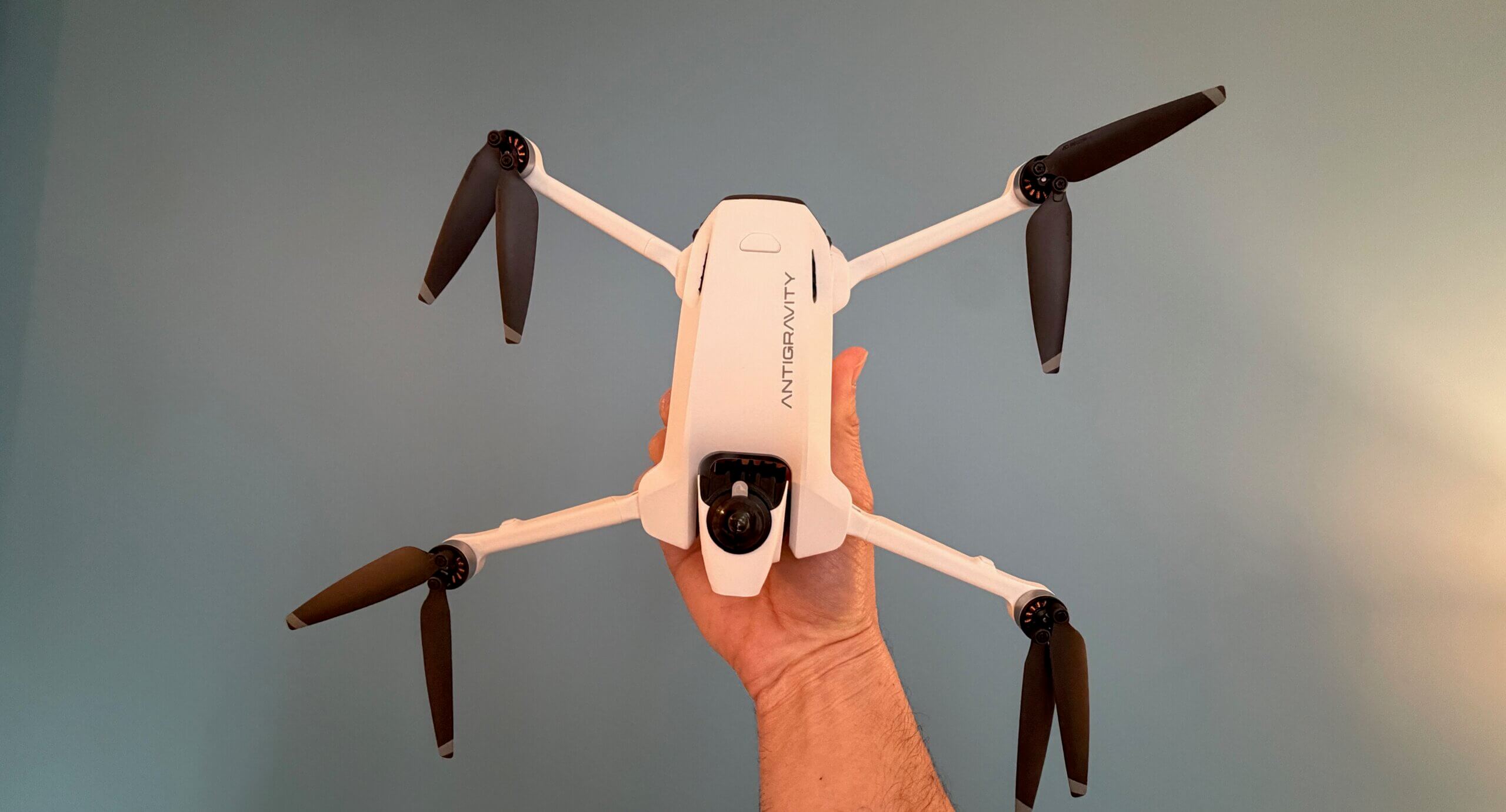
The A1 renders these limitations obsolete. By utilizing two ultra-wide-angle lenses positioned on the top and bottom of the central fuselage, the drone records a complete 360-degree sphere. In post-production, the drone itself is digitally erased from the footage, leaving the viewer with a sensation of a camera floating untethered through the air. This "fly now, frame later" philosophy allows creators to focus entirely on navigation, knowing that the "camera" can be pointed in any direction during the editing process.
Chronology of the A1 Development
The journey to the A1 began in mid-2023, as Antigravity’s engineering team identified a plateau in drone innovation. While 4K and 8K sensors were becoming standard, the physical form factor of drones had remained largely unchanged since the introduction of the foldable design in 2016.
- Q3 2023: Initial prototyping of the dual-lens stitching algorithm began. The primary challenge was latency—processing two 200-degree feeds into a seamless sphere in real-time.
- Q1 2024: The first flight-ready "Alpha" units were tested. The team faced significant vibration issues, which were eventually solved by the development of the "FlowState" software-based stabilization, which replaced the need for heavy mechanical gimbals.
- Q4 2024: Final regulatory compliance testing was completed, with a specific focus on the sub-250-gram weight class.
- November 2025: Official retail launch. The A1 was met with immediate acclaim from the FPV (First Person View) community, who praised the transition from manual, high-stress flying to a more fluid, immersive experience.
Technical Specifications and Performance Data
The A1 is not merely a gimmick; it is a powerhouse of miniaturized technology. The sensors are 1/1.28-inch CMOS units. While these are smaller than the 1-inch sensors found in some high-end, cinema-grade drones, they represent a significant leap over existing 360-degree action cameras. The larger surface area allows for superior low-light performance, effectively mitigating the noise that often plagues 360-degree capture.
Regulatory Advantage
One of the most strategic decisions made by Antigravity was the weight of the aircraft. By engineering the A1 to weigh exactly 249 grams with its standard battery, the company ensured that the drone falls below the 250-gram threshold required for commercial registration in many jurisdictions, including the United States, Canada, and much of the European Union. This allows users to operate the drone in a variety of environments with fewer administrative hurdles.
Build Quality
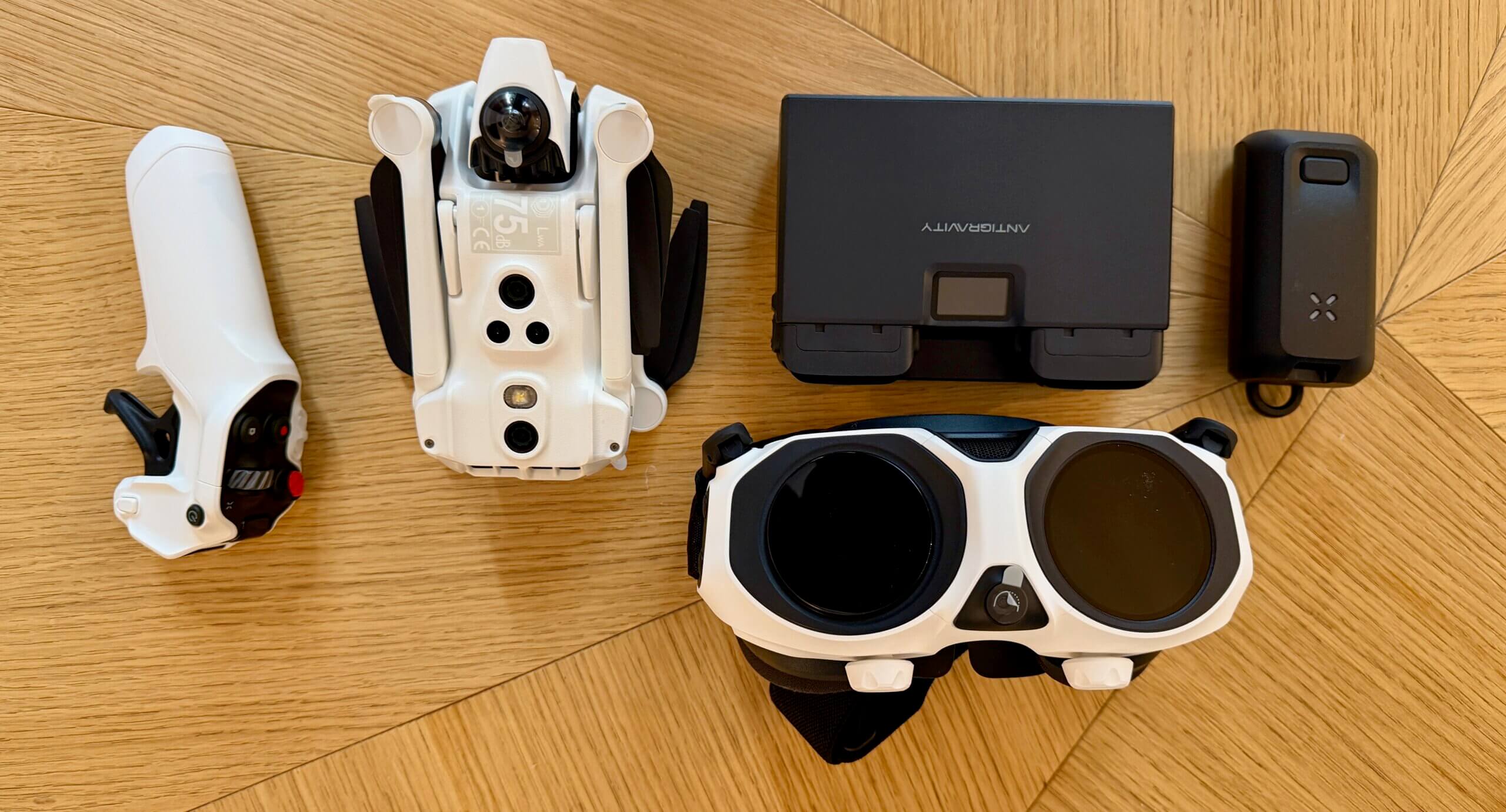
The chassis is constructed from carbon-fiber-reinforced polymer. This material choice is critical, as it provides a higher strength-to-weight ratio than the ABS plastic typically found in entry-level drones. The folding mechanism is designed for heavy use, offering a tactile "snap" that suggests longevity—a vital feature for travel creators who are constantly packing and unpacking their gear.
The Immersive Experience: Vision Goggles and Motion Control
The flight experience of the A1 is perhaps its most revolutionary aspect. The companion Vision Goggles utilize dual 4K micro-OLED displays with a 120Hz refresh rate. Because the drone is capturing in 360 degrees, the pilot is no longer viewing a "window" of the world; they are essentially sitting inside a virtual sphere. Integrated head tracking allows the pilot to look around the environment simply by turning their head.
The control scheme is equally innovative. The single-handed motion controller removes the steep learning curve associated with dual-stick transmitters. By pointing the controller to direct the drone’s path and using a trigger for speed, the A1 feels like an extension of the user’s arm. For purists, the system does offer a traditional "Mode 2" stick configuration, but industry feedback suggests that the motion controller is so intuitive that even veteran pilots are opting to switch.
Implications for Content Creation
The introduction of the A1 has immediate implications for solo creators. Historically, capturing a dynamic sequence of a traveler on a hike required either a second person to pilot the drone or a series of repetitive, choreographed passes.
With the "Auto-Frame" AI tool inside the Antigravity Studio app, the drone can now identify subjects automatically. A solo creator can simply fly the A1 in a general path, and the software will generate a cut that keeps the subject in frame, zooms in on details, and pans across landscapes—all without the pilot needing to touch the sticks during the "filming" phase.
The Battery Trade-off
Battery life remains the single biggest challenge for the A1. The standard battery offers roughly 19 to 20 minutes of flight time. While this may seem low compared to fixed-camera drones that can stay aloft for 40 minutes, the "work per minute" of the A1 is higher. Because the drone captures every angle simultaneously, a single 20-minute flight replaces the need for multiple flights from different angles. For those requiring more duration, the "Pro Battery" extends flight time to 39 minutes, though this pushes the drone over the 250-gram limit, necessitating formal registration.
Official Responses and Industry Outlook
Industry experts have hailed the A1 as a bridge between consumer drone technology and immersive VR media. A spokesperson for Antigravity stated: "Our goal was to remove the ‘pilot’s burden.’ We want our users to be directors, not just operators. The A1 is a tool for storytelling, not a tool for complex flight maneuvers."
While the device has its detractors—specifically those who point out that the ultra-wide lenses are prone to scratching and that 360-degree footage requires significant processing power—the consensus is that the A1 has successfully carved out a new category. It is a "cinewhoop" style flyer: stable, predictable, and incredibly forgiving.
Conclusion: A New Toolkit for the Modern Traveler
For the traveler looking to document their journey, the Antigravity A1 is a game-changer. It eliminates the stress of manual framing, reduces the amount of gear needed in a backpack, and provides a level of creative freedom that was previously reserved for film crews with significant budgets.
While it may not replace a dedicated 1-inch sensor cinema drone for high-end commercial work, it has made the "cinematic shot" accessible to the masses. As the software continues to improve through firmware updates, and as the "fly now, frame later" workflow becomes the industry standard, the Antigravity A1 will likely be remembered as the device that finally democratized professional-grade aerial storytelling. Whether you are traversing the Alps or capturing the bustle of a city center, the A1 allows you to stop worrying about your flight path and start focusing on the story you are trying to tell.