The Art of the Perfect Crunch: Elevating Homemade Strawberry Granola
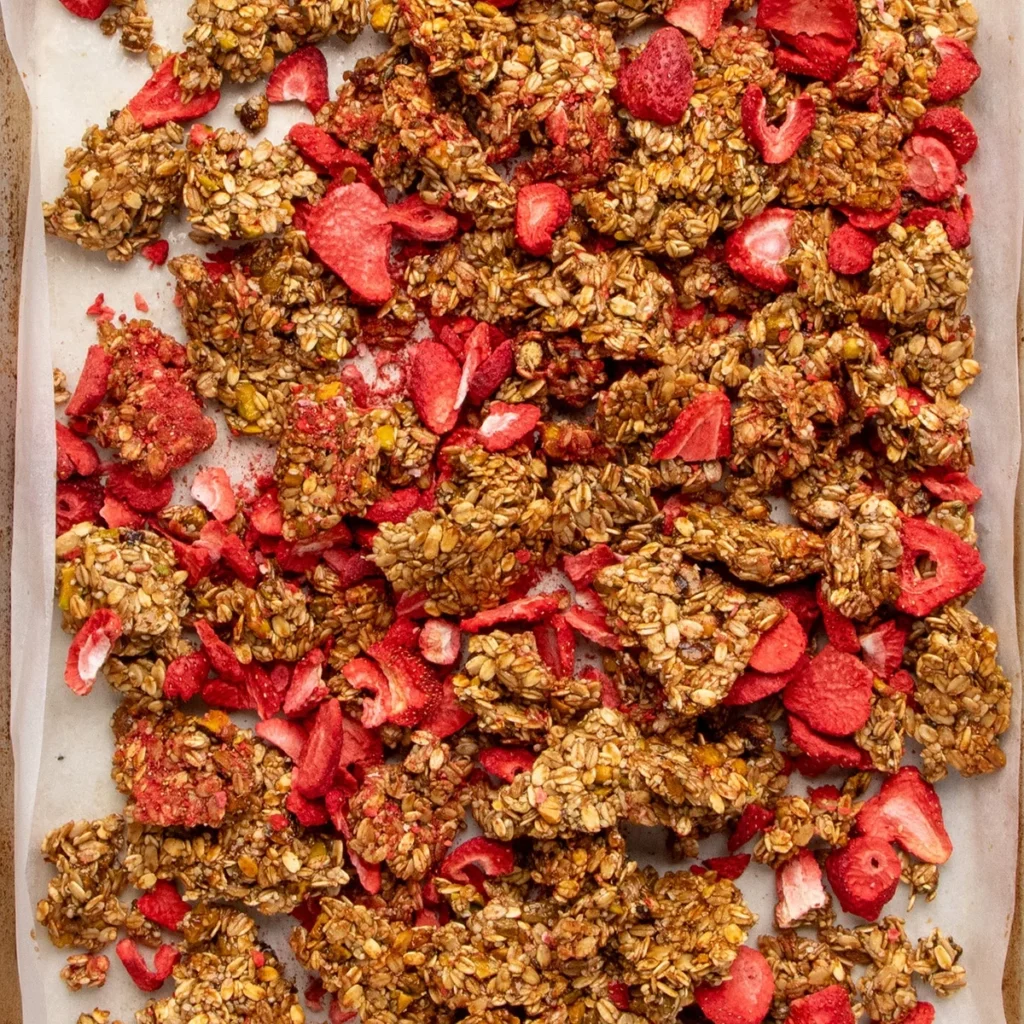
In the world of breakfast staples, few items offer the versatility and sensory satisfaction of a well-made granola. However, many commercial varieties suffer from a lack of genuine fruit flavor, often relying on artificial flavorings or sugary, shriveled dried fruit. A new culinary approach to strawberry granola is changing the narrative, moving beyond surface-level toppings to infuse the essence of the berry directly into the heart of the oat cluster. By utilizing a dual-stage process of concentrated fruit syrup and freeze-dried additions, home cooks can now achieve a vibrant, artisanal-quality breakfast that balances intense flavor with a signature, long-lasting crunch.
Main Facts: The Science of Strawberry Infusion
The secret to this elevated granola lies in its methodology. Traditional recipes often attempt to introduce strawberry flavor through dried fruit chunks baked alongside the oats. The issue, however, is that heat often degrades the subtle nuances of fruit, and moisture levels in standard dried strawberries can leave granola limp rather than crisp.
The current gold standard involves a two-part transformation. First, frozen strawberries are reduced into a highly concentrated syrup. This syrup, which acts as the binder for the dry ingredients, ensures that the strawberry flavor is not merely an accompaniment but is woven into every oat, nut, and seed. The second phase involves the addition of freeze-dried strawberries only after the baking process is complete. By keeping the freeze-dried fruit separate until the very end, the granola maintains a textural contrast between the deep, jammy clusters and the light, airy snap of the berries.
Chronology: A Step-by-Step Culinary Workflow
Achieving the perfect batch requires patience and a specific sequence of operations. The process is designed to manage moisture—the natural enemy of crispness.
1. Preparing the Puree
The journey begins on the stovetop. Frozen strawberries are combined with a touch of water, salt, and maple syrup. The mixture is cooked down until the berries surrender their structure, creating a thick, flavorful base. For those who prefer a refined texture, a quick pass through a fine-mesh sieve removes the seeds, though many opt to leave them for added rustic charm.
2. The Syrup Reduction
This is the most critical juncture. The strawberry puree is combined with honey, maple syrup, coconut sugar, a splash of vinegar, and melted coconut oil. The mixture is then reduced over medium heat until it reaches a "jammy" consistency. This reduction is essential; it concentrates the flavor while stripping away excess water that would otherwise lead to a soft or soggy finished product.

3. Binding and Baking
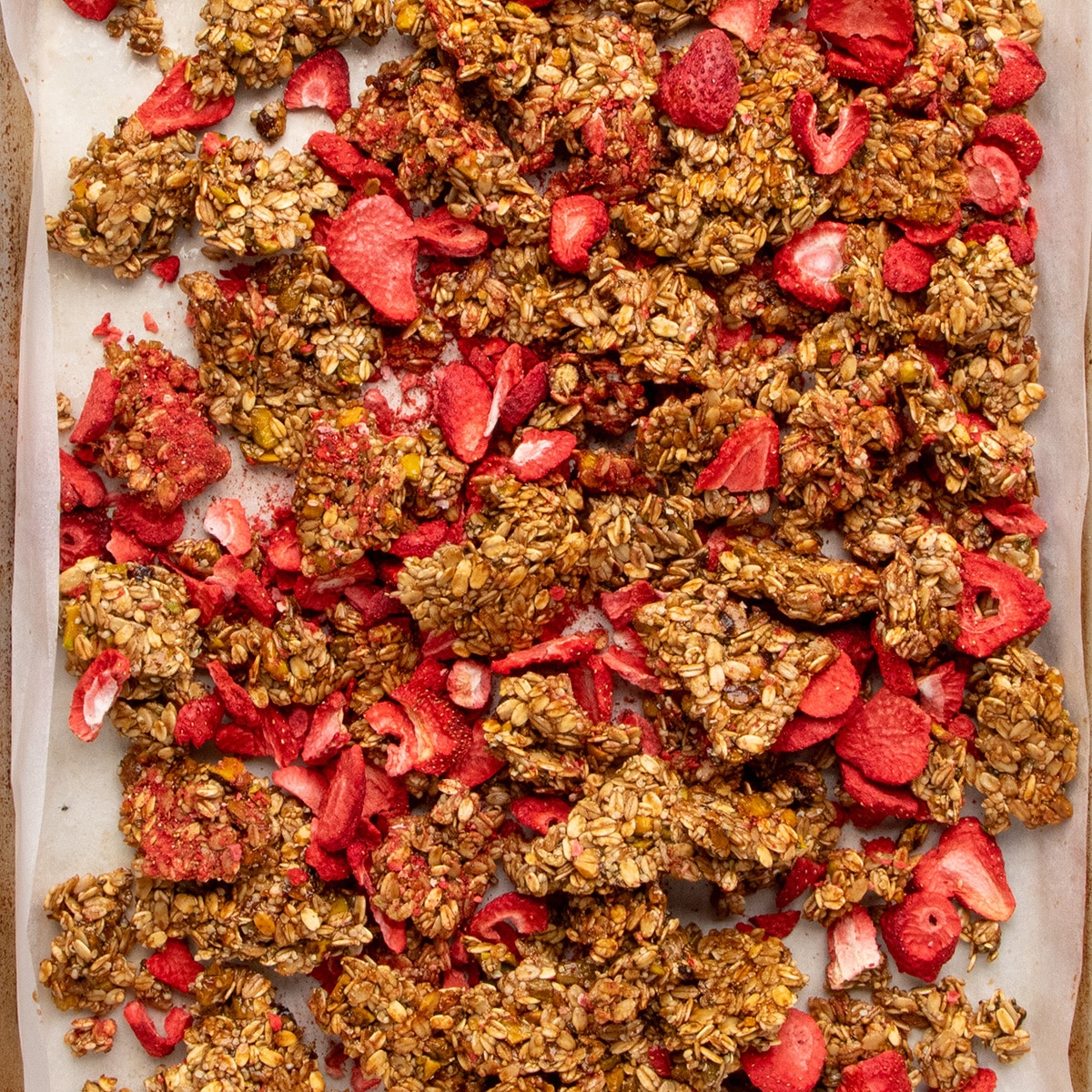
The hot syrup is folded into a mixture of rolled oats, chopped pistachios, and hemp seeds. The coating must be thorough to ensure that each cluster packs a punch. The mixture is spread onto a parchment-lined sheet pan in a thin, uniform layer. The initial bake takes place at 325°F for 20 minutes, with a crucial mid-way stir to ensure even heat distribution.
4. The Dehydration Phase
While many recipes stop after the initial bake, the true professional secret is the "low and slow" finish. Reducing the oven temperature to 175°F for an additional hour effectively dehydrates the granola, turning it from a simple toasted oat mix into a shelf-stable, exceptionally crispy snack.
5. The Final Addition
Only after the pan has cooled to room temperature are the freeze-dried strawberries added. Any earlier, and the residual heat would compromise the crispness of the berries. It is also advised to include the "strawberry dust" from the bottom of the bag, as it acts as a flavor-dense powder that coats the clusters.

Supporting Data: Ingredients and Nutritional Profile
The nutritional composition of this granola is significant, reflecting its high-quality, whole-food ingredients. A standard serving (approximately one cup) contains roughly 767 calories, 19 grams of protein, and 10 grams of dietary fiber.
Core Ingredient Roles:
- Rolled Oats: Provide the foundational structure and fiber.
- Pistachios: Offer monounsaturated fats and a distinct, sophisticated nutty flavor profile.
- Hemp Seeds: Add a subtle, earthy richness and a boost of plant-based protein.
- Coconut Oil: Ensures the granola binds together while remaining solid at room temperature for the perfect "cluster" effect.
- Vinegar: A minor but vital component that balances the sweetness of the syrup and enhances the brightness of the fruit.
Official Perspectives: The Philosophy of Gluten-Free Excellence
Expert voices in the gluten-free community, such as culinary developer Nicole Hunn, argue that the "good for gluten-free" standard is no longer acceptable. The goal of this recipe is to create a product that stands on its own merits, regardless of dietary restrictions. By focusing on whole, unprocessed ingredients, this granola avoids the pitfalls of refined sugars and common fillers found in mass-market cereals.

The emphasis here is on "culinary integrity." When one removes gluten, the reliance on texture becomes even more paramount. By leveraging the natural chemistry of fruit sugars and the precise application of heat, creators can produce a product that appeals to a broad demographic, whether they have celiac disease or are simply seeking a high-quality, whole-food breakfast alternative.
Implications: Storage and Long-Term Quality
The final challenge for any high-moisture ingredient (like fruit-infused granola) is shelf life. Because this recipe utilizes a concentrated reduction and a dehydrating final bake, it is remarkably stable. When stored in an airtight, nonporous container—ideally glass—this granola can maintain its peak texture and flavor for up to two weeks at room temperature.
For those looking to extend the life of their batch, freezing is an option, though it comes with a trade-off. While the granola remains safe, the texture of the freeze-dried strawberries may soften over time. However, this is easily corrected. A quick "refresh" in the oven at 175°F for 30 to 45 minutes can restore the original, crisp character, proving that even with homemade goods, a little post-storage care goes a long way.

Culinary Adaptations and Substitutions
The flexibility of this recipe allows for significant personalization:
- Nut Variations: While pistachios provide a unique color and flavor, they are easily swapped for walnuts, pecans, or almonds. For those with nut allergies, pumpkin seeds or jumbo sunflower seeds provide a satisfying, allergen-friendly crunch.
- Oat Alternatives: For those who cannot consume oats, flattened buckwheat or millet serve as effective, grain-free substitutes.
- Berry Rotations: The concept is not limited to strawberries. Blueberries or blackberries can be used to create the puree; however, when using seedy berries like blackberries, extra care must be taken to strain the puree thoroughly to ensure a pleasant mouthfeel.
Ultimately, this recipe demonstrates that the gap between store-bought convenience and homemade quality is defined by process. By understanding the interaction between moisture, heat, and sugar, home cooks can transform humble ingredients into a sophisticated, vibrant, and undeniably crunchy granola that sets a new standard for the breakfast table. Whether served over cold yogurt or enjoyed by the handful, the result is a testament to the fact that when it comes to flavor, there are no shortcuts worth taking.