The End of the Gimbal: Why the Antigravity A1 Is Rewriting the Rules of Aerial Cinematography
For the modern traveler, the drone has become as essential as a passport or a reliable camera. Whether it’s capturing the jagged peaks of the Andes or the sweeping coastlines of the Mediterranean, aerial photography has become the gold standard for documenting the globe. Yet, despite the technological leaps in drone hardware, the fundamental experience has remained stagnant: you pilot, you frame, you shoot, and you pray you didn’t miss the perfect moment.
Enter the Antigravity A1, a device released in late 2025 that is effectively rendering the traditional gimbal-mounted camera obsolete. By shifting the paradigm from "capturing a shot" to "recording a world," the A1 has transformed drone videography from a technical chore into an immersive, directorial experience.
The Core Concept: Redefining Aerial Capture
The brilliance of the Antigravity A1 lies in its departure from the standard "point-and-shoot" philosophy. Most commercial drones are constrained by the physical limitations of a single, forward-facing lens mounted on a motorized gimbal. If the pilot turns too sharply or misses the angle, the shot is lost.
The A1 takes a different approach. Equipped with a dual-lens 360-degree capture system, the drone records everything in every direction simultaneously. This creates a "fly now, frame later" workflow. As a pilot, you are no longer burdened with the stress of manual gimbal control or precise framing; you are simply navigating the space. In the post-production stage, the footage is treated like a digital environment where you can point a virtual camera in any direction, effectively directing your film after the flight has concluded.
Chronology of the A1’s Evolution
The development of the A1 did not happen in a vacuum. It represents the culmination of a three-year push by Antigravity to solve the "gimbal problem"—the tendency for mechanical stabilizers to fail or add unnecessary weight.
- Q1 2024: Antigravity announces the "Sphere Project," an internal research initiative aimed at developing ultra-wide-angle optics that could maintain high fidelity across a 360-degree stitch.
- Q3 2024: Prototype testing begins in high-altitude environments. Early iterations struggled with the "seam line" where the two 200-degree lenses met.
- Q2 2025: Finalization of the "FlowState" stabilization software, which proved capable of compensating for high-speed drone vibrations without physical gimbals.
- Late 2025: The commercial launch of the A1. The drone hits the market with a promise to disrupt the status quo of travel photography.
- Present Day: The A1 has moved from a niche enthusiast tool to a staple in the gear bags of professional travel vloggers and cinematographers globally.
Technical Specifications and Supporting Data
At the heart of the A1 are two 1/1.28-inch CMOS sensors. While traditional "Pro" drones may boast larger 1-inch sensors, the A1’s hardware is optimized for 360-degree integration. The sensors are significantly larger than those found in standard action cameras, allowing for superior low-light performance and a dynamic range that handles the harsh, high-contrast sunlight often encountered in travel environments.
The Weight Advantage
One of the most tactical decisions made by Antigravity is the A1’s weight: exactly 249 grams with its standard battery. This is a critical threshold in global aviation regulations. In many jurisdictions, including the US, EU, and parts of Asia, drones weighing 250 grams or more require mandatory registration and are subject to stringent flight path restrictions. By keeping the A1 at 249 grams, the manufacturers have provided travelers with a "fly-anywhere" tool that bypasses much of the bureaucratic friction associated with professional cinematography.
Durability and Build
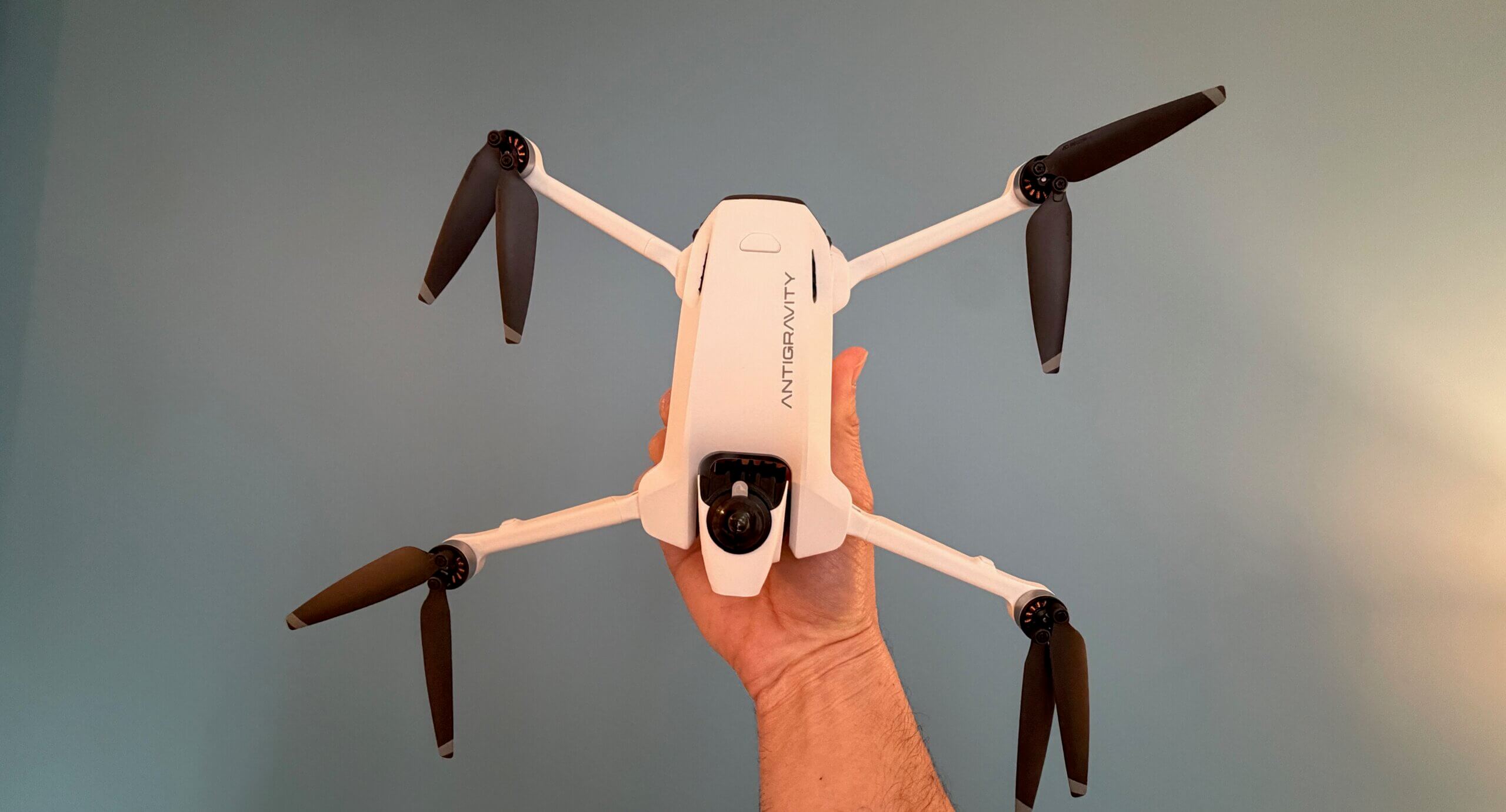
The drone is constructed from high-grade carbon-fiber-reinforced polymer. This material choice provides a superior strength-to-weight ratio compared to the ABS plastics used by competitors. During field testing, the foldable arms demonstrated exceptional tactile precision, locking into place with a "snap" that inspires confidence during frequent travel deployments. When folded, the device is roughly the size of a large smartphone, making it the perfect companion for a carry-on-only traveler.
The Flight Experience: Vision and Control
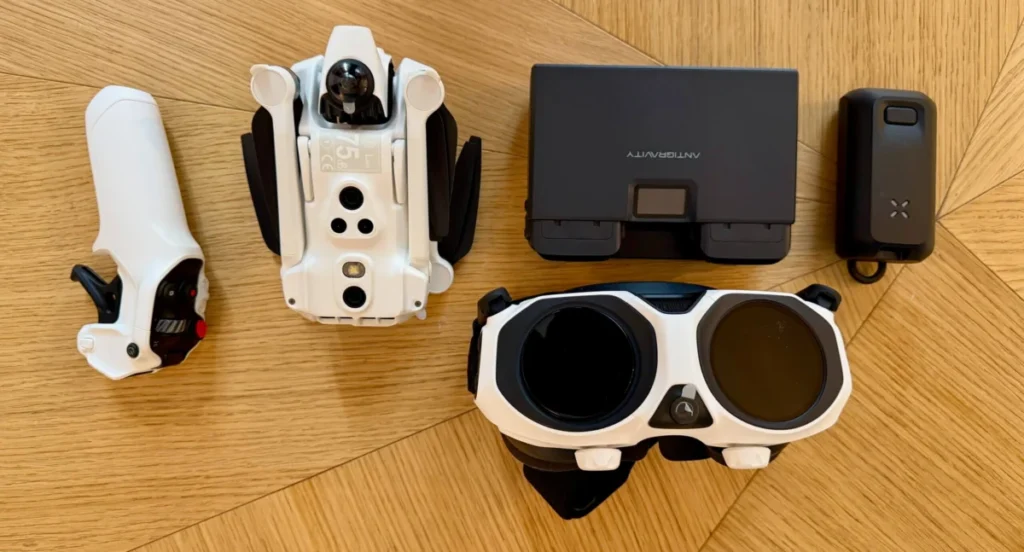
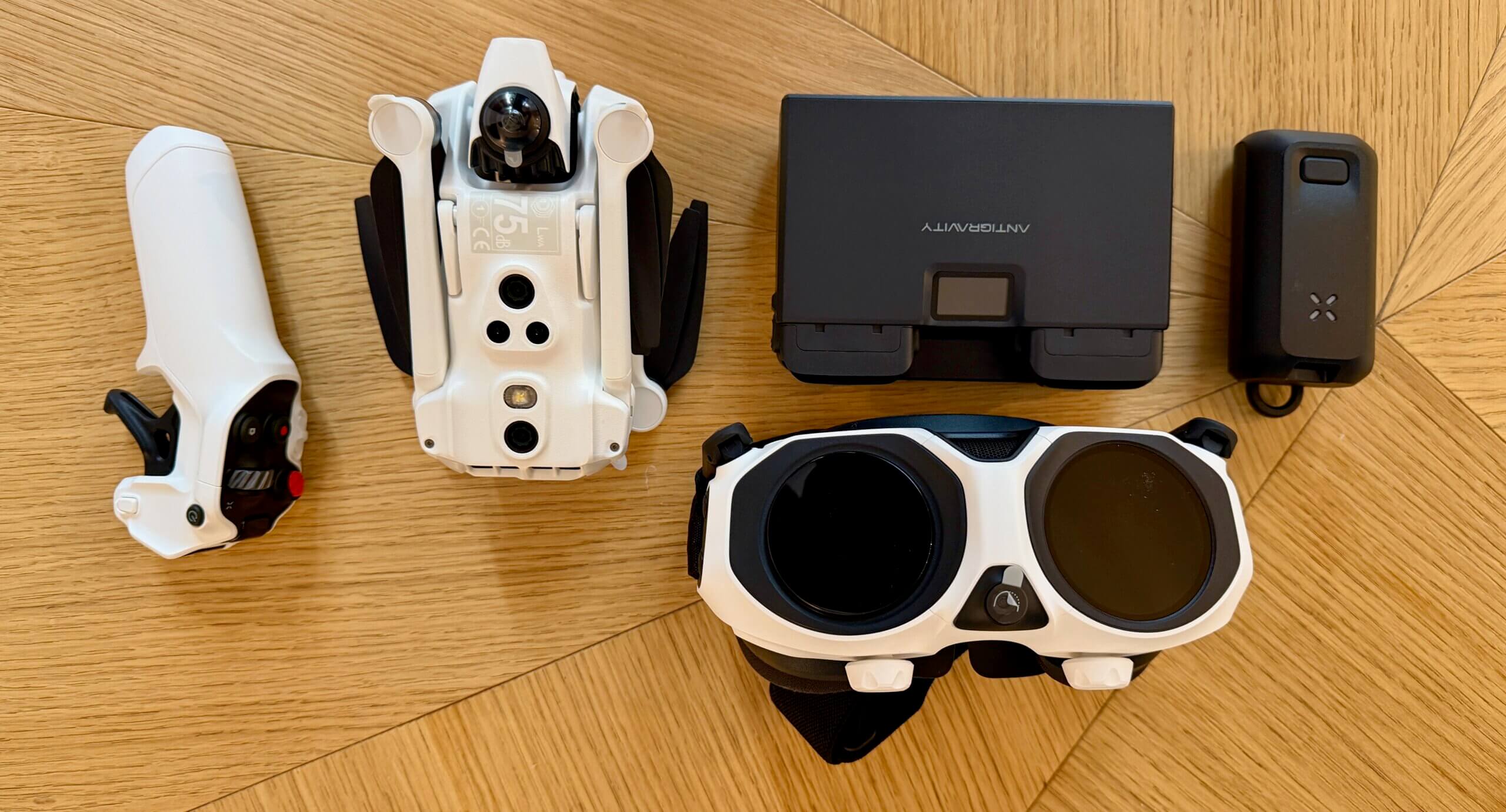
The immersive nature of the A1 is best realized through the "Vision Goggles." Featuring dual 4K micro-OLED displays with a 120Hz refresh rate, these goggles eliminate the latency issues that plagued earlier generations of FPV (First Person View) systems.
Because the drone captures a full 360-degree sphere, the goggles utilize head-tracking technology. If a pilot turns their head, the view within the goggles pans accordingly. This provides a level of situational awareness—looking down to see the terrain passing beneath you or looking up to capture a mountain peak—that is impossible with a fixed-camera drone.
The control scheme is equally revolutionary. While traditionalists can opt for a "Mode 2" stick controller, the A1 ships with a single-handed motion controller. This intuitive system translates wrist tilts and hand movements into flight paths, making complex maneuvers accessible to beginners. For those who find themselves in a precarious situation, the "Turtle Mode" is a standout feature; if the drone lands upside down, the propellers can reverse rotation to flip the unit upright, preventing the dreaded "walk of shame" to retrieve a downed craft.
Official Perspectives and Market Implications
Antigravity’s marketing strategy has been refreshingly transparent regarding the "8K Resolution" claim. They are quick to clarify that while the raw capture is 8K, that resolution is spread across a full sphere. When the user "reframes" the footage for a standard 16:9 social media format, they are cropping into that sphere.
Industry analysts view this as a necessary trade-off. "The A1 isn’t trying to replace a cinema-grade Arri camera," says one leading industry consultant. "It is trying to replace the need for a drone operator and a camera operator. It is a tool for the solo storyteller."
The implications for the industry are profound. If the A1 continues to gain market share, we may see a decline in the demand for traditional gimbals in the consumer sector. Furthermore, the reliance on AI-driven "Auto-Frame" software in the Antigravity Studio app suggests that the future of cinematography lies in the hands of algorithms that can identify and track subjects in real-time, effectively serving as a virtual camera crew.
Creative Liberation: A New Era for Travelers
The Antigravity A1 is not merely a piece of hardware; it is a shift in the creative process. By removing the technical barriers of manual framing, the A1 allows the pilot to focus on the story.
Battery Life and Real-World Usage
While the standard battery provides 19 to 20 minutes of flight time—a common bottleneck for small drones—the "work per minute" ratio is significantly higher. Because a single pass captures every angle, the need for multiple batteries and repeated flights is reduced. For those who demand more, the "Pro Battery" extends flight time to 39 minutes, though at the cost of crossing the 250g weight threshold and slightly reducing the unit’s agility.
Final Thoughts
Is the A1 for everyone? Perhaps not. The lenses are exposed and delicate, requiring a level of care that a ruggedized action camera might not need. The image quality, while excellent, is calibrated for agility and speed rather than raw cinema-grade output.
However, for the creator who is tired of the standard "top-down" or "forward-facing" drone shots, the A1 is a revelation. It bridges the gap between the physical world and the immersive potential of virtual reality. It turns the sky into a canvas where you can edit the perspective after the fact, ensuring that you never miss the shot.
As we look toward the future of travel content, the Antigravity A1 stands as a testament to how technology can liberate the artist. By providing the tools to "fly now and direct later," it ensures that the only limit on your footage is your imagination, not the mechanics of your gear. If you are looking to evolve your visual storytelling, the A1 is, quite simply, an essential addition to your toolkit.