The Folding Frontier: Samsung’s Strategic Response to the Looming Shadow of Apple
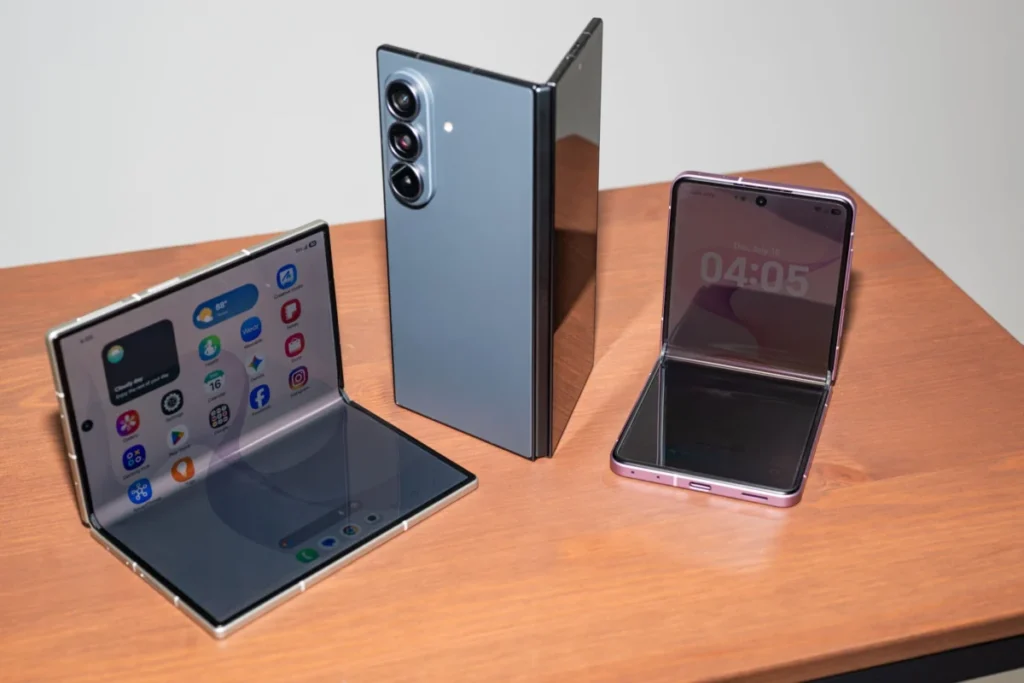
As the global smartphone market braces for the most significant shift in design language since the introduction of the modern touchscreen, the industry is hyper-focused on a single question: Can the foldable phone transcend its status as a niche enthusiast gadget and become a mainstream necessity?
On the eve of Apple’s long-rumored entry into the folding market—an event that analysts believe will serve as the ultimate litmus test for the form factor—the incumbent pioneer, Samsung, remains conspicuously unfazed. In an exclusive discussion with senior leadership at Samsung’s R&D divisions, the sentiment is clear: the competition is not only expected, it is “absolutely welcome.”
The Weight of Expectation: A Masterclass in Engineering
The narrative of the foldable phone has shifted dramatically over the last seven years. When Samsung first debuted its folding technology, the primary concerns were fragility and the “crease.” Today, the conversation has pivoted toward weight and ergonomics.
Hee-Cheul Moon, head of Samsung’s Advanced Mechanical R&D Group, and Seungki Choi, head of the company’s Smartphone R&D Group, recently detailed the grueling engineering process behind the Galaxy Z Fold8. The headline achievement? Shaving 75 grams off the weight of the device since the original model’s inception.
Weight is the silent gatekeeper of user adoption. A device that is too "chunky" or heavy inevitably becomes a burden, discouraging the very daily use that justifies its high price tag. By meticulously analyzing nearly 270 individual components—from antennas and circuit boards to microscopic adhesives—Samsung has managed to push the Z Fold8 down to 201 grams, effectively making it lighter than many traditional "candybar" flagships, such as the 214-gram Galaxy S26 Ultra.
The Anatomy of Slimness
The technical rigor involved in this reduction is immense. Samsung engineers redesigned printed circuit boards to eliminate redundant traces and optimized the spatial layout of internal components. They even machined the internal display support plate down to a staggering 0.2 millimeters.
To maintain structural integrity at such thinness, the company introduced "Flex Titanium," a specialized alloy film only one-third the thickness of a human hair. This material is designed specifically to maintain surface flatness and mitigate the deepening of the screen crease over thousands of fold-unfold cycles.
Chronology of a Form Factor: From Gimmick to Growth
To understand the significance of the Z Fold8’s design, one must look back at the trajectory of the market.

- 2019: The inaugural Galaxy Fold launch is marred by hardware issues, specifically dust ingress through the hinge, forcing a humiliating recall and delay.
- 2020–2022: The "discovery phase." Competitors like Honor and Google enter the fray, and the industry focuses on hinge durability and software optimization.
- 2023: Market saturation leads to a cooling of interest, with five consecutive quarters of declining growth.
- 2024: The "Refinement Era." Samsung and others pivot to thinner, lighter, passport-style designs. Customer feedback, supported by YouGov data, highlights bulkiness as the number one barrier to entry.
- 2025–2026: The current landscape. With the Z Fold8 series seeing a 30 percent jump in global preorders, and the impending launch of the Apple "iPhone Ultra," the market is poised for a significant rebound.
The Camera Trade-Off: Strategic Concessions
One of the most controversial decisions in the latest iteration of the Fold8 was the removal of the dedicated telephoto lens, leaving the device with a dual-camera setup. For a premium device, this is a bold, arguably risky move.
However, Samsung frames this as an intentional concession. By opting for a dual-camera system, the company was able to prioritize the phone’s "passport-style" ergonomics—a shape that users have identified as being far more pocketable. For users who demand the pinnacle of mobile photography, Samsung positions the Galaxy Z Fold8 Ultra as the alternative, ensuring that the flagship lineup caters to both the minimalist user and the power user.
This design philosophy is expected to be mirrored by Apple. Rumors surrounding the upcoming iPhone Ultra suggest a similar focus on a wider, shorter, and thinner chassis, potentially requiring Apple to make similar compromises in its optics array.
Official Perspectives: The View from the Top
When asked what advice Samsung would offer Apple as it prepares to enter this space, the response from Hee-Cheul Moon was blunt and pragmatic: "The key to providing the highest customer value in this market is all about the weight of the device. As you know, it’s not easy."
Samsung’s leadership maintains that their pride in the current market surge is rooted in validation. By pioneering the category, they have established the baseline for what a foldable should be. Now that Apple—the industry’s most influential trendsetter—is likely to adopt this form factor, the "foldable" category is expected to shift from a niche curiosity to an industry standard.
"We continue to always monitor the voice from the market, and we are open to any possibilities," says Seungki Choi. The data supports this, as global preorders for the new series suggest that consumers are finally ready to embrace the form factor, provided it doesn’t feel like carrying a brick.
The Durable Dilemma: Can Engineering Keep Up?
Despite the progress in weight reduction, a significant chasm remains between the foldable experience and that of traditional smartphones: ingress protection.
While the industry standard for flagship phones is IP68 (complete dust and water resistance), most foldables, including the Z Fold8, remain stuck at IP48. They can handle a spill, but dust remains a formidable enemy. iFixit’s director of sustainability, Elizabeth Chamberlain, notes that despite the engineering marvels within the hinge, the repairability of these devices remains a "serious liability."

Teardowns of the Galaxy Z Fold8 and the Google Pixel 11 Pro Fold reveal that hinges are often buried under complex layers of adhesive and hardware, leading to low repairability scores (the Fold8 received a 4/10). Chamberlain remains skeptical that even Apple will be able to solve the "hinge problem" in its first generation.
Samsung’s rebuttal is that they are not "chasing numbers for the sake of it." Moon asserts that their current dust and water performance is "best-in-class" and that the internal architecture of the Fold8 has been significantly improved to make individual components easier to service than in previous years.
Market Implications: A Rising Tide?
The arrival of an Apple-branded foldable is widely seen as the catalyst that will save the category from its current stagnation. According to Nabila Popal, senior research director at the International Data Corporation (IDC), the foldable market is expected to grow by nearly 13 percent year-over-year.
In a smartphone market that is otherwise struggling to find reasons for consumers to upgrade, the folding phone offers a tangible, functional difference. Popal argues that the hardware anxieties that plagued early adopters have largely subsided, and that Apple’s entry will provide the legitimacy needed to bring the technology to the masses.
Whether or not the "hinge problem" is truly solved, the industry is moving forward. The tension between the desire for ultra-slim, lightweight designs and the necessity of structural durability will define the next decade of mobile technology.
As the interview concluded, the Samsung team demonstrated their confidence not through marketing materials, but through personal use. When asked which devices they were currently using, the room was filled with the sound of snapping hinges—every single person in the room was carrying a Galaxy Z Fold8 or the Fold8 Ultra. As Moon smiled, clutching his own device, it was clear that for Samsung, the foldable isn’t just a product line—it is the future they have already decided to live in.