Main Facts: The Anatomy of an Iconic Stuffed Burger
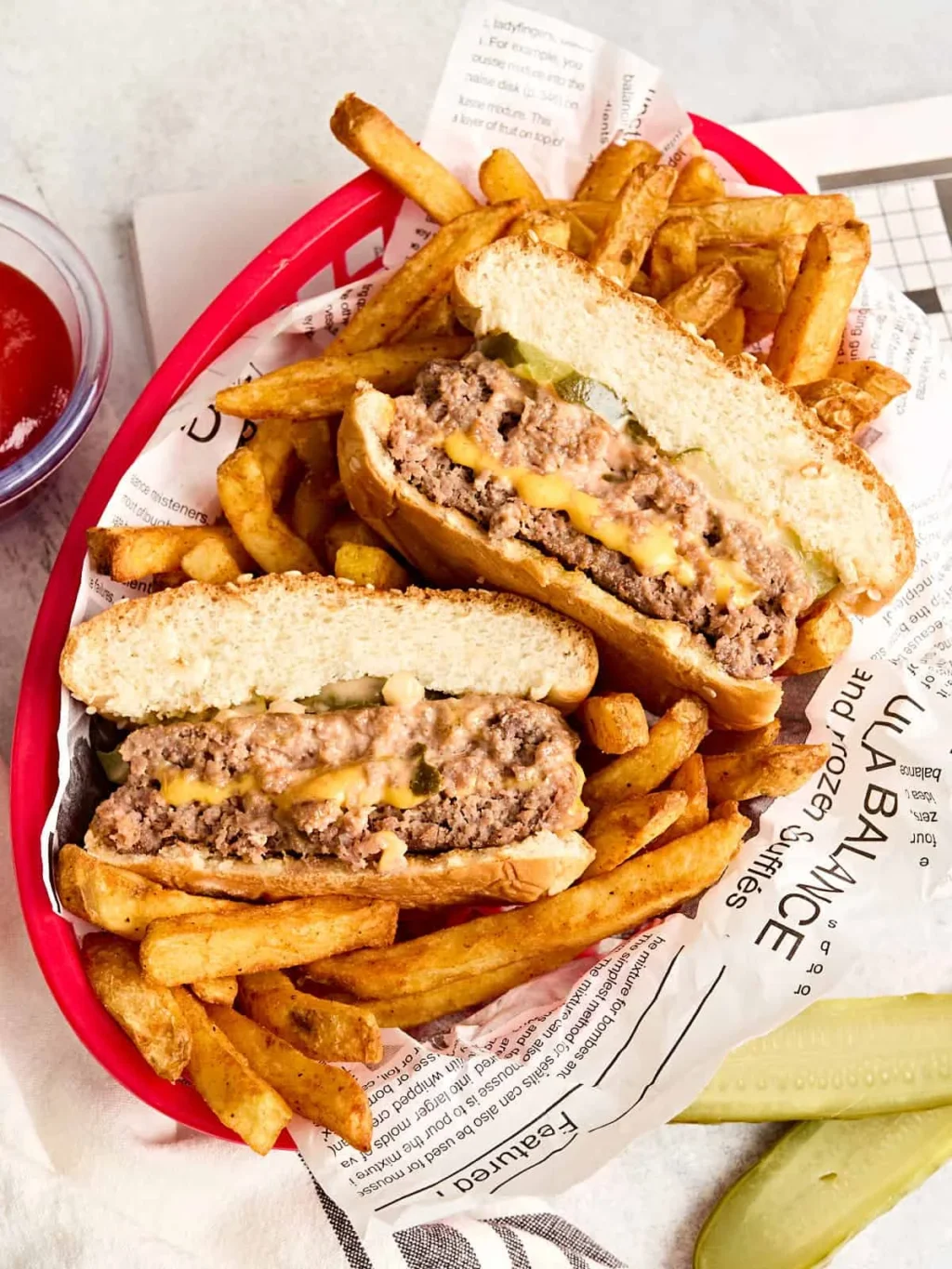
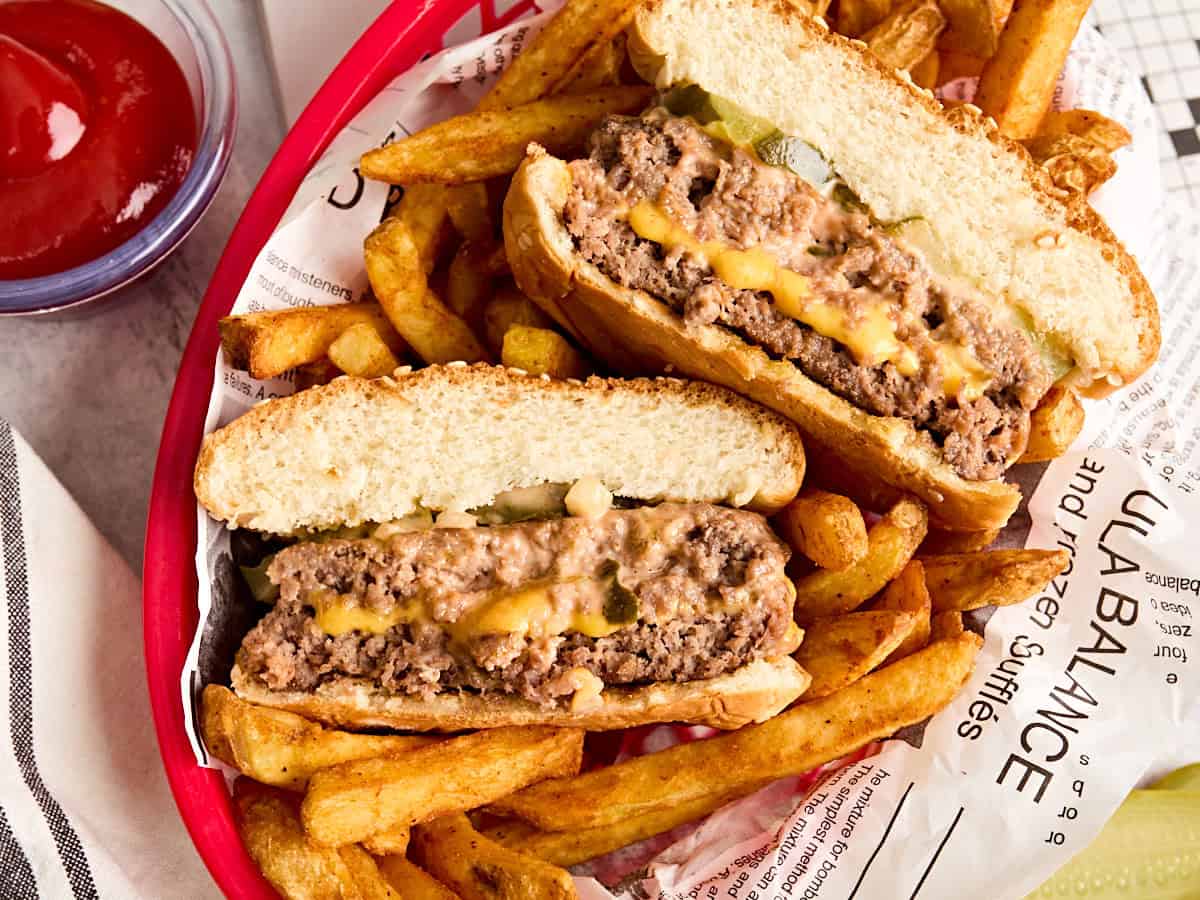
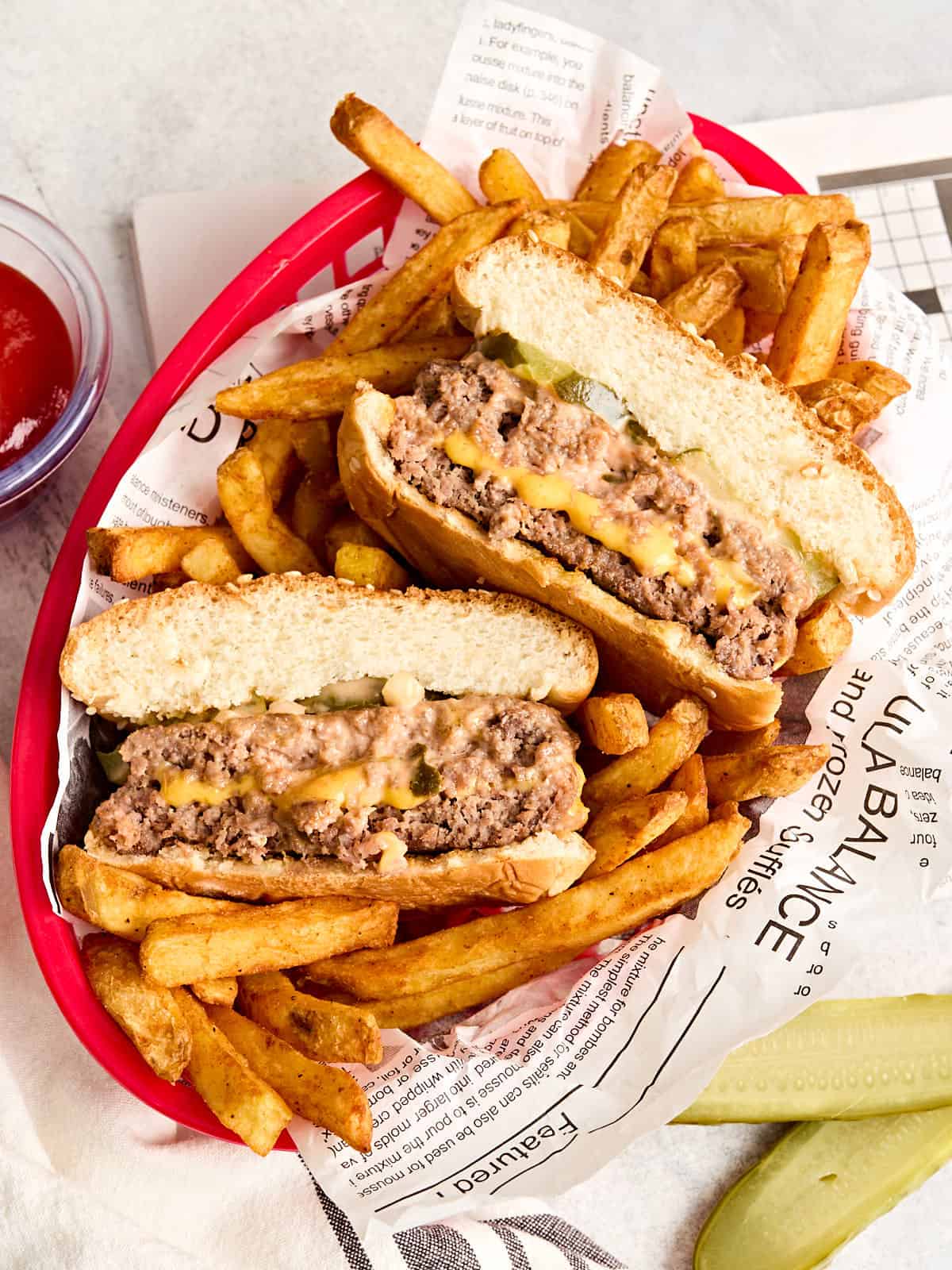
The American hamburger remains one of the most enduring symbols of global fast-casual dining, yet few regional variations command the cult-like devotion of the Minneapolis-born "Juicy Lucy" (frequently spelled "Jucy Lucy"). Unlike traditional cheeseburgers, where a dairy slice is draped over a seared beef patty, the Juicy Lucy reverses the architecture: the cheese is hermetically sealed inside the raw beef before cooking. As the meat sears, the trapped cheese undergoes a thermal transformation, melting into a molten, pressurized core. When bitten, the patty releases a dramatic, rich stream of liquefied cheese directly into the center of the bun.
Amidst persistent food-at-home inflation and a growing consumer demand for elevated comfort food, culinary developers are increasingly looking to historic, budget-friendly regional classics to satisfy both economic and gastronomic needs.
Recently, the Nashville Test Kitchen—a prominent culinary research facility dedicated to verifying affordable, accessible, and high-quality home recipes—released its definitive blueprint for the classic Juicy Lucy. The study reveals that this iconic, diner-style luxury can be successfully engineered at home for a mere $2.14 per serving, totaling $8.57 for a family-sized recipe of four.
This development highlights a broader culinary trend: utilizing precise food science and basic pantry staples to replicate high-end restaurant experiences without specialized equipment.
Chronology: From Midcentury Minneapolis Feuds to the Modern Skillet
To fully understand the evolution of the Juicy Lucy, one must trace both its midcentury historical origins and the precise, step-by-step physical timeline required to construct it in a home kitchen.
The Historical Origin and the Twin Cities Dispute
The chronology of the cheese-stuffed patty begins in south Minneapolis during the mid-1950s, a period marked by the post-war boom of neighborhood taverns and diner culture. The exact genesis of the burger is the subject of a decades-long, friendly yet fierce dispute between two culinary institutions located on Cedar Avenue:
1954 (The Matt’s Bar Claim): According to local lore, a customer walked into Matt’s Bar, requested a slice of cheese sealed between two thin patties, and upon taking a bite, exclaimed, "That’s one juicy Lucy!" The owner promptly added it to the menu but accidentally omitted the "i," forever branding their version as the "Jucy Lucy."
1958 (The 5-8 Club Counterclaim): The nearby 5-8 Club, a former 1920s speakeasy, established its own version, spelled conventionally as the "Juicy Lucy."
For nearly seventy years, the two establishments have maintained a rivalry that has drawn national television coverage, visits from sitting U.S. presidents, and endless debates among culinary historians.
       1954                                  1958                                  2026
  Matt's Bar Claim                     5-8 Club Counterclaim                 Nashville Test Kitchen
  (The "Jucy Lucy" is born)            (The "Juicy Lucy" debut)              (The $2.14 Modern Blueprint)
-------|-------------------------------------|-------------------------------------|------->
The Culinary Chronology: Step-by-Step Production
Recreating this midcentury masterpiece requires a strict sequence of physical steps. The Nashville Test Kitchen’s verified methodology outlines the precise chronology of preparation:
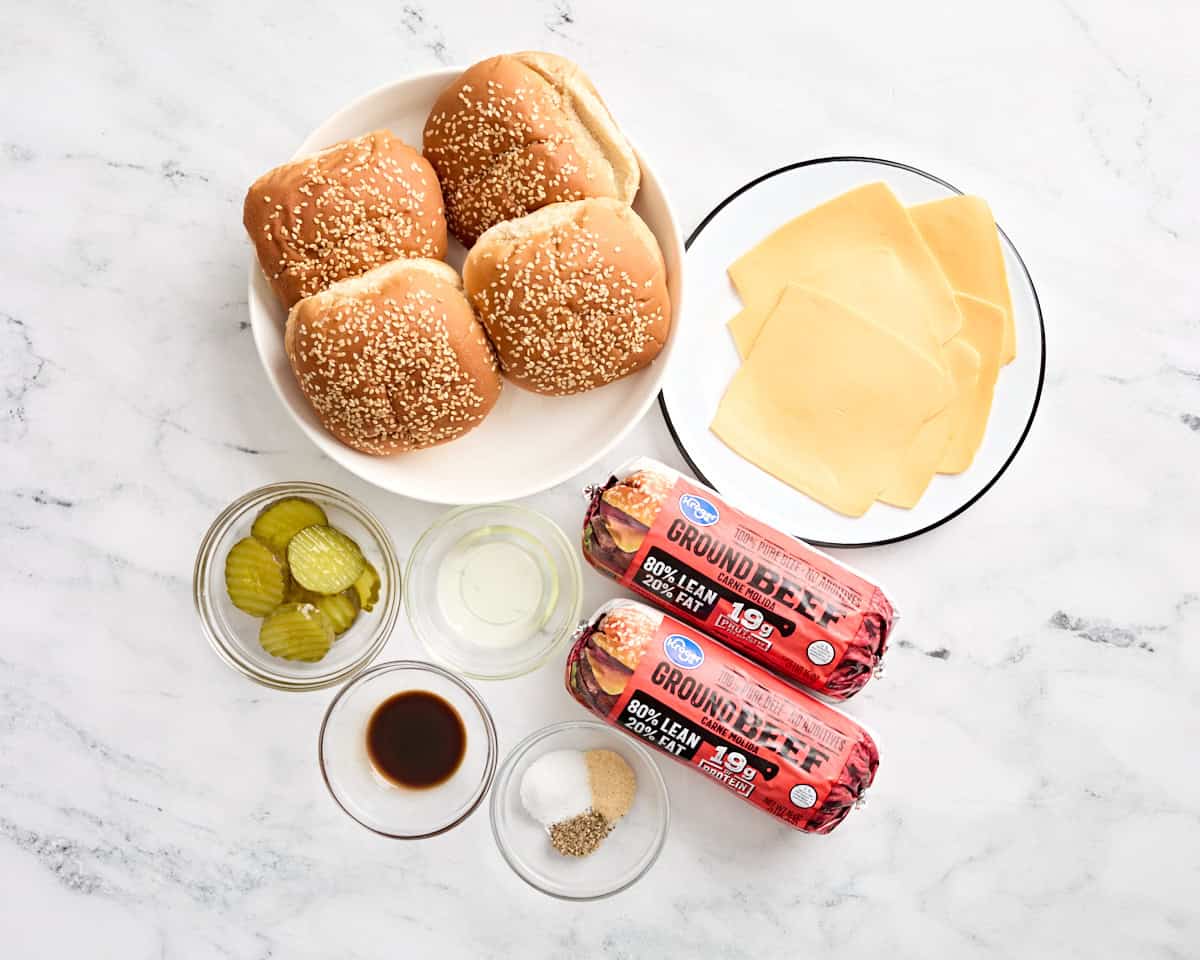
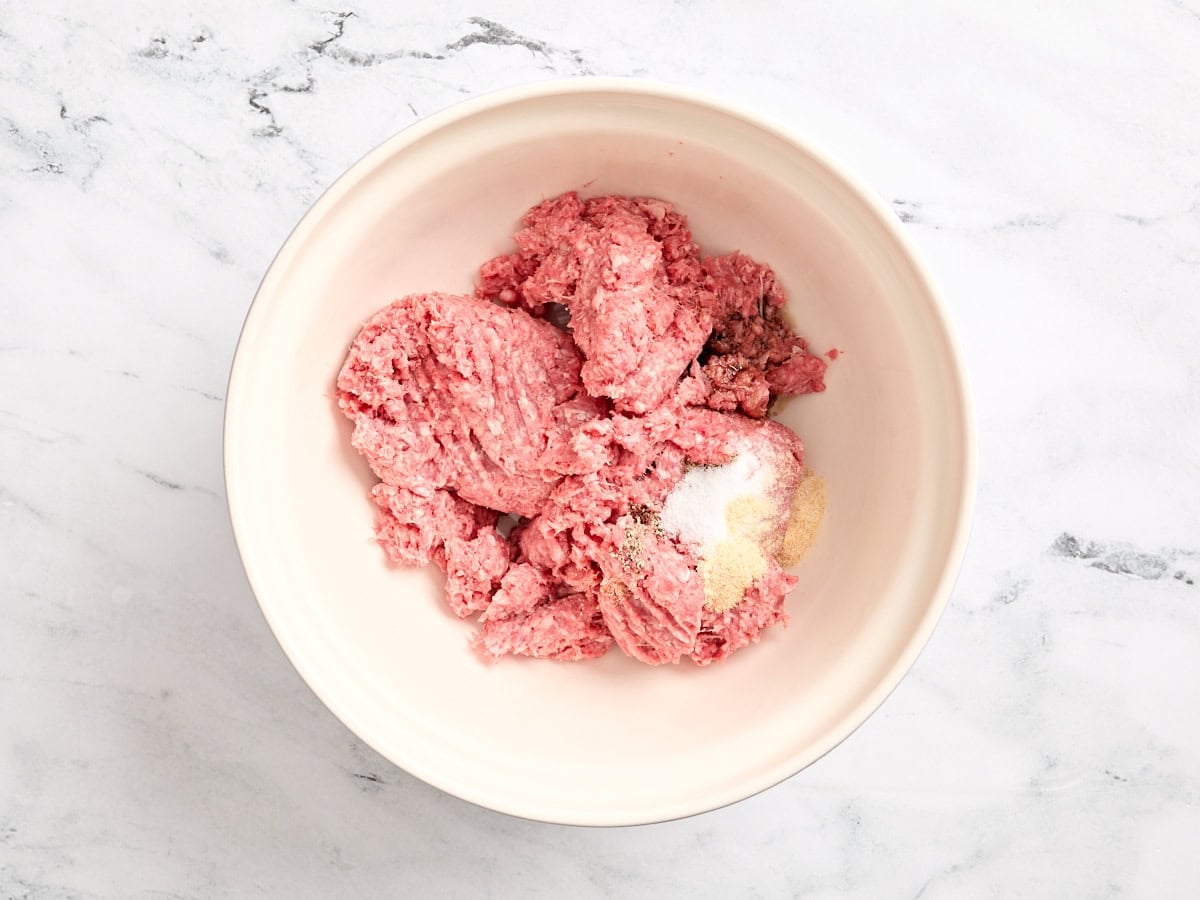
Home cooks begin by combining 1.5 pounds of ground beef with 1 teaspoon of Worcestershire sauce, 1 teaspoon of garlic powder, 1 teaspoon of salt, and 0.5 teaspoons of freshly cracked black pepper. The ingredients must be folded together gently until just combined. Overworking the meat at this stage aligns the proteins too tightly, resulting in a rubbery, dense texture rather than a tender, juicy crumb.
2. Division and Geometry
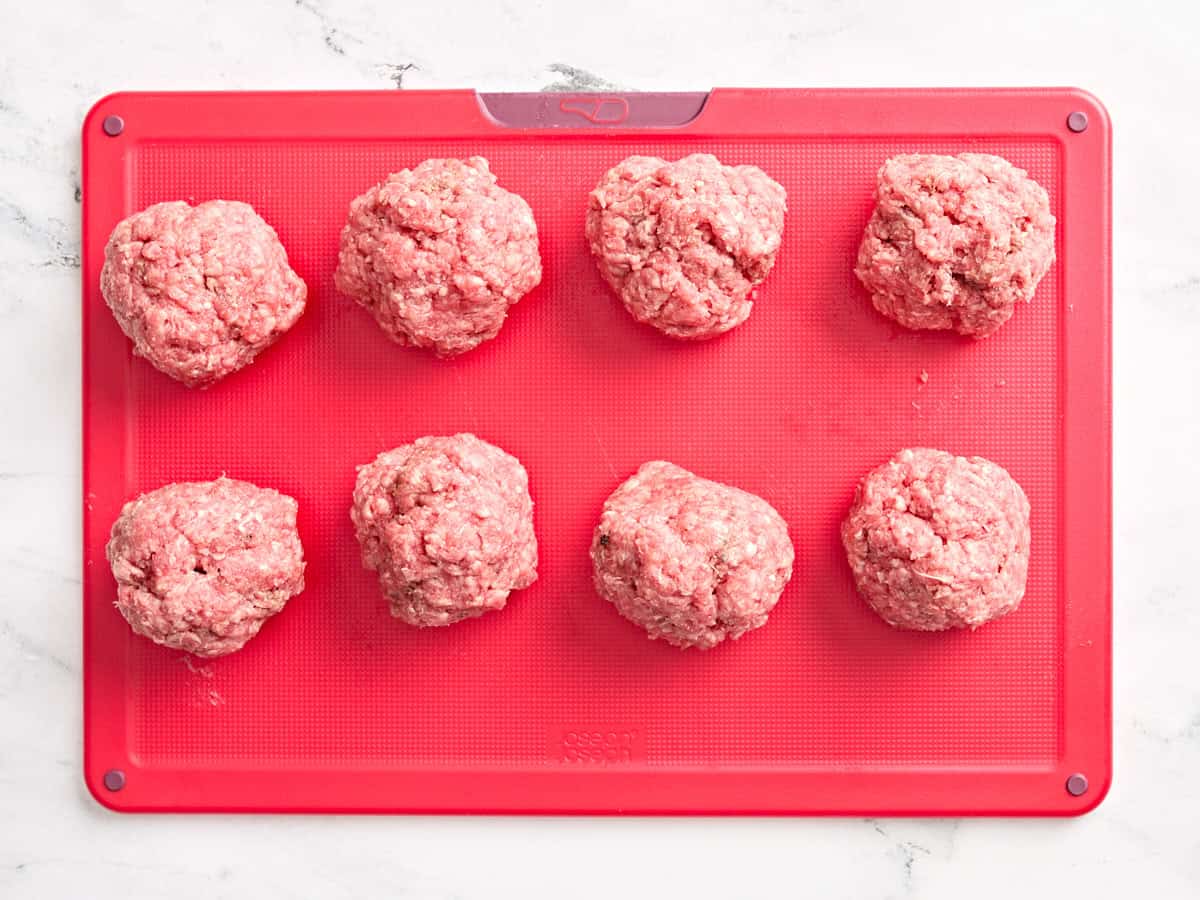
The seasoned beef is divided into eight equal portions, weighing approximately 3 ounces each, which are rolled into uniform spheres.
3. The Flattening Phase
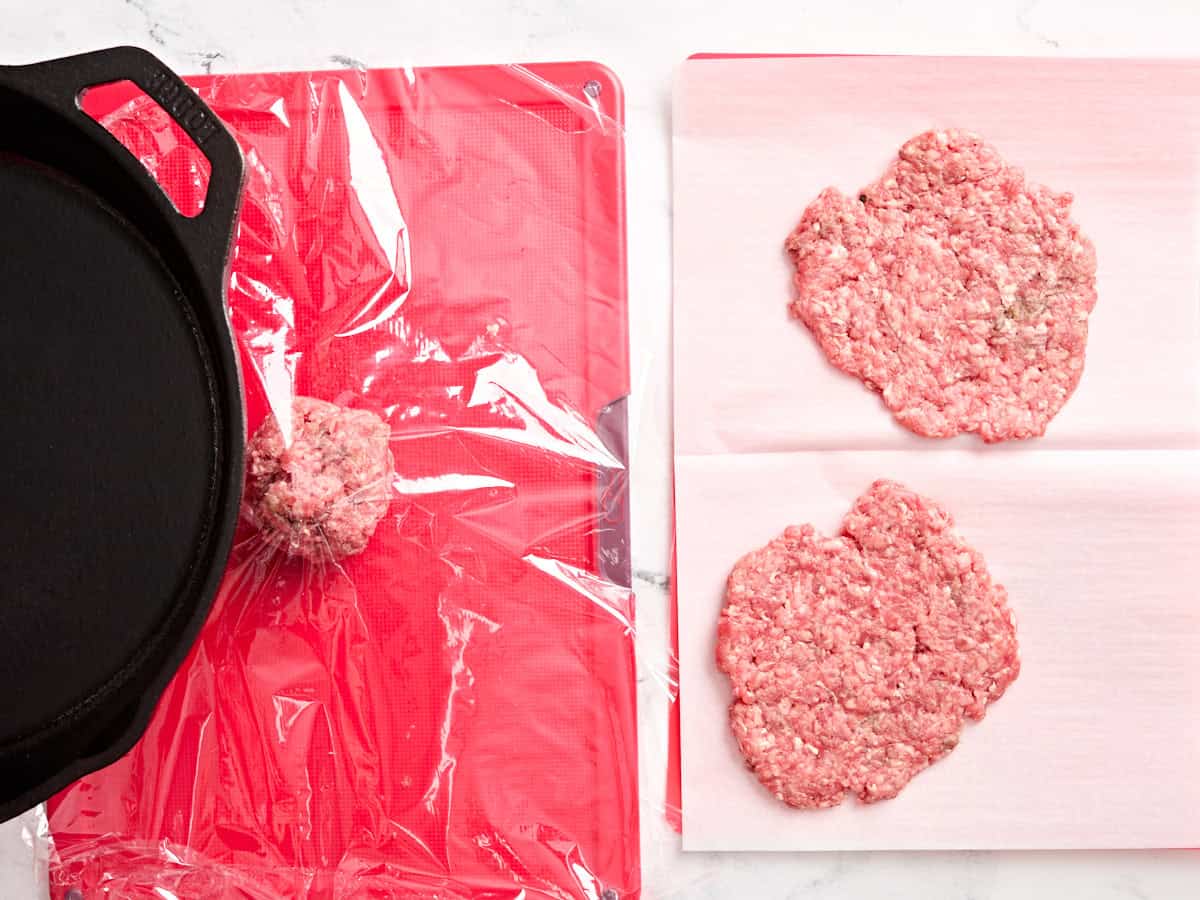
Each sphere is placed between sheets of parchment paper or plastic wrap. Using the flat, heavy bottom of a cast-iron skillet or a dedicated burger press, the cook compresses each ball into a very thin, even patty. This creates eight identical, wide discs designed to maximize surface area for sealing.
4. The Cheese Stack and Hermetic Seal
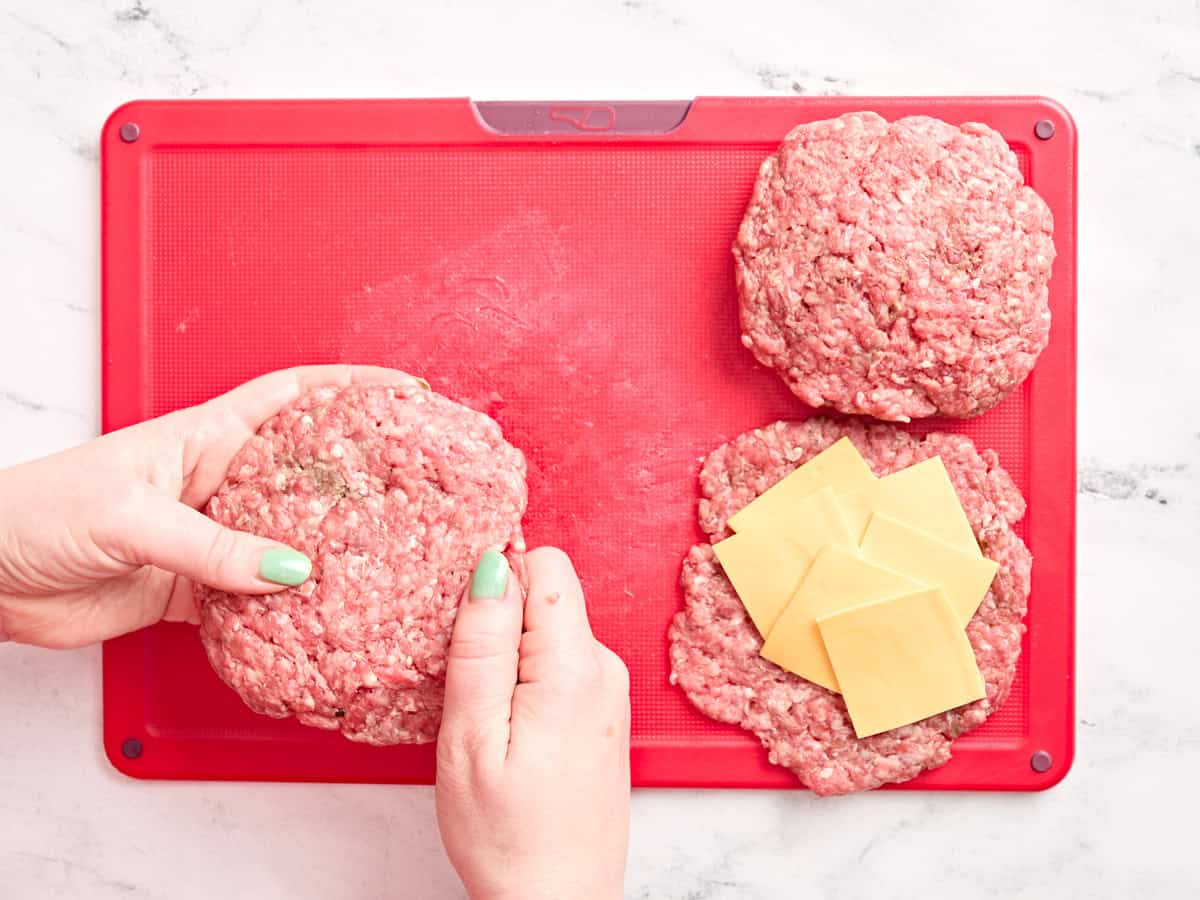
Six quarters of a standard slice of American cheese are stacked in a compact pile at the center of four patties, leaving a clear perimeter of raw meat around the edges. A second patty is placed on top.
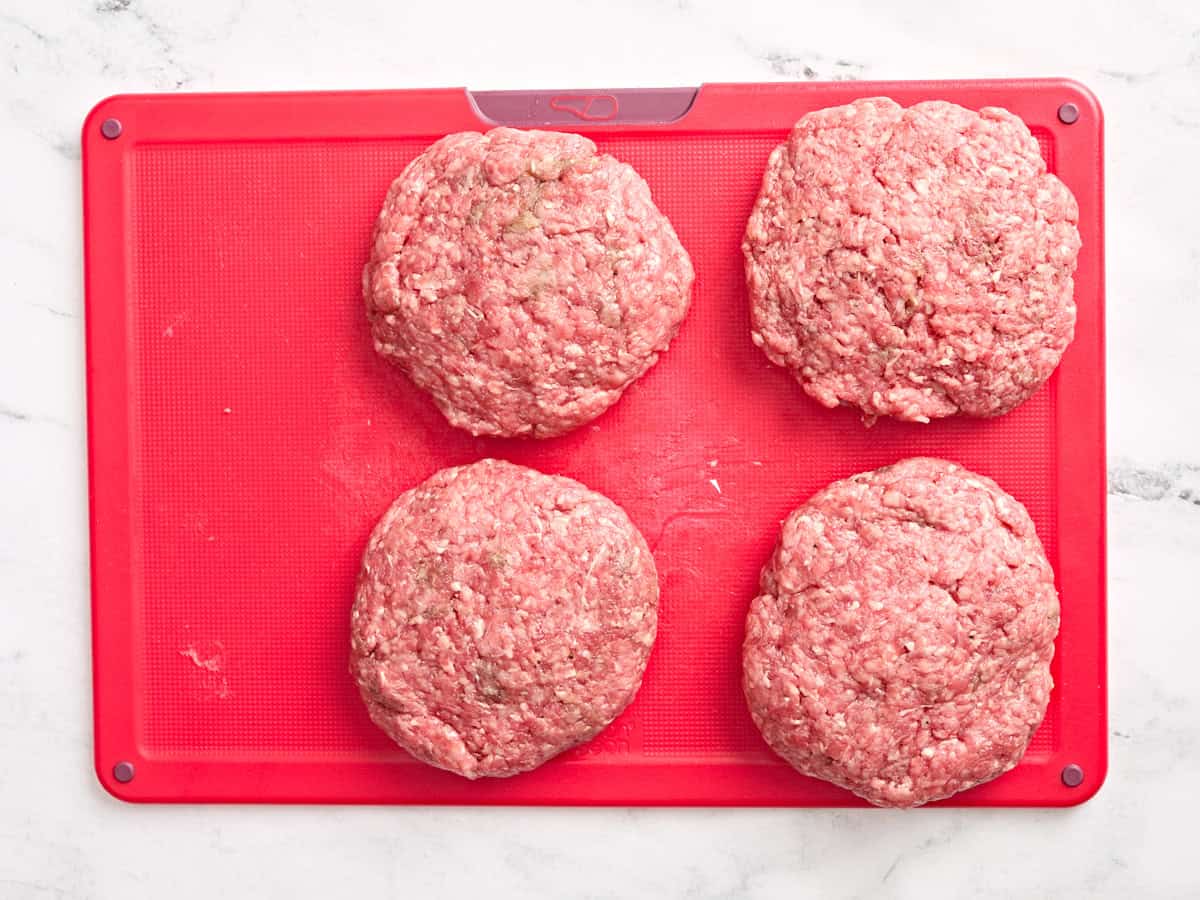
The cook must firmly pinch and press the outer edges together, smoothing out any cracks or micro-tears. This step is critical; any structural imperfection will allow the expanding steam and liquid cheese to breach the barrier during cooking.
5. The Sear (The Maillard Reaction)
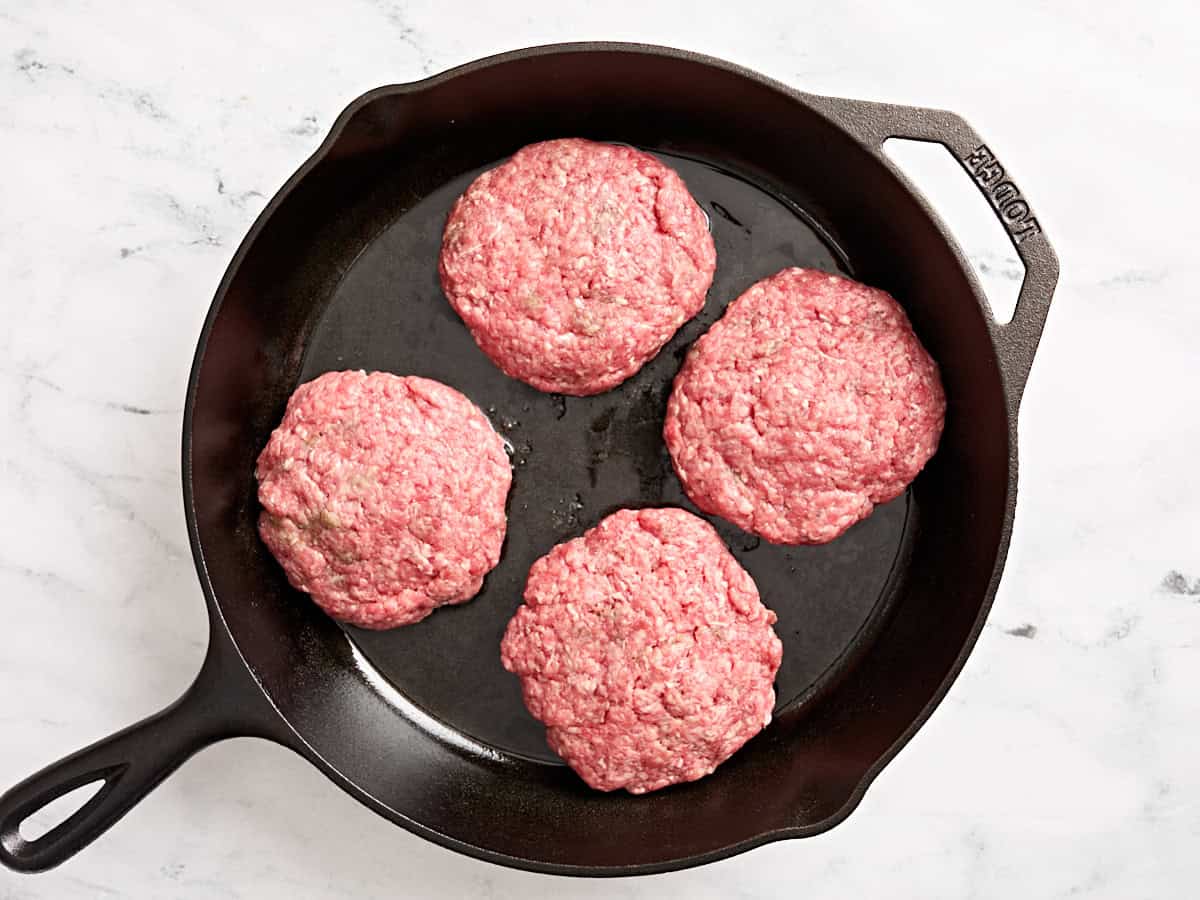
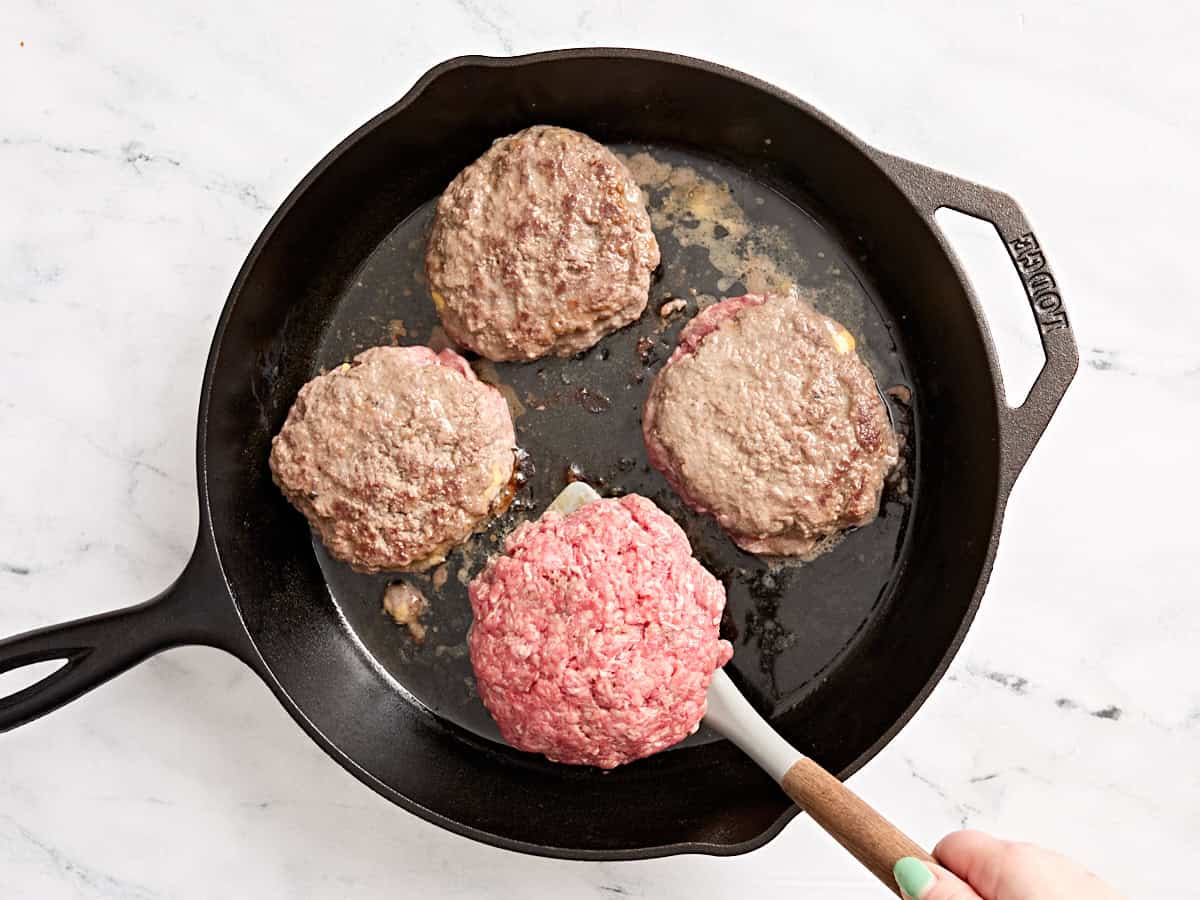
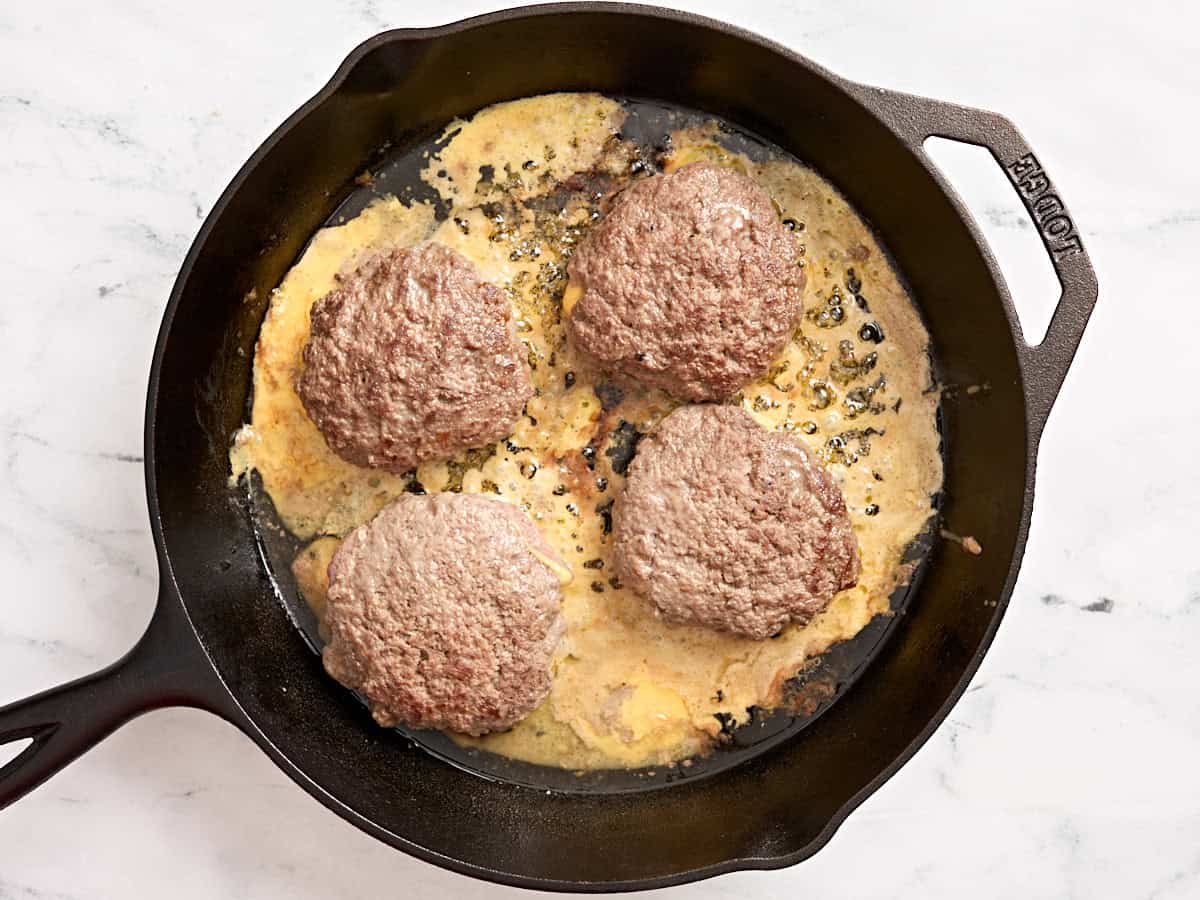
A cast-iron skillet is heated over medium heat with 1 tablespoon of high-smoke-point cooking oil. Once shimmering, the patties are introduced. They cook undisturbed for 3 minutes per side.
As the exterior undergoes the Maillard reaction—turning deeply caramelized and brown—the internal temperature of the beef rises, and the trapped cheese begins to liquefy under pressure.
6. The Essential Rest Period
Once deeply browned, the burgers are transferred to a plate to rest for exactly 5 minutes. During this window, the carryover heat finishes melting any stubborn cheese pockets, while the internal pressure of the molten core stabilizes. This prevents the hot cheese from violently bursting out on the first bite.
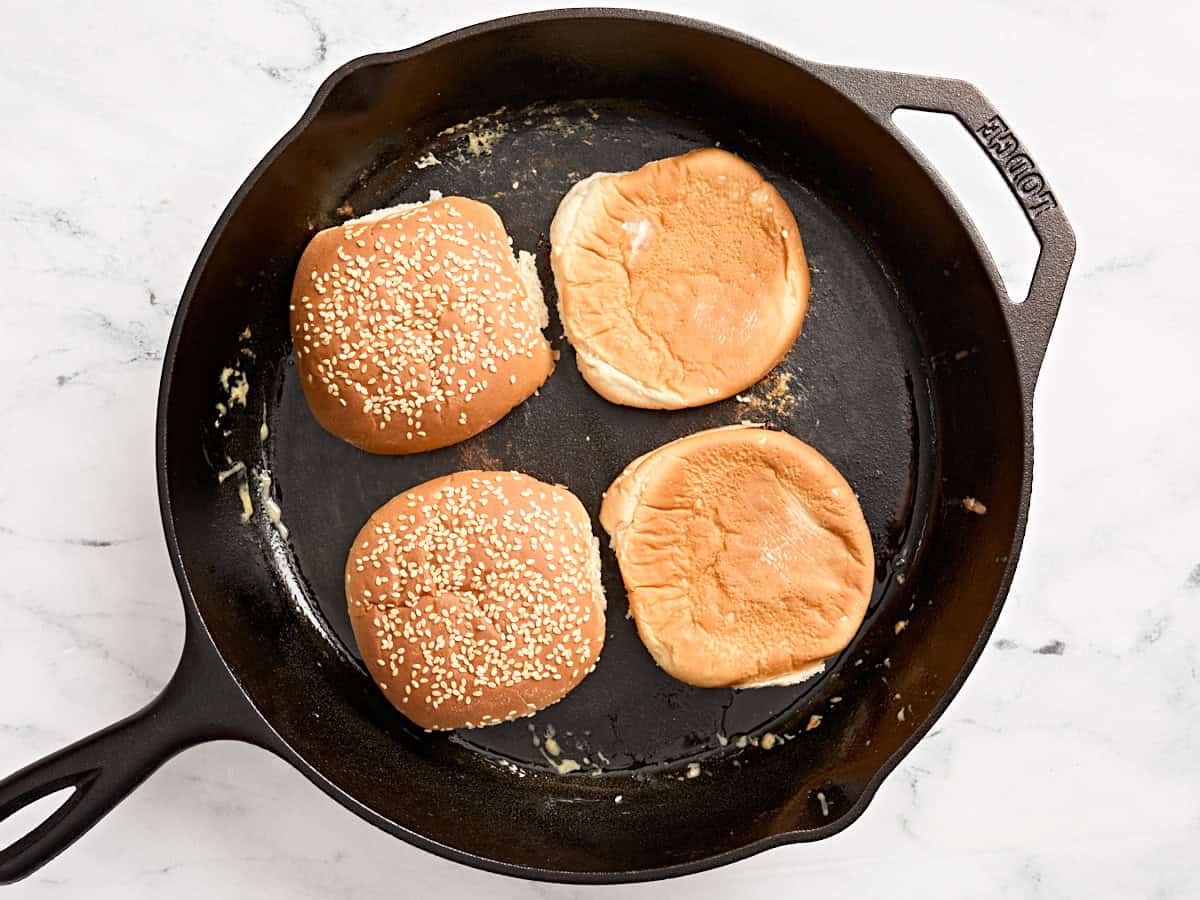
Simultaneously, the buns are toasted cut-side down in the remaining beef fat in the skillet.
Supporting Data: Economic, Nutritional, and Physical Profiles
To evaluate the feasibility of the Nashville Test Kitchen’s recipe, developers compiled rigorous cost-benefit analyses, nutritional breakdowns, and structural parameters.
Economic Feasibility Study
The primary appeal of the home-cooked Juicy Lucy lies in its high-value-to-cost ratio. Restaurant-style stuffed burgers regularly command prices upwards of $12.00 to $18.00 in modern gastropubs. The budget analysis of this recipe demonstrates substantial savings:
Ingredient Component
Estimated Cost (USD)
Cost Contribution (%)
Ground Beef (80/20 Blend, 1.5 lbs)
$5.40
63.0%
American Cheese (Slices)
$1.20
14.0%
Hamburger Buns (4 count)
$1.00
11.7%
Pantry Seasonings & Oil
$0.57
6.6%
Pickles & Garnishes
$0.40
4.7%
Total Recipe Cost
$8.57
100.0%
Cost Per Serving (4 Servings)
$2.14
—
Nutritional Analysis
A single serving of the Juicy Lucy provides a dense, macronutrient-rich profile suitable for a hearty main course. The nutritional data, automatically verified by dietary calculation software, reveals the following parameters per serving:
The structural integrity of a Juicy Lucy relies heavily on food physics. The Nashville Test Kitchen emphasizes that ground beef with a 15% to 20% fat content (80/20 or 85/15 blends) is non-negotiable.
The fat acts as a binding agent and lubricant. During the sealing process, the high fat content allows the meat fibers to meld seamlessly, forming a cohesive barrier. Leaner meats, such as 93/7 ground beef, turkey, or chicken, lack the necessary lipid structures to remain pliable. Under the intense steam pressure generated by the melting cheese, lean meats dry out, shrink rapidly, and tear, causing a structural failure known in professional kitchens as a "blowout."
Furthermore, the choice of cheese is governed by cheese chemistry. Processed American cheese contains emulsifying agents, specifically sodium citrate, which prevent the fat and water from separating when heated. This chemical composition allows the cheese to melt into a perfectly smooth, uniform liquid.
In contrast, natural cheeses like cheddar contain a delicate matrix of casein proteins that can break when heated rapidly, separating into a greasy pool of oil and a clumpy, stringy solid.
Official Responses: Insights from Developers and Historians
The release of the Nashville Test Kitchen recipe has drawn commentary from culinary experts, highlighting both the practical and historical considerations of the dish.
The Developer’s Perspective
Jennie Alley, a professional recipe developer and culinary school graduate with extensive experience in both front-of-house and back-of-house operations, led the development of the Nashville Test Kitchen formula. Alley emphasized that simplicity is paramount when adapting regional restaurant classics for home cooks.
"A Juicy Lucy is a flavor-packed throwback," Alley stated. "My dad used to call these his ‘gourmet burgers,’ and as a kid, that hot, cheesy center made them feel extra special. But behind the nostalgia, there’s a highly accessible, budget-friendly culinary technique. By keeping the seasonings classic—Worcestershire, garlic, salt, and pepper—we let the beef and the molten American cheese take center stage. You don’t need fancy tools; a heavy cast-iron skillet is actually superior to specialized burger presses for achieving that perfect, hard diner sear."
Alley also issued a strong warning regarding the temptation to overstuff the patties:
"The most common mistake home cooks make is adding too much cheese. It’s incredibly tempting to stack two or three full slices in there, but overstuffed patties will inevitably split at the seams under the pressure of the steam. Stick strictly to the equivalent of one to one-and-a-half slices per burger, folded tightly, to ensure the cheese stays where it belongs."
+-------------------------------------------------------------+
|                 NASHVILLE TEST KITCHEN ADVICE               |
+-------------------------------------------------------------+
|  "The resting period is not optional. When the burger first |
|   comes off the skillet, the liquid cheese in the center is |
|   essentially a pressurized volcanic core. Resting it for   |
|   five minutes allows the meat fibers to relax, the juices  |
|   to redistribute, and the cheese to cool slightly to a     |
|   creamy, safe-to-eat viscosity."                           |
|                                                             |
|   -- Jennie Alley, Lead Recipe Developer                    |
+-------------------------------------------------------------+
The Regional Historical Debate
When questioned about the historical accuracy of using American cheese versus other varieties, representatives of the Minneapolis culinary community remain fiercely protective of their respective traditions.
At Matt’s Bar, the official stance remains that the classic "Jucy Lucy" must be prepared with molten American cheese, served on a simple, untoasted bun with pickles, and that "if it’s spelled right, it’s spelled wrong."
Conversely, the 5-8 Club has modernized its menu over the decades, offering variations stuffed with Pepper Jack, Swiss, and Blue cheese, though they acknowledge that the classic American cheese remains their top seller.
The Nashville Test Kitchen’s decision to utilize American cheese as the primary recommendation aligns with historical consensus, prioritizing meltability and structural performance over artisanal trends.
Implications: The Rise of Budget Gastronomy and Comfort Food Revival
The release of a highly optimized, low-cost Juicy Lucy recipe carries broader implications for modern dining habits, consumer economics, and food culture.
The Macroeconomics of "Budget Gastronomy"
As the cost of living continues to pressure household budgets, a significant shift is occurring in consumer behavior. The restaurant industry has witnessed a decline in traffic as families cut back on discretionary spending, particularly mid-tier casual dining.
However, the desire for "gourmet" experiences has not diminished. Instead, it has transitioned into the home kitchen, giving rise to "budget gastronomy."
                          ECONOMIC SHIFT
   High Restaurant Prices                Household Budget Pressure
                                                   /
                                                  /
               v                                  v
         [Consumer Demand for High-Quality Dining at Home]
                               |
                               v
         [Rise of "Budget Gastronomy" (e.g., $2.14 Juicy Lucy)]
By demonstrating that an iconic, high-margin restaurant item can be produced at home for just $2.14 per serving, culinary developers are empowering consumers. This economic shift suggests that the future of home cooking lies not in austere, minimalist meal prep, but in the clever application of food science to transform affordable, everyday ingredients into luxurious, comforting meals.
The Psychology of Nostalgia in Foodways
Sociological research consistently demonstrates that during times of economic uncertainty or social stress, consumers gravitate toward nostalgic foods. The Juicy Lucy, with its midcentury diner heritage, taps directly into this psychological need.
For many, the burger represents a simpler era of American gastronomy—one defined by neighborhood taverns, roadside stands, and backyard family cookouts. Recreating these dishes at home serves a dual purpose: it provides a cost-effective meal while offering a sense of comfort and emotional grounding.
The Demarginalization of Processed Ingredients
Finally, the culinary validation of American cheese in high-performance recipes represents a broader trend of demarginalizing processed ingredients. For years, the "craft" food movement dismissed processed American cheese in favor of expensive, artisanal varieties.
However, as modern food science becomes more widely understood by home cooks, the unique physical properties of processed cheese—specifically its meltability and stability under heat—are being celebrated once again. The success of the Juicy Lucy relies entirely on these properties, illustrating that in culinary arts, utility and science often triumph over sheer prestige.