The State of the Echo: Navigating Amazon’s Evolving Smart Speaker Ecosystem in 2025
The landscape of the smart home has shifted dramatically over the past year. As Amazon pushes its latest generative AI-powered "Alexa+" interface, the hardware that carries the voice assistant—the ubiquitous Echo line—has undergone a transformation of its own. Between price hikes, privacy policy shifts, and a renewed focus on hardware specialization, choosing the right speaker for your home is no longer as simple as picking the cheapest device on the shelf.
The Hierarchy of Sound and Utility: Top Picks
While Amazon’s catalog is vast, a few standout devices continue to define the category for specific user needs.
The Audiophile’s Choice: Echo Studio (2nd Gen)
For those who prioritize high-fidelity audio, the Echo Studio (2nd Gen) remains the undisputed king of the Alexa lineup. Despite its compact footprint—roughly comparable to the Apple HomePod—the Studio delivers a staggering amount of acoustic power. During our testing, the speaker effortlessly filled a large, open-concept floor plan without pushing the volume to its upper limits.
Equipped with three 1.5-inch drivers and a robust 3.75-inch woofer, the Studio handles everything from the delicate piano riffs of indie tracks to the complex, layered harmonies of modern pop with surprising clarity. Beyond its sound, it serves as a formidable smart home hub, featuring spatial audio, Dolby Atmos support, and immediate integration with the new Alexa+ ecosystem.
The Bedroom Companion: Echo Spot (2nd Gen)
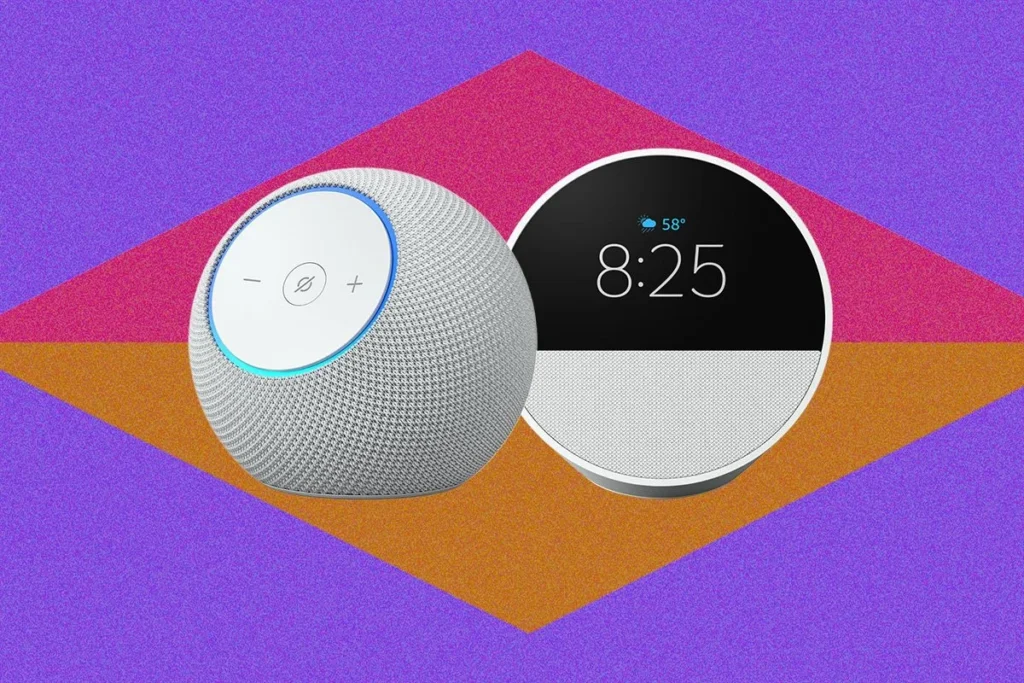
After a brief hiatus, the Echo Spot returned in 2024 to reclaim its title as the ultimate bedside device. Its minimalist, half-circle display provides at-a-glance information, such as time and active alarms, without the sensory overload of a full-blown smart display.
Crucially, the Spot avoids the "camera-in-the-bedroom" dilemma that plagues many Echo Show models. The screen dims to a soft, non-intrusive red hue in dark environments, ensuring that your sleep cycle remains undisturbed by glaring lights or distracting, automated slideshows. While it is not intended for audiophile-grade music playback, it is perfectly suited for morning lo-fi playlists or news briefings.
The Family Essential: Echo Dot Kids (5th Gen)
The Echo Dot Kids edition is functionally identical to the standard 5th-gen Echo Dot, but it distinguishes itself through a rigorous parental control suite. Parents can set firm time limits, filter explicit content, and monitor device activity via the Amazon Kids portal. With a playful owl or dragon aesthetic and a included one-year subscription to Amazon Kids+—granting access to a vast library of Audible books and interactive games—it is the most practical entry point for younger users.
Chronology: The Evolution of the Echo Line
The Echo ecosystem did not arrive in its current state overnight. The trajectory of Amazon’s smart hardware has been a decade-long experiment in AI integration.
- 2014–2016: The original Echo launched as a singular, tall cylinder, marketed as a novelty "connected speaker."
- 2017–2019: Rapid expansion saw the introduction of the Dot, the Show (smart displays), and the Spot, moving Alexa from a background utility to a central visual interface.
- 2020–2023: Amazon focused on "ambient intelligence," integrating smart home hubs like Zigbee and Matter support directly into the hardware to make Alexa the connective tissue of the modern home.
- 2025: The shift to "Alexa+." This year marked the most significant pivot, as Amazon moved toward a generative AI model that requires cloud-based processing for all voice requests, ending the era of local, offline command processing.
Supporting Data: Pricing and Performance Metrics
The hardware market for Alexa devices has seen a significant price correction. As of late 2026, Amazon has implemented widespread price increases across its smart home division.

| Device | Price Change Trend | Note |
|---|---|---|
| Echo Show 5 | +$10 | Diminished value compared to the Spot. |
| Echo Show 8 | +$20 | Sound quality concerns; skip for the Show 11. |
| Echo Show 15 | +$50 | Overpriced; struggles with TV-like functionality. |
| Echo Show 21 | +$100 | Premium pricing; limited use case. |
These increases, attributed by Amazon to rising costs in semiconductor supply chains and memory storage, suggest that the "loss-leader" strategy—selling hardware cheaply to encourage ecosystem lock-in—is being replaced by a model that demands more immediate profitability from the hardware itself.
Official Responses and Strategic Shifts
Amazon’s recent corporate communications emphasize a transition toward "Conversational AI." The introduction of Alexa+ is the cornerstone of this strategy. A company spokesperson noted that the new model is designed to handle "more complex, multi-turn conversational topics" that were previously impossible for the rigid, intent-based Alexa of the past.
However, this technological leap comes with a privacy cost. In an email sent to users in early 2025, Amazon clarified that the "Do Not Send Voice Recordings" feature has been officially discontinued. The company maintains that sending all voice data to the cloud is necessary to facilitate the advanced processing required by Alexa+ and to improve the overall accuracy of the assistant. For privacy-conscious users, this is a significant trade-off, as it effectively removes the option for purely local, on-device voice processing.
Implications for the Consumer
The "Always-Listening" Reality
Consumers must recognize that the boundary between "listening for the wake word" and "active recording" is becoming increasingly porous. While Echo devices use local processing to detect wake words, the subsequent interaction with Alexa+ involves an extended window of analysis. For those deeply concerned about privacy, the physical mute button remains the only truly effective deterrent.
The Problem with Smart Displays
The proliferation of ads on Echo Show devices has become a point of contention for many users. While Amazon provides granular controls in the privacy settings to disable interest-based ads, the interface remains cluttered with widgets, sports scores, and "suggested" content. As noted in our testing, the only way to achieve a truly clean, ad-free experience is to set the device to "Photo Display" mode, which effectively turns the smart screen into a high-tech digital photo frame, sacrificing the utility of the display.
Choosing the Right Ecosystem
For users invested in multiple platforms, the JBL Authentics 200 stands out as a unique bridge. By supporting both Google Assistant and Alexa, it offers a level of flexibility that native Amazon hardware lacks. Conversely, the Sonos Era 100 serves as the gold standard for those who want high-end audio quality while maintaining a presence in the Alexa ecosystem.
Final Verdict: Is it Time to Upgrade?
If you are currently running older Echo hardware, the jump to the latest models is only worth it if you are seeking specific functionality, such as the spatial audio of the Echo Studio or the bedroom-specific design of the Echo Spot.
The current climate—marked by rising prices and a move toward subscription-based, cloud-dependent AI—suggests that the era of "cheap and disposable" smart speakers is coming to a close. Consumers should prioritize long-term utility over short-term savings. When purchasing, wait for major retail windows like Prime Day or Black Friday, where the steep discounts can mitigate the impact of the recent price hikes.
Ultimately, the best Alexa speaker for your home is one that respects your privacy, fits your specific room requirements, and delivers the acoustic performance you need without forcing you into an unwanted subscription cycle. As Amazon continues to iterate on Alexa+, the hardware choice will become less about the speaker and more about how much of your home life you are willing to entrust to the cloud.