The Unsavory Truth: How the World Reacted to Processed Meat’s Cancer Link
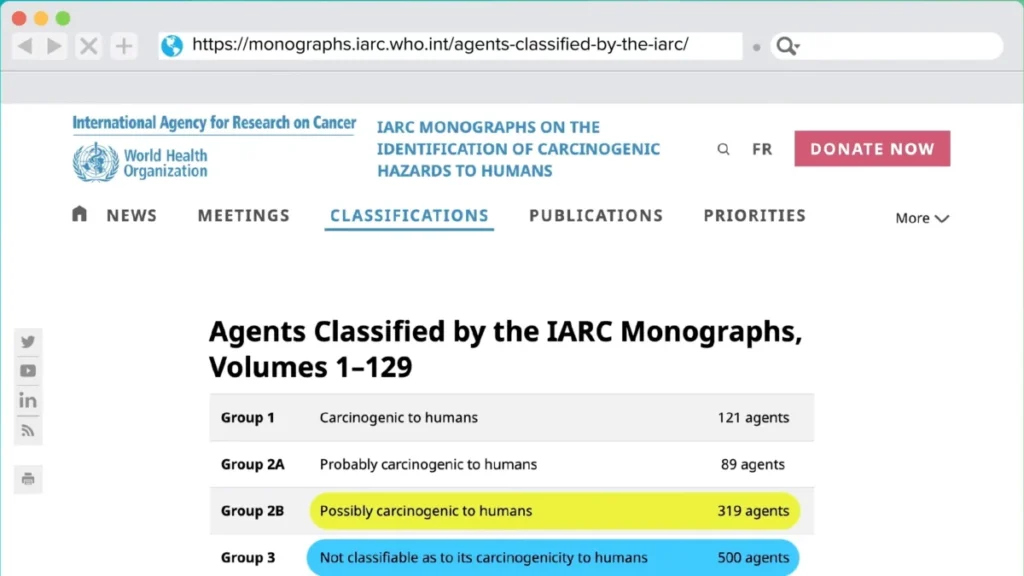
In a revelation that sent shockwaves through the global food industry and public health communities, the International Agency for Research on Cancer (IARC), the specialized cancer agency of the World Health Organization (WHO), delivered a definitive verdict in 2015: processed meat causes cancer. This unequivocal classification, placing beloved staples like bacon, ham, hot dogs, and lunch meat in the highest risk category, Group 1, sparked a furious debate, pitting scientific consensus against powerful economic interests and challenging established dietary norms.
The announcement was not merely a scientific footnote; it was a profound declaration with far-reaching implications, prompting questions about industry accountability, government responsibility, and the integrity of public health messaging. The subsequent reactions from the meat industry, governments, and even some cancer organizations revealed a complex interplay of denial, lobbying, and cautious recalibration in the face of irrefutable evidence.
Main Facts: A Definitive Link to Cancer
The core finding of IARC’s Monograph 114, published in 2018 but widely reported after its 2015 summary, was stark and unambiguous. After meticulously reviewing over 800 scientific studies, a panel of 22 international experts concluded that the consumption of processed meat causes cancer. This classification places processed meat in Group 1, alongside other well-known carcinogens such as tobacco, asbestos, and plutonium. For red meat, the evidence was deemed "probably carcinogenic to humans" (Group 2A), indicating strong but not yet conclusive evidence of a link.
Processed meat, as defined by IARC, refers to meat that has been transformed through salting, curing, fermentation, smoking, or other processes to enhance flavor or improve preservation. This includes a vast array of products consumed daily across the globe: bacon, ham, sausages, hot dogs, corned beef, beef jerky, canned meat, and even some turkey deli slices. The primary cancer identified as being caused by processed meat consumption is colorectal cancer, which affects the colon or rectum.
The significance of this finding cannot be overstated. Colorectal cancer is a formidable global health challenge, ranking as the second most deadly cancer worldwide after lung cancer. In the United States, it is also the second leading cause of cancer death, affecting not only older populations but increasingly striking individuals earlier in life. The IARC’s pronouncement meant that a significant portion of these devastating diagnoses could be directly linked to a widely consumed dietary item, prompting an urgent need for public awareness and policy adjustments. The scientific body emphasized that even small, regular consumption of processed meat contributes to this risk, with no known safe threshold identified.
Chronology: From a Grieving Letter to Global Scientific Consensus
The story of the IARC’s classification of processed meat is rooted in a compelling narrative that underscores the agency’s founding principles. The IARC itself was born from a unique moment of international altruism, initiated by a single, poignant letter from a grieving husband in 1963. His wife’s suffering from cancer spurred him to advocate for a global effort against the disease. This personal tragedy cascaded into an open letter published in The New York Times, urging governments to dedicate a mere half of one percent of their military budgets to fighting for "life" by confronting humanity’s greatest plagues.
Eighteen months later, in 1965, the International Agency for Research on Cancer was established within the World Health Organization. Its overarching motive, as envisioned by its founders, was clear: cancer prevention through rigorous scientific inquiry. Headquartered in Lyon, France, IARC was designed to be an independent research institution, free from political or commercial influence, dedicated solely to identifying the causes of cancer.
The IARC is renowned globally for its Monograph program, which has systematically evaluated environmental factors that could increase cancer risk since 1971. These monographs are exhaustive, book-sized reports that synthesize all available scientific literature on a suspected carcinogen. The process is meticulously structured: a working group of leading international experts, free from conflicts of interest, reviews hundreds of peer-reviewed studies—epidemiological, animal, and mechanistic—over several days. Their conclusions are then published, often regarded as the "final word" on whether a substance is carcinogenic.
The journey to Monograph 114, which focused on the consumption of red and processed meat, began years before its public announcement. Scientists had long observed epidemiological links between high meat consumption and increased cancer risk, particularly colorectal cancer. The IARC panel convened in October 2015, comprising 22 experts from 10 countries. Over several intensive days, they delved into the vast body of research, scrutinizing studies on population groups, animal experiments, and the biological mechanisms by which meat might cause cancer. The rigorous methodology, which considered both the quantity and quality of evidence, ultimately led to the historic classification. The official, comprehensive 500-page report was subsequently published in 2018, detailing the full scientific rationale behind their conclusions. This thorough, multi-year process highlighted the IARC’s commitment to scientific integrity, ensuring that its findings were based on the most robust and comprehensive evidence available.
Supporting Data and Scientific Consensus: Unpacking the Mechanisms
The IARC’s classification of processed meat as a Group 1 carcinogen was not an arbitrary decision but the culmination of extensive scientific investigation, revealing multiple plausible biological mechanisms for its carcinogenic effects. The evidence presented in Monograph 114 drew from a diverse array of studies, including large-scale epidemiological cohorts, case-control studies, and mechanistic research.
One key mechanism involves the presence of nitrates and nitrites used in the curing process of processed meats. These compounds can react with amines in the meat during digestion, particularly at high temperatures, to form N-nitroso compounds (NOCs). Many NOCs are known potent carcinogens, capable of damaging DNA and initiating tumor formation, particularly in the gastrointestinal tract.
Another contributing factor is heme iron, a compound found abundantly in red and processed meats. While essential for oxygen transport, excessive heme iron intake has been linked to increased production of NOCs and lipid peroxidation, leading to oxidative stress and DNA damage in the colon. It can also promote cell proliferation, potentially accelerating the growth of cancerous cells.
Furthermore, the high-temperature cooking methods commonly used for processed meats, such as grilling, frying, or barbecuing, can generate heterocyclic amines (HCAs) and polycyclic aromatic hydrocarbons (PAHs). These compounds are also known carcinogens, formed when muscle meats are cooked at high temperatures, and have been shown to induce mutations and promote tumor development in various organs, including the colon.
The sheer volume of evidence supporting the IARC’s conclusion is compelling. The 22-member expert panel meticulously reviewed over 800 studies, encompassing a broad range of human population studies (epidemiological), animal carcinogenicity studies, and mechanistic data. Epidemiological studies consistently showed a dose-response relationship, where higher consumption of processed meat was associated with an increased risk of colorectal cancer. For instance, meta-analyses indicated that for every 50-gram portion of processed meat consumed daily (equivalent to about two slices of bacon or one hot dog), the risk of colorectal cancer increased by approximately 18%. While the absolute risk for any individual remains relatively small, the widespread consumption of processed meat globally means that this elevated risk translates into a significant number of cancer cases.
The distinction between processed meat (Group 1) and red meat (Group 2A) is also crucial. While red meat (beef, pork, lamb, goat, veal) also contains heme iron and can form HCAs and PAHs when cooked, the evidence for its direct causal link to cancer was deemed strong but not as conclusive as for processed meat. The additional chemical processing in processed meats, particularly the formation of NOCs, provided the stronger basis for the Group 1 classification, signifying "sufficient evidence" that it causes cancer in humans. This scientific rigor ensures that the classifications are based on the totality of evidence, providing a robust foundation for public health recommendations.
Official Responses and Industry Backlash: A Battle for Narrative
The IARC’s pronouncement ignited a firestorm of controversy, triggering immediate and often aggressive reactions from the meat industry and its allies, while governments and public health organizations navigated a complex landscape of scientific truth and economic reality.
The meat industry was swift to condemn the findings, characterizing them as a "dramatic and alarmist overreach." The North American Meat Institute (NAMI) immediately issued statements questioning the science and methodology, claiming the IARC selectively interpreted data and ignored the benefits of meat in a balanced diet. One agricultural group in Italy famously retorted with a press release titled: "Just say no to terrorism on meat," encapsulating the industry’s hyperbolic and defensive stance.
Beyond public statements, the industry launched a concerted lobbying effort. In Canada, the meat industry actively pressured the government to cut off funding to the IARC, arguing that the agency’s findings were detrimental to their sector and unwarranted. A similar campaign was mounted by the U.S. meat industry, demonstrating a coordinated international strategy to discredit and financially undermine the independent scientific body. This aggressive response positioned the IARC "under siege by corporate interests" seeking to challenge its cancer evaluations, not just on meat but also on other controversial substances like Monsanto’s Roundup pesticide.
These tactics were not new. Critics quickly pointed out that the industry’s playbook mirrored strategies famously employed by the tobacco industry in the 20th century: denying scientific consensus, creating doubt, funding counter-research, lobbying politicians, and attacking the credibility of scientific institutions and individual researchers. Internal documents, for example, have revealed Monsanto scientists "casually discussing ‘ghost-writing’ scientific papers and suppressing science that conflicts with corporate assertions of Roundup’s safety," highlighting the insidious nature of corporate influence on scientific discourse. The chemical industry also joined this corporate cacophony, dismissing IARC monographs as "dubious and misleading," further muddying the waters of public perception.
Amidst this corporate onslaught, the IARC and WHO adopted a measured, almost detached, stance. They responded to "questions, concerns, and clarification requests" by reiterating their mandate: to assess cancer hazards based on scientific evidence, not to issue dietary guidelines or mandates. Their message was effectively: "Hey, we never told anyone to stop eating processed meat—your body, your choice. The report just indicated that consuming less of these products can reduce the risk of a leading cancer killer. So, you like cancer? You do you." This position, while scientifically sound, left the onus of action squarely on individuals and national health authorities, perhaps inadvertently contributing to public confusion.
Governments themselves reacted with varying degrees of caution. Few immediately issued sweeping bans or drastic dietary guideline changes. The economic implications of such actions, particularly in meat-producing nations, were immense. Instead, many governments largely deferred to national health agencies to interpret the findings and formulate recommendations, often leading to more conservative advice.
Implications and Public Health Directives: Navigating the Future of Food
The IARC’s classification of processed meat as a carcinogen carried profound implications for public health, dietary guidelines, and the future of food policy. While the scientific consensus was clear, translating this knowledge into actionable, universally accepted public health directives proved to be a complex and often contentious process.
One of the immediate implications was the potential for public confusion and skepticism. Faced with conflicting messages – definitive scientific warnings from IARC versus industry assurances and sometimes cautious governmental advice – the public could easily become disoriented. The "terrorism on meat" rhetoric, for example, aimed to dismiss the scientific findings as sensationalism rather than serious health information, undermining trust in public health institutions.
Regarding dietary guidelines, the IARC’s findings prompted a re-evaluation by many health organizations, though their responses varied in directness. The American Cancer Society (ACS), for instance, which had been unequivocally clear on alcohol (stating "it is best not to drink alcohol" for cancer prevention), adopted a more tempered approach for processed meat. While acknowledging the risk, their guidance often leaned towards "limiting" intake rather than outright avoidance, perhaps reflecting a pragmatic recognition of deeply ingrained dietary habits and the difficulty of drastic dietary overhauls. This wishy-washy stance contrasted with the scientific certainty of the IARC’s Group 1 classification, leaving some advocates desiring a stronger, more direct warning.
In contrast, the European Commission and some other international bodies were a little clearer. Their updated recommendations to reduce cancer risk often included specific advice to "straight-up avoid sausage and other processed meats," alongside promoting a diet rich in whole grains, pulses (beans, split peas, chickpeas, and lentils), fruits, and vegetables, while limiting sugary, fatty, and salty foods. This more assertive stance aligned more closely with the IARC’s implicit message that for Group 1 carcinogens, minimizing exposure is the safest approach. Indeed, when asked directly how much processed meat is safe to eat, the IARC explicitly replied that it is "unknown whether a safe level exists, period," underscoring that even small amounts contribute to risk.
The long-term implications for food policy and future research are significant. The IARC’s pronouncement has intensified calls for clearer food labeling, potentially including cancer warnings similar to those on tobacco products, though this remains a contentious issue. It has also spurred increased research into healthier alternatives for meat processing, and a greater emphasis on plant-based diets as a strategy for cancer prevention. The growing body of evidence linking diet to various chronic diseases, including cancer, continues to shape public health narratives and encourages a shift towards more sustainable and health-promoting food systems.
Beyond cancer, it is also important to note that processed meat consumption has been linked to other adverse health outcomes. Research, for example, has indicated negative effects on lung function, cardiovascular disease, and type 2 diabetes, further underscoring the broader health benefits of reducing or eliminating these products from one’s diet. The IARC’s classification serves as a potent reminder that our dietary choices have profound and far-reaching impacts on our health, demanding careful consideration from individuals, industries, and governments alike.