The Ultimate Guide to Perfect Gluten-Free Chocolate Banana Bread: Science, Technique, and Mastery
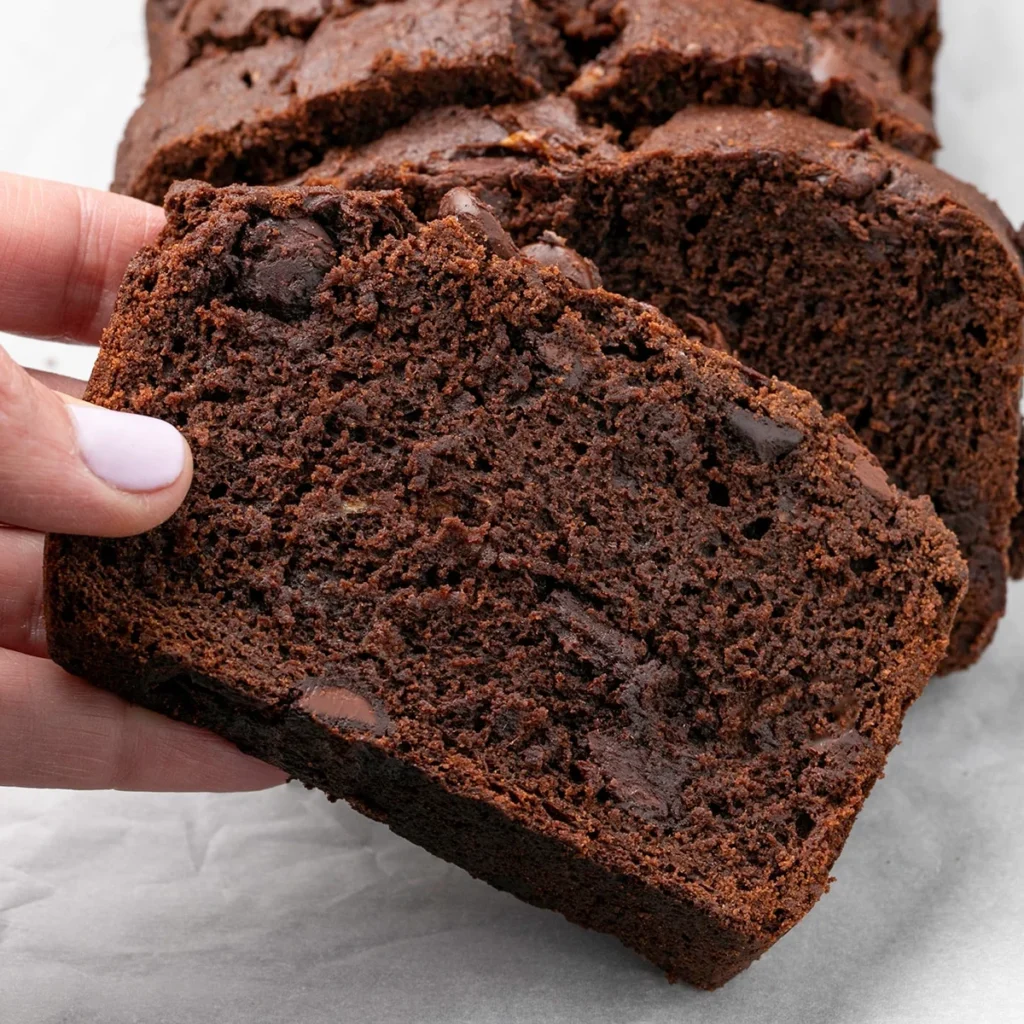
For those navigating the complexities of a gluten-free lifestyle, the search for the perfect baked good often feels like an exercise in compromise. Too often, gluten-free loaves are characterized by a gritty texture, a tendency to crumble, or a flavor profile that lacks the depth of their wheat-based counterparts. However, a new standard has emerged in the world of gluten-free baking: the decadent, deeply rich, and structurally sound Chocolate Banana Bread.
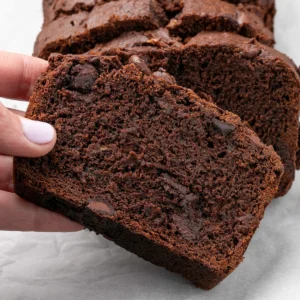
This recipe transcends the standard "banana bread with chips" approach, utilizing a sophisticated combination of cocoa powder and melted chocolate to create a moist, fudgy, and intensely flavored loaf that rivals any traditional bakery offering.
Main Facts: The Anatomy of a Better Loaf
At its core, this recipe is a masterclass in moisture management and structural integrity. Unlike standard quick breads, which rely on the elastic properties of gluten to trap air and provide support, this gluten-free variation compensates through a scientific approach to ingredient ratios.
The Power of Dual-Chocolate Integration
The recipe distinguishes itself by using both cocoa powder and melted chocolate. The cocoa powder provides the foundational chocolate flavor, while the melted chocolate—specifically a baking bar with a high cocoa butter content (around 65%)—imparts a velvety, dense texture that is essential for a satisfying mouthfeel.
The Role of Moisture and Emulsification
The inclusion of mashed bananas is not merely for flavor. When properly beaten into the wet ingredients, the bananas release vital moisture. This is supplemented by the addition of sour cream, which provides acidity and fat, ensuring the crumb remains tender for days. The emulsification process—carefully melting the chocolate and butter before introducing them to the eggs and sugar—creates a stable base that holds the heavy, chocolate-rich batter together.
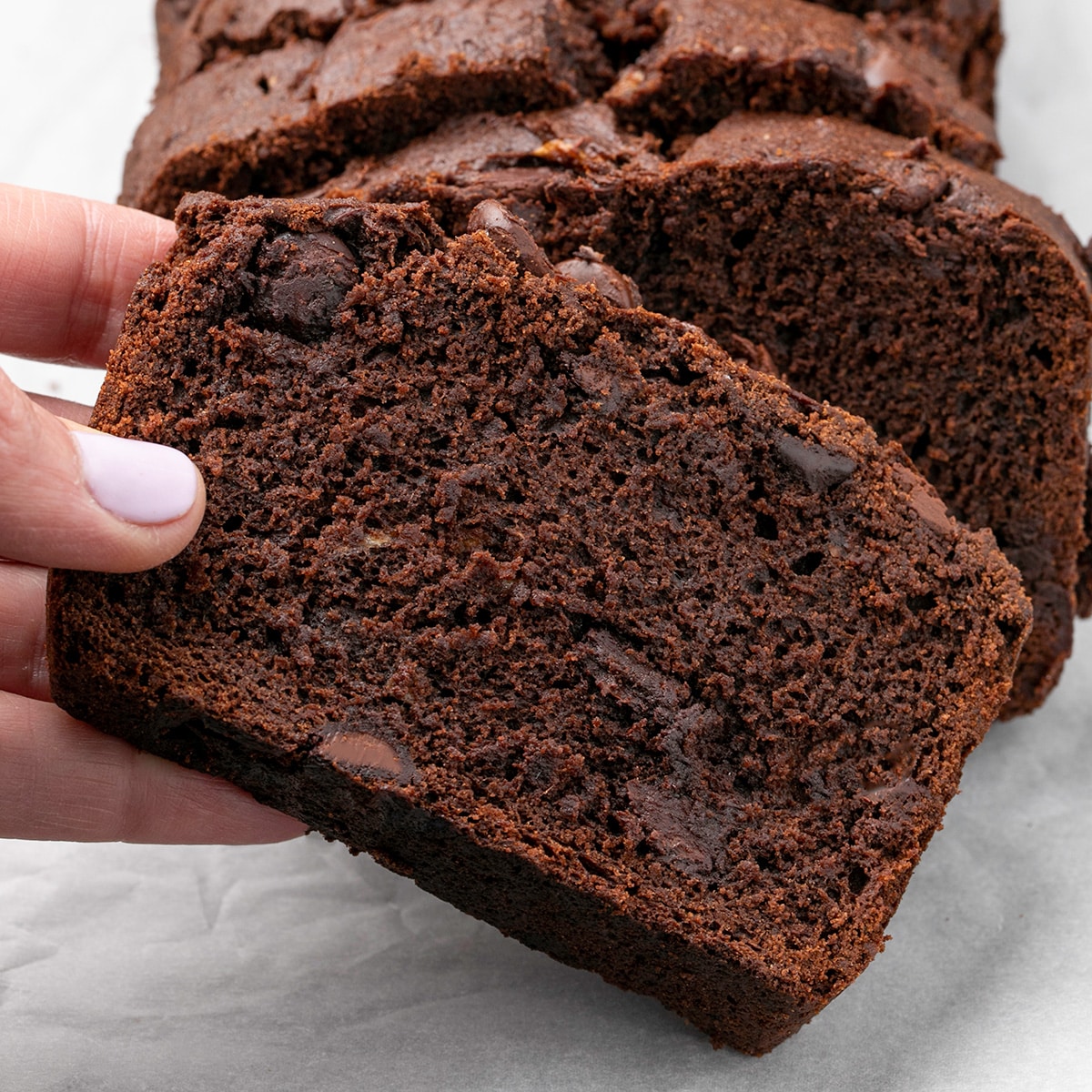
Chronology: The Step-by-Step Evolution of the Bake
To achieve professional results, home bakers must treat the preparation process as a precise sequence of chemical events.
Phase 1: Preparation and Emulsification
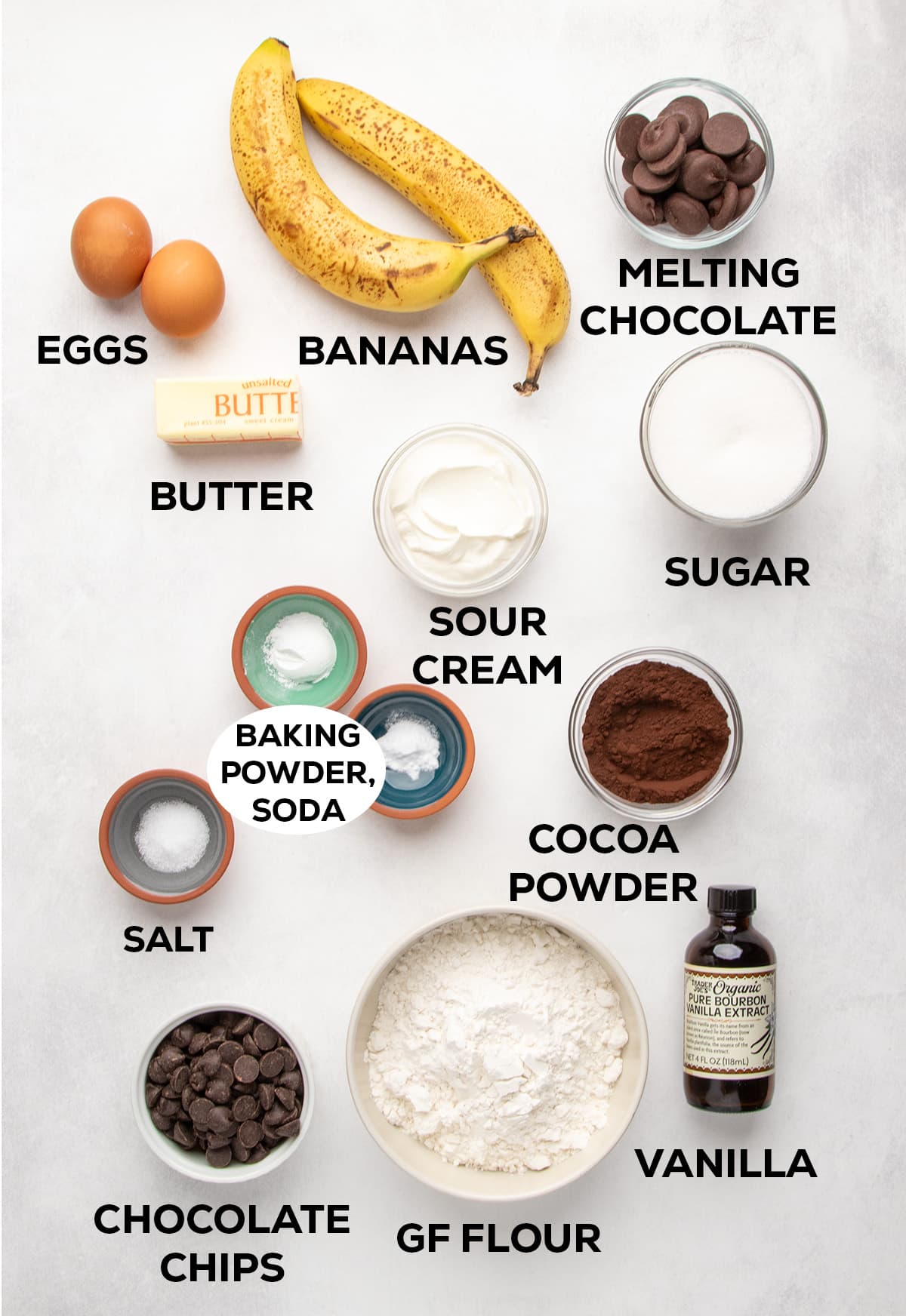
The process begins with the gentle melting of dark, high-quality chocolate and butter. Using 30-second intervals in the microwave prevents the chocolate from seizing, ensuring a smooth, glossy emulsion. Simultaneously, the dry ingredients—cocoa powder, gluten-free flour (with xanthan gum), baking powder, soda, and salt—are whisked thoroughly. This step is critical; cocoa powder is notorious for clumping, and pre-mixing ensures it distributes evenly throughout the flour.
Phase 2: The Wet Base
In a high-capacity mixer, the mashed bananas, sugar, vanilla, and sour cream are combined with the cooled chocolate-butter mixture. The beating process here is more vigorous than in standard muffin recipes. By beating the bananas into the wet ingredients, the baker encourages the fruit to fully break down, maximizing moisture release to soften the subsequent thick batter.
Phase 3: The Integration
The dry ingredients are folded into the wet, followed by the addition of texture-enhancing mix-ins: chocolate chips and small, intentionally kept chunks of banana. The folding must be gentle to preserve the integrity of the banana pieces.
Phase 4: Scoring and The Thermal Environment
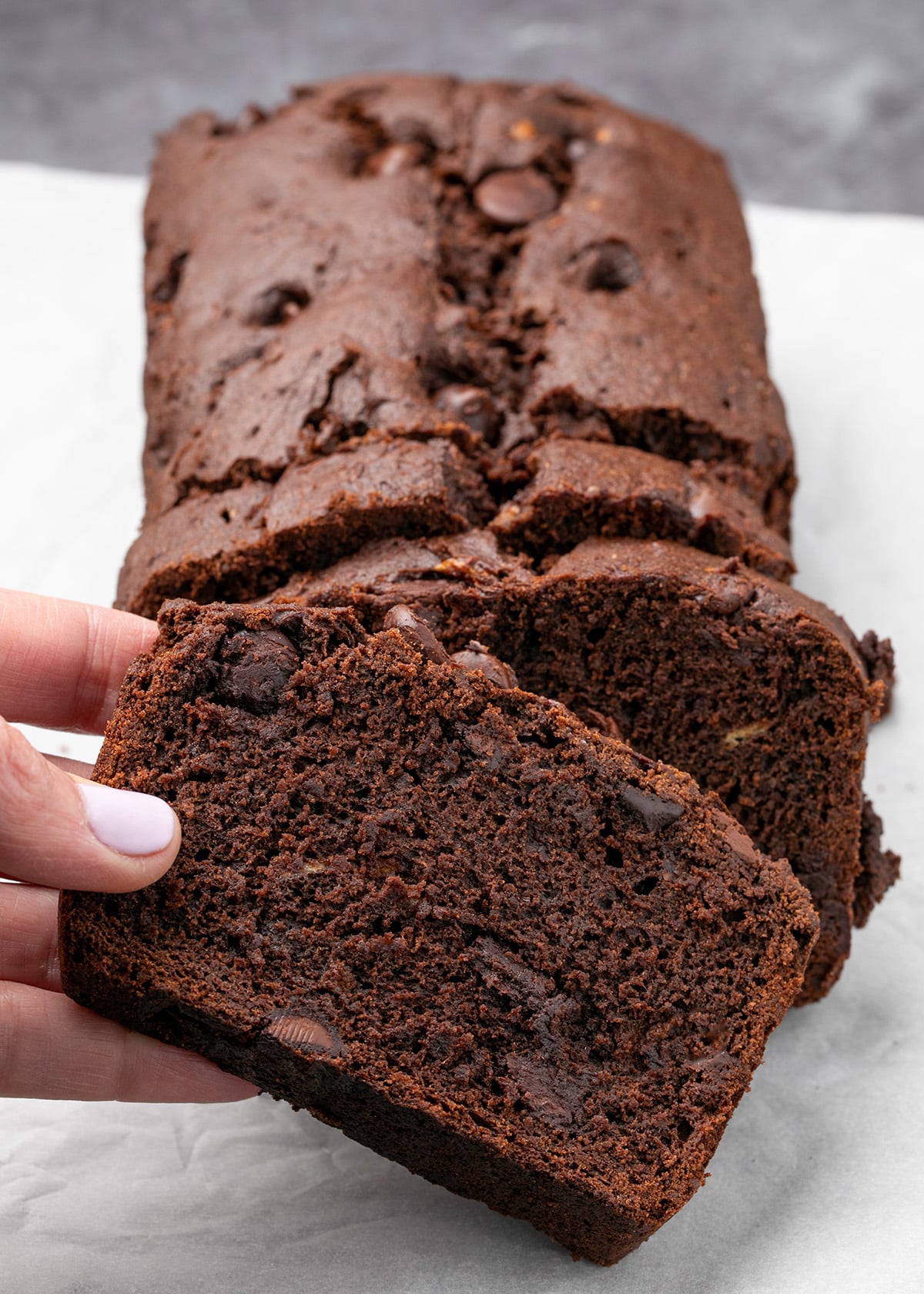
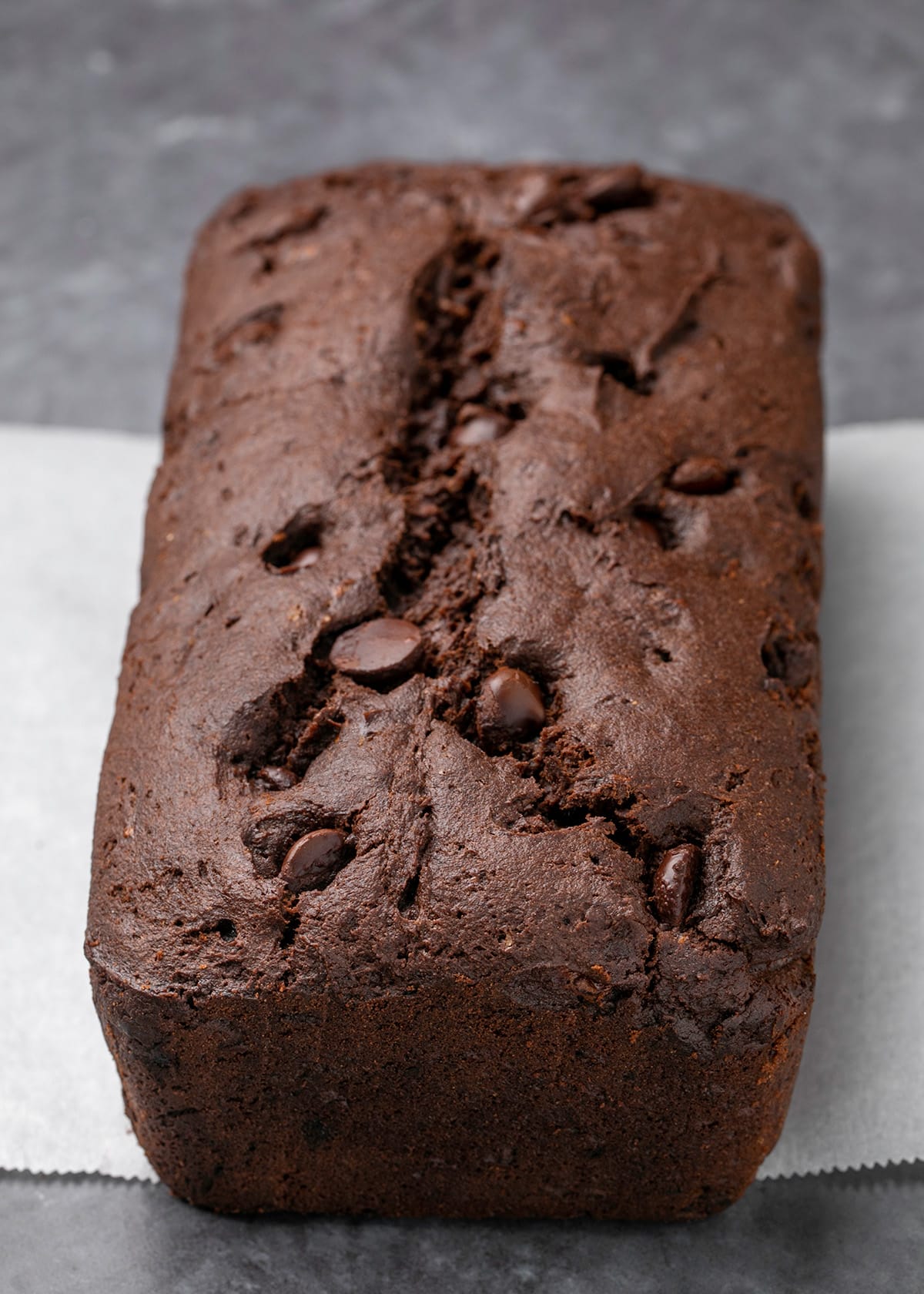
The batter is transferred to a light-colored, nonstick loaf pan. A critical technique here is the "score"—a shallow, 1/4-inch deep incision made lengthwise down the center of the loaf. This acts as a pressure relief valve, allowing the bread to rise and release steam in a controlled, aesthetic fashion rather than cracking haphazardly.
Phase 5: The Bake and Cool-Down
Baking at 350°F (175°C) for approximately 55 minutes is standard, though rotation is required at the 30-minute mark to ensure even heat distribution. Because the loaf is dark, visual cues are unreliable; the "toothpick test" remains the gold standard for determining internal doneness. Crucially, the loaf must cool for 10 minutes in the pan before being transferred to a wire rack for a full 45-minute cooling period. Cutting into the bread while it is still hot will compromise the starches, resulting in a gummy or collapsed interior.
Supporting Data: Ingredient Roles and Substitutions
Success in gluten-free baking is heavily dependent on understanding how specific ingredients function as the "glue" of the recipe.
The Flour Matrix
Not all gluten-free flours are created equal. The recipe emphasizes the necessity of a balanced blend.
- Better Batter (Original): Excellent for structure without additional additives.
- Bob’s Red Mill 1-to-1: Requires an extra 1/2 teaspoon of xanthan gum to prevent the crumb from becoming brittle.
- Home-blends: Using high-quality starches and protein-rich flours is essential for replicating the "bite" of wheat.
The Egg Variable
While the recipe can be executed with a single egg, the use of two eggs is recommended for professional-level results. The extra egg provides protein structure, which helps the loaf rise higher and maintain its shape during the cooling process, preventing the "sinking" phenomenon common in dense, chocolate-heavy bakes.
Official Responses: Addressing Common Culinary Challenges
Why do loaves sink? Why can’t I use milk instead of sour cream? These are the questions that define the home baker’s journey.
The "Sinking" Phenomenon
If a loaf rises beautifully in the oven but collapses as it cools, the culprit is almost certainly an oven that is running too hot. A high-temperature exterior sets the crust before the internal structure has had time to stabilize. The internal steam then escapes, causing the center to cave in. The professional response is the use of an oven thermometer to ensure a true 350°F.
The Sour Cream Necessity
Sour cream is not an arbitrary choice; it provides the specific acidity required to react with the baking soda and the fat content needed for a "melt-in-the-mouth" texture. Milk lacks the viscosity and acidity to provide the same result. If sour cream is unavailable, Greek-style yogurt is the only viable alternative. Regular yogurt, which has a higher moisture content, should be strained through a fine-mesh sieve until it achieves the thickness of sour cream to maintain the recipe’s integrity.
Implications: The Future of Gluten-Free Indulgence
The rise of high-quality, gluten-free alternatives like this chocolate banana bread has profound implications for dietary inclusivity. For decades, the "gluten-free tax"—the idea that one must pay more for products that taste like cardboard—has been a barrier for those with celiac disease or gluten sensitivities.
By mastering the science of cocoa-based baking, home cooks are proving that dietary restrictions do not necessitate a sacrifice in quality. This recipe provides a roadmap for a product that is not just "good for gluten-free," but objectively delicious by any culinary standard.
Storage and Longevity
To ensure the bread retains its texture, it should be stored at room temperature for no more than 3 days. For long-term storage, the freezer is the optimal environment. Slices should be wrapped individually, allowing the baker to pull a single serving at a time. The recommended method for "refreshing" a slice involves a light misting of water followed by a short stint in a 300°F toaster oven, which revives the moisture of the crumb and gives the chocolate chips a freshly-melted appeal.
Final Thoughts
Whether you are a seasoned gluten-free baker or a newcomer to the craft, this recipe serves as a cornerstone for understanding how to manipulate ingredients to achieve professional, decadent results. It is a reminder that with the right technique, the right pan, and an appreciation for the chemistry of the kitchen, one can create a loaf that is truly worth celebrating.
As we continue to refine the science of gluten-free, we move closer to a culinary world where the label "gluten-free" is simply an descriptor of the ingredients, not a disclaimer for the flavor.