The Unsettling Truth: How the World Reacted to Processed Meat’s Cancer Link
Main Facts
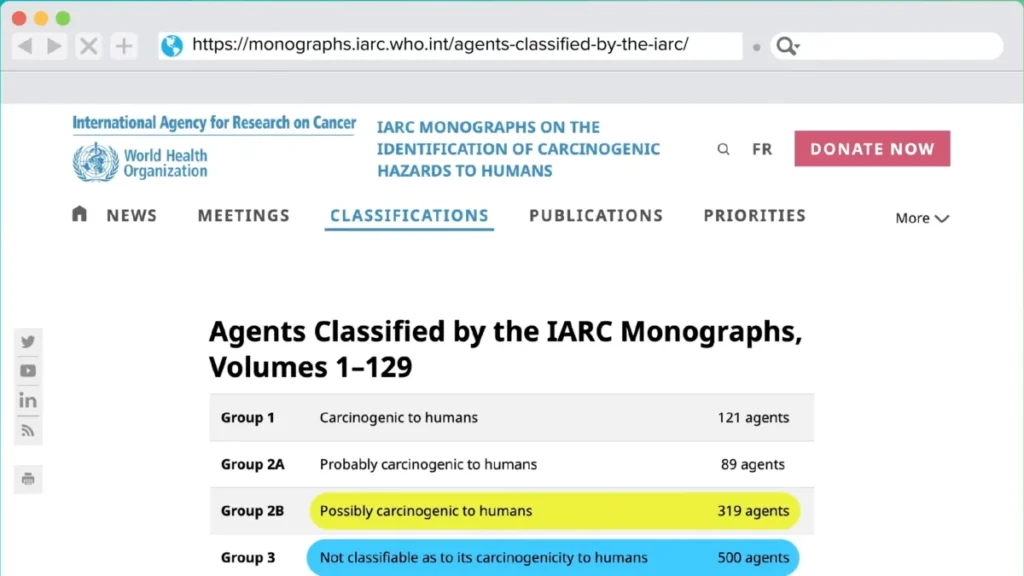
In a finding that sent ripples through global health organizations, government agencies, and the multi-billion-dollar meat industry, the International Agency for Research on Cancer (IARC), the specialized cancer agency of the World Health Organization (WHO), delivered a sobering verdict in 2015. After a meticulous review of scientific literature, IARC officially classified processed meat – including beloved staples like bacon, ham, hot dogs, and lunch meat – as "carcinogenic to humans" (Group 1). This placed processed meats in the same risk category as tobacco smoking and asbestos, signifying compelling evidence of a causal link to cancer. Red meat, encompassing beef, lamb, and pork, was simultaneously categorized as "probably carcinogenic to humans" (Group 2A), indicating strong but not yet definitive evidence of a link. The primary cancer implicated by processed meat consumption was colorectal cancer, the second deadliest cancer worldwide. The announcement ignited a firestorm of controversy, triggering predictable outrage from industry groups and prompting a complex response from public health bodies tasked with translating scientific findings into actionable advice.
Chronology: From a Grieving Letter to a Global Health Warning
The very existence of the IARC, and by extension, its crucial findings, stems from a deeply personal plea for humanity’s well-being. The agency’s origin story began in the early 1960s with a poignant letter from a grieving husband, whose wife had succumbed to cancer, detailing her suffering. This individual appeal escalated into a powerful open letter published in The New York Times in 1963, penned by a group of distinguished scientists and Nobel laureates. The letter called upon governments worldwide to allocate a mere half of one percent of their colossal military budgets to combat cancer – a fight for life against one of humanity’s greatest scourges.
This audacious proposal resonated deeply within the international community. Just eighteen months later, in 1965, the International Agency for Research on Cancer was formally established under the auspices of the World Health Organization. Its overarching motive, as enshrined in its founding principles, was unequivocal: cancer prevention. For decades, IARC has been the global sentinel, tirelessly identifying environmental and lifestyle factors that contribute to cancer development.
IARC is renowned for its Monograph series, comprehensive, book-sized reports that systematically evaluate whether a suspected carcinogen does, in fact, cause cancer. These monographs are widely regarded as the closest to a "final word" on carcinogenicity that the scientific community offers. The agency’s rigorous process involves bringing together international working groups of leading scientists to review all published studies on a particular agent. For its 114th monograph, published in 2018 (following the initial 2015 summary report), the focus was squarely on meat.
Supporting Data: The Weight of Evidence Behind the Classification
The IARC’s classification of processed meat was not a hasty decision but the culmination of an exhaustive scientific undertaking. A working group comprising 22 experts from 10 countries meticulously considered more than 800 different studies from around the world. These included epidemiological studies investigating associations between meat consumption and cancer in human populations, as well as mechanistic studies exploring the biological pathways through which meat might cause cancer. After thoroughly reviewing this vast body of scientific literature, the experts compiled their findings into a 500-page report.
The report’s conclusions were stark. Processed meat was assigned to Group 1, "carcinogenic to humans." This classification is reserved for agents for which there is "sufficient evidence" of carcinogenicity in humans. Other well-known Group 1 carcinogens include tobacco smoke, asbestos, plutonium, and ultraviolet radiation. The scientific consensus behind this classification for processed meat was based on strong epidemiological evidence linking its consumption to colorectal cancer.
Red meat, defined as unprocessed mammalian muscle meat (e.g., beef, veal, pork, lamb, mutton, horse, goat), was classified as Group 2A, "probably carcinogenic to humans." This category is used when there is "strong evidence" that an agent causes cancer in humans, but confounding factors cannot be completely ruled out, or when there is strong evidence of carcinogenicity in experimental animals but human data are limited.
The Mechanism of Harm: Why Processed Meat Causes Cancer
The IARC monograph highlighted several plausible mechanisms by which processed meat contributes to cancer. These include:
- N-nitroso compounds (NOCs): These are formed in processed meats, particularly during curing with nitrites and nitrates, and can be endogenously produced in the gut after consumption. NOCs are potent genotoxic carcinogens, capable of damaging DNA.
- Heme iron: Found abundantly in red and processed meats, heme iron can promote the formation of NOCs and induce oxidative stress, which can lead to DNA damage and cellular proliferation in the colon.
- Heterocyclic aromatic amines (HAAs) and polycyclic aromatic hydrocarbons (PAHs): These carcinogenic compounds are formed when meat is cooked at high temperatures, especially by grilling or frying. While HAAs and PAHs are also found in red meat, their presence and impact contribute to the overall carcinogenic profile of meat consumption.
The specific type of cancer most strongly linked to processed meat consumption is colorectal cancer, affecting the colon or rectum. This cancer is a significant global health burden, ranking as the second most deadly cancer worldwide, only surpassed by lung cancer, which is primarily caused by smoking. In the United States, colorectal cancer is also the second leading cause of cancer death, affecting not only older populations but increasingly becoming a leading cause of cancer and cancer-related mortality among younger individuals. This trend underscores the urgency of understanding and mitigating dietary risk factors.
The IARC clarified that "processed meat" refers to meat that has been transformed through salting, curing, fermentation, smoking, or other processes to enhance flavor or improve preservation. This definition encompasses a wide array of popular products, including bacon, ham, hot dogs, sausages, corned beef, canned meat, and even some turkey deli slices that undergo these processing methods.
Official Responses: Industry Outrage and Public Health Guidance
The IARC’s announcement was met with an immediate and vociferous backlash from the global meat industry. Industry bodies swiftly condemned the findings, framing them as an "alarmist overreach" and a "dramatic" misrepresentation of the science. The North American Meat Institute, for instance, issued a statement challenging the classification. More aggressively, an agricultural group in Italy reportedly issued a press release proclaiming, "Just say no to terrorism on meat," equating scientific findings with an act of aggression.
The industry’s response quickly escalated beyond public statements. In Canada, the meat industry openly pressured the government to cut off funding to the IARC, specifically appealing to the Health Minister to defund the agency for daring to question meat. A similar campaign was waged by the U.S. meat industry, demonstrating a coordinated effort to undermine the IARC’s financial and scientific independence.
This aggressive posture is not unprecedented. The IARC has found itself "under siege by corporate interests" on multiple occasions, particularly when its evaluations threaten powerful industries. This was evident in the challenges mounted against its classification of Monsanto’s Roundup pesticide (glyphosate) as a probable carcinogen. Internal documents later revealed Monsanto scientists "casually discussing ‘ghost-writing’ scientific papers and suppressing science that conflicts with corporate assertions of Roundup’s safety," highlighting a pattern of corporate interference in scientific integrity. The chemical industry, too, joined this "corporate cacophony," dismissing IARC monographs as "dubious and misleading."
These tactics – attempting to discredit scientific bodies, undermine financial backing, and spread doubt about scientific consensus – are eerily reminiscent of strategies employed by the tobacco industry for decades. As experts have observed, there is "little to suggest that, as a corporate actor, ‘Big Tobacco’ differs fundamentally from, e.g., ‘Big Booze’ or ‘Big Food,’" implying a shared playbook for managing public health threats to their profits.
One recurring corporate talking point, frequently disseminated to media outlets and policymakers, is that "IARC never met a carcinogen it didn’t like." However, a review of IARC’s classifications reveals this to be a misleading claim. The vast majority of agents evaluated by IARC are categorized as "possibly carcinogenic to humans" (Group 2B) or, more often, as having "insufficient evidence" for carcinogenicity. IARC only investigates substances for which there is already "an existing body of scientific literature indicating a degree of carcinogenic hazard to humans." Therefore, it is logical that a significant number of the agents it reviews would, indeed, be found to possess carcinogenic properties, justifying the agency’s focused research.
The IARC’s Measured Response and Varied Public Health Guidance
Amidst the storm of criticism, the IARC and the World Health Organization maintained a consistent, albeit nuanced, stance. In response to "questions, concerns, and clarification requests," the WHO essentially reiterated its position: the IARC’s role is to evaluate scientific evidence, not to issue dietary mandates. Their message was akin to: "Hey, we never told anyone to stop eating processed meat—your body, your choice. The report merely indicated that consuming less of these products can reduce the risk of a leading cancer killer. So, you like cancer? You do you." This stance underscores the IARC’s function as a scientific assessment body, distinct from organizations that issue public health recommendations.
The translation of IARC’s findings into clear public health advice proved more complex for other cancer organizations. The American Cancer Society, for instance, has been unequivocally clear about alcohol and cancer risk, stating that "it is best not to drink alcohol" when it comes to cancer prevention. However, with processed meat, their guidance appeared somewhat "wishy-washy," suggesting that people could "limit" their intake rather than explicitly recommending avoidance. This softer approach may reflect the cultural embeddedness of meat in many diets, the economic power of the industry, or perhaps a different interpretation of the risk-benefit analysis.
In contrast, the European Commission offered a more direct recommendation. To reduce cancer risk, their guidelines emphasize consuming abundant whole grains, pulses (beans, split peas, chickpeas, lentils), fruits, and vegetables. Crucially, they advised limiting sugary, fatty, and salty foods, and explicitly stated to "straight-up avoid soda, sausage, and other processed meats." This clearer directive aligns more closely with the IARC’s finding that there is no known "safe level" of processed meat consumption, a point IARC itself made when asked directly about how much processed meat is safe to eat.
Implications: Navigating Dietary Choices and Public Health Policy
The IARC’s classification of processed meat as a Group 1 carcinogen carries profound implications for public health, individual dietary choices, and food policy worldwide. For individuals, the scientific consensus provides critical information to make informed decisions about their diet. While the risk increase for an individual consuming processed meat might be small on an absolute scale, the sheer number of people consuming these products means that the population-level burden of cancer attributable to processed meat is substantial.
The "no safe level" conclusion from IARC presents a particular challenge. Unlike some carcinogens where a threshold can be identified, the current scientific evidence suggests that even small amounts of processed meat could contribute to cancer risk. This reinforces the European Commission’s more assertive guidance to "avoid" such products rather than merely "limit" them.
Beyond cancer, it is important to remember that processed meat consumption has been linked to other adverse health outcomes. Research, for instance, has explored "The Effects of Processed Meat on Lung Function," indicating that its impact extends beyond oncological risks. High consumption of processed meats is also associated with an increased risk of cardiovascular disease, type 2 diabetes, and overall mortality, underscoring a broader pattern of negative health impacts from these foods.
For governments and public health agencies, the IARC report serves as a strong impetus to revisit and update national dietary guidelines. It prompts consideration of public awareness campaigns, potential labeling requirements, and even policy interventions aimed at reducing population-wide consumption of processed meats. However, such measures often face significant resistance from powerful industry lobbies, as demonstrated by the immediate backlash against IARC. The battle between scientific evidence and corporate interests remains a central tension in public health policy.
Ultimately, the IARC’s findings on processed meat underscore the critical importance of a diet rich in whole, unprocessed foods. While individual choices play a vital role, systemic changes in food production, marketing, and public education are essential to effectively address the global burden of diet-related cancers and other chronic diseases. The enduring legacy of the IARC’s work is its unwavering commitment to providing the foundational scientific knowledge necessary for a world free from preventable cancers, even when that knowledge challenges deeply ingrained dietary habits and powerful economic interests.