Unraveling the Enigma of Hair Loss: Beyond Genetics and Myths
Hair loss, a universal concern, impacts an estimated half of the adult population by the age of 50, affecting both men and women. Far from being a mere cosmetic issue, the experience can carry significant psychological weight, influencing self-esteem and body image. Despite its widespread prevalence, many misconceptions persist regarding its causes and potential remedies. This in-depth analysis delves into the complex interplay of genetic predispositions, environmental factors, and the often-misunderstood role of nutritional supplements like biotin and zinc, offering an evidence-based perspective on a common human experience.
The Ubiquitous Challenge: A Shared Human Experience
The journey of hair loss is a deeply personal one, yet it is shared by millions worldwide. By mid-life, the statistics paint a clear picture: approximately 50% of individuals will observe noticeable thinning or shedding. This phenomenon, often referred to as alopecia, encompasses various forms, with androgenic alopecia (pattern baldness) being the most common. The emotional impact can range from mild concern to significant distress, prompting many to seek solutions, both conventional and unconventional. Understanding the underlying mechanisms is the first step toward informed decision-making.
Genetic Blueprint: The Dominant Factor
Contrary to popular belief, the frequency of hair washing or the vigor of brushing are not culprits in age-related hair loss. These are enduring myths that have been thoroughly debunked by scientific inquiry. Instead, research consistently points to a powerful, inherent driver: genetics. Studies have unequivocally demonstrated that the majority of hair loss with age is genetically determined for both men and women.
One of the most compelling pieces of evidence comes from twin studies, a powerful research tool that allows scientists to disentangle genetic and environmental influences. Researchers studying identical twins, who share nearly identical genetic material, have found the heritability of baldness in men to be a striking 79%. This means that approximately 80% of the variations in hair loss observed among men can be attributed to their genetic inheritance. While this figure underscores the formidable role of genetics, it also, critically, leaves a significant "wiggle room" – an opening for other factors to exert their influence. The remaining 20% highlights the potential impact of non-genetic elements, prompting further investigation into how lifestyle and environmental exposures can modulate a person’s genetic destiny regarding their hair.
Dispelling Persistent Myths: What Doesn’t Cause Hair Loss
Before exploring the genuine contributors to hair loss, it’s essential to put to rest some of the most stubborn myths. The idea that excessive shampooing or vigorous brushing leads to hair loss is a common misconception. While harsh treatment can certainly cause breakage or damage to individual strands, it does not impact the hair follicle’s ability to produce new hair. Similarly, notions linking hair loss to wearing hats, certain hairstyles, or specific types of water lack scientific backing. These myths often distract individuals from seeking accurate information and addressing the true underlying causes, which are far more complex and rooted in biology and environment.
The Environmental Tapestry: Lifestyle and External Influences
While genes undeniably play a dominant role, they are not the sole arbiters of hair destiny. Even with a strong genetic predisposition, environmental and lifestyle factors can significantly alter the trajectory of hair loss, either accelerating or mitigating its progression. This nuanced interaction between nature and nurture offers avenues for intervention and prevention, moving beyond the fatalistic acceptance of a genetic fate.
The Stress-Smoking-Sickness Nexus: Lessons from Identical Twins
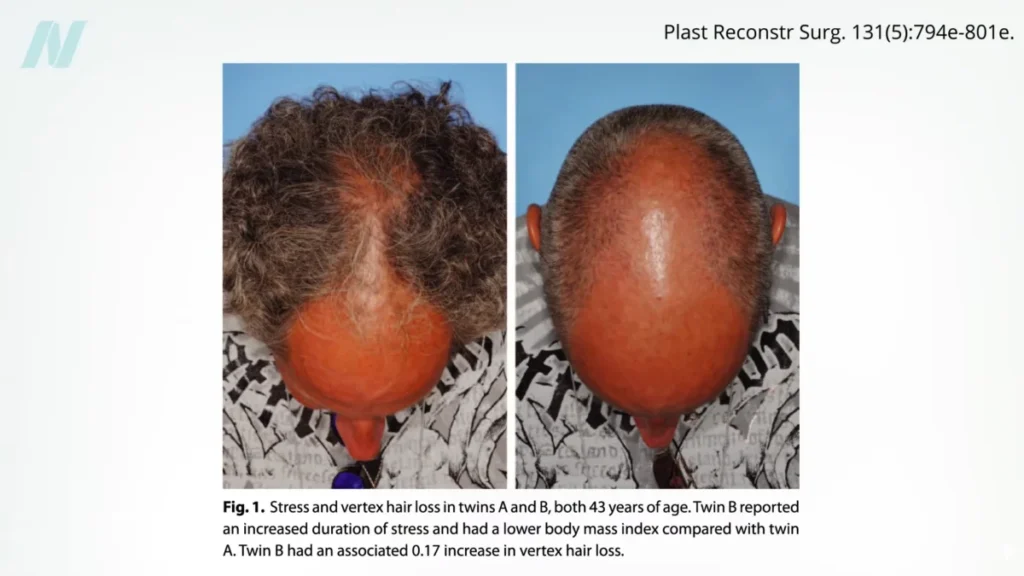
The power of environment to modify genetic expression is vividly illustrated through further twin studies. In remarkable cases, even identical twin sisters, sharing the same DNA, can exhibit differing degrees of hair loss. Researchers have linked these discrepancies to factors such as increased stress levels, higher rates of smoking, having more children, or a personal history of high blood pressure or cancer. These findings highlight that while genetics loads the gun, lifestyle and environment often pull the trigger.
Consider the compelling visual evidence from studies involving identical twin brothers. In one such pair, documented in accompanying visuals and detailed in the video "Supplements for Hair Growth," both brothers possessed identical genetic makeups. Yet, the twin on the right displayed more pronounced hair loss, a difference he attributed to experiencing higher levels of stress in his life. Stress, particularly chronic stress, can disrupt the hair growth cycle, pushing more follicles into the resting phase (telogen effluvium) and leading to increased shedding.
Another striking example involves a pair of identical twins where the twin on the right was a smoker and consumed more alcohol. The visual difference in hair density between the two was evident, underscoring the detrimental effects of these lifestyle choices. Smoking, in particular, has been extensively linked to both male and female pattern baldness. The genotoxic compounds present in cigarettes can directly damage the DNA within hair follicles, impeding their normal function and growth. Furthermore, smoking can induce microvascular poisoning at the base of the follicle, compromising blood supply and nutrient delivery essential for healthy hair production. The cumulative effect is often a premature acceleration of hair loss, even in individuals with a genetic predisposition.
The Silent Threat: Mercury Toxicity and Dietary Connections
Beyond stress and smoking, other insidious environmental agents can contribute to hair loss. Mercury, a heavy metal, stands out as a significant toxic agent associated with hair loss. Its particular danger lies in its ability to concentrate approximately 250-fold in growing scalp hair, making hair a sensitive indicator of exposure. Historically, the perils of mercury were starkly evident; some historians speculate that William Shakespeare’s own hair loss might have stemmed from mercury poisoning, a side effect of syphilis treatments prevalent in his era. Thankfully, the medical community has long abandoned mercury-based therapies.
In contemporary society, the primary route of mercury exposure is no longer medicinal but dietary, predominantly through the consumption of certain types of seafood. The U.S. Centers for Disease Control and Prevention (CDC) acknowledges seafood as a major pathway for mercury to enter the human body. This modern reality poses a unique challenge, especially for individuals who regularly consume fish high in mercury.

The connection between dietary mercury and hair loss is not merely theoretical; clinical cases provide compelling evidence. For instance, a 43-year-old woman presenting with hair loss and symptoms of early menopause was found to have significantly elevated mercury levels during her evaluation. Her diet, rich in tuna – a fish known for its higher mercury content – was quickly identified as the likely source. The good news, however, was that her condition was reversible. Upon cessation of tuna consumption, her mercury levels steadily declined. Within a mere two months of adopting a fish-free diet, her hair began to regrow, and within seven months, it had fully recovered. This remarkable turnaround underscores the treatable nature of mercury-induced hair loss.
The Reversible Path: Addressing Mercury-Induced Hair Loss
The case of the 43-year-old woman offers a critical takeaway for healthcare providers and individuals alike. Given the potential for mercury toxicity to manifest as hair loss, medical professionals should consider screening for heavy metal levels when patients present with unexplained hair thinning or shedding. A simple blood test can reveal elevated mercury, prompting further investigation into dietary habits. Advising patients to reduce or eliminate high-mercury fish from their diet, followed by repeat blood tests, can not only offer significant symptom relief but also uncover crucial dietary patterns contributing to heavy metal-induced health issues. This proactive approach can lead to a complete reversal of hair loss in affected individuals, highlighting the profound impact of dietary choices on overall health and well-being.
Nutrient Deficiencies and Hair Health: A Targeted Approach
The notion that nutrient deficiencies can cause hair loss is well-established in specific contexts. However, the widespread belief that general vitamin and mineral supplementation will automatically cure hair loss in otherwise healthy individuals often overlooks the crucial distinction between deficiency and sufficiency.
Malabsorption Syndromes: When Deficiencies Are Evident
One clear example where nutrient deficiencies directly lead to hair loss is after bariatric surgery. These procedures intentionally rearrange the digestive anatomy to induce malabsorption, a mechanism designed to promote significant weight loss. Consequently, hair loss is frequently reported as a symptom of the resulting nutrient deficiencies in these patients. In such cases, targeted supplementation under medical supervision is not only beneficial but essential for restoring hair health and preventing other deficiency-related complications.
The Baseline Principle: Sufficiency Over Excess
For the general population, however, the landscape is different. While severe nutrient deficiencies can indeed trigger hair loss, there is limited evidence to suggest that routine vitamin and mineral supplementation offers benefits to individuals who are not actually deficient. The body operates on a principle of sufficiency: once an adequate baseline level of a nutrient is achieved, consuming more generally does not confer additional advantages for hair growth and, in some cases, can even be detrimental.
A historical example illustrating this point is scurvy, a severe vitamin C deficiency. For centuries, it has been known that scurvy can cause widespread physiological issues, including hair loss. However, once a person consumes enough vitamin C to prevent symptoms like bleeding gums and maintain overall health, there are no data to suggest that increasing vitamin C intake further will enhance hair growth. The key lies in addressing a genuine deficit, not in indiscriminately boosting intake.
Zinc and Biotin: Separating Fact from Supplement Fiction
Two nutrients frequently touted in the hair loss supplement market are zinc and biotin. While both are essential for numerous bodily functions, including hair health, their role in preventing or reversing hair loss in the absence of a true deficiency is largely misunderstood and often misrepresented.
Zinc deficiency, for example, can indeed lead to hair loss, particularly in specific populations such as individuals who abuse alcohol, as alcohol consumption can impair zinc absorption and utilization. In these cases, zinc supplementation, guided by medical assessment, can be effective. However, if blood zinc levels are within the normal range, taking additional zinc supplements will not promote hair growth. Moreover, excessive zinc intake can lead to negative side effects, including copper deficiency, impaired immune function, and digestive issues.
Biotin, also known as vitamin B7, is perhaps the most common ingredient found in top-selling hair loss products. It is true that severe biotin deficiency causes hair loss. However, severe biotin deficiency is exceedingly rare in healthy individuals consuming a balanced diet. One notable exception is deficiency caused by the regular consumption of raw egg whites, which contain avidin, a protein that binds to biotin and prevents its absorption. Aside from such rare deficiency syndromes, there is no evidence-based data to support the claim that biotin supplementation promotes hair growth in individuals with normal biotin levels. Despite this lack of scientific backing, the myth persists, fueled by aggressive marketing.
The Perils of "Might Help": Why Supplementation Can Be Dangerous
The common attitude of "can’t hurt, might help" is particularly dangerous when applied to dietary supplements, especially those marketed for hair health. This seemingly innocuous mindset overlooks critical issues related to regulatory oversight, potential medical interference, and the very real risk of toxicity.
Regulatory Blind Spots: The Wild West of the Supplement Industry
A fundamental problem in the supplement industry is the profound lack of robust regulatory oversight. In many countries, including the United States, dietary supplements are regulated more like food than like drugs. This means they do not undergo the rigorous pre-market testing and approval processes that pharmaceutical drugs must endure to prove their safety and efficacy. Manufacturers are largely responsible for ensuring their products are safe and accurately labeled, often without independent verification. This regulatory lacuna creates a "Wild West" environment, where product quality, ingredient purity, and stated dosages can vary dramatically, and deceptive marketing claims are rampant. Consumers are left vulnerable to products that may be ineffective, contaminated, or even harmful.
Biotin’s Deceptive Interference: A Medical Minefield
The widespread use of high-dose biotin supplements, often far exceeding the recommended daily intake (sometimes up to 650 times), poses a unique and significant medical risk. Excess biotin in the bloodstream is known to interfere with a wide array of laboratory tests, particularly immunoassays that rely on biotin-streptavidin technology. This interference can lead to falsely high or falsely low results, creating a medical minefield.
For instance, biotin can skew results for thyroid function tests, leading to misdiagnoses of hyperthyroidism or hypothyroidism. It can also affect other hormone tests, including those used in pregnancy detection. Most critically, biotin interference can impact tests used to diagnose acute myocardial infarction (heart attack). A falsely low troponin level, for example, could lead to a missed or delayed diagnosis of a heart attack, with potentially life-or-death consequences. Healthcare providers and patients must be acutely aware of this interaction, and individuals taking high-dose biotin should inform their doctors before any blood tests.
The Risk of Toxicity: When "More" Becomes Harmful
The belief that "more is better" when it comes to nutrients is a dangerous misconception. The supplement industry’s lack of stringent regulation has, unfortunately, led to instances of severe harm due to manufacturing errors and excessive dosing. One well-documented case involved an outbreak of selenium toxicity that affected hundreds of individuals. A manufacturing error resulted in a supplement containing 200 times the labeled dose of selenium, leading to a range of severe symptoms, including hair loss – ironically, the very problem many supplements claim to solve. Similarly, excessive intake of vitamin A, often through high-dose supplements, can also cause hair loss, among other serious health issues. These incidents underscore that even essential nutrients can become toxic in supra-physiological doses, and the unregulated nature of the supplement market makes such incidents a recurring concern.
Official Responses and Expert Recommendations
The growing awareness of the risks associated with certain supplements has prompted official bodies and medical professionals to issue warnings and provide clearer guidance.
FDA Warnings and Public Health Advisories
The U.S. Food and Drug Administration (FDA) has, for example, issued safety communications specifically warning the public and healthcare providers about biotin’s potential to interfere with lab tests. These advisories emphasize the critical need for patients to disclose all supplement use to their doctors and for laboratories to be aware of the potential for biotin interference when interpreting results. Such warnings highlight the serious public health implications stemming from the widespread, unregulated use of these products.
Physician’s Role: Targeted Screening and Evidence-Based Advice
Given the complexities, the role of a physician is paramount. Instead of relying on anecdotal evidence or marketing claims, medical professionals are encouraged to adopt an evidence-based approach. This includes:
- Targeted Screening: For patients presenting with hair loss, screening for specific nutrient deficiencies (like zinc or iron) should only be performed if clinical symptoms or risk factors suggest a genuine deficiency. Similarly, mercury toxicity screening should be considered in cases of unexplained hair loss, especially with a history of high seafood consumption.
- Discouraging Unnecessary Supplementation: Physicians should actively counsel patients against the indiscriminate use of biotin, zinc, and other hair growth supplements unless a confirmed deficiency exists. They should explain the lack of efficacy in non-deficient individuals and, crucially, highlight the potential risks, particularly with biotin and lab test interference.
- Focusing on Lifestyle Modifications: Emphasizing the impact of stress management, cessation of smoking, and a balanced, whole-foods-based diet (with careful consideration of mercury-containing fish) can provide tangible, safe, and effective strategies for promoting overall health, which in turn can support hair health.
Broader Implications and Future Directions
The conversation around hair loss extends beyond individual remedies; it touches upon broader themes of health literacy, consumer protection, and the evolving understanding of human biology.
Holistic Health: Beyond a Single Supplement Fix
The findings presented here strongly advocate for a holistic approach to health. Hair loss, while often viewed in isolation, is frequently a symptom or reflection of deeper physiological processes or lifestyle choices. Rather than seeking a quick fix in a pill, individuals are better served by addressing overall well-being – managing stress, maintaining a nutrient-rich diet, avoiding harmful toxins like mercury and cigarette smoke, and consulting with healthcare professionals for personalized advice. This comprehensive perspective acknowledges the intricate connections within the human body and prioritizes sustainable health practices over isolated, unproven interventions.
The Evolving Landscape of Hair Loss Research
Scientific research into hair loss is continually advancing. While this article has focused on the limitations of certain supplements and the impact of environmental factors, the medical community is actively exploring other avenues. Future discussions will delve into the benefits and risks associated with pharmacological interventions for hair loss, such as minoxidil and finasteride, which are FDA-approved and have demonstrated efficacy in many individuals. Furthermore, the critical role of diet in promoting hair growth will be explored, identifying specific foods and dietary patterns that can genuinely support hair health. These ongoing investigations promise to provide even more nuanced insights and effective strategies for those experiencing hair loss.
Empowering Patients: Informed Choices for Hair Health
Ultimately, empowering patients means providing them with accurate, evidence-based information to make informed decisions about their health. The allure of a simple supplement promising miraculous hair growth is powerful, but understanding the science behind hair loss, the limitations of unregulated products, and the genuine risks involved is paramount. By dispelling myths, highlighting true causes, and advocating for a cautious, medically guided approach, individuals can navigate the complex world of hair health with greater confidence and achieve better, safer outcomes. The journey to healthier hair, like the journey to overall health, is best undertaken with knowledge, prudence, and professional guidance.