The "Vintage" League: Why the Next Big Trend in Sports Fandom Is Actually a Wine Club
By Stacy Buchanan
September 4, 2026
Every September, as the crisp air signals the arrival of autumn, millions of Americans engage in a peculiar, time-honored ritual: the fantasy football draft. It is a high-stakes, multi-month game of role-play where casual fans suddenly transform into pseudo-general managers. They dissect injury reports, obsess over waiver wire priorities, and navigate the treacherous landscape of Thursday night kickoffs. For many, it is a thrilling test of acumen; for others, it is an unintentional second job—one that comes with enough group-chat notifications to mimic the stress of a Fortune 500 board meeting.
But what if the grind of the traditional league could be replaced by the slow, refined pleasure of a wine cellar?
As the publisher of Blood Of Gods, a project dedicated to the unlikely, heavy-hitting intersection of wine and heavy metal, I have long operated on the belief that the most vibrant communities are forged at the crossroads of seemingly unrelated passions. Wine possesses a unique, almost alchemical ability to act as a social lubricant, but when paired with an external framework—be it sports, music, or high-stakes art—the result is an entirely new, elevated form of connection.
Last season, alongside my friend Jess Forster, a sommelier at Buffalo’s renowned Waxlight Bar & Vin, we set out to answer a simple question: Could we create an NFL pool that felt less like a homework assignment and more like the communal act of opening a special bottle with friends? The answer was a resounding, and surprisingly simple, "Yes."
The Philosophy of the Low-Maintenance Pool
The traditional fantasy model is built on constant engagement, which is precisely why it alienates as many people as it attracts. Between the harvest season for wine professionals and the general busyness of professional life, the weekly maintenance of a roster is often a barrier to entry rather than an invitation.
Our solution was to strip away the weekly management. We removed the roster trades, the benching of players, and the mid-week panic. Instead, we shifted to a "Set It and Forget It" model. Each participant contributes a single bottle of wine—the only buy-in—and submits one round of predictions before the season kicks off in September. That is the entirety of the labor. From the opening kickoff of Week One until the final whistle of the Super Bowl, the league manages itself.
The Mechanics of the "Wine-First" League
The setup is intentionally accessible, designed to encourage participation from people who might otherwise find the NFL impenetrable.
- The Buy-In: Every participant contributes one bottle of wine. The quality varies—some bring reliable "daily drinkers," while others reach into the back of their cellars for a rare gem. This builds a diverse, eclectic prize pool that becomes a spectacle in itself.
- The One-Time Forecast: Before the season begins, participants complete a simple digital form. They predict the AFC and NFC winners, the Super Bowl matchup, the ultimate champion, and their Wild Card picks. Once submitted, these picks are locked.
- The Scoring: To keep the game approachable, the scoring is kept elementary. Correct division winners earn one point; Wild Card teams earn one point; Super Bowl participants earn two points; and correctly guessing the Super Bowl Champion earns three points.
- The Distribution: We utilize a "winner takes most" structure. With thirty participants, our prize pool consisted of thirty bottles. First place received eighteen, second place took eight, and third place claimed the remaining four.
Chronology of the Season: From Kickoff to Decanting
The beauty of this format lies in its rhythm. Unlike standard leagues that create immediate, high-pressure deadlines, the "Wine-First" league is a slow burn.
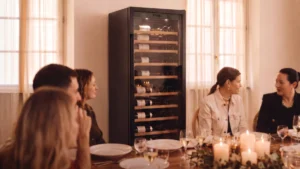
September (The Preseason): The league gathers for a kickoff event. This is where the "bottle share" aspect takes center stage. We lay out the thirty donated bottles, allowing participants to survey the collection. This creates an immediate, tangible goal: everyone is now playing to win a cellar’s worth of wine.
October (The Settling): By the time the leaves begin to turn, the league has naturally shifted from "active management" to "passive observation." Because there are no weekly rosters to adjust, participants check the standings with a sense of relaxed curiosity rather than anxiety.
November/December (The Mid-Season Pivot): This is where the league’s secondary layer—the "Best Team Name" competition—comes into play. By the time the cold sets in, the social aspect becomes the primary focus. Puns like Pfalz Start or The Brutal Bruts emerge as cultural touchstones. A community vote for these names adds a layer of interactivity that keeps the group engaged without requiring a single minute of football research.

January/February (The Playoff Finale): As the Super Bowl approaches, the excitement reaches its peak. Because the scoring is fixed, the "mathematical" tension of the playoffs becomes the primary narrative. Even those who wouldn’t normally follow the NFL find themselves locked into the division races, having "skin in the game" through their initial, well-thought-out predictions.
Supporting Data and Social Dynamics
The shift from standard fantasy football to a wine-based prediction league has provided fascinating insights into human connection. According to Jess Forster, the motivation behind this format is rooted in a fundamental human need.
"I think humans in general want and sometimes even ache for community," Forster notes. "When you can connect with other wine enthusiasts or professionals through the lens of sports or music or other topics, it’s so fun. You aren’t just comparing stats; you’re sharing a lived experience."
The data suggests that the "low-lift" barrier to entry is the most significant factor in broadening the demographic of the league. In our inaugural season, our participant list included everyone from veteran sommeliers to individuals who had never watched an entire professional football game in their lives. The result? A newcomer, choosing a team based on their new home city (the Seattle Seahawks), eventually walked away with a third-place finish and a trophy case of wine.
This democratization of the league is its greatest strength. By removing the need for deep technical knowledge, we allow the game to become a social platform rather than a test of intellectual superiority.
Implications: The Future of "Niche" Community Building
The implications of this model extend far beyond the world of football. We are currently witnessing a shift where traditional "hobbies" are becoming increasingly siloed. By introducing a crossover element—like wine, craft beer, or regional culinary experiences—into sports fandom, we are creating "hybrid communities."
The "Pairing" Effect
A significant part of the league’s charm is the forced association between the game and the glass. For example:
- Physicality Games: When two hard-hitting teams meet, like the Bills and the Ravens, we suggest pairing the game with a bold, tannic Cabernet Sauvignon.
- Atmospheric Games: Rainy, Pacific Northwest matchups naturally align with the earthy, terroir-driven qualities of an Oregon Pinot Noir.
- Championship Stakes: The Super Bowl, regardless of the teams involved, demands the celebratory energy of high-end Champagne.
These pairings do not need to be sommelier-approved; they function as conversation starters. They turn a passive viewing experience into an active, multisensory event.
Official Perspective: The "Wine-First" Verdict
As we look toward the future, the success of this model offers a blueprint for offices, wine clubs, and social circles looking to foster tradition. The "winner takes most" structure, while competitive, is secondary to the primary goal: providing a recurring reason to connect during the winter months.
We have found that the league requires no more than two hours of total commitment from a participant over the course of four months. In an era where "time poverty" is a genuine issue, this low-friction approach is a sustainable alternative to the burnout associated with traditional fantasy sports.
Whether your group ends up with a cellar of cult-status bottles or a collection of fun, experimental labels, the actual "win" is the consistency of the community. As we prepare for the next kickoff, the focus remains on the same thing it was at the beginning: a shared table, a shared bottle, and the slow, satisfying unfolding of a season shared among friends.
If you have been looking for a way to bridge the gap between your sports-loving friends and your wine-loving peers, the answer is not to change the game—it’s to change the way you play it. Collect your bottles, fill out your form, and let the season do the rest. You might just walk away with a new tradition that lasts longer than any single championship title.