Echoes of the Earth: The Arbëreshë Wine Caves of Barile
By Danielle Callegari
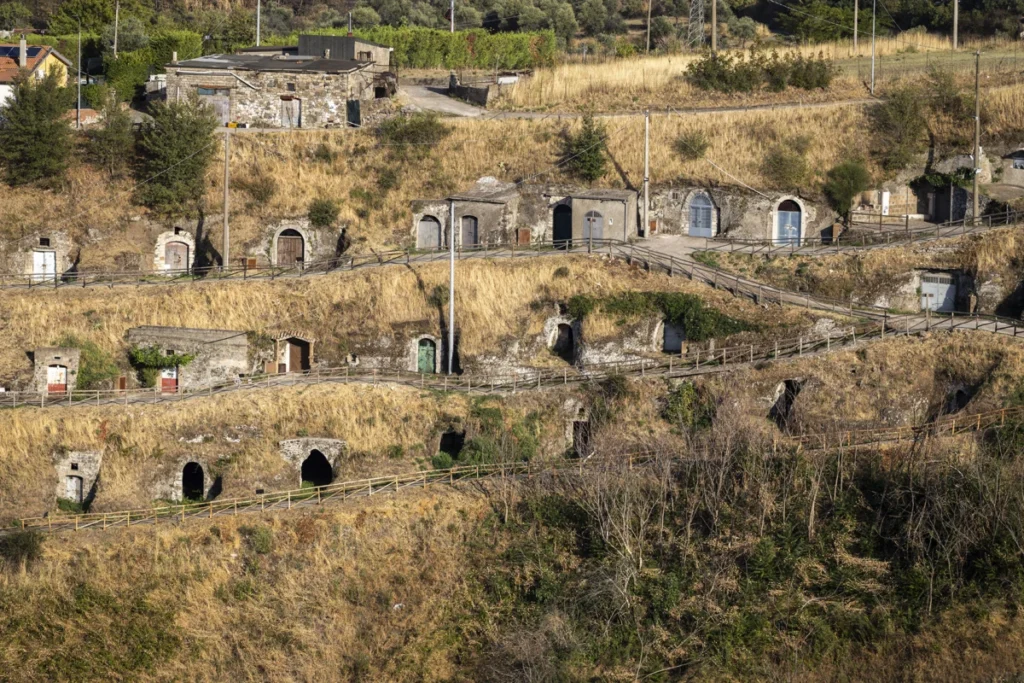
In the rugged heart of Basilicata, nestled in the arch of Italy’s "booted foot," lies the town of Barile. It is a place that feels suspended in time, where two hilltops of volcanic tuff hold the secrets of a displaced civilization. To the casual observer, Barile is a picturesque village, but to those who look deeper—into the earth itself—it is a monument to an extraordinary cultural fusion.
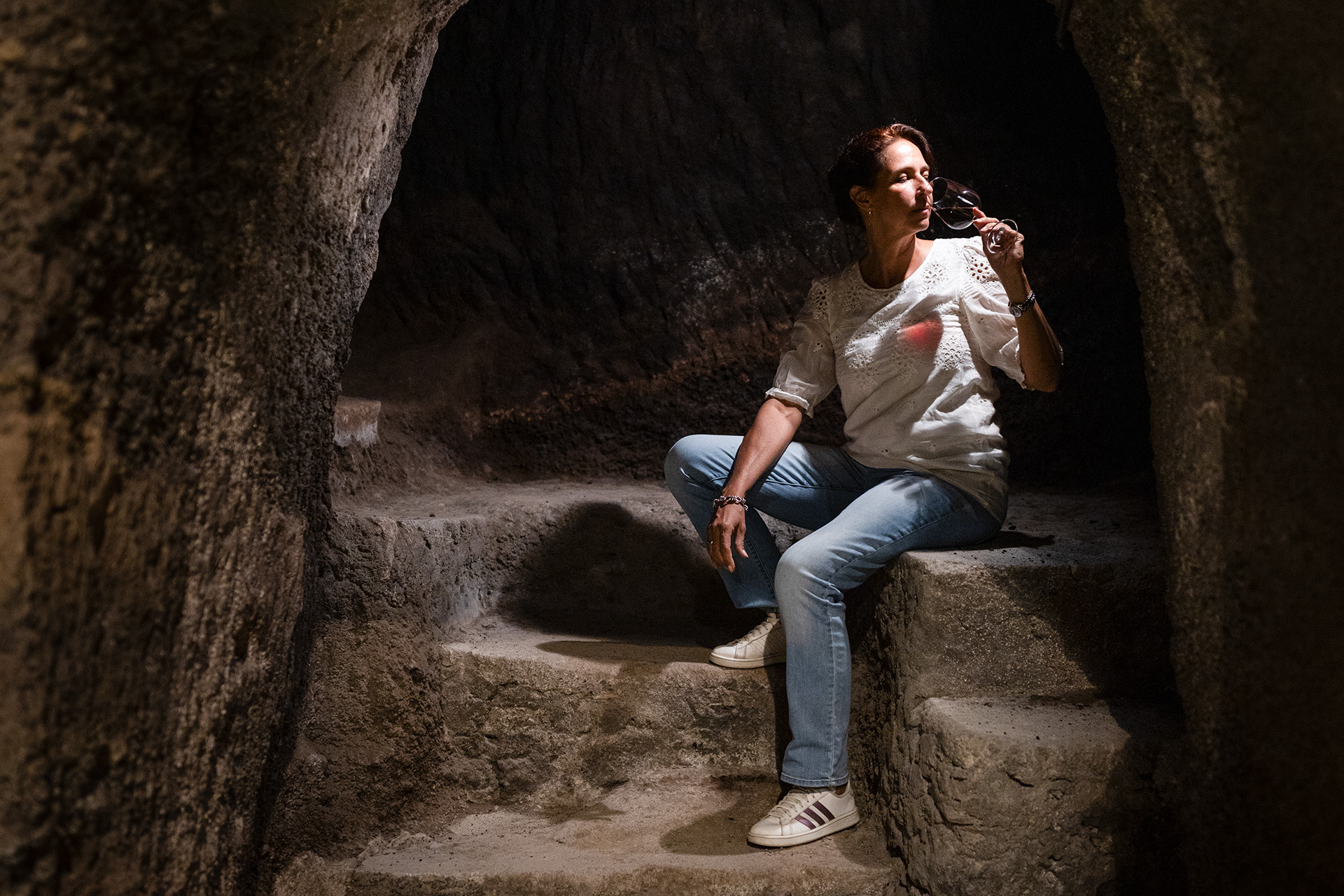
More than six decades ago, legendary Italian filmmaker Pier Paolo Pasolini arrived in Barile seeking a landscape that could convincingly depict the ancient, mystical world of the New Testament. He found it in the sheshë—the ancient wine caves carved into the volcanic rock by Albanian refugees in the 16th century. Today, these caves are at the center of a quiet renaissance, as a new generation of winemakers works to preserve not just the unique terroir of Aglianico del Vulture, but the living history of the Arbëreshë people.
The Origins of a Hidden Legacy: A Chronology of Survival
The story of Barile’s caves is inextricably linked to the geopolitical upheavals of the 16th century. As the Ottoman Empire expanded, thousands of Albanians fled their homeland to seek refuge on the Italian peninsula. These refugees, known as the Arbëreshë, settled across a swathe of Southern Italy, from Calabria through Basilicata and into Puglia.
They brought with them more than just their language and customs; they brought a distinct viticultural heritage. Finding themselves in a new, volcanic landscape, they applied their traditional engineering skills to the soft tuffaceous soil. They excavated vast networks of subterranean chambers—the sheshë—which served a dual purpose: they were highly efficient cellars for wine, cured meats, and cheese, and, in many cases, they served as the primary dwellings for the families themselves.
- 16th Century: Arbëreshë refugees establish communities in Barile, initiating the excavation of the volcanic tuff caves.
- 1964: Pier Paolo Pasolini selects Barile as a filming location for The Gospel According to St. Matthew, immortalizing the rugged, cave-dotted hillsides on celluloid.
- Late 20th Century: Economic shifts, the migration of youth to urban centers, and evolving sanitary regulations lead to the widespread abandonment of many sheshë.
- Present Day: A concerted effort by local vintners to integrate traditional cave aging with modern, sustainable viticulture breathes new life into the subterranean network.
The Architecture of Terroir: Why the Caves Matter
The fascination with the sheshë is not merely romantic; it is rooted in practical, scientific necessity. The volcanic tuff in Barile is unique—porous, easy to excavate, yet structurally sound enough to support cavernous ceilings.

"The caves maintain the perfect temperature and an ideal level of humidity all year, so there couldn’t have been a better place for storing wine, cured meats, and cheeses," explains Lorenzo Piccin, co-owner and winemaker at Grifalco.
For the production of Aglianico del Vulture—a notoriously structured, tannic, and slow-aging red grape—these conditions are near-perfect. The subterranean environment provides a steady, cool climate that allows the wine to breathe and mature without the aggressive evaporation often found in modern, climate-controlled steel warehouses. It is a natural "cru" environment, where the earth itself acts as the primary tool of the vintner.
Voices from the Grotto: Official Perspectives
The modern struggle to preserve these caves is spearheaded by a handful of passionate winemakers who view themselves as stewards of history. Viviana Malafarina, a winemaker whose operations are located entirely within these grottoes, sees the challenge of space and logistics not as a burden, but as a commitment to authenticity.

"There is a treasure of enormous value here, both in terms of what has been and what might be," says Malafarina. Her project, which yields four sophisticated expressions of Aglianico, utilizes grapes from organic, 80-year-old vines trained in the traditional capanno method. For Malafarina, the cave is a collaborator. The wine produced within its walls possesses a "sanguine, earthy" character—a reflection of the volcanic soil and the ancient atmosphere in which it ages.
Elena Fucci, whose eponymous winery has helped bring international acclaim to the region, echoes this sentiment. Fucci’s "Sceg" line (the Arbëreshë word for "pomegranate") is a direct homage to her heritage.
"The sheshë represent the historical memory of this place," Fucci notes. "It’s a point of reference that allows us to recount our story to new generations. The caves literally hold our history." Fucci currently utilizes one of the caves for the aging of her Riserva and Superiore wines, citing the 360 square meters of natural climatic control as an essential component of her quality standards.

Implications for the Future: Sustainability and Heritage
The survival of the Arbëreshë caves faces a two-fold threat: the logistical difficulty of modernizing cave-based production to meet global health standards, and the demographic decline of rural Basilicata. However, the movement to save the sheshë is gaining momentum through a strategy of "heritage-based premiumization."
By marketing the wine as a product of these unique, historic spaces, producers like Fucci and Malafarina are attracting oenotourism. The goal is to transform these sites into interactive, educational spaces—tasting rooms where the narrative of the Arbëreshë people can be told exactly where it originated.
Economic and Cultural Data Points
- Scale: Over 100 identifiable sheshë remain in Barile, representing a significant, albeit underutilized, architectural asset.
- Viticultural Impact: The use of traditional caves is allowing producers to lower their energy consumption significantly compared to wineries relying on electrical refrigeration.
- Tourism Potential: The cultural intersection of Pasolini’s film legacy and the Arbëreshë history provides a unique "cultural tourism" hook that differentiates Barile from more commercialized wine regions in Italy.
Conclusion: A Vinous Myth of the Cave
The "cave" in Barile serves as a metaphor for the region’s broader identity. Just as Plato’s Cave explored the difference between perceived reality and the truth, the sheshë of Barile force the consumer to look past the label of a bottle of Aglianico and confront the centuries of resilience, migration, and adaptation embedded in the liquid.

As these producers continue to restore and utilize the grottoes, they are proving that history is not merely a subject for textbooks or film archives. It is a living, breathing component of the terroir. When a visitor descends into the cool, dark depths of a Barile cave to sample an Aglianico, they are not just tasting wine—they are consuming the memory of the Arbëreshë, the vision of Pasolini, and the enduring strength of the volcanic earth.
As Elena Fucci succinctly puts it, "Why not tell the history of the place in the place that tells its history?" In Barile, the wine is finally speaking, and the world is starting to listen.