Navigating a Crisis of Capacity: Dr. Heidi Overton’s Senate Confirmation Amidst FDA Workforce Contraction
Main Facts: A Commissioner Under the Microscope
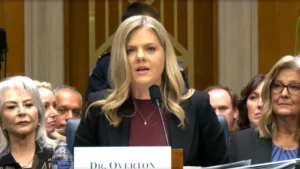
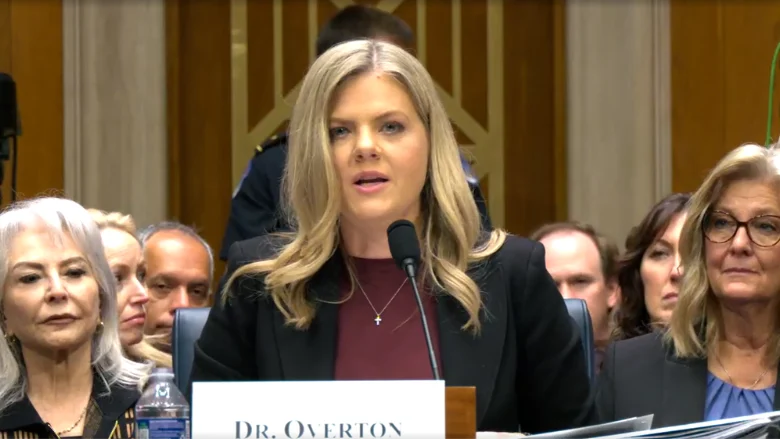
On September 24, the Senate Committee on Health, Education, Labor, and Pensions (HELP) convened to weigh the nomination of Dr. Heidi Overton, M.D., Ph.D., as the next Commissioner of the U.S. Food and Drug Administration (FDA). The hearing, which lasted several hours, served as a litmus test for the nominee’s ability to reconcile the ambitious, high-profile health goals of the current administration—specifically those of Health Secretary Robert F. Kennedy Jr.—with the reality of a federal agency currently navigating a historic period of attrition and budgetary turbulence.
Dr. Overton, a board-certified public health and general medicine practitioner, enters the nomination process as a familiar figure within the Trump administration. However, her lack of a formal background in food policy or regulatory safety science became a central point of contention during the questioning. As the agency faces increased pressure to modernize its oversight of food additives and bolster its response to an unprecedented surge in foodborne illness, Dr. Overton acknowledged a critical vulnerability: the Human Foods Program (HFP) lacks the necessary staffing and fiscal resources to meet its stated safety mandates.
Chronology: The Erosion of Regulatory Infrastructure
To understand the gravity of the questions posed to Dr. Overton, one must examine the timeline of the FDA’s recent structural decline.
- Early 2025: The FDA enters the new administration with a stable, albeit challenged, workforce. Within months, however, sweeping Reductions in Force (RIFs) are implemented across the agency.
- Late 2025: Former Commissioner Jim Jones, a vocal proponent of strengthening chemical oversight, expresses deep concern regarding the "indiscriminate" nature of layoffs within the HFP.
- Early 2026: Commissioner Jones resigns, citing that the staffing cuts have rendered the agency’s ability to conduct post-market chemical safety reviews effectively "fruitless."
- Summer 2026: The nation experiences a sharp, 16-fold increase in reported foodborne illness outbreaks compared to the previous year, highlighted by the record-breaking cyclosporiasis outbreak linked to Taylor Farms.
- August 2026: In accordance with Secretary Kennedy’s directive, the FDA proposes a mandatory notification rule for "Generally Recognized as Safe" (GRAS) ingredients, a move intended to close a longstanding regulatory loophole.
- September 24, 2026: Dr. Overton’s confirmation hearing reveals a chasm between the administration’s regulatory goals and the agency’s operational capacity.
Supporting Data: The Cost of Contraction
The numbers presented by members of the Senate HELP Committee during the hearing painted a stark picture of an agency in retreat. Senator Patty Murray (D-WA) noted that the HFP currently employs approximately 1,700 individuals—a 13 percent decrease since the start of 2025. This figure is compounded by the staggering revelation from Senator Tim Kaine (D-VA) that the FDA has lost a total of 4,500 staffers, or 20 percent of its total workforce, since the beginning of the current administration.
The data suggests that this drain on human capital is directly correlated with public health outcomes. The record-low number of federal food inspectors—the fewest since 2005—coincides with the massive spike in foodborne illness outbreaks reported throughout the summer. When questioned about these outbreaks, Dr. Overton struggled to identify the Coordinated Outbreak Risk and Evaluation (CORE) Network, the specific branch of the FDA tasked with emergency response. This gap in knowledge, coupled with the reliance on a shrinking workforce, suggests that the agency’s ability to pivot from a passive, post-market observer to an active, proactive regulator is severely compromised.
Official Responses and Strategic Vision
Throughout the hearing, Dr. Overton attempted to balance loyalty to the administration’s vision with the pragmatic requirements of a regulator. Her testimony regarding the GRAS pathway was perhaps the most revealing. Currently, the "self-GRAS" system allows companies to introduce additives to the food supply with minimal FDA oversight. The proposed rule would make notifications mandatory, but Dr. Overton admitted that without increased resources, the HFP would be unable to process these filings in a meaningful, safety-oriented way.
When pressed by Senator Jim Banks (R-IN) on whether the FDA has enough resources to conduct these safety evaluations, Dr. Overton was candid: "To my understanding, the agency would need more resources in its Human Foods Program to properly be able to process or review all of those mandatory notifications."
Her proposed solution rests largely on the expansion of foreign facility user fees. By shifting the financial burden of inspections to the industry—specifically those international entities importing goods into the U.S.—the nominee hopes to fill the budgetary void. Furthermore, she emphasized that the agency is currently engaged in a hiring surge intended to place the "best people in the best positions," though she provided no specific timeline for when these hires would offset the 4,500 positions lost to previous RIFs.
Implications: The Future of Federal vs. State Oversight
The hearing also highlighted a fundamental shift in the relationship between federal and state food safety authorities. Senator Lisa Murkowski (R-AK) expressed grave concern over the dwindling federal grants provided to states for food facility inspections. With states currently handling roughly 60 percent of nationwide inspections, the potential for further budget cuts to state-federal contracts threatens to destabilize the nation’s primary line of defense against contaminated food.
Moreover, the debate over "preemption" looms large. As individual states enact their own stringent bans on toxic food additives, the food industry has lobbied for a "strong national standard" to prevent a fragmented regulatory landscape. Dr. Overton signaled support for this concept, suggesting that uniformity—while potentially stripping states of their ability to set higher safety bars—might be the necessary trade-off for a cohesive federal oversight program.
The Path Forward
The nomination of Dr. Overton represents a pivot point for the FDA. If confirmed, she will inherit an agency that is effectively at a crossroads. The administration’s goal of "Making America Healthy Again" requires a robust, well-staffed, and technologically capable FDA. However, the legacy of the past 24 months—defined by RIFs, mass resignations, and a shrinking inspectorate—suggests that the agency’s "core mission" of food safety is currently a mission in jeopardy.
Dr. Overton’s reliance on user fees and the promise of future hiring are standard responses to bureaucratic under-funding, yet they may not suffice to address the 16-fold increase in outbreaks or the structural collapse of the HFP. As the Senate prepares to vote, the central question remains: Can a nominee without a background in food science navigate the political demands of a reform-minded administration while simultaneously rebuilding an agency that has been systematically dismantled?
The answer to that question will have profound implications for every consumer in the American food supply chain. For now, the agency remains in a state of suspended animation, waiting for leadership that can bridge the gap between aspirational safety mandates and the stark, under-resourced reality on the ground.