Beyond the Snapshot: Why Immersive Work-Abroad Programs are Redefining Modern Travel
For decades, the standard blueprint for travel has remained largely unchanged: book a flight, check into a hotel, snap a photo of a famous monument, eat at a recommended restaurant, and repeat. It is a model defined by extraction—taking memories and images from a destination without ever truly becoming part of its fabric. Even for the self-proclaimed "traveler" who eschews tourist traps in favor of hostels and public transit, the fundamental dynamic remains the same: we are passersby, observing a culture from the outside looking in.
However, a significant shift is occurring in the way people interact with the globe. As the novelty of the "digital nomad" lifestyle wanes for those who lack the high-level remote skills required to sustain it, a new paradigm is emerging: the working holiday. By integrating into local economies and contributing to communities, travelers are moving beyond the superficial "tourist" label and into the realm of true immersion.
The Problem with "Extractive" Tourism
At its core, traditional tourism is passive. When we arrive in a new city for a week or two, our interactions with locals are fleeting, usually confined to transactional exchanges with hotel staff, tour guides, or waitresses. While many travelers harbor romantic visions of befriending locals and experiencing a destination like a resident, the reality is that such deep connections are rarely forged in such a short window.
Most locals are not looking to build lasting friendships with individuals who will be gone in 72 hours. Consequently, the average traveler exists in a bubble, floating above the local culture rather than engaging with it. To truly understand a place, one must stay long enough to transition from a visitor to a participant. This requires a shift from consuming a destination to contributing to it.
The Rise of the Working Holiday
In recent years, the aspirational ideal of the "digital nomad"—working remotely from a beachside café—has dominated the travel conversation. Yet, this model is inherently exclusionary. It demands a specific set of skills, a high income, and a level of career stability that remains out of reach for many, particularly younger travelers or those looking for a career pivot.
Working holiday programs offer a more grounded, accessible alternative. Unlike the digital nomad, who remains tethered to a home-based company and a laptop, the working holiday maker arrives in a destination and enters the local job market. This integration is profound:
- Economic Contribution: You are earning in the local currency and participating in the local tax and economic system.
- Social Fabric: Your social circle is built through coworkers and neighbors rather than fellow travelers in transient hostels.
- Stability: You have a schedule, a routine, and a genuine reason to invest in your surroundings.
Structuring the Experience: The Role of Global Work & Travel
The biggest hurdle for any aspiring long-term traveler is the logistical nightmare of moving abroad. Navigating visa requirements, finding legitimate employment, securing housing, and managing international banking are enough to discourage even the most adventurous spirits.
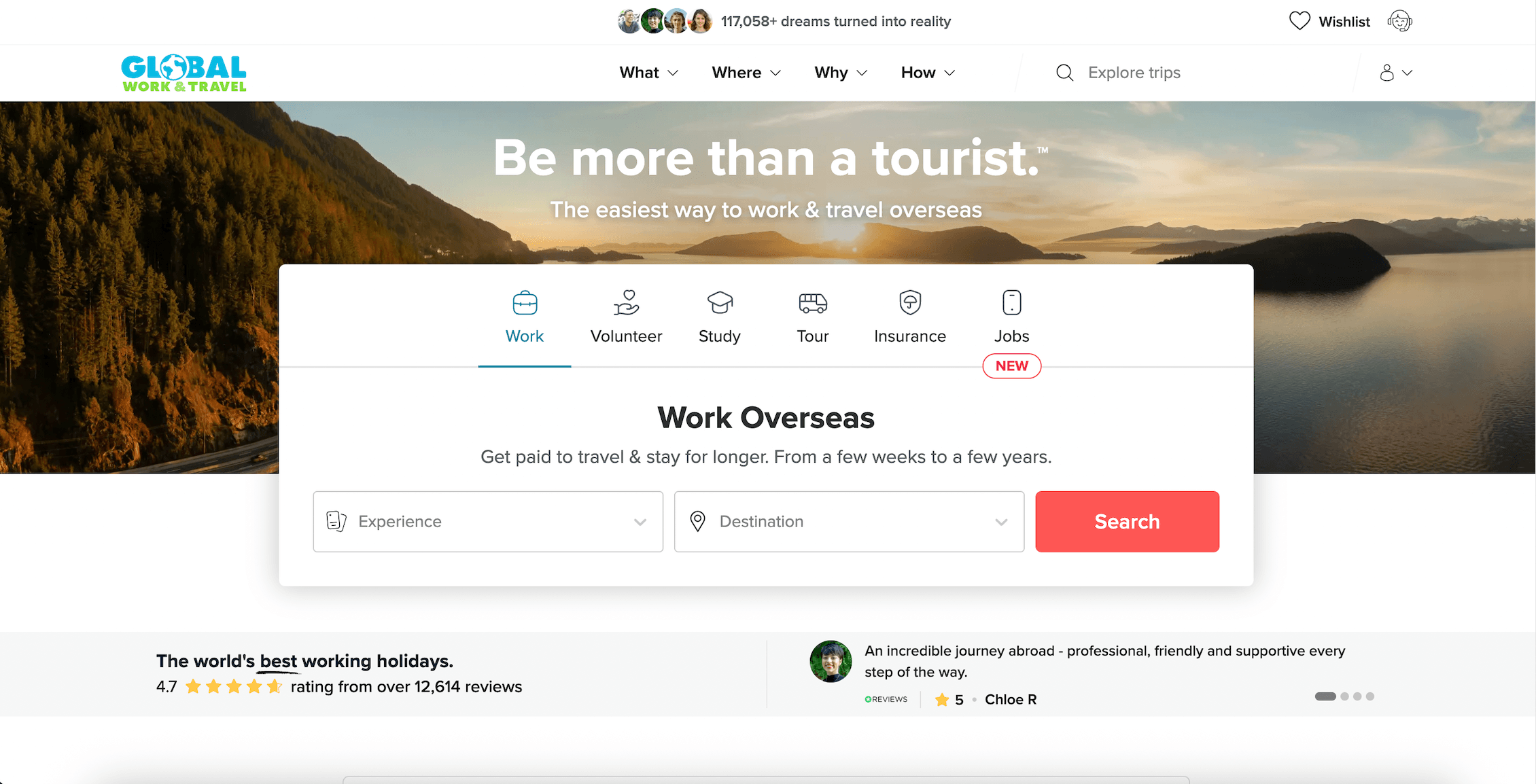
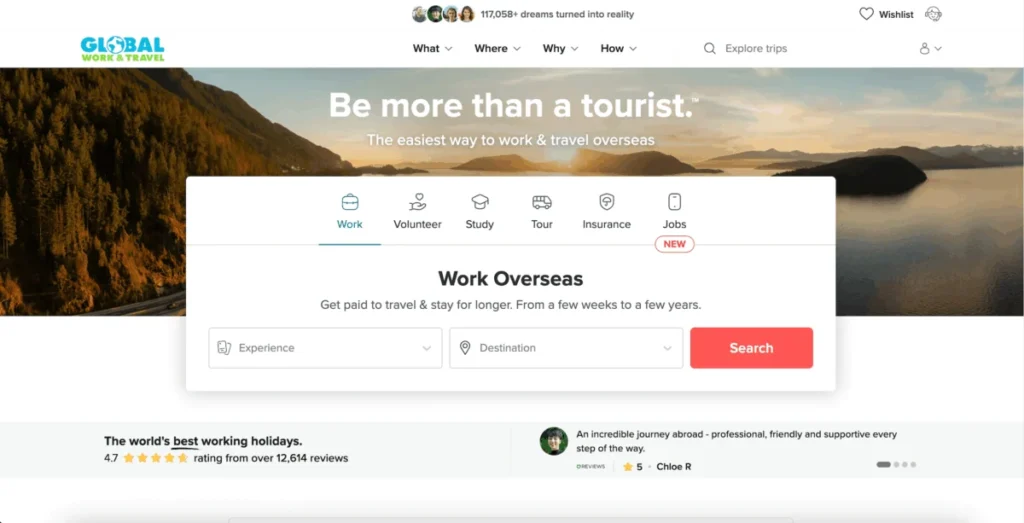
For nearly two decades, organizations like Global Work & Travel have acted as the necessary "scaffolding" for this transition. By providing a structured support system, they bridge the gap between the idea of living abroad and the reality. With over 116,000 placements across Europe, the Americas, Asia, Africa, and the Pacific, they provide a vetted framework that mitigates the risks associated with moving to a foreign country.
The Mechanism of Support
The logistical burden of moving to a new country is often underestimated. Global Work & Travel addresses this through a multi-layered approach:
- Visa Guidance: Navigating the labyrinthine immigration laws of foreign nations is the primary reason most people give up on their dream of working abroad. These programs provide expert guidance to ensure compliance.
- Job Matching: Rather than competing blindly against locals, participants receive assistance in finding placements that match their skill sets.
- The gWorld Portal: This centralized digital hub acts as a personal command center, keeping visas, job contracts, and pre-departure checklists organized in one location.
- Ongoing Support: The assistance does not end upon arrival. Ongoing mentorship and local support networks provide a safety net that is vital for first-time expats.
Ethical Volunteering: A Force for Good
Beyond paid work, there is an increasing demand for ethical volunteering. However, the sector is notoriously fraught with "voluntourism," where profit-driven companies capitalize on the altruism of travelers.
When done correctly, volunteering can be a transformative experience. Programs vetted by reputable organizations—such as those focusing on wildlife conservation in South Africa, elephant rehabilitation in Thailand, or community development in Zanzibar—ensure that the traveler’s time is actually meeting a need identified by the local community, rather than fulfilling a manufactured tourist experience. By channeling resources into initiatives like the Global Animal Welfare Fund, these organizations ensure that the impact persists long after the individual volunteer has returned home.
Chronology of a Shift
The evolution of travel can be viewed through a clear timeline:
- The Era of Sightseeing (1980s–2000s): The rise of the guidebook, where travel was measured by how many landmarks one could visit in a limited timeframe.
- The Era of the Digital Nomad (2010s–2023): The rise of remote work and the "laptop lifestyle," focusing on geographical arbitrage.
- The Era of the Working Holiday (2024–Present): A pivot toward sustainability and depth. Travelers are prioritizing long-term immersion, local integration, and meaningful contribution.
Supporting Data and Trends
According to industry reports, the demographic of people seeking working holidays is shifting. While 18-35-year-olds remain the core base for working holiday visas, there has been a notable uptick in participants aged 40 and older seeking career breaks. The primary driver is no longer just "adventure," but a desire for a "lifestyle reset."
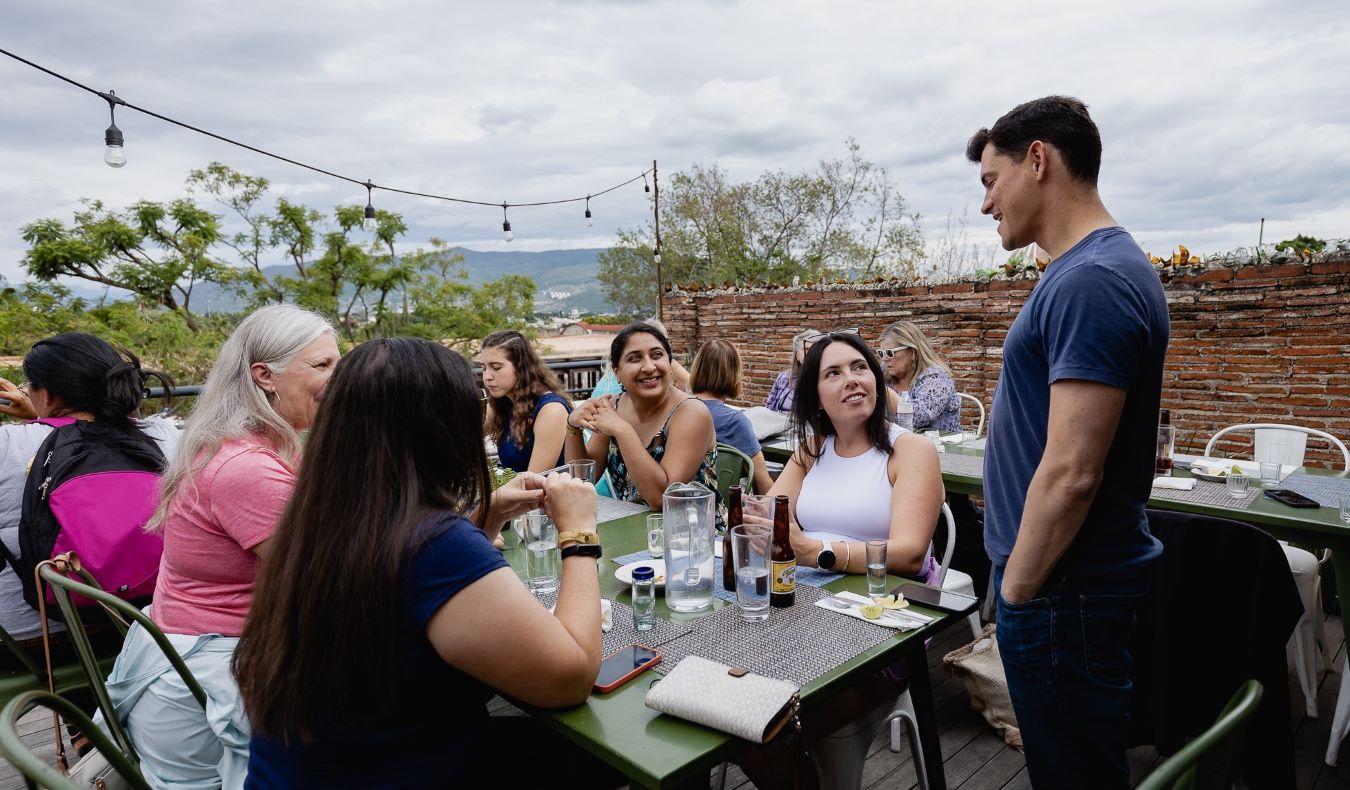
Data from Global Work & Travel indicates that participants who opt for structured programs are 60% more likely to complete their intended duration of stay compared to independent travelers, largely due to the support networks that help them overcome the inevitable "culture shock" phase.
Official Perspectives and Ethical Standards
Professional travel organizations emphasize that the success of a working holiday depends on the legitimacy of the placement. For those considering this path, the following criteria are essential for vetting any program:
- Financial Transparency: Are there clear, upfront costs, and is there a fair refund or "lifetime deposit" policy?
- Regulatory Compliance: Does the company work within the legal frameworks of the host country?
- Community Impact: Does the organization have a long-term presence in the region, or are they a "fly-by-night" operation?
Global Work & Travel maintains membership in several consumer protection services, which provides a layer of security that independent job seekers cannot access. This financial protection is a cornerstone of modern, responsible travel.
Implications for the Future of Travel
The rise of the working holiday represents a maturation of the travel industry. It reflects a growing realization that "consuming" a destination is inherently limiting. By working abroad, travelers are forced to confront the realities of a country—the bureaucracy, the workplace culture, the local politics—which provides a far more honest picture of the world than any vacation brochure.
This shift also challenges the "digital nomad" narrative. While the allure of working from a laptop in a hammock is strong, the reality of isolation in a coworking space can be jarring. Working holidays provide a "built-in" community. Whether one is teaching English in Japan, working at a resort in Canada, or assisting in conservation in Costa Rica, the act of showing up for a job every day creates an immediate social anchor.
Conclusion: A Call to Action
The most memorable moments of any life are rarely the ones spent standing in a queue for a tourist attraction. They are the moments of connection, the days spent contributing to a project, and the nights shared with people from a culture entirely different from one’s own.
For those who have felt the urge to go deeper but have been held back by the fear of logistics, the tools to make that leap are now more accessible than ever. By utilizing resources like Global Work & Travel, the barrier between a two-week vacation and a life-changing year abroad is effectively dismantled.
Travel is at its best when it ceases to be mere tourism and becomes an active, engaged pursuit. As we look toward the future, the most successful travelers will not be those who have seen the most, but those who have lived, worked, and connected the deepest. The world is no longer just a place to visit—it is a place to participate.