Multi-Conveyor Unveils Advanced Integrated Gripper Loop System to Revolutionize Product Handling
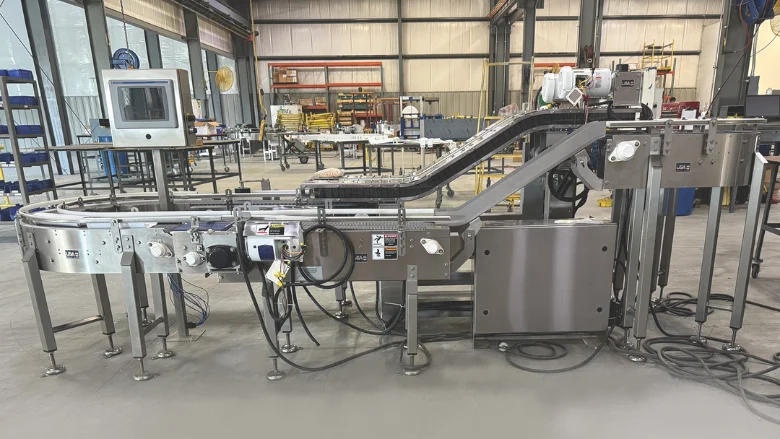
In an era where production floor efficiency, space optimization, and precision handling are paramount, Multi-Conveyor has introduced a groundbreaking advancement in industrial automation. The company has officially debuted a new, multi-functional gripper loop conveyor system, a sophisticated engineering feat that consolidates multiple product transport technologies into a single, seamless layout. This innovation represents a significant leap forward for food processing, packaging, and manufacturing facilities, where the movement of delicate or irregularly shaped items often requires complex, disjointed machinery.
Main Facts: A Convergence of Transport Technologies
The newly unveiled gripper loop conveyor system serves as a masterclass in modular engineering. By integrating diverse transport capabilities—including vertical elevation, precise product turning, high-speed transferring, and gentle handling—Multi-Conveyor has addressed a long-standing industry pain point: the "footprint problem."
In traditional manufacturing lines, product handling often necessitates a series of standalone machines linked by manual or secondary conveyor segments. This not only increases the physical footprint of the line but also introduces potential points of failure, product damage, or contamination risks. The new Multi-Conveyor system eliminates these gaps by performing all these operations within one integrated loop.
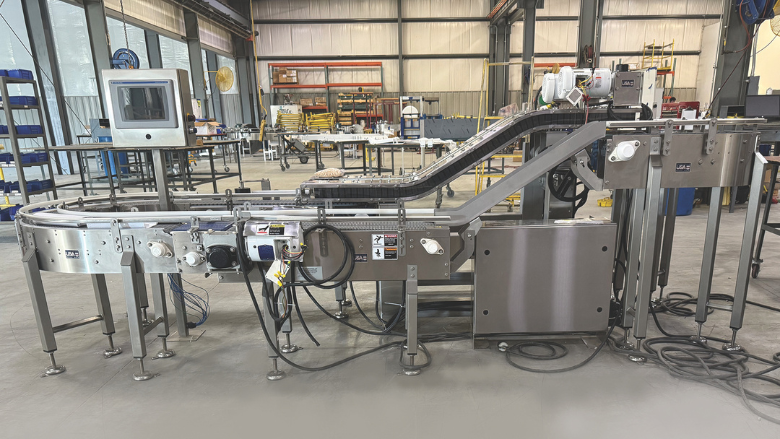
Key Capabilities of the New System:
- Vertical Elevation: Utilizing specialized gripper mechanisms, the system can lift products to different elevations, allowing for multi-level facility layouts without requiring separate elevator units.
- Dynamic Turning: The system features advanced orientation controls, enabling products to be turned or flipped during transit without stopping the flow of the line.
- Seamless Transferring: By maintaining constant contact through the gripper loop, products are transferred between segments with zero transition lag, significantly increasing throughput speeds.
- Gentle Handling: Designed with sensitive materials in mind, the gripper technology ensures that even delicate packaging or food products are held securely without excessive pressure, reducing waste and product loss.
Chronology: The Path to Integrated Automation
The development of the gripper loop system is the culmination of years of iterative design and customer feedback. While conveyor technology has seen incremental improvements over the past decade, the industry has been clamoring for a more holistic approach to product flow.
Phase 1: Identifying the Bottleneck (2022–2023)
During the post-pandemic recovery phase, many food and beverage manufacturers reported that labor shortages and space constraints were hindering growth. Multi-Conveyor’s engineering team conducted extensive site visits to observe how operators were manually managing product reorientation and elevation. The consensus was clear: the transition zones between machines were the primary source of downtime and product jams.
Phase 2: Prototyping and Simulation (2024)
Throughout 2024, the Multi-Conveyor R&D department focused on the physics of "loop-based" transport. Using high-fidelity digital twin simulations, engineers tested how varying speeds and gripping pressures affected different product types, from heavy glass jars to lightweight pouches. The goal was to create a "universal" gripper that could adapt to varying product shapes without requiring complex retooling.

Phase 3: Launch and Integration (2025–2026)
Following successful pilot tests in controlled environments, the company moved into the production phase. The current unveiling marks the commercial availability of the system, which is now being marketed to high-capacity food safety facilities that require rigorous sanitation standards alongside high output requirements.
Supporting Data: Why Integration Matters
In the modern food safety landscape, the "Total Cost of Ownership" (TCO) is a critical metric. By integrating multiple functions into one system, Multi-Conveyor is directly addressing several key operational data points:
1. Throughput Efficiency
Preliminary performance data indicates that the integrated gripper loop system can increase throughput by up to 15–20% compared to traditional "stop-and-start" conveyor setups. By eliminating the deceleration required at transfer points, the system maintains a consistent "steady-state" velocity.

2. Space Utilization
Facility managers are constantly tasked with maximizing "square-footage yield." The gripper loop system allows for vertical utilization of space, effectively doubling the usable area in some instances by moving products overhead rather than spreading them across a sprawling floor plan.
3. Sanitation and Maintenance
One of the most compelling aspects of the system is the reduction in "catch points." In food manufacturing, every conveyor joint is a potential site for debris accumulation and bacterial growth. By consolidating multiple functions into one continuous system, the number of mechanical transitions is slashed, simplifying the Clean-in-Place (CIP) process and reducing the hours required for sanitation teams.
Official Perspectives: The Engineering Philosophy
While the technical specifications are impressive, the philosophy behind the system is equally noteworthy. The Multi-Conveyor design team emphasizes that the gripper loop is not merely a piece of equipment, but a "strategic solution."

"We recognized that our clients were dealing with fragmented systems that forced them to compromise on speed or safety," stated a spokesperson for the Multi-Conveyor engineering team. "Our goal was to create a system that acts as a continuous conduit. By unifying the lifting, turning, and transporting, we aren’t just moving products; we are maintaining the integrity of the product from the moment it leaves the filling machine until it hits the palletizer."
Industry experts observing the launch have noted that this move signals a broader shift toward "intelligent conveying." As AI and smart sensors continue to penetrate the packaging sector, the mechanical hardware must become more flexible to accommodate the increased speed of these digital systems. Multi-Conveyor’s new unit provides the physical framework necessary to support such high-tech upgrades.
Implications for the Industry
The introduction of this technology carries significant implications for the future of food manufacturing and packaging safety.
Enhancing Food Safety Standards
The primary benefit in a food safety context is the reduction of human interaction with the product. Every time a product is manually reoriented or transferred between conveyor lines, there is a risk of contamination. By automating these processes within a sealed, gripper-based loop, the risk profile of the entire production line is lowered.
Flexibility in Product Variations
The modern consumer market demands variety, which forces manufacturers to run multiple SKUs on the same line. The gripper loop system’s ability to adjust to different product dimensions through software-defined settings allows manufacturers to switch between production runs with minimal downtime. This flexibility is essential for companies looking to maintain agility in a volatile market.
Sustainability and Energy Efficiency
By reducing the number of individual motors, sensors, and controllers required to manage a production line, the integrated system inherently consumes less energy. The consolidated power draw of one unified system is significantly lower than that of four or five independent conveyor modules. For companies aiming to meet ESG (Environmental, Social, and Governance) targets, this is a measurable advantage.

Conclusion: The Road Ahead
As the industry looks toward 2026 and beyond, the trend toward consolidation and high-density automation shows no signs of slowing. Multi-Conveyor’s gripper loop system serves as a benchmark for what is possible when engineering is driven by the specific, complex needs of the end-user.
For facilities struggling with outdated, sprawling conveyor layouts, this technology offers a clear path toward modernization. By reducing complexity, increasing uptime, and enhancing the overall safety of the product handling process, Multi-Conveyor is setting a new standard for how items—and the businesses that move them—can thrive in a competitive, fast-paced global economy.
For those interested in integrating this technology, Multi-Conveyor suggests a detailed site audit to determine how the gripper loop can be configured to meet specific facility constraints. As the industry moves toward a more automated future, the ability to do more with less space will undoubtedly remain the hallmark of successful manufacturing.