Precision Meets Intelligence: Mettler Toledo Unveils the X56 DXD+ X-Ray Inspection System
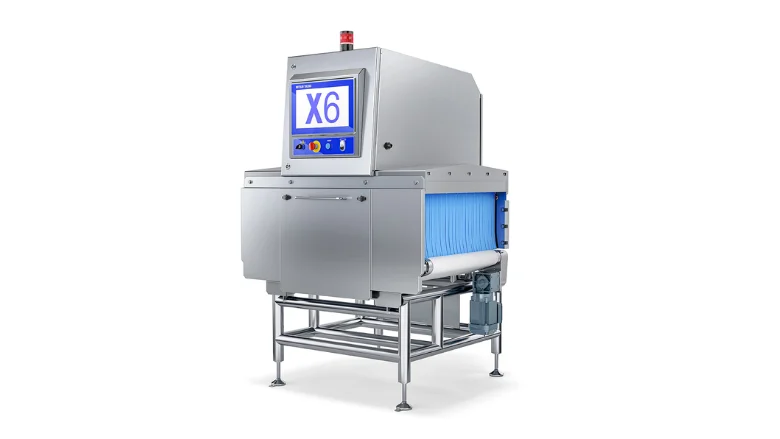
In an era where food safety standards are tightening and supply chains are increasingly complex, the demand for high-fidelity inspection technology has never been greater. Mettler Toledo Product Inspection Group has officially expanded its renowned X6 Series with the introduction of the X56 DXD+—a sophisticated, dual-energy photon-counting X-ray inspection system. By marrying advanced hardware with cutting-edge artificial intelligence (AI), the company aims to redefine how food processors identify low-density contaminants and ensure product integrity in high-speed, high-volume environments.
Main Facts: The New Standard in Contamination Detection
The X56 DXD+ is not merely an iteration of existing technology; it represents a significant leap forward in photon-counting capabilities. At its core, the system utilizes Mettler Toledo’s proprietary DXD+ detector technology paired with the Advanced Material Discrimination Pro (AMD Pro) software.
Unlike conventional single-energy X-ray systems, which often struggle to distinguish between product density and potential foreign objects, the dual-energy approach allows the X56 DXD+ to effectively "see through" the noise. This is particularly transformative for the detection of low-density contaminants—such as rubber, plastic, and certain glass types—that have historically been notoriously difficult to flag. By measuring how different materials absorb X-ray energy at various levels, the system can isolate these elusive contaminants even within products that possess variable thickness, irregular density, or overlapping textures.
The system is engineered for versatility, accommodating a wide range of packaged food applications, from potato chips and pet food to complex multi-pack items. With a conveyor width of 500 mm and the ability to operate in both single-lane and multi-lane configurations, the X56 DXD+ is positioned to support medium- to large-sized product lines that require uncompromising accuracy.
Chronology: The Evolution of X-Ray Inspection
To understand the significance of the X56 DXD+, one must look at the trajectory of the Mettler Toledo X6 Series. The journey began with the push for higher throughput and the realization that standard X-ray imaging was reaching its physical limits regarding material discrimination.
- Foundation Phase: The initial X-Series systems established the baseline for safety, focusing on metallic contaminants and basic integrity checks.
- The X6 Expansion: Mettler Toledo introduced the X6 series to address specific industrial bottlenecks. This included the X16, designed specifically for high-speed, single-package inspection, and the X36.2, which brought customization to high-throughput lines and complex, multi-lane configurations.
- The Intelligence Era: Recognizing that hardware alone could not solve the "overlap" problem—where products stacked atop one another confuse standard sensors—the company began integrating AI-driven analysis.
- The Present: The launch of the X56 DXD+ integrates these past advancements into a singular, high-performance unit. It represents the convergence of dual-energy hardware (the DXD+ detector) and software-defined intelligence (the AMD Pro suite), marking the latest chapter in the company’s push toward "zero-defect" manufacturing.
Supporting Data: Technical Capabilities and Efficiency
The performance metrics of the X56 DXD+ are designed to meet the rigorous demands of modern food manufacturing, where production speeds often exceed 400 to 500 units per minute.
The Power of Photon Counting
Traditional X-ray detectors often suffer from "energy integration" issues, where signal clarity is lost at high speeds. The X56 DXD+’s photon-counting technology counts individual photons, resulting in a much higher signal-to-noise ratio. This allows the system to maintain sensitivity even when product geometry is inconsistent.
AI-Driven Decision Making
The integration of AI into the X56 DXD+ serves two primary functions:
- Reduction of False Rejects: One of the most significant costs to food processors is the "false positive"—where perfectly safe product is discarded because the machine misidentified an internal fold or a natural clump as a contaminant. The AI model is trained on vast datasets to distinguish between "safe" product variations and actual hazards.
- Operational Efficiency: By minimizing unnecessary stops and rejects, the AI-powered inspection ensures that the "Overall Equipment Effectiveness" (OEE) remains high, reducing the labor burden on plant operators.
Throughput and Versatility
The system’s capability to inspect up to 500 products per minute is a critical benchmark for large-scale operations. Beyond basic contamination detection, the system performs secondary quality checks simultaneously:
- Completeness Checks: Ensuring all components in a multi-pack are present.
- Clip Detection: Identifying loose metal clips in sausage or bag seals.
- Seal Inspection: Verifying that product is not caught in the crimp area of a package, which could compromise shelf-life or safety.
Official Responses and Strategic Vision
Mettler Toledo has positioned the X56 DXD+ as a holistic solution for the "connected factory." A spokesperson for the company emphasized that the system is not just an inspection device, but a node in a larger data ecosystem.
"In today’s regulatory environment, it is not enough to simply detect a problem; you must be able to prove that your process is in control," noted a company representative. To this end, the X56 DXD+ is fully compatible with Mettler Toledo’s ProdX data management software. This integration allows for:
- Centralized Monitoring: Real-time visibility across multiple lines or even multiple global facilities.
- Automated Documentation: Electronic recordkeeping that satisfies the most stringent global food safety audit requirements (such as GFSI-recognized schemes).
- Traceability: Every image captured is stored and linked to the specific production run, providing a robust audit trail in the event of a quality inquiry or a voluntary recall.
The company’s focus on "Hygienic Design" also addresses a critical pain point in the food industry. With a toolless conveyor belt removal system and an interface designed for rapid sanitation, the X56 DXD+ is built to survive the harsh washdown environments typical of meat, dairy, and snack food facilities.
Implications for the Food Industry
The introduction of the X56 DXD+ signals a broader trend in the food manufacturing landscape: the shift from reactive to proactive quality assurance.
Regulatory Compliance and Audit Readiness
As regulatory bodies worldwide—most notably the U.S. FDA under the Food Safety Modernization Act (FSMA)—demand more granular control over the supply chain, the ability to generate digital, unalterable proof of inspection becomes invaluable. The X56 DXD+’s ability to document every scan effectively turns a quality control checkpoint into a compliance asset.
Waste Reduction and Sustainability
Food waste is a major sustainability challenge. By utilizing AI to drastically reduce false rejects, the X56 DXD+ directly contributes to corporate sustainability goals. Every package saved from the reject bin is a reduction in waste, energy, and resources spent on production and logistics.
Consumer Trust and Brand Protection
In the age of social media, a single report of a foreign object in a consumer product can cause catastrophic brand damage. The X56 DXD+ offers a heightened layer of protection, particularly for sensitive items like pet food and chips, where small, low-density contaminants (like plastic shards) are the most frequent culprits for consumer complaints. By implementing dual-energy detection, manufacturers are demonstrating a commitment to safety that goes above and beyond the industry minimum.
The Future of Inspection
The deployment of the X56 DXD+ highlights that the future of the factory floor is digital. As AI continues to evolve, systems like this will likely become "self-learning," where the machine updates its own detection algorithms based on daily production data. This shift towards autonomous quality control suggests that the role of the operator is evolving from manual inspection to system oversight and data analysis.
Conclusion
The Mettler Toledo X56 DXD+ is a formidable addition to the X6 Series, offering a sophisticated answer to the persistent challenges of physical contaminant detection in complex packaging. By combining high-speed, dual-energy hardware with intelligent AI software, the system provides a comprehensive solution that addresses the needs of the modern food processor: speed, accuracy, data traceability, and ease of sanitation.
As the industry continues to prioritize food safety and production efficiency, technologies that can effectively see through the "noise" of product variability will become the new baseline. With the X56 DXD+, Mettler Toledo has reinforced its commitment to innovation, providing manufacturers with the tools to not only ensure the safety of their products but also to optimize their operations in an increasingly competitive global market. Whether for the largest multinational food brand or a specialized snack producer, the X56 DXD+ represents a significant step forward in the quest for total quality assurance.