The "CasioNaut" Phenomenon: G-Shock’s Boldest Step Into the Luxury Zeitgeist
In the stratified world of horology, few brands command as much universal respect as Casio. It is a rare phenomenon where a brand can occupy the wrists of world leaders and high-school students with equal legitimacy. The iconic F-91W, a marvel of utilitarian design that has graced the arms of figures ranging from Barack Obama to pop-culture icons like Napoleon Dynamite, remains the gold standard for "attainable cool." Yet, it is the G-Shock line—specifically the GA-2100, affectionately dubbed the "CasiOak"—that has truly bridged the gap between rugged utility and high-fashion aesthetics.
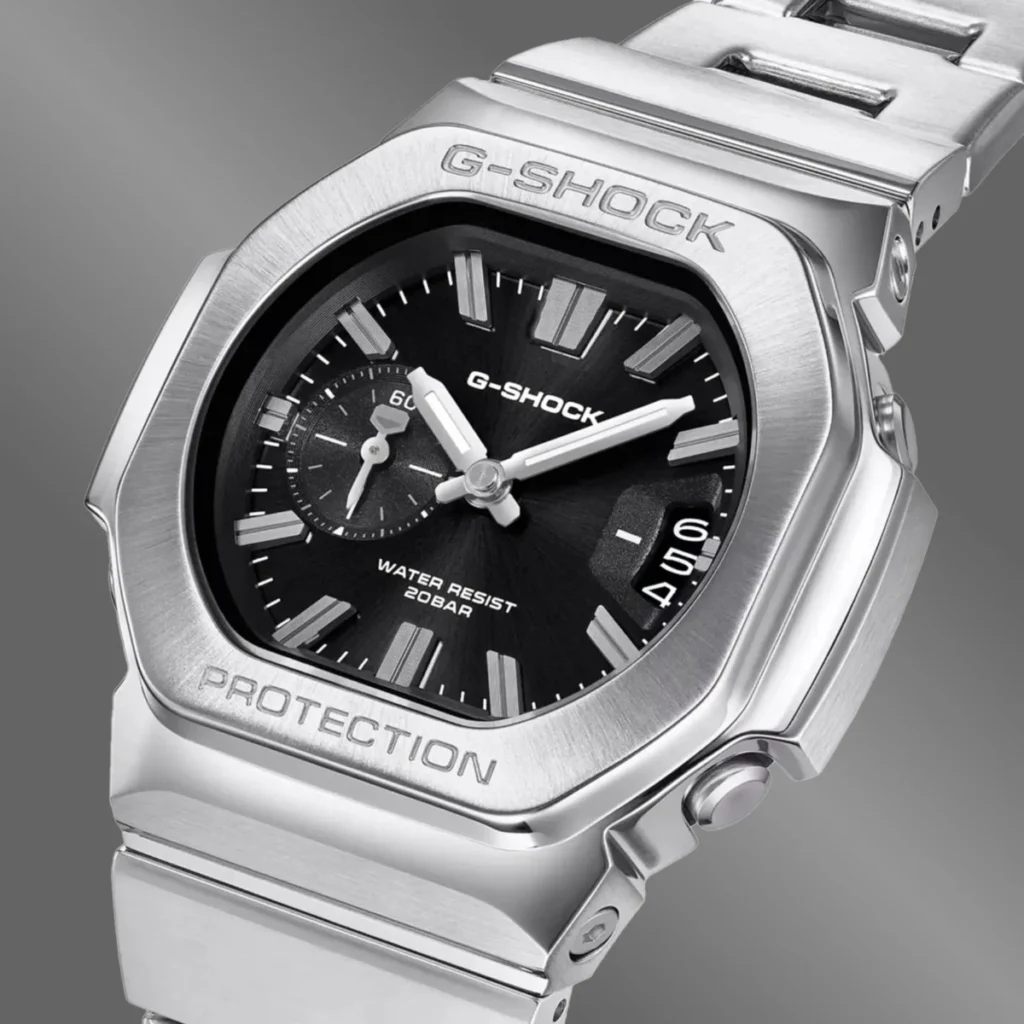
Now, reports surfacing from enthusiast circles and industry trackers suggest that Casio is poised to double down on this "affordable luxury" design language. Leaked specifications and imagery regarding the upcoming GMC-2500 and GAC-2500 series indicate that the Japanese watchmaker is drawing inspiration from another pillar of high-end horology: the Patek Philippe Nautilus. As enthusiasts scramble to dub these incoming models the "CasioNaut" or "CasioTilus," the industry is left to wonder: is this mere mimicry, or is Casio mastering the art of the accessible homage?
The Anatomy of an Icon: From Genta to G-Shock
To understand the buzz surrounding the upcoming 2500 series, one must first understand the shadow cast by the legendary designer Gérald Genta. In 1972, Genta fundamentally altered the trajectory of the watch industry by presenting Audemars Piguet with the Royal Oak. At a time when quartz watches were threatening to render mechanical timepieces obsolete, Genta proposed an angular, stainless steel sports watch with a price tag that exceeded many gold dress watches. It was a defiant, revolutionary move that birthed the "luxury sports watch" category.
Four years later, in 1976, Genta refined this ethos for Patek Philippe. Legend has it that the design for the Nautilus—the watch that would eventually serve as the blueprint for the CasioNaut—came to Genta in just five minutes while he observed Patek executives dining at a nearby table in a hotel restaurant. Inspired by the portholes of transatlantic ocean liners, the Nautilus featured signature "shoulders" (or ears) on either side of the case, a design choice that remains one of the most recognizable silhouettes in history.
The Casio 2500 series appears to be leaning heavily into this specific design vocabulary. By adopting those prominent lateral protrusions, the new G-Shocks create a profile that feels remarkably reminiscent of the Patek icon, albeit wrapped in the shock-resistant DNA that has defined Casio since 1983.

Chronology of a Design Shift
The evolution of G-Shock’s design philosophy has been a slow, calculated march toward sophistication.
- 1983: The launch of the DW-5000C, the original G-Shock, established the brand’s reputation for near-indestructible performance.
- 2019: The introduction of the GA-2100 (CasiOak) marked a turning point. Its octagonal bezel was the first true departure into "lifestyle" aesthetics, proving that Casio could compete on style just as effectively as it did on durability.
- 2023-2024: The market saw a saturation of "luxury-look" affordable watches, including the Swatch x Audemars Piguet "Royal Pop" collaboration.
- Late 2024: Leaks appearing on platforms like Instagram and industry watchdogs like Notebookcheck revealed the existence of the GMC-2500 and GAC-2500.
This timeline suggests that Casio is not merely reacting to trends, but actively positioning itself as a legitimate alternative for collectors who admire the shapes of high-horology but require the ruggedness of a daily beater.
Technical Specifications and Innovation
While the aesthetic resemblance to the Nautilus is the headline, the engineering beneath the surface is where the 2500 series distinguishes itself. The upcoming collection is expected to be a fully analog affair—a significant departure for a brand that almost always incorporates a digital display.
The Magnetic Holding Structure
Perhaps the most intriguing technical feature is the inclusion of a "Magnetic Holding Structure." In traditional analog watches, hands are fixed to a central shaft. Under severe impact, this shaft can bend or break, leading to catastrophic failure. Casio’s solution uses magnetism to hold the hands in place, allowing them to effectively "float" and absorb kinetic energy during a shock event without losing their alignment or snapping. This ensures that the watch remains as functional in a construction site as it looks at a black-tie event.
Dimensions and Materials
According to the leaked data, the GAC-2500 (resin) and GMC-2500 (stainless steel) are remarkably compact, catering to modern preferences for more wrist-friendly dimensions:

- GMC-2500 (Metal): 46.7 x 43.8 x 12.9 mm
- GAC-2500 (Resin): 46.7 x 44.5 x 12.7 mm
These dimensions place them in a "sweet spot" for comfort, significantly thinner and more wearable than the bulky, oversized G-Shocks of the early 2000s. The resin models are expected to arrive in four colorways—white, black, green, and yellow—while the metal variants will offer an array of strap and bracelet configurations.
Supporting Data and Market Economics
The pricing strategy for the 2500 series is designed to disrupt the entry-level watch market. With the resin models estimated to retail at approximately 20,900 Japanese yen (roughly $134 USD) and the premium metal versions anticipated to land around $320 USD, Casio is aggressively undercutting the competition.
For the price of a mid-tier dinner, a consumer is receiving 200 meters of water resistance, a sophisticated shock-resistant system, and a design that nods to one of the most expensive timepieces ever created. This is the definition of "attainable luxury." In an era where the secondary market for a genuine Nautilus can reach six figures, the CasioNaut offers a "fun" entry point that allows enthusiasts to enjoy the silhouette without the anxiety of damaging a priceless asset.
The Silence of the Brand
As with many major watch releases, Casio has maintained a strategy of strategic silence. When approached for comment regarding the leaks, the company offered no official confirmation or denial. In the world of high-stakes product launches, this "no comment" stance is often a way to maintain the hype cycle, allowing the community’s speculation to build momentum until an official press release can be issued. The current rumored release date for the series is November, which aligns with the typical holiday shopping cycle, suggesting that Casio is preparing for a massive global rollout.
Implications for the Watch Industry
The emergence of the CasioNaut has sparked a broader debate about the nature of design influence. Critics may argue that Casio is leaning too heavily on the intellectual property of established Swiss houses. However, proponents argue that Genta’s design language—specifically the octagonal bezel and the integrated bracelet/ear structure—has become a part of the cultural lexicon of watchmaking.

1. The Democratization of Design
Casio is effectively democratizing design. By taking a shape that was once reserved for the ultra-wealthy and applying it to a mass-produced, high-durability product, they are acknowledging that the aesthetic appeal of the Nautilus is universal. It brings the "luxury" experience to a demographic that would otherwise be excluded.
2. The Death of the "Digital" Requirement
For decades, the presence of a digital screen was the hallmark of a G-Shock. By moving to a fully analog dial with a two-eye layout (seconds subdial and date window), Casio is signaling that it is comfortable moving away from its traditional identity. This is a high-risk, high-reward pivot that could alienate purists while attracting a new wave of fashion-forward consumers.
3. The Future of the "Homage" Market
The success of the CasiOak set a precedent. When a watch becomes as culturally relevant as the GA-2100, it ceases to be an "homage" and starts to become its own entity. The 2500 series will likely follow this path. It will be judged not by how well it mimics Patek Philippe, but by how well it performs as a G-Shock.
Final Thoughts
The "CasioNaut" is not just a watch; it is a testament to the enduring power of classic design. Casio has proven, time and again, that it understands the pulse of the market better than almost any other manufacturer. By blending the ruggedness of a tool watch with the refined, Genta-inspired silhouettes of the 1970s, the company is positioning itself to own the sub-$500 market for the foreseeable future.
Whether you are a seasoned collector with a safe full of mechanical masterpieces or a newcomer looking for your first "real" watch, the GMC-2500 series represents a rare opportunity to own a piece of horological history—or at least a very stylish nod to it—without the prohibitive cost of entry. As November approaches, the watch community waits with bated breath to see if the reality of the CasioNaut lives up to the legend of its inspiration.